
Reviewed · TUK-TUK TOURS
Tours in the Port DE Tuk Tuk
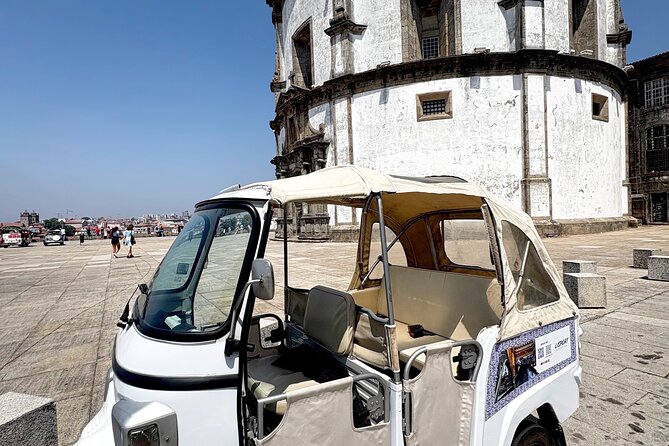
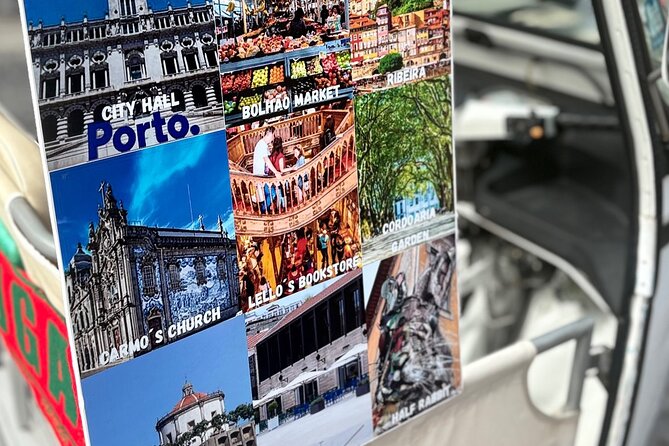
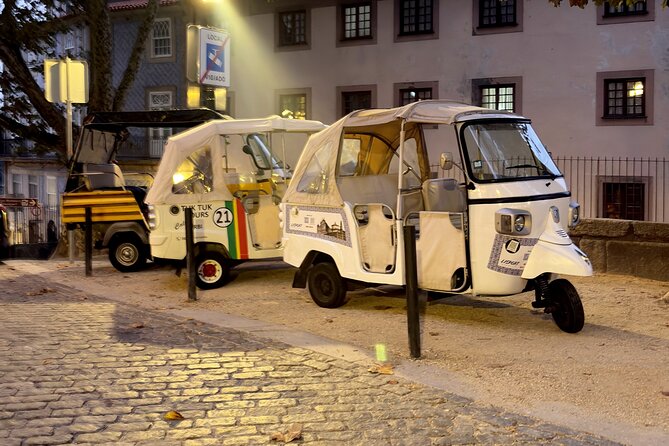
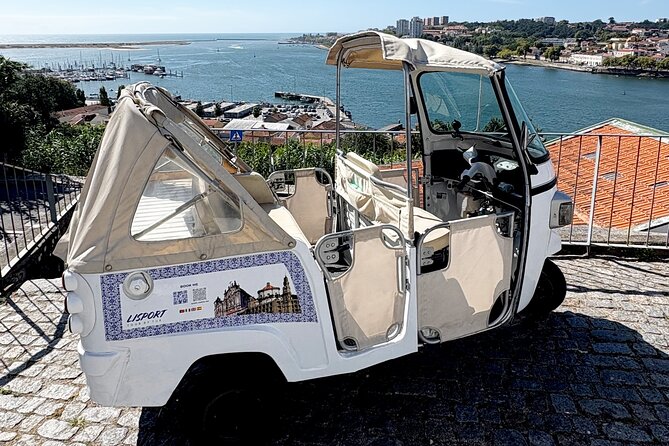
Porto gets easier when you ride low and slow. This 1-hour tuk-tuk tour rolls through Porto’s biggest highlights, with quick stops that make sense of the hills, tile walls, and river views. You’ll spend serious time looking at landmarks like São Bento Station and nearby churches without wasting your energy walking too much.
I love the way the guide, often Bruno, keeps things calm and flexible from the start. I also like how he tailors the pace to what you care about, then throws in practical recommendations for what to do next so the tour actually helps the rest of your trip.
The only real catch is the short duration, so you’ll mostly get exterior views and photo moments, not long museum-style visits. Also, this weather-dependent experience runs best when conditions are good, since poor weather can lead to a reschedule or full refund.
In This Review
- Key highlights worth planning for
- Getting your bearings fast with a Porto tuk-tuk loop
- São Bento Station, where Portugal is painted on tile
- From the São João Theatre area to a city that rebuilt itself
- Sé Cathedral and the Fernandina Wall, medieval Porto in layers
- Dom Luís I Bridge, Porto and Gaia from the river spine
- Igreja de Santo Ildefonso and the tile obsession
- Downtown Porto: Rua de Santa Catarina and the Aliados clock tower
- Praça dos Leões, Lello, and the Carmo and Carmelites duo
- Jardim da Cordoaria, then the photography stop at Cadeia da Relação
- Clérigos Tower, the skyline view you can plan around
- Price and time: is $42.05 per group good value?
- Who this Porto tuk-tuk tour fits best
- Should you book this Porto tuk-tuk tour?
- FAQ
- How long is the Porto tuk-tuk tour?
- Is the tour offered in English?
- Do I get a mobile ticket?
- Is this tour private?
- What main sights does this route cover?
- Is the tour dependent on weather?
- When can I cancel for a full refund?
- Is there any safety equipment?
- Is it suitable for most travelers?
Key highlights worth planning for
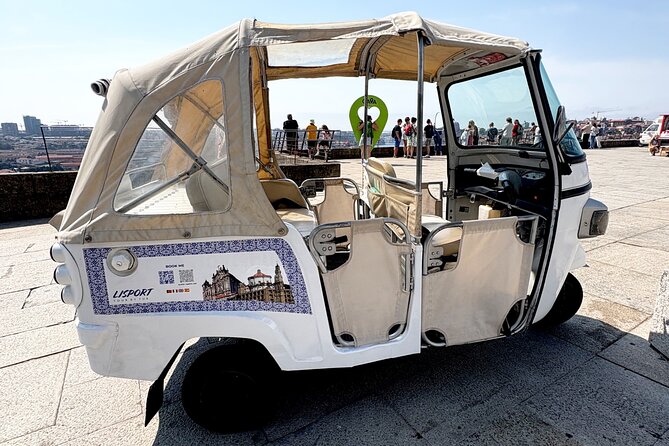
- Bruno-style customization so the route fits your interests and pace
- São Bento’s tile storytelling with 20,000 painted panels to spot and explain
- Dom Luís I Bridge viewpoints connecting Porto to Vila Nova de Gaia
- Blue-and-white tile facades at Igreja de Santo Ildefonso at the Plaza da Batalha area
- Clérigos Tower 360-degree promise for golden hour photos and skyline awareness
- Fast orientation in a hilly city so you navigate Porto more confidently afterward
Getting your bearings fast with a Porto tuk-tuk loop
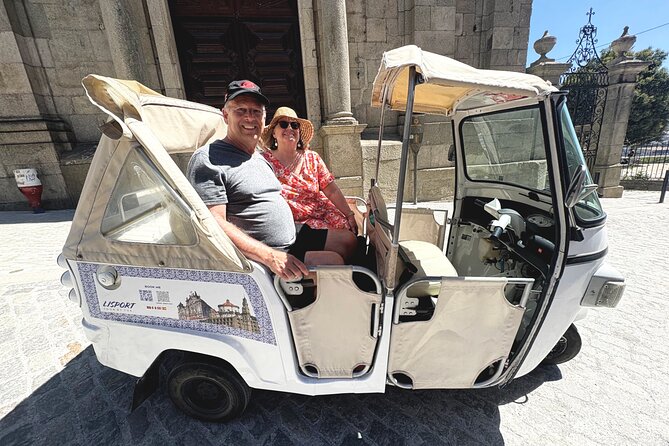
A Porto day can feel like a workout if you try to see everything on foot. This tuk-tuk experience solves that by doing the heavy planning for you. In about 1 hour to 1 hour 10 minutes, you get a tight loop of Porto’s core neighborhoods and landmarks, with just enough time at key spots to absorb what you’re looking at.
I like this format because Porto is all layers, Romanesque, Baroque, neoclassical, modern downtown life, and the city climbs up and back down. When you ride, you can actually connect where things are, like how the old core around the river connects to the hillier areas near Clérigos.
Also, this is a private tour, meaning it’s just your group, not a mixed cattle-car situation. That matters because it makes it easier for your guide to adjust on the fly. If you want more history talk, you can lean in. If you want photo stops and quick context, you can do that too.
More tuk-tuk loops through the old streets:
- Porto: Guided Tour by Tuk-Tuk & Optional Douro River Cruise★ 4.5 · 5,980 reviews
- Discover Porto’s Highlights on a 2-Hour Private Electric Tuk Tuk★ 4.5 · 1,860 reviews
- Porto: Guided Tuk Tuk Tour★ 4.6 · 1,390 reviews
- Historic Porto by Private Electric Tuk Tuk to Top Landmarks★ 4.5 · 735 reviews
São Bento Station, where Portugal is painted on tile
São Bento Railway Station is one of the best places in Porto for your first real wow moment. The building is early 20th-century, officially inaugurated on 5 October 1916, and it replaced the old Convent of Saint Benedict of Ave-Maria. The station design ties to Beaux-Arts influence, shaped in a U layout with internal tunnels connecting to the rail network.
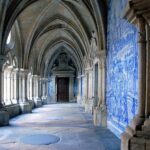
But the real star is the interior: more than 20,000 historic tiles, painted between 1905 and 1908 by Jorge Colaço. The scenes cover Portuguese history, rural life, transport, and other major moments. It’s not just decoration. It’s a visual timeline, and once you know to look for story panels, you start seeing patterns right away.
Quick tip: give yourself a minute to step back first, so you can spot the big scenes. Then move closer to catch the brushwork detail and small captions. Even with limited time on a tuk-tuk schedule, you’ll get way more out of it by doing that two-level glance.
From the São João Theatre area to a city that rebuilt itself
Before you hit Porto’s biggest ticketed icons, you’ll be in the historic centre around the Plaza da Batalha area near the National Theatre of São João. This building tells a classic Porto story, start bold, lose it to disaster, rebuild smarter.
The theatre opened in 1798 as the Royal Theatre of São João and was the first theatre built on purpose in Porto. A fire destroyed it in 1908. It reopened in 1920, with a project by architect José Marques da Silva, the same architect tied to the design of São Bento Station.
What I like here is how the vibe shifts from arts and grand facades into something you can recognize immediately later in the day. Neoclassical and Beaux-Arts elements show up in more than one place, so your brain starts connecting architecture dots as you move.
If you’re an architecture nerd, the exterior facade is impressive on its own, with columns, sculptures, and inscriptions. The interior is richly decorated with golden frescoes and painted ceilings, and it can be visited during scheduled shows or guided tours when available.
Sé Cathedral and the Fernandina Wall, medieval Porto in layers
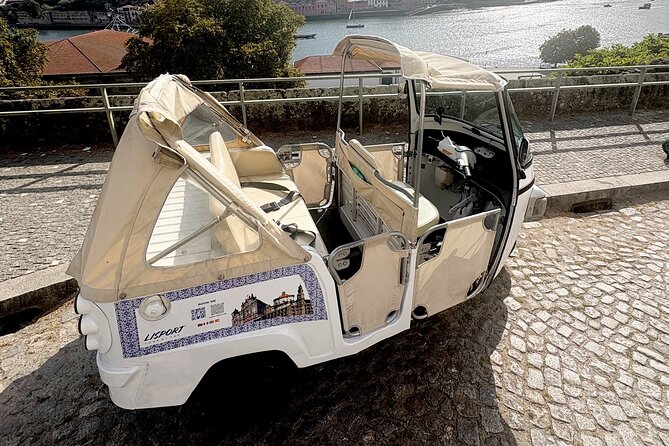
Porto’s medieval core isn’t one single landmark. It’s a network of stone decisions made over centuries. Two stops make that point fast: the Sé do Porto Cathedral area and the Fernandina Wall remnants.
The Sé Cathedral building began in the 12th century in Romanesque style, then kept changing through time. Major shifts in the 14th and 17th centuries bring Gothic touches like the cloister, plus Baroque elements such as the facade and chapels. The facade has Romanesque character too, including a rosacea. You’ll also notice the twin towers, with coruchées mentioned as part of the design details.
Why it’s more than just a pretty church: Dom Pedro IV celebrated Mass here before starting the siege of Porto during the Liberal Wars. It’s also tied to real wedding stories in the cathedral setting. So you’re not only looking at architecture. You’re standing in a place that marked turning points.
Then there’s the Fernandina Wall, built in the 14th century during the reign of D. Fernando I. It replaced and expanded an older Romanesque wall to match Porto’s growth. This was about control and protection, granite medieval defenses with towers and doors, designed to guard commercial entrances and exits.
Porto didn’t keep every stone from that wall, since parts were demolished in the 19th century for urban expansion. Still, you can spot surviving sections, including areas next to the waterfront, the stretch between Largo do Muro dos Bacalhoeiros and Ribeira, and Postigo do Carvão, described as the only medieval door still existing. This is the stop where your photo brain finally learns what to look for.
Dom Luís I Bridge, Porto and Gaia from the river spine
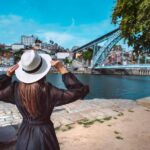
If you want one landmark that makes Porto feel like Porto, it’s the Dom Luís I Bridge. It connects Porto to Vila Nova de Gaia across the Douro River, sitting between the Ribeira do Porto side and the Cais de Gaia side.
The bridge opened in 1886 and was designed by engineer Théophile Seyrig, who was associated with Gustave Eiffel. It replaced an earlier wooden and iron bridge (the Pênsil Bridge). At the time, it was described as one of the largest metal-bound bridges in the world.
The bridge has two decks. The upper deck is used by Port Metro Line D and pedestrians. The lower deck is for cars and pedestrians. The central iron arch measures 172 meters and reaches about 45 meters above the river. It’s also been classified as a National Monument since 1982.
For your day planning, this bridge is gold because it’s both a connection and a viewpoint. Even when you only pass by, you’ll understand why the city looks the way it does from the river. Later, if you add time, walking on the decks is a great way to turn those tuk-tuk glimpses into a full panoramic moment.
Elsewhere in Porto, worth a look before you book:
- The Unvanquished Tour in Porto City Center
★ 5.0 · 26,497 reviews - From Porto: Douro Valley w/ Boat Tour, Wine Tasting & Lunch
★ 4.7 · 19,061 reviews - Complete Douro Valley Wine Tour with Lunch, Wine Tastings and River Cruise
★ 5.0 · 12,920 reviews - Porto: Douro Valley with Winery Lunch, Tastings & Cruise
★ 4.7 · 7,002 reviews
Igreja de Santo Ildefonso and the tile obsession
Porto’s blue-and-white tile tradition isn’t subtle, and this church leans all the way into it. Igreja de Santo Ildefonso sits in the Plaza da Batalha area, near the São Bento Station and close to the National Theatre of São João and Rua de Santa Catarina.
Construction ran from 1709 to 1739, replacing an older chapel. The church is dedicated to Saint Ildefonso de Toledo, a Spanish archbishop from the 7th century. The style is Baroque with proto-rococo influence, and the granite structure includes two towers and a curved fronton.
Now for the part you’ll want to photograph. The facade is covered with about 11,000 blue-and-white tiles. Those tiles were created in 1932 by Jorge Colaço and include scenes from the life of Santo Ildefonso and passages from the Gospel.
The staircase in front matters too. The contrast between granite and the tiles creates a strong frame for photos, and the lighting at night is known to highlight facade details. If you’re heading out late for dinner, this is one of those stops you’ll be happy you already oriented yourself to.
Downtown Porto: Rua de Santa Catarina and the Aliados clock tower
One of the practical wins of a short tuk-tuk ride is getting your mental map of the downtown spine. In this route, that means time around the Rua de Santa Catarina shopping street, and then the grand scale of Avenida dos Aliados.
Rua de Santa Catarina runs from near the Plaza da Batalha toward the Marquês area and is mostly pedestrian. It mixes modern and traditional shops, with well-known chains alongside classic footwear, clothing, and souvenir stores. If you want a quick taste of Porto’s café culture, this is where Café Majestic comes into the picture, described as a historic Belle Époque style favorite.
Close by is the Chapel of Souls, noted for a facade covered with blue tiles, one of the city’s most photographed details. And just a bit farther, Bolhão Market is nearby, an iconic traditional market that stays lively with street music and constant foot traffic.
Then you pivot to the monumental feel of Avenida dos Aliados. Here the big landmark is the imposing municipal building, neoclassical with 20th-century monumental influences. Construction started in 1920 and finished in 1957, with Correia da Silva as the architect. The central tower with a clock rises to 70 meters, and the facade includes sculptures and decorative elements. The building is still the headquarters of Porto’s municipal executive, so it’s not just a photo prop. Guided interior visits can happen when scheduled or during special public events like open days.
Praça dos Leões, Lello, and the Carmo and Carmelites duo
Porto feels like a student city and a tourist city at the same time around Praça dos Leões. It’s called that for the fountain in the center, a neobarroco feature installed in the 19th century with four bronze-winged lions that spout water. The square sits near the Rectorate of the University of Porto, the Church of Carmo, the Carmelites, and the famous Lello Bookstore area.
This is also where you can sense the different energies in Porto. You get the university atmosphere, plus the crowds that gather around Lello. The key for you is to use the location strategically: once you know where Praça dos Leões is, you’ll understand how the Clérigos area connects down the hill.
Next come two churches that make a great walking-photo pair, the Church of the Carmelites and the Church of Carmo. The Carmelites church was built between 1616 and 1628 in a classical Baroque style, linked to a female convent of the Discalced Carmelites. The facade is described as more sober, while the interior includes golden retables typical of Portuguese Baroque.
The Church of Carmo was built between 1756 and 1768 in a Baroque and Rococo style. Its facade is more richly decorated with Rococo elements, and its side includes blue-and-white tile panel art added in 1912, depicting the Imposition of the Escapulario to St. Simon Stock.
The fun detail is the narrow connection between them, described as the narrowest house in Porto. It’s about 1 meter wide, created so nuns and monks could not have direct contact, following an old canonical rule. That tiny architectural oddity makes the churches feel more human, like you’re reading local life through stone.
Jardim da Cordoaria, then the photography stop at Cadeia da Relação
If you want one or two pauses that feel like a breather, this route has you covered. Jardim da Cordoaria is in the Baixa area near the Tower of Clérigos and the Hospital of Santo António area references. It was originally tied to the rope-making trade, where workers stretched and twisted cords. In the 19th century it became a garden, reformulated by landscape architect Émile David, associated with the Crystal Palace.
What you get now is a quiet green pocket: walking routes, old trees for shade, and places to sit back and reset. There’s also sculpture interest, including the bronze human figures by Juan Muñoz described as spread across the garden in mysterious poses, plus a sculpture of writer Ramalho Ortigão. The garden can also host cultural events like book fairs and performances when scheduled.
Then you have a more surprising culture stop near the Tower of Clérigos: Cadeia da Relação, the prison and courthouse building from the 18th century (1767). It became active as a prison in 1974 and was rehabilitated in the 1990s as a photography center. The institution runs the preservation and promotion of photography in Portugal, with collections that include ancient cameras, negatives, historical portraits, and work by Portuguese photographers. You can also see old prison cells, grids, and rooms as part of the building visit.
Best part for value: entry is described as free. If you’re the type who likes museums but hates paying museum prices, this is your reason to breathe and step indoors for a bit without guilt.
Clérigos Tower, the skyline view you can plan around
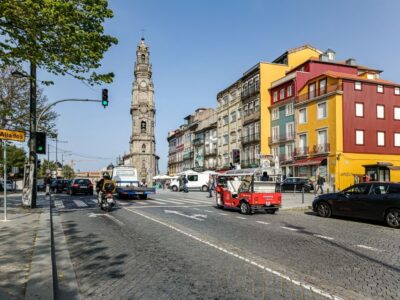
At the end of this circuit, you’re in Clérigos territory. The Church of the Clergy (Clérigos Church) was built between 1732 and 1750, and the tower was completed in 1763. The Italian architect Nicolau Nasoni shaped it, and he’s described as a key figure of Baroque in northern Portugal.
The church has an oval floor plan, described as rare in Portugal, with golden scale details and Baroque organs. The tower is the real magnet: 76 meters high, with 225 steps to reach the top. From there, it’s an amazing 360-degree view over Porto and the Douro. The tower is also lit at night when in use, which makes it a strong nighttime photo target.
Practical note: entry to climb the tower and visit the museum is paid, and the ticket includes access to sacred art and items connected to the Brotherhood of Poor Clergy, plus church access. If you want the full skyline moment, consider using your tuk-tuk orientation to know exactly where you’ll return for that climb.
Price and time: is $42.05 per group good value?
For $42.05 per group for a ride that runs about 1 hour to 1 hour 10 minutes, the value depends on your travel style.
This price makes the most sense if:
- You have limited time and want to see key Porto sights without spending hours relocating on foot.
- You value guidance that explains what you’re seeing, like why the station tiles matter or why the bridge design is special.
- You want a flexible pace, not a rigid checklist.
It’s less ideal if you plan to treat the stop moments as long indoor museum visits. A tuk-tuk loop is about orientation and quick context, not deep dives into ticketed attractions. If you want long time in places like the tower museum or any church interiors, you’ll probably use the tuk-tuk as your first-day setup, then add those extra visits later.
The average booking window is about 8 days in advance, so if your dates are fixed, grab it early. You’re paying for convenience and smart routeing more than you’re paying for deep ticketed entry time.
Who this Porto tuk-tuk tour fits best
This is a great choice if you want a first-day orientation in a city that has hills and surprises. It works well for couples, families who need fewer stairs, and anyone who wants to connect landmarks into a coherent map quickly.
It also fits different interests smoothly. In practice, the guide can tailor the outing so history fans and arts-and-architecture fans both get good moments. I especially like that it can slow down when you want to linger at a tile facade or take a few extra photos, and it stays relaxed even if you run a little longer than planned.
If you’re traveling with limited mobility or you just don’t want to grind uphill all day, riding is the easiest way to see more. Most people can participate, and there’s a security belt for safety.
Should you book this Porto tuk-tuk tour?
Yes, if you want Porto highlights in one efficient pass, with an English-speaking guide and the freedom to shape the pace. You’ll get a smart overview of tile icons like São Bento and Igreja de Santo Ildefonso, river drama at Dom Luís I Bridge, medieval textures at Sé Cathedral and the Fernandina Wall, and the skyline punch of Clérigos Tower.
Book it especially if it’s your first time in Porto, your schedule is tight, or you want a comfortable way to map out neighborhoods for later exploring.
Skip it if you’re only interested in long indoor visits with minimal driving around. In that case, you may prefer a walking-focused day or a tour that spends more time inside specific attractions.
FAQ
How long is the Porto tuk-tuk tour?
It lasts about 1 hour to 1 hour 10 minutes.
Is the tour offered in English?
Yes, it is offered in English.
Do I get a mobile ticket?
Yes, the tour includes a mobile ticket.
Is this tour private?
Yes, it is a private tour/activity, and only your group participates.
What main sights does this route cover?
You can expect stops around key Porto highlights such as São Bento Railway Station, the Dom Luís I Bridge, and the Clérigos area, plus other central landmark areas like Plaza da Batalha and Avenida dos Aliados.
Is the tour dependent on weather?
Yes. The experience requires good weather, and if it’s canceled due to poor weather, you’ll be offered a different date or a full refund.
When can I cancel for a full refund?
You can cancel up to 24 hours in advance for a full refund.
Is there any safety equipment?
Yes. The vehicle includes a security belt.
Is it suitable for most travelers?
Most travelers can participate.
Fresh off the Porto quays



Tuk-Tuk Tours, compared.
Guided Tour by Tuk-Tuk & Optional Douro River Cruise
Read our review →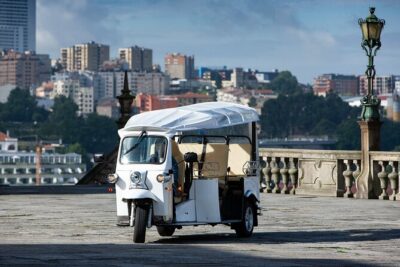
Discover Porto’s Highlights on a 2-Hour Private Electric Tuk Tuk
Read our review →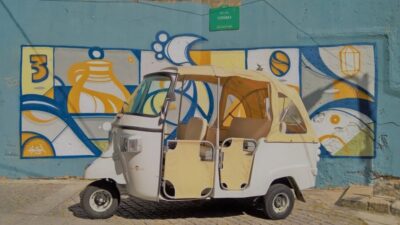
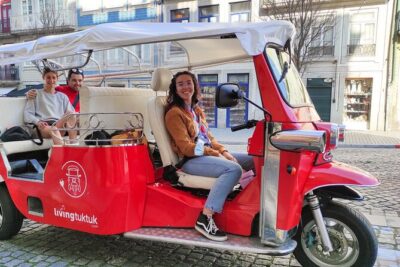
Historic Porto by Private Electric Tuk Tuk to Top Landmarks
Read our review →
Porto Guided Tour to the Historical Center on a Tuk Tuk
Read our review →
Oporto Tuk-Tuk Tour: Fast, Fun & Flexible – 1H to Full Day!
Read our review →
Browse the lists this tour appears in