
Reviewed · TUK-TUK TOURS
Porto Guided Tour to the Historical Center on a Tuk Tuk
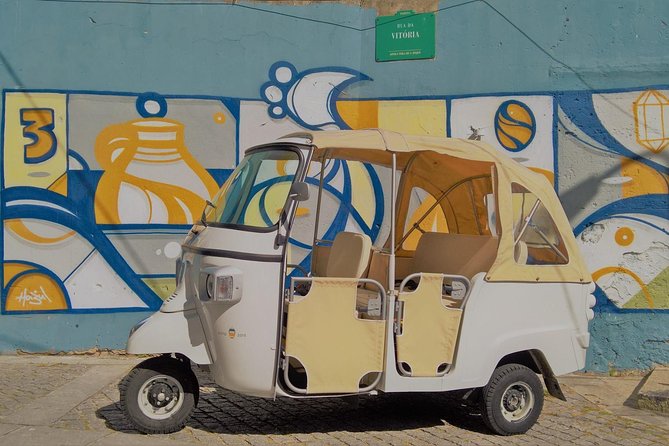
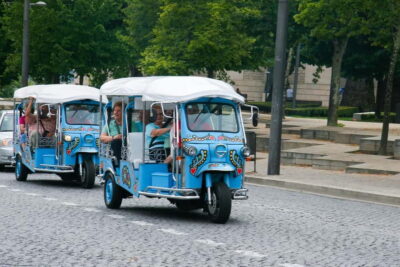
Porto snaps into focus at tuk tuk speed. This private 1 hour 50 minute ride zips you through the historical core, hopping between medieval landmarks, baroque showpieces, and a few quieter streets you might skip on foot.
I especially like the easy pace: you get quick stops to look around, then roll on before your feet revolt. I also like that the route mixes famous names, like the cathedral area and São Bento, with smart detours such as Serra do Pilar’s viewpoint and the city walls.
One drawback to plan for, though: you’re in a vehicle in traffic, so audio can be hard to catch in busier moments, and you may need to lean in or ask for repeats.
In This Review
- Key things to know before you ride
- Why this tuk tuk tour is a smart Porto starter
- Getting oriented: from the old theatre site to Porto’s medieval spine
- São Bento station tiles: Porto’s indoor storytelling moment
- Squares and rocco-co churches: where Porto gets expressive
- Cordoaria Garden and Torre dos Clérigos: a baroque street-to-view break
- Monastery cloisters and the Stock Exchange’s Arabian Room area
- Livraria Lello and the iron market that became Hard Club
- Gothic gold, catacombs, and Alfândega’s transport future
- Serra do Pilar viewpoint: the Porto geography lesson you came for
- Crossing the river: D. Luís I Bridge and Arrábida’s iron elegance
- Price and value: what you get for $42.33
- Practical tips that make the tour feel smooth
- Should you book this tuk tuk historical center tour?
- FAQ
- How long is the Porto guided tour to the historical center on a tuk tuk?
- What is included in the tour price?
- Are monument entrances included?
- Is this a private tour?
- Where does the tour start and end?
- What weather happens if it is not good?
- Is free cancellation available?
- Can children and service animals join?
Key things to know before you ride
- Tuk tuk access for narrow streets: the open vehicle format helps you cover more ground without fighting Porto’s steep cobbles.
- Port wine included: you’ll get a glass of Port during the tour, a small but fun payoff.
- Fast stops, not long entries: you’ll see key exteriors and highlights, but monument entry tickets are not included.
- Serra do Pilar as a major payoff: the terrace viewpoint is a top moment for understanding how Porto sits over the Douro.
- Guides set the mood: expect a lively, energetic style of explanation, which matters more than you think in a moving vehicle.
- Bring a rain layer: the tour works in bad weather when possible, but you will feel the wind and wet.
Why this tuk tuk tour is a smart Porto starter
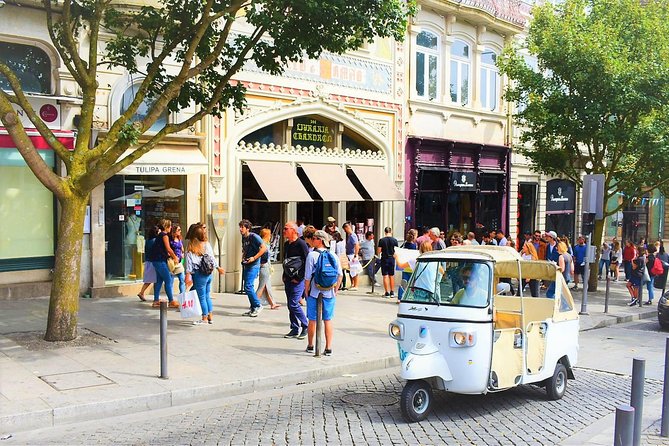
If you’re arriving in Porto with a short timeline, the big challenge is simple: you need orientation fast. This tour does that by pairing transportation with mini stops, so you get a layout of the city without spending your whole day walking uphill, crossing back and forth, and guessing distances.
The private format helps too. Your group travels together on the same route, and for larger bookings, multiple tuk tuks handle capacity while keeping the timing consistent. The tour is offered in English, and you’ll receive a mobile ticket.
The price, about $42.33 per person, ends up feeling reasonable because it bundles the driver/guide time, the city driving, and at least one included experience with the Port wine glass. For a first day, that can be worth more than paying for entry tickets you might not even use well.
More tuk-tuk loops through the old streets:
- Porto: Guided Tour by Tuk-Tuk & Optional Douro River Cruise★ 4.5 · 5,980 reviews
- Discover Porto’s Highlights on a 2-Hour Private Electric Tuk Tuk★ 4.5 · 1,860 reviews
- Porto: Guided Tuk Tuk Tour★ 4.6 · 1,390 reviews
- Historic Porto by Private Electric Tuk Tuk to Top Landmarks★ 4.5 · 735 reviews
Getting oriented: from the old theatre site to Porto’s medieval spine
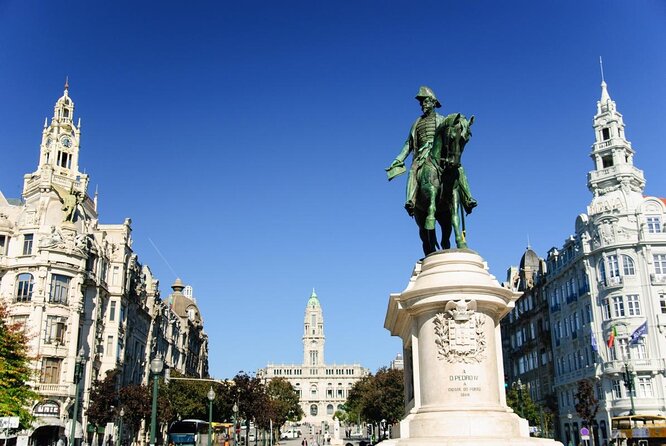
The ride starts by threading you toward the city’s older layers, where Porto’s story is written in architecture. One early stop focuses on a major theatre building constructed in 1910, built on top of earlier ruins, and decorated with sculptural ideas that represent strong human themes like pain and love. Even if you’re not a theatre person, it’s a good anchor point because it shows how Porto rebuilds after loss.
From there, you move toward the Muralha Fernandina do Porto, the defensive wall that was built over centuries between the late 1300s and mid 1400s. The description matters here: this isn’t a decorative backdrop. It’s a real clue to where the city’s limits used to be, which helps everything you see afterward make more sense.
Next come the cathedral and the ceremonial space around it. The Cathedral of Porto dates from the 12th or 13th century and was changed and enlarged over time, so what you see now reflects many eras. The visit is quick, and since the cathedral admission ticket is not included, treat it as a look-and-learn stop unless you’ve planned ticket time.
A short terrace stop then connects to the idea of local government with the pelourinho monument. There’s a story here of demolition and redevelopment under the Estado Novo policy in 1940, followed by later placement of a stone monument as a reproduction based on an older drawing. It’s the kind of detail you usually only catch if someone points it out.
You then pass the Paco Episcopal, likely 13th century in origin and remodeled in the 1700s, with a grand arched entrance and decorative frontons. This stop is brief, but it’s useful because it shows the blend of medieval foundation and later flourishes.
São Bento station tiles: Porto’s indoor storytelling moment
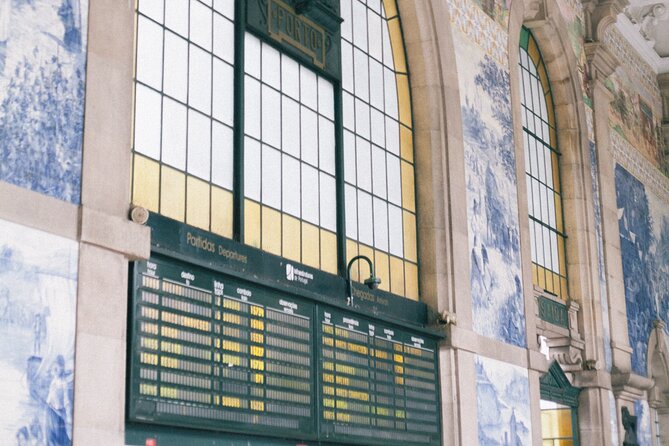
Then comes one of Porto’s most photographed places, São Bento Railway Station. The standout is the early 20th century design roof, and the real reason people linger is the interior coverage of narrative tiles made by painter Jorge Colaço, with about 20,000 tiles in the lobby.
This stop is usually around 10 minutes. Since entry is free, it’s a rare chance to get a high-impact cultural hit without paying extra. If you want photos, go with a simple game plan: look up, then scan left to right for tile scenes that match what your guide is describing. The tiles reward slow looking, but you can also get the pattern in a short visit.
One practical tip from the kind of tour rhythm you’ll experience here: keep your phone charged. You’ll be tempted to stop filming at every doorway, because the station is bright and photo-friendly compared to many stone streets outside.
Squares and rocco-co churches: where Porto gets expressive
After São Bento, the tour shifts toward the old square system and the religious architecture that gives Porto its theatrical feel. You’ll pass through an area with roots in the early 1700s, where a project created new streets and a larger square called Praça Nova, replacing earlier medieval boundaries and older structures.
This part of the route has a lot of layered naming. The square was once called Praça dos Ferradores, connected to blacksmith workshops. Later, the Palace of Viscondes de Balsemão entered the picture, and it even hosted King Charles Alber from Sardinia when he was in exile in Porto. You’ll also see a monument in the garden area remembering Portuguese who died during World War I.
From there, you move to the Fonte dos Leões, a 19th century lion fountain built by a French company and cast at the Val d’Osne foundry in France. If you like connections, this is the kind of detail that makes a city feel connected to the wider world rather than sealed off in the past.
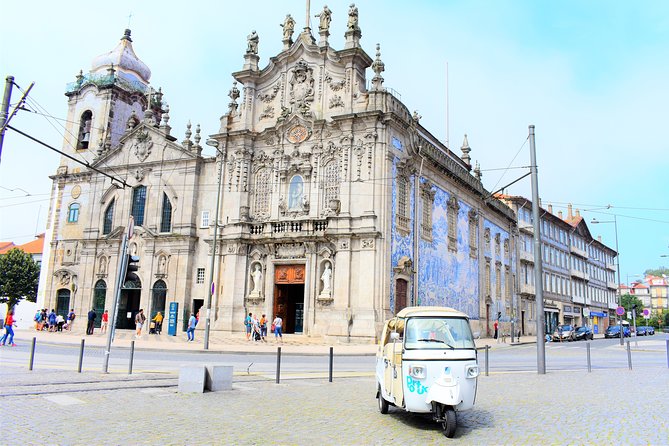
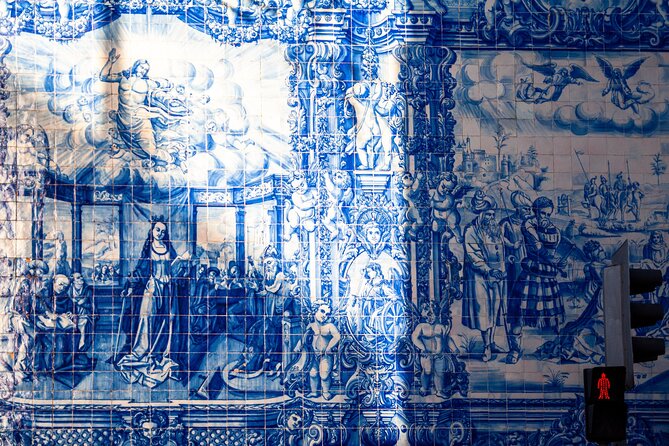
Religion then takes over in two quick but very different church stops. One is a 17th century church with a classical façade and an altarpiece described as Porto rococo style, and it’s designated a national monument. The other is 18th century and is especially known for tile work on its lateral façade, with drawings designed by Silvestre Silvestri. Both are typically brief exterior or partial interior moments, and the big value is what you learn to notice before you arrive.
Cordoaria Garden and Torre dos Clérigos: a baroque street-to-view break
Between the older buildings and the main monuments, you get a breather at Cordoaria Garden, also called João Chagas Garden since 1924. The garden’s story is tied to rope makers who worked in the area for roughly 200 years, which is a fun reminder that Porto’s economy shaped its geography as much as its kings and churches did.
This isn’t just a patch of green. You can look at statues of Ramalho Ortigão and António Nobre, plus sculptures connected to Porto 2001, the European Capital of Culture project. If you’ve been photographing nonstop, this is your reset button.
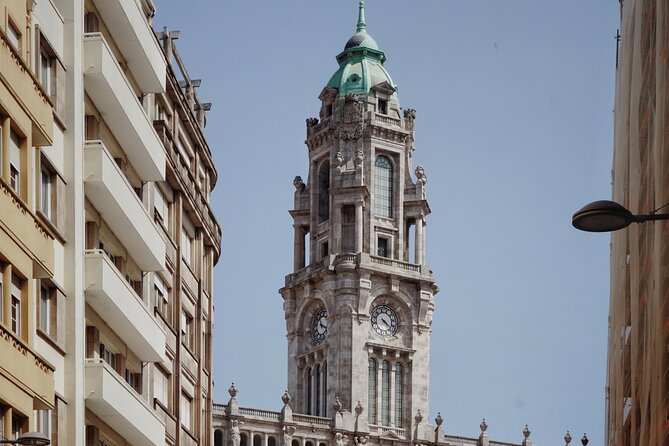
Then the tour angles you toward Torre dos Clerigos, Porto’s famous baroque tower. The bell tower is a symbol you can spot from multiple points around the city. The church stop is quick, and the admission ticket is not included, so you’re mostly focusing on the exterior and the significance of the tower in the skyline.
If you care about making the most of short stops, stand where your guide tells you to. In Porto, the angle matters, and towers look different depending on whether you’re seeing them from a street canyon or from an open square.
More of the old city, layer by layer:
- Douro Valley: Historical Sites, Wine Experience, Lunch & Cruise
★ 5.0 · 5,133 reviews - Porto: An Intimate Fado Show in a Historical Tavern
★ 4.8 · 2,055 reviews - Porto: Historic City Center Walking Tour
★ 4.7 · 1,172 reviews - Porto: Private Tour of the Historic City in a Ford T Car
★ 4.8 · 932 reviews
Monastery cloisters and the Stock Exchange’s Arabian Room area
The route next leans into major religious and civic architecture. You’ll see a monastery area connected to a National Monument designation, restored so Benedictine monks could occupy parts of it again, plus use linked to the Porto National Orchestra and Porto District Archives. Part of the complex also connects to theatrical performances and concerts.
Right after that, the tour includes the Palácio da Bolsa, the Stock Exchange Palace and headquarters of the Commercial Association of Porto. Designed in a neoclassical style, it’s one of the most visited monuments in the historic center, and the famed highlight is the Arabian Room.
Important practical point: monuments entrance is not included. So plan your expectations accordingly. You’ll get the approach, the context, and enough time to appreciate why this palace is so famous, but you should not count on going inside unless you buy tickets on your own.
If you decide to return later, the value of this tuk tuk moment is that you’ll understand where everything sits relative to the rest of the city. That helps you avoid the common mistake of returning and spending half your time orienting again.
Livraria Lello and the iron market that became Hard Club
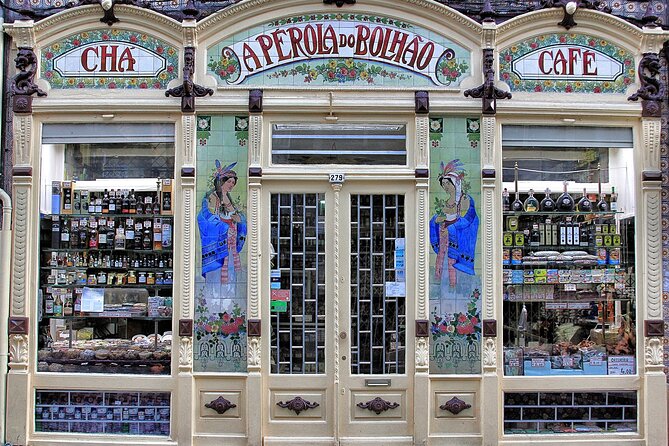
Next you’ll pass one of Porto’s most recognizable shopping and book-hunting sights, the Art Nouveau-style Livraria Lello. The building was inaugurated in 1906 and has a famous Art Nouveau façade with neo-Gothic details. Inside, painted plaster imitates wood, and there’s a dramatic staircase linked with details like stained glass and the monogram and motto Decus in Labore.
The tour stop here is time-limited, and again, entrance is not included. Still, just seeing the façade in the middle of a driving route can be a big help. If you later buy a ticket, you’ll already know exactly what you’re looking for.
Then comes a change of texture: the Mercado building built in 1885 as an iron architecture market. It later shifted uses, and today the entertainment venue Hard Club occupies the renovated space. It’s a neat reminder that Porto reuses buildings instead of tossing them.
If you’re into design, take one minute to compare the market’s iron structure to the stone churches you’ve been seeing. The contrast makes both styles feel more meaningful.
Gothic gold, catacombs, and Alfândega’s transport future
This section of the route turns from city centers of commerce and books to the cathedral-scale religious masterpiece in Porto. You’ll reach the Igreja do Carmo, described as the city’s most important Gothic temple, with construction begun in the 14th century. The interior is Baroque and famous for gilded woodwork, with the reputation of a Church of Gold. It’s also known for a Tree of Jesse and its catacombs, and it has been designated a national monument and UNESCO World Heritage since 1996.
The stop is quick. With a church like this, you’ll get the big picture and maybe a glimpse of why it earns its nickname, but if you want full impact photos and close-up views, you may want to revisit later with more time.
After that, you’ll pass Alfândega Nova do Porto, a neoclassical building built in the 19th century. It has two façades, facing the Douro river and the city, and it was designed with structural solutions using iron alongside other materials depending on the spaces.
The tour frames it in terms of the Transport and Communications Museum plan managed by the associated organization. If you like engineering details, this is one of the most practical stops because it shows how Porto built for movement, not just for worship and trade.
Serra do Pilar viewpoint: the Porto geography lesson you came for
Now the tour hits one of its biggest payoff moments. You’ll reach Mosteiro da Serra do Pilar, a monastery and World Cultural Heritage site. Construction started in 1538 and was completed around 1670, beginning with Augustinian Friars, later changing hands during the Civil War period. The church has a circular plan, with a dome, and the cloister is also circular with 36 Ionic columns.
The real reason this stop lands for most people is the view. From the terrace, you can see the riverside area all the way toward Gaia until Arrábida Bridge, plus the historic center and key landmarks like the Cathedral and D. Luís I Bridge. In the other direction, you can spot Fontainhas and São João bridge.
This is your chance to do the best kind of travel thinking: match what you saw earlier in the streets to where they actually sit on the river. Once you understand the geography, Porto gets easier to navigate on your own for the rest of your trip.
It also helps with photography. A terrace viewpoint beats street shots because the angles flatten out the chaos. If the weather is clear, you’ll get the full “how the city stacks on a hillside” feeling.
Crossing the river: D. Luís I Bridge and Arrábida’s iron elegance
To wrap up, you’ll drive across major bridges that define Porto’s relationship with the Douro. You’ll see D. Luís I Bridge, planned by engineer Teófilo Seyrig, a disciple of Eiffel. The bridge opened in 1886 and has two overlapping iron decks, with a 395 meter length and a forged iron arch still regarded as the world’s biggest in forged iron. The upper deck is used by Porto Metro.
You’ll also see the Arrábida Bridge conceptually as another key crossing. It was inaugurated in 2003 and built to replace the upper deck lane of the D. Luís I Bridge used by metro line D. It uses a Maillart-type arch design with a 280 meter arch span described as a world record by experts, and it connects Fontainhas to the parish of Oliveira do Douro in Gaia.
You might not stop for long on these bridge moments, but the point is to connect what you saw from Serra do Pilar to what you’re driving over now. It’s Porto in two sentences: stone neighborhoods above, iron crossings over water below.
Price and value: what you get for $42.33
Let’s talk value in a grounded way. At $42.33 per person for about 1 hour 50 minutes, you’re paying for time, not a museum pass. The included items are a Port wine glass, plus a driver/guide and a local guide.
If you’re the kind of traveler who enjoys learning on the move, that part pays off. If you’re the kind of traveler who wants long interior visits, you should treat it as an orientation plus a highlight reel. The price makes sense because it saves your legs and stitches together the city center into one readable route.
You should also plan around what’s not included. Monuments entrance tickets are not included, and several stops specifically note this. That means you’ll want to decide ahead of time which places you care about enough to come back for entry, like the cathedral, the Clerigos tower, the Palácio da Bolsa, or Livraria Lello.
On timing: the itinerary is built around short visits, so even small delays can shrink the last bits. If you’re hoping to buy tickets for a specific interior afterward, give yourself a buffer. Porto traffic and local road changes can affect the driving schedule.
Practical tips that make the tour feel smooth
Bring a raincoat if the forecast is gloomy. This tour moves quickly between stops, and in wet wind, you’ll feel it.
Sound can be tricky in a moving tuk tuk. If you care about stories and dates, sit where you can hear the guide best and be ready to ask for a repeat at the first stop when everyone is standing still.
Also, give extra time at the meeting point. The start address is R. de Augusto Rosa 180, 4000-528 Porto, and not every street-level pickup is easy on day one, especially if you’re carrying luggage or navigating a busy area.
Finally, keep expectations simple. You’ll see a lot of Porto, but you’ll also learn why Porto rewards return visits. The tour is built to help you return smarter.
Should you book this tuk tuk historical center tour?
Book it if you want a fast Porto map, you like history told with energy, and you want the Port wine touch without scheduling a separate tasting. It’s also a strong choice for your first day because the Serra do Pilar viewpoint plus the bridge sequence makes the whole city make sense.
Skip it or pair it with a different plan if your priority is long indoor museum time. Since entrances are not included, you might spend more time outside looking at famous buildings than you’d like.
My best advice: use this tour as your orientation day, then come back for any interiors that really grab you. The tuk tuk ride is the shortcut, not the end goal.
FAQ
How long is the Porto guided tour to the historical center on a tuk tuk?
It lasts about 1 hour 50 minutes, with timing that can change due to local traffic conditions.
What is included in the tour price?
The tour includes a Port wine glass, the driver/guide, and a local guide. A mobile ticket is provided, and the tour is offered in English.
Are monument entrances included?
No. Monument entrance tickets are not included. Some stops also explicitly note admission is not included.
Is this a private tour?
Yes. It is private, meaning only your group will participate. If you have a larger group, the operator may use multiple vehicles.
Where does the tour start and end?
The tour starts at R. de Augusto Rosa 180, 4000-528 Porto, Portugal. It ends back at the meeting point.
What weather happens if it is not good?
This experience requires good weather. If it is canceled due to poor weather, you will be offered a different date or a full refund.
Is free cancellation available?
Yes. You can cancel up to 24 hours in advance for a full refund. If you cancel less than 24 hours before the start time, the amount paid will not be refunded.
Can children and service animals join?
Children must be accompanied by an adult. Service animals are allowed.
Fresh off the Porto quays



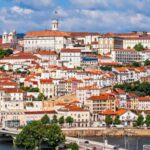


Tuk-Tuk Tours, compared.
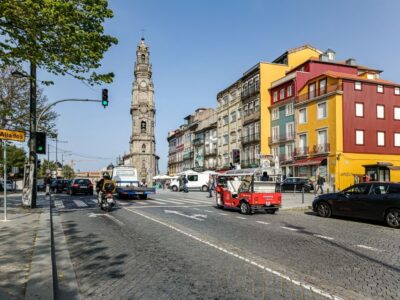
Guided Tour by Tuk-Tuk & Optional Douro River Cruise
Read our review →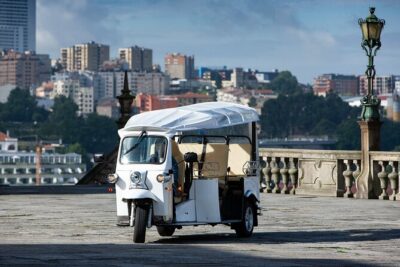
Discover Porto’s Highlights on a 2-Hour Private Electric Tuk Tuk
Read our review →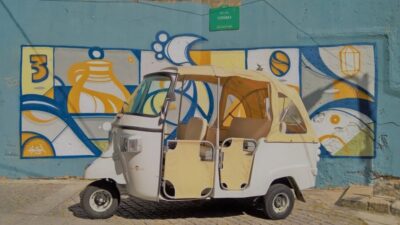
Historic Porto by Private Electric Tuk Tuk to Top Landmarks
Read our review →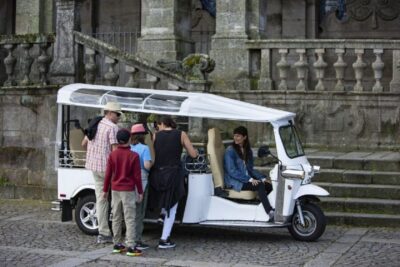
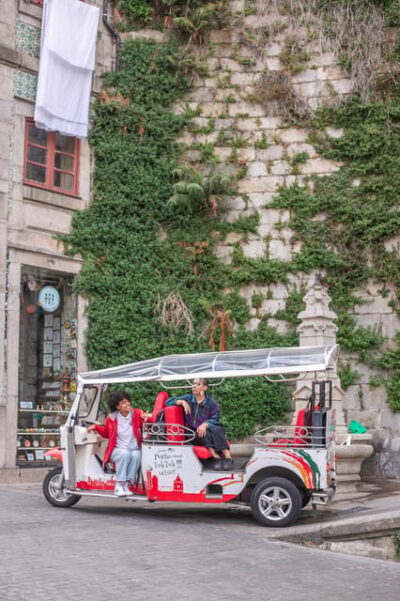
Oporto Tuk-Tuk Tour: Fast, Fun & Flexible – 1H to Full Day!
Read our review →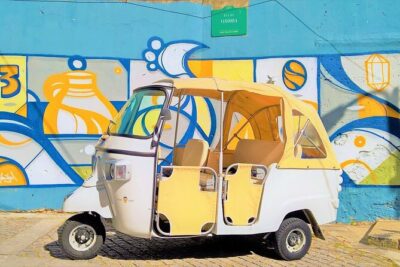
Browse the lists this tour appears in