
Reviewed · COOKING CLASSES
Porto: Portuguese Cooking Class on the Terrace
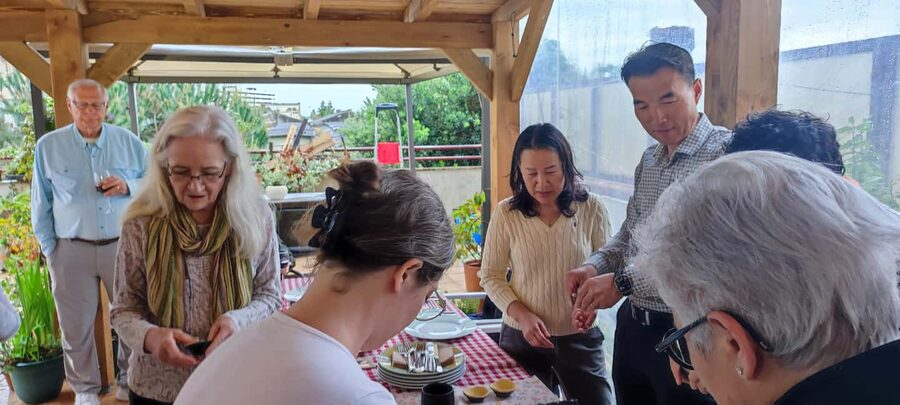
Cooking on a Porto terrace feels like a warm invite. This Portuguese cooking class is built around hands-on prep, a relaxed apartment setup, and a real family atmosphere that turns dinner into an event.
I especially like two things: first, the chance to actively prepare the entire menu with clear, step-by-step tips from the resident family, including Jorge, João, Isabel, and Miguel. Second, you get to eat what you made right away, with the menu set up to adapt to dietary needs (including swapping the meat), plus extra tasting along the way.
One possible drawback: it is private and intentionally cozy, so the experience is more of a “group dinner lesson” than a big sightseeing show, and the terrace space is limited compared to a restaurant kitchen.
In This Review
- Key Things That Make This Porto Class Fun
- A Porto Dinner Lesson That Feels Like Visiting Home
- Terrace Kitchen Setup, Small-Space Charm, and a Real Local Vibe
- Welcome Drink, Appetizer, and Meeting the Family
- Building the Menu Together: Bacalhau, Salad, and Rojões
- Pataniscas de Bacalhau, the Starter You Start With
- Fresh Salad, Not an Afterthought
- Rojões de Porco with Chestnuts, the Heart of the Meal
- Tomato Rice and Timing
- Pastel de Nata Dessert, and Why It Lands So Well
- What You Hear Along the Way: Customs, Habits, and Food Logic
- Drinks, Tastings, and the 3.5 Hour Pace
- Language Options, Private Group Comfort, and How It Feels
- Value That Actually Makes Sense for Food Lovers
- Who This Porto Terrace Class Is Best For
- Should You Book This Porto Terrace Cooking Class?
- FAQ
- How long is the Porto Portuguese Cooking Class on the Terrace?
- Where is the meeting point?
- What menu will we cook and eat?
- Can the menu be adapted for dietary needs?
- Are there tastings during the cooking?
- Is alcohol included?
- What languages are available for the instructor?
- What is the cancellation policy?
- Is this a private experience?
Key Things That Make This Porto Class Fun
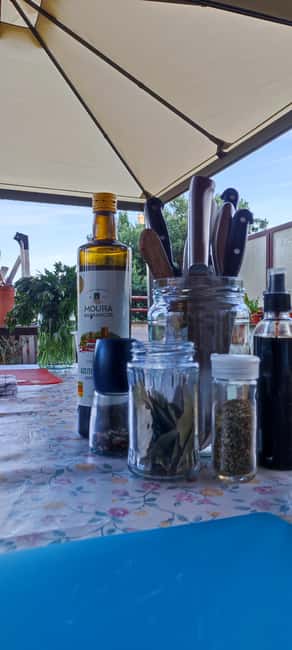
- Terrace-first experience in a small one-bedroom apartment with a spacious outdoor cooking and eating area
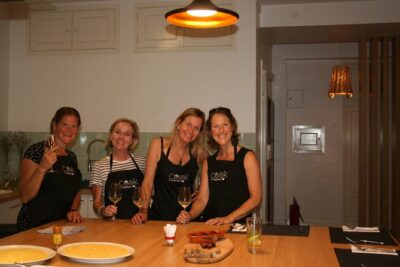
- A resident family feel, with Jorge, João, Isabel, and Miguel helping you cook and chat
- Hands-on menu prep, from ingredients to plating, not just watching
- Portuguese comfort food with smart guidance, including classic bacalhau flavors and pork with chestnuts
- Tastings during prep, plus music and even a neighborhood cat that keeps things lively
- Diet flexibility, since the menu can be adjusted, like substituting the meat
A Porto Dinner Lesson That Feels Like Visiting Home
Porto has its set of “food experiences,” but this one hits differently because it centers on doing, not watching. You meet at the door where the activity happens, then you are welcomed into a home kitchen setup on a terrace. The tone is friendly and unhurried, and that matters, because cooking classes often feel rushed when they try to fit too much into too little time.
The format also helps you learn in a practical way. You are not just collecting trivia about Portuguese food. You are chopping, mixing, preparing ingredients, and using the family’s tips so the flavors click, even if you are not a confident cook. When you finally sit down to eat, it feels earned because you built the meal step-by-step.
And yes, it stays social. Music plays in the background, the neighborhood cat shows up like it has a reservation, and conversations flow about habits, customs, and picturesque facts of the city and country. You end up leaving with more than recipes. You leave with a sense of how Portuguese home cooking fits into daily life.
Other benches where Porto hands still make things:
- Porto: Pastel de Nata Pastry-Making Workshop★ 4.9 · 1,542 reviews
- Porto: Tile Painting Workshop with Porto Wine – Sé do Porto★ 4.9 · 1,095 reviews
- Porto: Pastel de Nata Cooking Class with Port Wine – Sé★ 4.8 · 888 reviews
- Porto: Small Group Surf Lesson with Transportation★ 4.9 · 594 reviews
Terrace Kitchen Setup, Small-Space Charm, and a Real Local Vibe
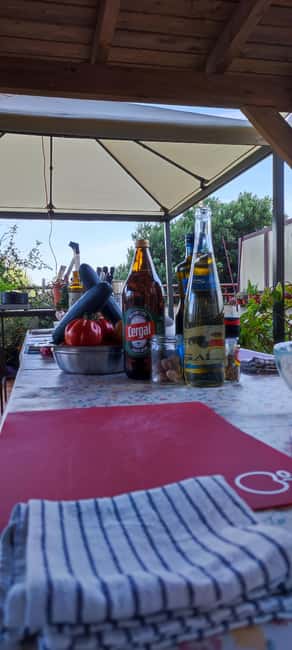
The cooking happens in a small one-bedroom apartment with a terrace that gives you breathing room. That matters more than it sounds. A terrace setting makes the session feel lighter and more relaxed than a crowded indoor classroom. You can work comfortably without the claustrophobic feel that some “at-home cooking” experiences can have.
You also get what I’d call a neighborhood vibe. The family’s space feels lived-in, not staged. Music is part of the mood. And that resident neighborhood cat becomes part of the scene, which sounds silly until you realize it turns the whole evening into something warm and spontaneous.
Practical note for you: because it is a private group and the space is intentionally modest, come ready to enjoy a cozy setting. If you want a large, high-energy, ticketed production, this is not that. If you want a personal evening with food, chat, and hands-on cooking, that is exactly what you’re signing up for.
Welcome Drink, Appetizer, and Meeting the Family
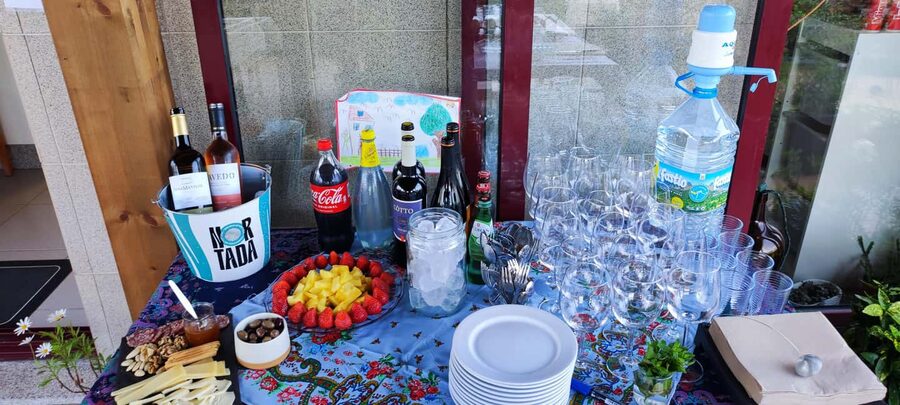
Before you start cooking in earnest, you get a welcome drink and an appetizer. This is a small detail that makes a big difference. It helps you settle in and feel comfortable while the family explains how the evening will run.
Then you are introduced to the resident family. In this class, that introduction is not a formality. It sets expectations for the tone, which is kind, easy, and accommodating. You are also briefly walked through what you will do and what will be on the menu.
This matters because the menu includes multiple components, and cooking them in sequence is easier when you know the plan. You also get the big picture from the start, so you do not spend the first part of the evening figuring out what comes next.
Building the Menu Together: Bacalhau, Salad, and Rojões
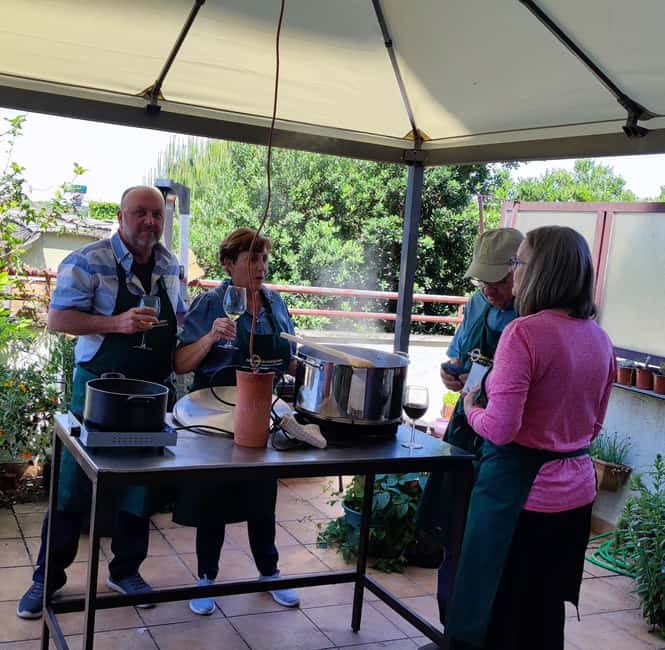
The menu is designed to give you a real Portuguese meal rather than three random dishes. Here is what you cook together.
Pataniscas de Bacalhau, the Starter You Start With
You begin with pataniscas de bacalhau. This is where Portuguese flavors get very real, very fast. Bacalhau is a cornerstone ingredient in Portugal, and the technique behind pataniscas is a hands-on opportunity to learn how to treat the batter and get the texture right.
What you should look for as you cook: the family’s tips focus on small prep choices that affect the final result. You are not left guessing.
Also, in at least one recent session, mushrooms were part of the cooking work alongside bacalhau. That’s a reminder that even when the menu is structured, the kitchen may add comfort-food touches that make the evening feel personal.
More Portuguese cooking, hands in the dough:
- Pastel de Nata | Workshop from scratch | Porto’s city center
★ 5.0 · 449 reviews - Porto: Pastel de Nata Cooking Class with Porto Wine (Sé do Porto)
★ 5.0 · 340 reviews - Porto Local Market Visit & Cooking Class / Showcooking
★ 5.0 · 206 reviews - Portuguese Cooking Class in Porto with Portuguese Wine
★ 5.0 · 110 reviews
Fresh Salad, Not an Afterthought
Next comes a fresh salad. It works as a reset between heavier flavors. You get to switch from the more technique-driven starter to something that emphasizes freshness and balance.
This is a good part of the evening because it teaches you how Portuguese meals often create contrast. In many home-style Portuguese menus, salad is not “rabbit food.” It is a practical side that keeps the meal from feeling heavy.
Rojões de Porco with Chestnuts, the Heart of the Meal
The main dish is Rojões de Porco with Chestnuts, plus Tomato Rice. This is the part of the menu that feels like a full-on Portuguese centerpiece.
The class description notes that the dish may not be a strict traditional label, but the components are strongly tied to Portuguese cuisine. That distinction is useful for you: it tells you to look past whether everything is “old school” and focus on the ingredients and techniques you can actually carry home and use.
You will prep the elements, learn the approach, and understand what chestnuts and tomato rice add to the plate. Chestnuts bring a sweet, earthy note that works with pork. Tomato rice brings comfort and absorption, so each bite has flavor even when you are eating with your hands-free, home-dinner rhythm.
Tomato Rice and Timing
Tomato rice is both a side and a flavor system. If you are someone who loves meals where every forkful tastes intentional, you will like this. Tomato rice helps pull together the pork flavors and keeps the meal from tasting separate.
The timing is also part of why cooking together is valuable. When you make the rice yourself, you get a sense of when it should be done and how it fits between the hotter main elements and the final settling down at the table.
Pastel de Nata Dessert, and Why It Lands So Well
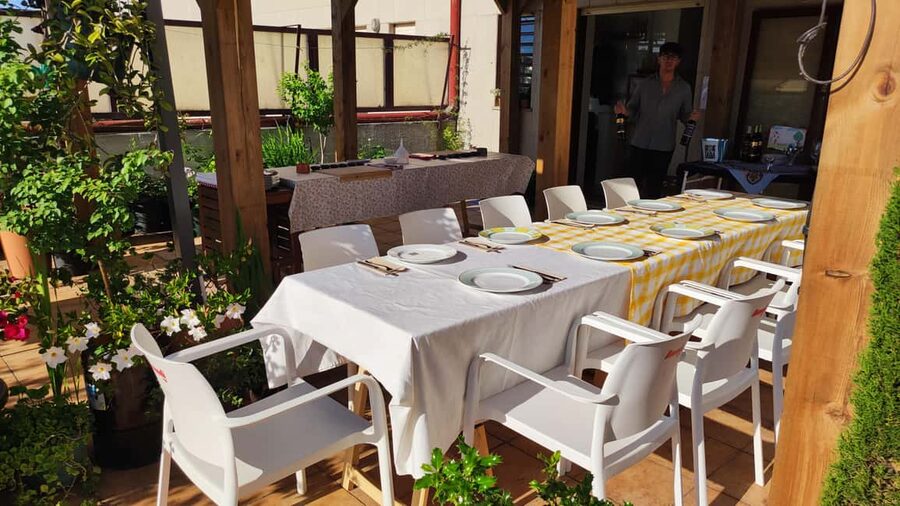
Finally, you finish with some Pasteis de Nata. Dessert is the moment when everything feels complete. This is a smart ending for a cooking class because it is instantly recognizable, and it gives you that satisfied, closing taste you want after three and a half hours of cooking.
Also, pastel de nata is one of those desserts where people often think they only need to buy the pastry. In this class, the experience is different because you are not just eating. You are part of the flow that leads you to dessert.
In one review, Nicole specifically called out pastel de nata among what she and her sister cooked and enjoyed. That detail tracks with why this dessert is such a satisfying payoff. It is familiar enough to feel special, and Portugal-specific enough to make the evening feel rooted.
What You Hear Along the Way: Customs, Habits, and Food Logic
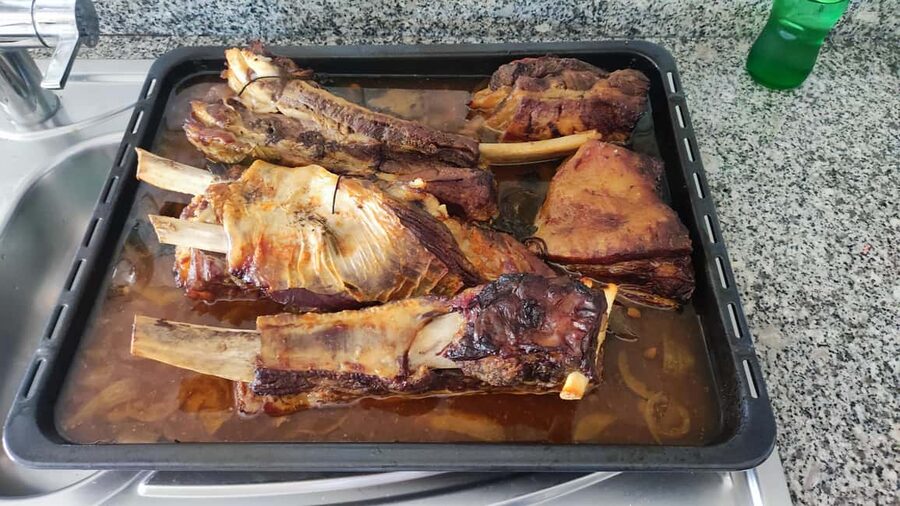
This class includes time to chat after the cooking is done, and it also supports conversation throughout. You talk about habits and customs, and you hear picturesque facts about Porto and Portugal.
I like that the conversation is not only foodie talk. It connects food to daily life, so when you later order something in a restaurant, you understand why it shows up that way and what the ingredient choices mean.
It also helps you learn the logic behind dishes. Portuguese home cooking can be built on straightforward components, but the choices that make it taste right often come from technique and timing. This is the kind of meal that teaches you how flavor is constructed, not just what to order.
Drinks, Tastings, and the 3.5 Hour Pace
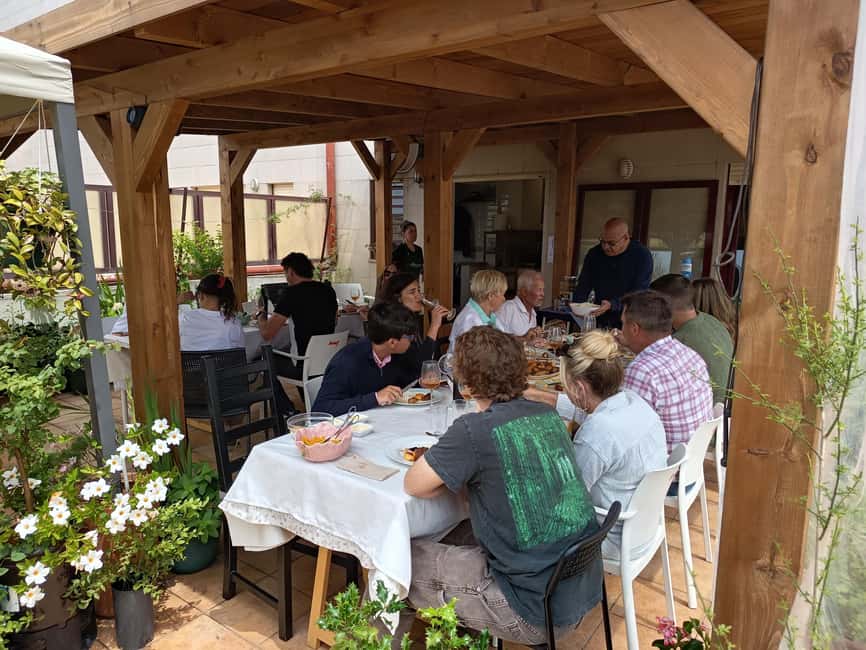
During the session, drinks and some appetizers are available for tasting while you cook. Alcoholic beverages are served only to those over 21, so if you are under that age, you still get the tasting elements.
The pacing is designed around the rhythm of cooking. You are not stuck in a start-stop cycle where someone tells you what to do and then nothing happens for long stretches. Instead, there is ongoing activity: prep, ingredient prep explanations, tastings, and then the sit-down meal.
You also get the benefit of doing a full meal in 3.5 hours. That is long enough to learn useful technique and still feel like the evening is moving forward. If you only have a short window in Porto and you still want something authentic, this length is a strong sweet spot.
Language Options, Private Group Comfort, and How It Feels
The instructor can work in Portuguese, English, and French. That’s important because it supports the class feeling like a true communication experience rather than a silent cooking demo.
The group is private, so you do not have strangers hovering nearby. It makes it easier to ask questions, get hands-on help, and keep the evening personal. Reviews highlight that the hosts are accommodating and warm, and that tracks with a private setup where the family can actually focus on you.
In practice, a private group also affects your cooking. You get more real interaction. When you hit a question like how to handle the batter texture or how to structure the cooking steps, you are more likely to get direct guidance instead of a one-size explanation.
Value That Actually Makes Sense for Food Lovers
There is a reason this class rates so high: it is not just tasting Portuguese food. You are involved. You prepare the menu, cook with fresh ingredients, get tips and tricks, and then you sit down to enjoy the meal as a group.
That is real value. A lot of food experiences in Porto give you one dish plus a story. This gives you a whole menu experience: starter, salad, main with pork and chestnuts plus tomato rice, and pastel de nata dessert. You also get tastings during prep and a welcome drink and appetizer at the start.
On top of that, the family interaction is part of the value. The class is set up like a warm visit, not like a scripted performance. When you can adapt to dietary requirements, including substituting the meat, it becomes more than a fun activity. It becomes a stress-free way to enjoy Portuguese cooking in a way that fits your needs.
Who This Porto Terrace Class Is Best For
I think this fits best if you want a food experience that is:
- Hands-on, not passive
- Personal, with a resident family vibe
- Practical, where you learn how dishes come together
- Portuguese-focused, with bacalhau and pastel de nata as anchors
- Flexible, since the menu can adapt based on requirements
It may not be ideal if you want:
- A big group party feel
- A long, structured walking itinerary
- A strictly “traditional history” lecture where the goal is pure facts instead of cooking
Should You Book This Porto Terrace Cooking Class?
Yes, I’d book it if your idea of a great Porto day includes making dinner with real people. The combination of terrace charm, full menu cooking, tastings, and the warm hosting style from Jorge, João, Isabel, and Miguel is exactly the kind of experience that tends to stick with you.
If you are choosing between a restaurant meal and a class, pick the class when you want the story of how the food gets made. You will leave with a full stomach and a better feel for Portuguese cooking that you can use later.
If you are tight on time, this still works because the duration is a manageable 3.5 hours. You get enough guided cooking to learn and enjoy, without turning it into a full-day event.
FAQ
How long is the Porto Portuguese Cooking Class on the Terrace?
The experience lasts 3.5 hours.
Where is the meeting point?
Meet at the door, at the activity location. The coordinates listed are 41.17914581298828, -8.614091873168945.
What menu will we cook and eat?
You will make a starter of Pataniscas de Bacalhau, a fresh salad, Rojões de Porco with Chestnuts with Tomato Rice, and Pastéis de Nata for dessert.
Can the menu be adapted for dietary needs?
Yes. The menu can be adapted to customer requirements, including substituting the meat.
Are there tastings during the cooking?
Yes. Drinks and some appetizers are available for tasting throughout the time you cook.
Is alcohol included?
Alcoholic beverages are only served to those over 21.
What languages are available for the instructor?
The instructor works in Portuguese, English, and French.
What is the cancellation policy?
You can cancel up to 24 hours in advance for a full refund.
Is this a private experience?
Yes, it is listed as a private group.
Fresh off the Porto quays






Cooking Classes, compared.

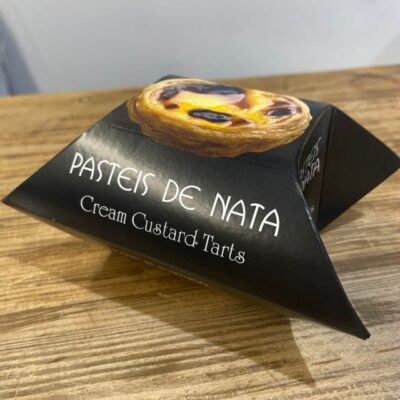
Pastel de Nata Cooking Class with Port Wine – Sé
Read our review →
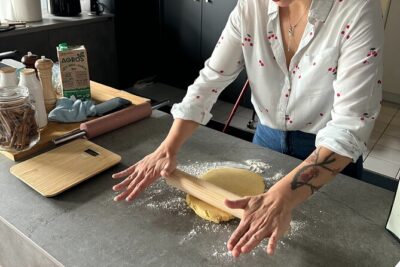
Pastel de Nata | Workshop from scratch | Porto’s city center
Read our review →
Pastel de Nata Cooking Class with Porto Wine (Sé do Porto)
Read our review →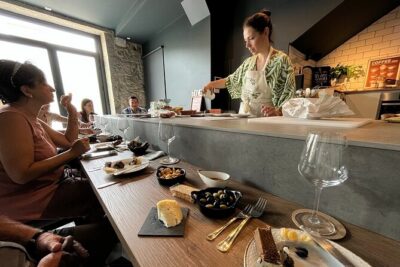
Portuguese Cooking Class in Porto with Portuguese Wine
Read our review →
Porto center- Workshop “A nata do BJ” making pasteis de nata
Read our review →Browse the lists this tour appears in