
Reviewed · TILE PAINTING WORKSHOPS
Porto: Azulejos Tiles Walking Tour
Porto has a second skin, and it is made of tiles. This Azulejos Tiles Walking Tour turns a quick stroll into real understanding, with stops around the UNESCO historic center and plenty of close-up tile spotting. I love how you get to read the city through techniques and patterns, and I also love the sheer variety, from church facades to depot and store tilework. One possible drawback: the pacing is focused on walking and viewing, so you’ll want solid shoes and patience if you prefer a slower, sit-down tour.
Guides like Susana and Nuno Miguel Ferreira Silva bring the “why” behind Porto’s tile culture, not just the “what.” In about 2.5 hours, you’ll finish near the São Bento train station, with a sharper eye for which tiles were made for what purpose and how they show up across the city. If you are traveling with small kids under 8 or you need very limited walking, this one may not fit your day.
In This Review
- Key Things That Make This Tour Worth Your Time
- Porto’s Azulejos: Street-Level Art With Real Clues
- Starting at Igreja do Carmo: The Best Way to Begin Looking
- Igreja do Carmen: How Tiles Turn a Church Into a Message Wall
- Bank of Materials, Tile Depots, and Storefronts: Where Production Meets Display
- The Missing Stop That Matters: More Tile Facades, More Clues
- Ending Near São Bento and Avenida dos Aliados: Your Tile Education Pays Off
- Price and Time: Is $53 a Good Deal for Porto?
- Guides and Group Feel: Why People Keep Mentioning the Same Names
- What You Should Bring (And What You Can Skip)
- Who This Tour Suits Best
- Should You Book This Porto Azulejos Tiles Walking Tour?
- FAQ
- How long is the Porto Azulejos Tiles Walking Tour?
- Where does the tour start and where does it end?
- What sights does the tour include?
- What is included in the price?
- What languages are the guides?
- Is transportation or food included?
- What should I bring?
- Is the tour suitable for children or people with mobility needs?
- What about cancellation and booking flexibility?
Key Things That Make This Tour Worth Your Time
- Tile spotting with purpose, not random photos, because you learn what to look for
- Church, depot, store, and station views in one loop, so the city feels connected
- UNESCO historic center context, helping you place tiles in Porto’s story
- Technique talk you can see, including how tiles get applied in different ways
- Finish near São Bento, so your tile education pays off right at the landmark
Porto’s Azulejos: Street-Level Art With Real Clues
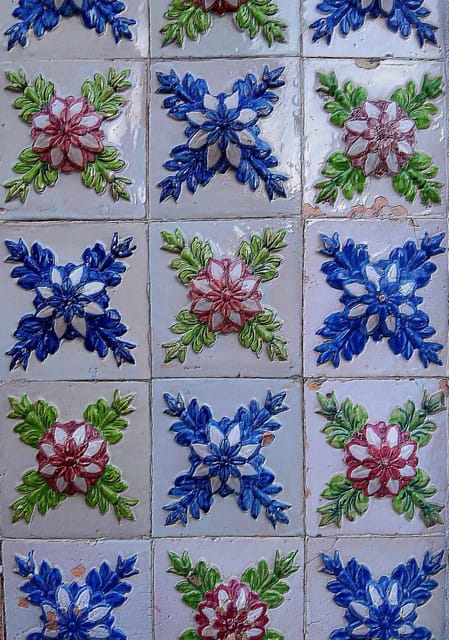
If you’ve ever stood in front of a blue-and-white tile wall in Porto and felt like you were missing the plot, this tour fixes that. The big win is simple: you stop treating azulejos like decoration and start treating them like visual documentation. You learn to notice differences in placement, panel style, and how tile designs were used to communicate ideas, brand buildings, or create architectural drama.
You’ll also come away with a more practical souvenir mindset. After a few stops, you’re not just collecting images, you’re trying to identify what you’re looking at, even later in the week. That is exactly the kind of “skill” that makes the tour feel like value, not just an outing.
This is best for you if you like architecture, religious art, design, or you want to understand what you’re seeing instead of just ticking off sites.
Other azulejo workshops around Porto:
- Porto: Tile Painting Workshop with Porto Wine – Sé do Porto★ 4.9 · 1,095 reviews
- Porto: Tile Painting and Cocktails in Downtown Porto★ 4.9 · 484 reviews
- Tile Painting and Cocktails in Downtown Porto★ 5.0 · 187 reviews
- Porto: Tile Painting Workshop with Porto Wine (Sé do Porto)★ 5.0 · 102 reviews
Starting at Igreja do Carmo: The Best Way to Begin Looking
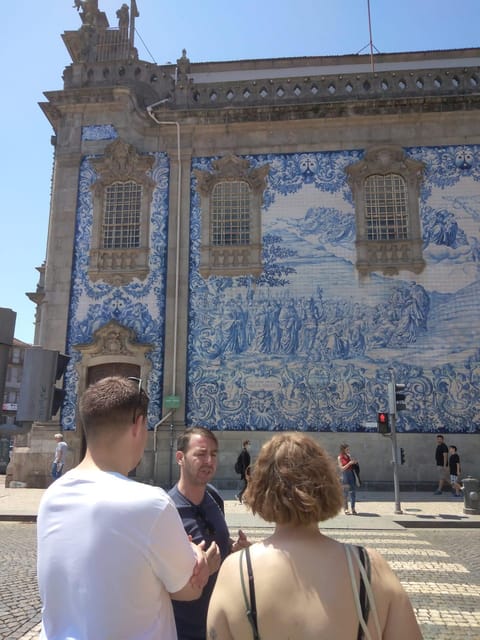
The tour starts at Igreja do Carmo, and you meet your guide by the tiled facade. That matters, because the first minutes set the tone. Instead of walking into the historic center blind, you start with a close look at how tiles cover surfaces and how they frame doors, windows, and building edges.
This is also where the guide’s teaching style really pays off. Expect a quick orientation to tile “reading,” meaning you learn how to separate pattern from story. You’ll hear about the history of Porto’s tiles and how factories produced them, which makes the rest of your walk feel organized rather than scattered.
Practical tip: bring your camera, but don’t only shoot. Take a moment to study the transition points, like where tile work changes density or where panels stop and plain surfaces begin.
Igreja do Carmen: How Tiles Turn a Church Into a Message Wall
Next up is Igreja do Carmen. You spend about 10 minutes here, which is short in clock time, but perfect for learning how to focus. Church tiles often feel like they are telling you something at a distance, but the tour helps you catch the details that make them work up close.
I love this stop because it teaches you that azulejos are not one-size-fits-all. Even when the look is similar from across the street, the way tiles are arranged can signal different eras, different production habits, or different artistic goals.
Possible drawback to consider: if you are the type who wants long photo sessions in one place, the church stops are intentionally time-boxed. The payoff is that you see more of Porto’s tile culture overall.
Bank of Materials, Tile Depots, and Storefronts: Where Production Meets Display
One of the most useful parts of the tour is the shift from “beautiful buildings” to “how tile culture worked in real life.” After the church stop, you reach the Bank of Materials area, where you spend about 20 minutes. This is where the guide’s factory-and-production perspective helps.
You’ll learn about different techniques and applications of tile art, and you’ll see tilework in environments that feel more practical than purely ceremonial. That includes visits to depots and stores, so you can understand azulejos as something that was produced, distributed, and placed intentionally, not only as a later historical curiosity.
This section is where the tour becomes extra valuable for first-timers. Most people only think about the iconic station tiles, but Porto’s tile story is broader than one landmark. Seeing tilework tied to material handling and retail makes the city feel more understandable, and it makes you realize why tiles show up on so many types of buildings.
If you’re the kind of traveler who likes to recognize things later, this is also where you start mentally filing tile traits. That skill pops up again on the final stretch.
The Missing Stop That Matters: More Tile Facades, More Clues
There’s a mid-walk stop in the route that you can think of as a “pattern check.” The time block is about 15 minutes, and the purpose is consistent with the tour’s overall goal: you keep moving, you keep comparing, and you keep refining what you notice.
This part of the walk usually functions like this:
- You see another tile-heavy facade or frontage
- You compare the panel layout and surface coverage to earlier stops
- You get another shot of technique talk that helps you interpret what you’re seeing
Even without a named landmark, it’s a smart design. You are building visual literacy step-by-step, and the walk structure supports that.
So if you ever worry you might get tired of staring at walls, don’t. The guide keeps tying each new sight back to the same few concepts, so it feels like learning rather than repetition.
More Porto on foot:
- Porto Walking Tour, Lello Bookshop, River Cruise and Cable Car
★ 5.0 · 3,354 reviews - Experience Porto’s Charm: 3-Hour Guided Walking Tour
★ 5.0 · 2,432 reviews - Porto: 3-Hour Guided City Highlights Walking Tour
★ 4.8 · 2,050 reviews - Porto: Wine Tasting with Tapas Walking Tour
★ 4.4 · 1,541 reviews
Ending Near São Bento and Avenida dos Aliados: Your Tile Education Pays Off
The walk ends near Avenida dos Aliados, and you finish close to the São Bento train station area. The timing is ideal, because you reach the big tile moment after you’ve already learned how to read tiles.
This tour includes a stop that brings you to the train station tiles, and that is a strong payoff. Station tiles often feel like art, but the guide’s earlier explanations make you see them as a cultural tool: something that decorates and instructs in public space, where thousands of people pass without choosing to “visit art.”
You’ll leave this section with a clearer sense of:
- why tiles were used in major public settings
- how patterns and panels work visually at street level
- how different tile styles can signal different time periods or production habits
And yes, it is also a great moment to slow down with your camera. By the end, you know what you’re photographing.
Price and Time: Is $53 a Good Deal for Porto?
At about $53 per person for roughly 2.5 hours, the value is strongest if tiles are part of why you came to Porto. This is not a generic city walk where you get a couple of quick facts and move on. You’re paying for guided interpretation of techniques and applications, plus a route that covers churches, depots, stores, and the train station.
You also get practical benefits:
- you skip the ticket line (when there is one during the experience)
- your guide is live and in English and Portuguese
- you get direction on what to look for during the rest of your trip
If your goal is only to get photos of the most famous tile scenes and you already feel confident reading art-on-walls, you might decide the tour is more than you need. But if you want to understand Porto’s azulejo culture in a way you can use later, this price usually feels fair.
Think of it like a guided visual workshop, with walking built in.
Guides and Group Feel: Why People Keep Mentioning the Same Names
The reviews tied to this experience highlight a clear pattern: guides like Susana and Nuno bring energy and strong explanations. When the tour works well, it is because the guide can answer questions on the fly, and can connect tile styles to real places and real uses.
I like this kind of guide-led format because it turns a passive activity into a dialogue. Even when you are not asking questions, you benefit from hearing how someone else thinks about the design.
Group logistics aren’t spelled out in detail here, but the format is a walking route through the historic center. That means the best experience comes when you arrive ready to walk, look, and keep up.
What You Should Bring (And What You Can Skip)
Bring:
- Comfortable shoes (you will be on your feet)
- Water, especially since you’ll spend time looking at facades and panels
- A camera if you like to compare details later
You can also do a simple strategy: take a wide shot early at each stop, then take one close shot after your guide points out a specific technique or panel trait. Later, when you compare photos, you’ll remember the lesson.
You can skip bringing anything fancy. This tour is built for street-level viewing.
Who This Tour Suits Best
This is a great match if:
- you’re interested in azulejos as art and culture, not just decor
- you want to connect UNESCO-era Porto spaces to what you see on walls
- you like guided interpretation you can carry into the rest of your trip
It may not be ideal if:
- you dislike walking and prefer long seated museum time
- you’re traveling with children under 8
- you have mobility needs that make repeated walking hard
Also note: the experience is listed as wheelchair accessible, but it also says it is not suitable for people with mobility impairments. If this affects you, it’s worth checking directly before booking.
Should You Book This Porto Azulejos Tiles Walking Tour?
Yes, if you want to see Porto and actually understand the tiles you’re looking at. This tour is one of the better ways to get oriented fast, because it teaches you how to notice differences in tile techniques and applications, then shows those ideas across the city. The fact that it ties the lesson to real stops, including churches and the São Bento train station, makes the learning stick.
If you’re short on time but still want a meaningful Porto first impression, the 2.5 hour length helps. And if you are the type who keeps staring at walls while other people move along, this will feel like your kind of trip.
FAQ
How long is the Porto Azulejos Tiles Walking Tour?
The duration is listed as 2.5 hours.
Where does the tour start and where does it end?
The tour starts at Igreja do Carmo and meets by the tiled facade. It ends next to the São Bento train station, with the finish described as near Avenida dos Aliados.
What sights does the tour include?
You’ll see azulejo tiles on churches, depots, stores, and at the train station. The walk takes place in Porto’s UNESCO World Heritage Site historic center.
What is included in the price?
You get a guided walking tour and visits connected to tile viewing, with insights into the history of Porto’s tiles and their production, plus observation of different tile patterns and panels.
What languages are the guides?
The tour offers live guiding in English and Portuguese.
Is transportation or food included?
No. Transport and food are not included.
What should I bring?
Wear comfortable shoes, bring a camera, and bring water.
Is the tour suitable for children or people with mobility needs?
It is not suitable for children under 8. The information also lists wheelchair accessibility, but it separately notes it is not suitable for people with mobility impairments, so you should confirm fit with the operator.
What about cancellation and booking flexibility?
The experience offers free cancellation up to 24 hours in advance for a full refund, and it is listed as reserve now and pay later.
Fresh off the Porto quays






Tile Painting Workshops, compared.

Tile Painting Workshop with Porto Wine – Sé do Porto
Read our review →
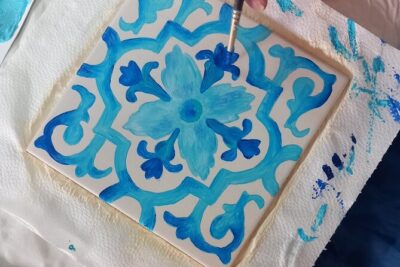
Tile Painting and Cocktails in Downtown Porto
Read our review →Tile Painting Workshop with Porto Wine (Sé do Porto)
Read our review →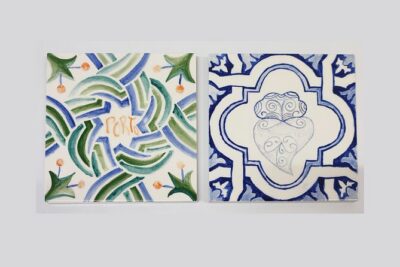
Porto Tile Painting Workshop in artist studio
Read our review →

The Passing Vessel: Ceramic, Perfumery & Candle Workshop in Porto
Read our review →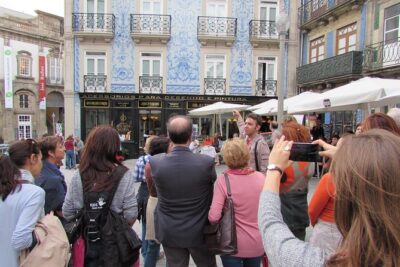
Browse the lists this tour appears in