
Reviewed · WORKSHOPS
Porto: Acrylic and Oil Painting Class with a Local Artist
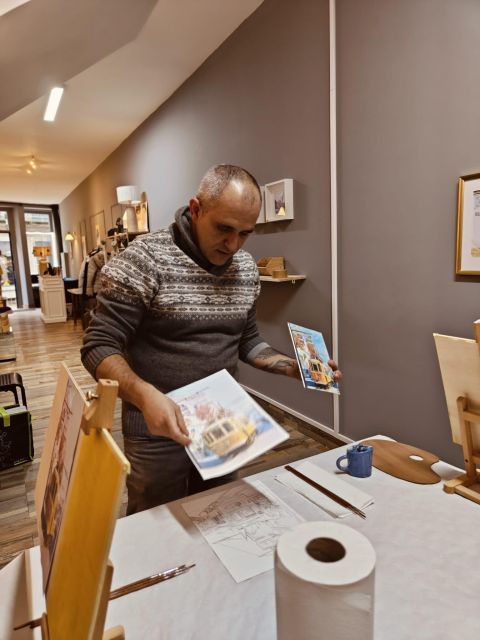
Porto looks different with paint in hand. In a 2.5-hour class at Boiler Studio near S. Bento, you work on easels with local artist Emanuel Ribeiro while learning acrylic and oil basics, guided step by step by a graduate teacher. I love the hands-on brush technique and the way you practice color mixing so you understand what different tones actually do on paper or canvas.
The main tradeoff is time: at 2.5 hours, this is built for solid foundations, not a long, highly detailed finished oil painting.
In This Review
- Key Highlights Worth Your Time
- Painting With a Local Artist in Downtown Porto: The Real Point
- Finding Boiler Studio Near S. Bento Train Station
- The Small Group Lesson Style: Max 5 Makes It Practical
- Acrylic and Oil Painting Fundamentals You Actually Use
- Brush control, not just paint
- Color value and why it matters
- Mixing colors with quantities
- How the Studio Setup Teaches Better Painting
- Easel use and painting at the right angle
- Surfaces and preparation for success
- Accessories and materials for real-world painting
- Emanuel Ribeiro’s Porto Approach: Light, Streets, and Daily Life
- Timing and What Happens During the 2.5 Hours
- Cocktails, Conversation, and a More Human Kind of Class
- Value Check: Is $53 Worth It?
- Who Should Book This Painting Class in Porto?
- Practical Tips for a Smooth Painting Session
- Should You Book This Porto Acrylic and Oil Class?
Key Highlights Worth Your Time
- Small group size (max 5): more personal feedback while you paint.
- Acrylic and oil fundamentals: you learn core skills using both mediums.
- Brush use plus color value: you get practical coaching on how to see and mix color.
- Easel, surface prep, and accessories: you learn the same “setup” thinking professionals use.
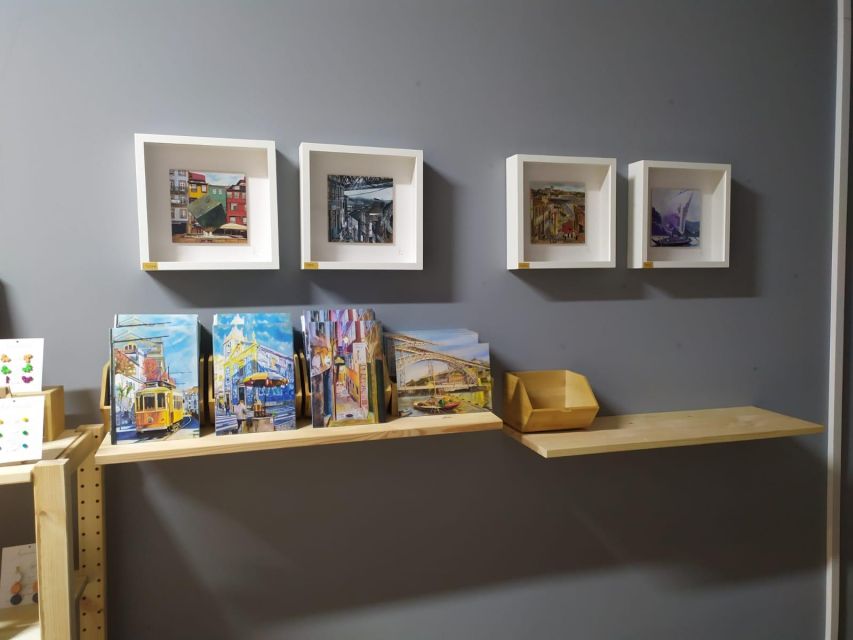
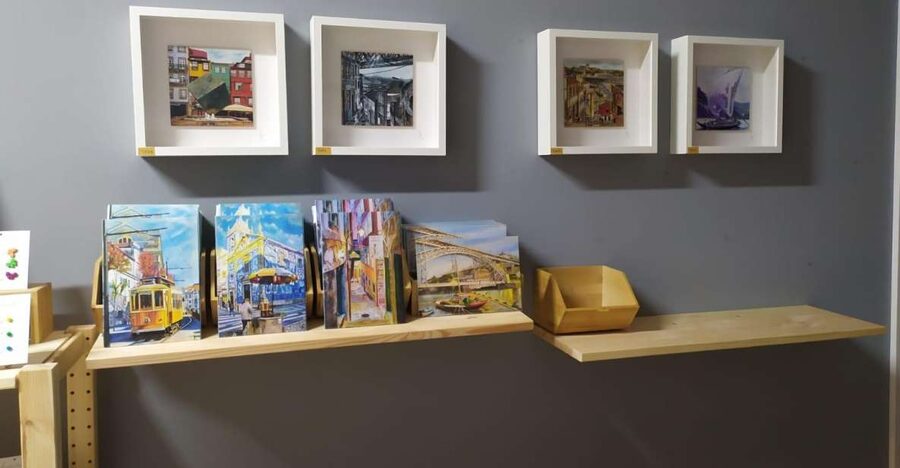
- Local Porto inspiration: Emanuel paints urban scenes, and that mindset shapes your brushstrokes.
- Cocktails included: a nice add-on for relaxing while you create.
Painting With a Local Artist in Downtown Porto: The Real Point
Porto is full of places where you can just look. This class flips that script. Instead of photographing the city for later, you spend the time learning how to translate what you see into paint. You follow a local artist’s approach to working from daily life in Porto, influenced by the way the city’s light changes the feel of streets and buildings.
If you like hands-on travel, you’ll probably enjoy this more than a typical museum hour. The learning is practical, and the results feel personal because you are actively making decisions with your brushes, colors, and the easel in front of you.
Also, it’s not a lecture where you watch someone else create. You’re at your station, painting, testing mixes, and getting feedback as you go. That matters because painting skills do not really transfer through watching alone. They transfer when your hand repeats the same motion, and your eyes learn what to correct.
Other benches where Porto hands still make things:
- Porto: Pastel de Nata Pastry-Making Workshop★ 4.9 · 1,542 reviews
- Porto: Tile Painting Workshop with Porto Wine – Sé do Porto★ 4.9 · 1,095 reviews
- Porto: Pastel de Nata Cooking Class with Port Wine – Sé★ 4.8 · 888 reviews
- Porto: Small Group Surf Lesson with Transportation★ 4.9 · 594 reviews
Finding Boiler Studio Near S. Bento Train Station
You meet on a street near S. Bento Train Station. That’s a smart setup for most itineraries. You’re already likely to pass through this area at some point, and it keeps the class from feeling like a “special detour” day.
Once you arrive, the atmosphere is part of the experience. Boiler Studio is a working space where artists work every day. You get that studio feeling quickly: people painting, materials around, and a normal, everyday rhythm to art-making. It’s the kind of place where you stop treating painting like a hobby and start treating it like craft.
If you’re arriving from the station, give yourself a few extra minutes to find the exact spot. The meeting is described as a street near S. Bento, not a specific room number on a big sign. A quick buffer saves stress, especially if you’re also managing a language shift and figuring out directions on foot.
The Small Group Lesson Style: Max 5 Makes It Practical
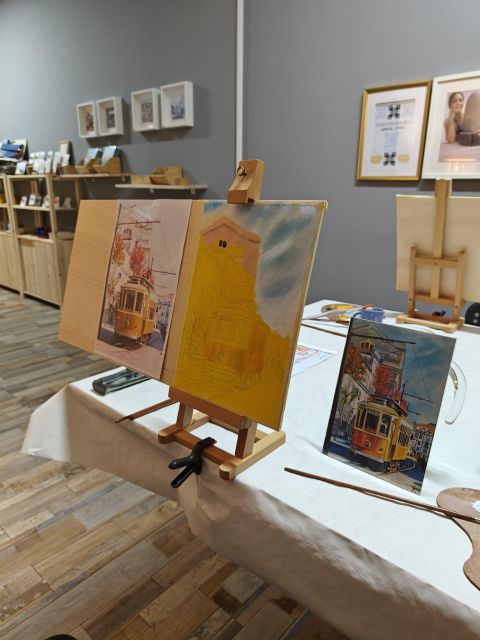
This is limited to 5 participants, so you get a lot more instructor time than you would in a larger class. That small size changes the whole experience. When you hesitate over a brushstroke or mix the wrong tone, you do not have to wait for a “class-wide moment.” You can get immediate corrections.
The teacher is a graduate instructor, and the class is led by Emanuel Ribeiro, an artist who paints Porto’s urban scenes. The language options are English, Portuguese, and Spanish, which is helpful if your travel group has mixed comfort levels. Even if your Portuguese is basic, you still have support.
In practical terms, this means you spend more time painting and less time figuring out what you’re supposed to do. You’ll likely learn faster because the feedback is targeted to what you’re doing right now, not what someone else did earlier.
Acrylic and Oil Painting Fundamentals You Actually Use
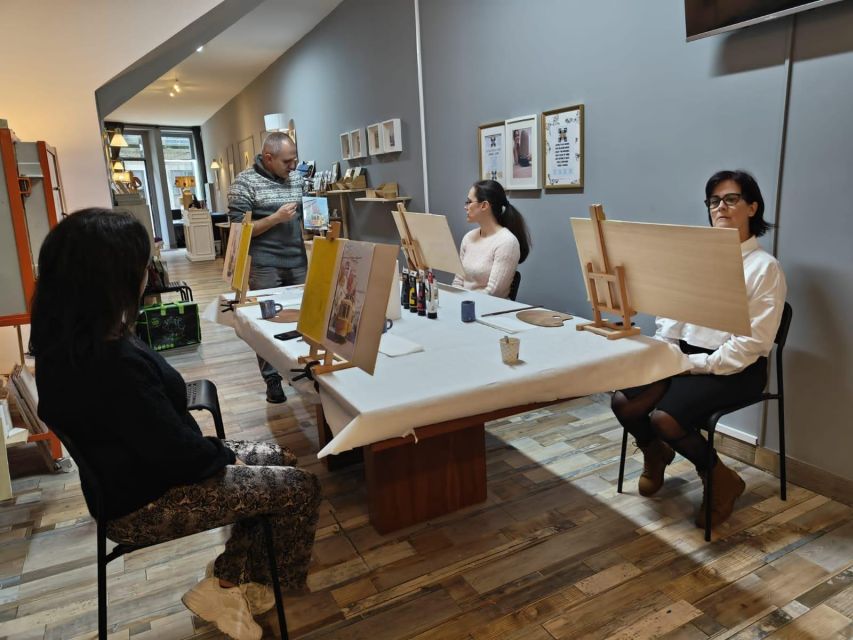
The core of the class is straightforward: fundamental techniques for acrylic and oil painting, taught on easels. That sounds broad, so here’s what it translates to in real life.
Brush control, not just paint
One of the first skills covered is how to use brushes correctly. That includes handling brushes in a way that gives you more control over edges, strokes, and coverage. You’re not just applying color. You’re learning what your tools do when you move them across the surface.
Elsewhere in Porto, worth a look before you book:
- The Unvanquished Tour in Porto City Center
★ 5.0 · 26,497 reviews - From Porto: Douro Valley w/ Boat Tour, Wine Tasting & Lunch
★ 4.7 · 19,061 reviews - Complete Douro Valley Wine Tour with Lunch, Wine Tastings and River Cruise
★ 5.0 · 12,920 reviews - Porto: Douro Valley with Winery Lunch, Tastings & Cruise
★ 4.7 · 7,002 reviews
Color value and why it matters
You also learn the value of color, which is painter-speak for understanding how colors relate to each other. This is one of the biggest beginner turning points. Many first-time painters pick colors they like without thinking about how they compare. In this lesson, you learn to think in terms of relationships: what looks too dark next to a certain tone, what looks washed out, and what needs a stronger mix to hold its place.
Mixing colors with quantities
Color mixing is not only about learning formulas. It’s about mixing enough. You’ll learn how to mix colors and understand quantities needed for your painting. That avoids the common problem where you run out of a mix halfway through and end up with a slightly different shade that no longer matches.
If you’ve ever tried to match paint colors at home and felt like it never looks the same twice, you’ll appreciate the practical coaching here. The class pushes you toward repeatable habits, not guessing.
How the Studio Setup Teaches Better Painting
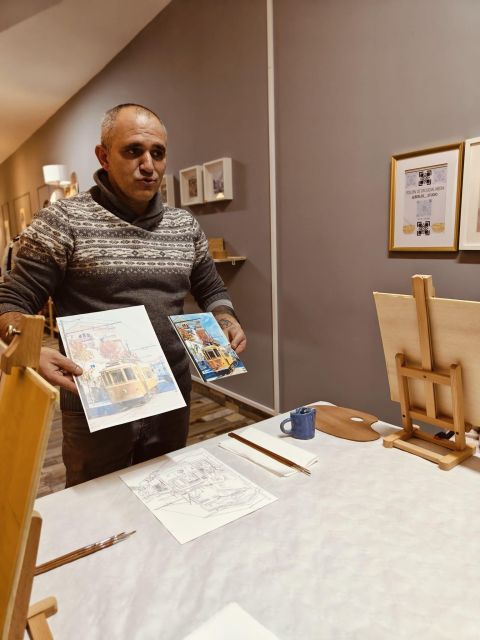
Painting isn’t just what happens on the surface. A lot of it is setup, and this class spends time on the stuff people often skip.
Easel use and painting at the right angle
You learn how to use an easel and how to work comfortably from it. This seems basic, but it matters more than most beginners expect. When you adjust your angle and working position, your wrist moves differently and your strokes look different. You also get a better view of the painting as a whole, which helps with color balance.
Surfaces and preparation for success
You also learn about preparing surfaces. That means understanding what you’re painting on and how to set it up so the paint behaves the way it should. You’re not left guessing. You learn why surface prep matters, and you learn how to do it in a practical way with the materials and accessories provided.
Accessories and materials for real-world painting
The class covers various materials and accessories used in professional painting. Even if you never become a studio painter, this helps you think like one. You start noticing that paint work is a system: tools, surfaces, and process all affect the final look.
If you’ve ever bought paint supplies and felt overwhelmed, this part is where the lesson gives value fast. You go from scattered curiosity to a clear idea of what tools do what jobs.
Emanuel Ribeiro’s Porto Approach: Light, Streets, and Daily Life
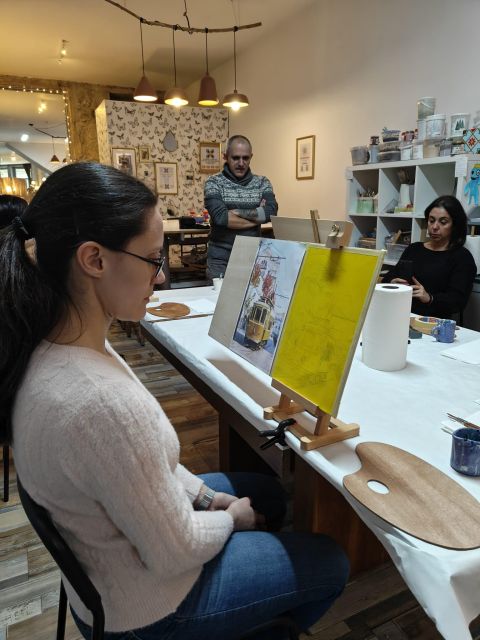
Emanuel is a local visual artist known for painting urban scenes of Porto. That local focus makes the class feel tied to place, not just to paint.
In practice, you’re encouraged to be influenced by the light of Porto and the day-to-day life of locals. That can change how you think about your subject. Instead of copying what you see like a camera, you start asking questions like:
- What looks brighter here, and what shifts into shadow?
- Where does the street feel lighter or heavier?
- How do repeated details turn into patterns?
The goal isn’t to turn you into an expert at urban scenes overnight. It’s to give you a way of seeing so your brushstrokes make sense. You also get that sense of “history on the canvas” thinking, with the idea of immortalizing the city through paint. It’s a poetic idea, but in a painting class it becomes practical: you choose what to emphasize, what to soften, and how to guide the viewer’s eye.
Timing and What Happens During the 2.5 Hours
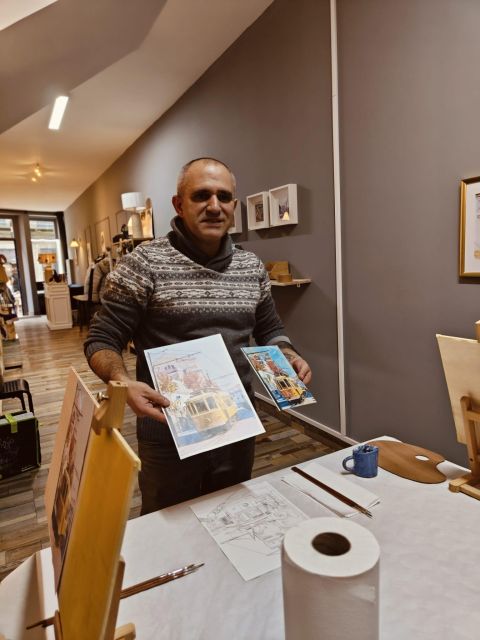
You’re looking at a compact session, 2.5 hours total. That’s enough time to learn skills, try mixes, and produce a real painting rather than just a demo.
A typical flow looks like this:
- You meet the teacher and get oriented to materials and the easel setup.
- You start practicing brush technique and basic painting moves.
- You mix colors, test tones, and learn how much you need to keep things consistent.
- You work through surface prep and accessory use so your paint behaves well.
- You build your own painting while getting guidance as you go.
- You finish with a relaxed moment to reset and reflect.
Because the class is small, your pacing will likely be adjusted. If you work quickly, you’ll get more coaching on refining. If you work slowly, you’ll get patient help so you do not feel lost.
Cocktails, Conversation, and a More Human Kind of Class
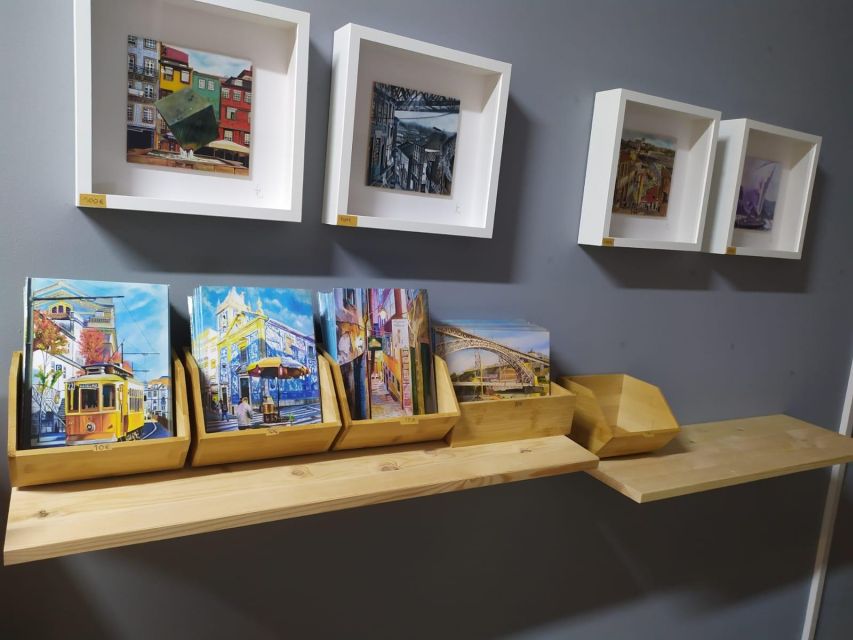
Cocktails are included, and that changes the tone. Art classes can sometimes feel stiff. Here, you’re creating something, not just receiving instructions.
The conversation side is strong too, based on what people highlight about Emanuel. He’s described as charming and conversational, and he genuinely enjoys talking about art and life. That matters because it turns the class into a local cultural exchange, not just a skills workshop.
If you’re traveling solo, this can help you connect without forcing a structured social plan. If you’re traveling with others, it makes the class feel like an experience you share rather than a task you complete.
Value Check: Is $53 Worth It?
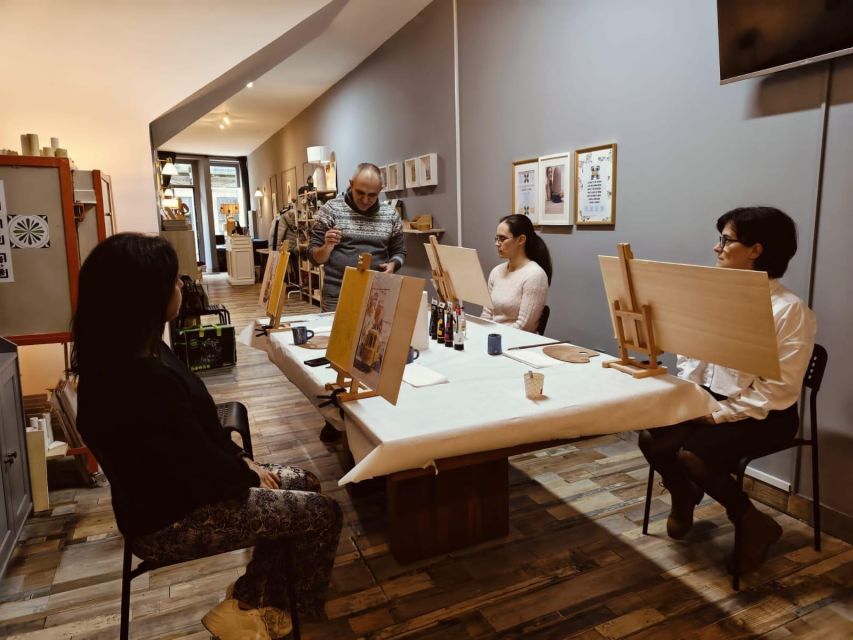
At $53 per person for a 2.5-hour class, this is a pretty reasonable deal, mainly because the lesson includes the essentials:
- graduate teacher guidance
- all painting materials and accessories
- easel usage
- cocktails
For many art experiences, you end up paying extra for supplies or you find yourself underprepared. Here, you show up and paint. You are not doing a scavenger hunt for brushes or dealing with the stress of figuring out what supplies your first class requires.
The other big value factor is small-group time. Max 5 means you can actually get feedback while you paint. In a beginner class, that feedback is often what makes the difference between frustration and progress.
One last note on expectations: this is priced like a focused learning session, not like a multi-session atelier course. That’s fine. It’s actually easier to commit to because you know what you’re buying, fundamentals with hands-on practice.
Who Should Book This Painting Class in Porto?
This class is a great fit if:
- you want a local experience that stays hands-on and practical
- you have no painting background and want clear instruction
- you like urban inspiration and you’re curious how artists interpret the city
- you prefer small groups over big tours
It may not be the best fit if:
- you want an advanced, long-form oil painting workshop
- you’re looking for a sightseeing-focused day with lots of walking and stops
- you’re traveling with very young children (it’s not suitable for children under 10, and babies under 1 are not listed as suitable)
Kids age 10 and up can do well in this kind of guided studio setting, especially because the lesson is structured and you’re painting at an easel with real coaching. The class is designed to keep you moving and practicing, which is exactly what makes it work for mixed skill levels.
Practical Tips for a Smooth Painting Session
You’ll get the best experience if you treat the class like a craft session, not a casual photo stop.
- Wear clothes you don’t mind getting paint on. Even with care, studio painting can be messy.
- Bring a curious mindset. The lesson is about fundamentals, but your results improve when you ask questions and test mixes.
- If you speak English, Spanish, or Portuguese, use it. The instructor supports multiple languages, and asking what you should do next saves time.
- Plan for a focused block. This is a short, intensive 2.5 hours. Don’t schedule tight connections right after if you can avoid it.
And since the meeting is near S. Bento Train Station, you can easily pair it with pre or post travel. It’s a convenient studio window in the middle of a city day.
Should You Book This Porto Acrylic and Oil Class?
Yes, I’d book it if you want a real Porto experience that’s not just looking. The combination of a small group, a local artist, and acrylic and oil fundamentals makes it feel efficient and personal. You’re learning brush technique, color thinking, mixing with quantities, and the studio setup skills that usually take people months to figure out on their own.
Skip it only if you’re expecting a long, deep specialization in oil painting or a full day of city sightseeing. This is a focused class. The payoff is practical skills you can carry forward, plus the satisfaction of creating something while interpreting Porto’s light with paint in hand.
If you want a memorable souvenir that is actually made by you, this is one of the better bets in Porto.
Fresh off the Porto quays





Workshops, compared.


Tile Painting Workshop with Porto Wine – Sé do Porto
Read our review →
Pastel de Nata Cooking Class with Port Wine – Sé
Read our review →
Pastel de Nata | Workshop from scratch | Porto’s city center
Read our review →
Port Wine class with 3 or 5 Port tasting and pairings
Read our review →Browse the lists this tour appears in