
Reviewed · TUK-TUK TOURS
Cruise Shore Excursion – Private Tuk Tuk Tour to the Historic Center
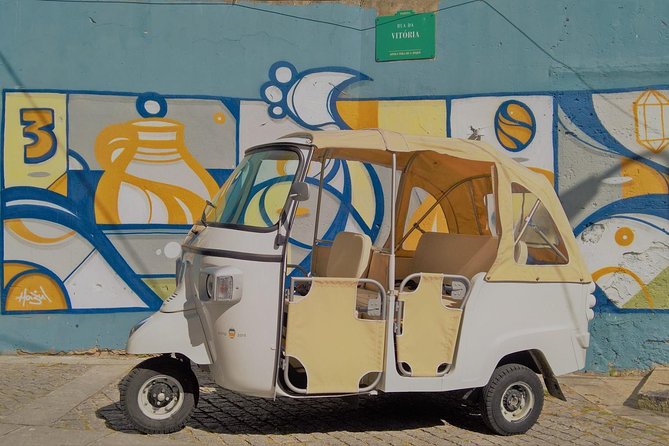
Porto on a tuk tuk feels like cheating the hills. You get a private ride through the historic center plus smart stops at viewpoints and monuments, all wrapped in live English commentary.
I especially like two parts of the setup. First, pickup is offered from the cruise ports that are actually away from the city, so you spend less time figuring out transport and more time seeing Porto. Second, the tuk tuk style means you can reach tight streets and viewpoints a bus can struggle with, and you still get a structured overview of history and culture.
One drawback to consider is that the experience is tight on time and the tuk tuk is small. If you want lots of inside ticket time or extra shopping stops, this format may feel more like a fast orientation than a slow wander, and the vehicle size can matter if you have more people than the tuk tuk comfortably fits.
In This Review
- Quick hits
- Why Porto works so well with a tuk tuk
- Price and what you really get for $106.93
- Starting at the pier, then riding into the real city
- Seafaring heritage and river engineering, the tour’s “big picture” run
- Passeio das Virtudes viewpoint and Cordoaria Garden
- Torre dos Clérigos climb, and how to plan for time
- Livraria Lello and the reality of inside tickets
- Church stops: Carmo and Carmelitas for Porto’s rococo details
- Bolsa Palace, Ferreira Borges, and the Ribeira area mood shift
- São Francisco church and the Dom Luís I bridge views
- Serra do Pilar monastery terrace, then the modern arch bridge
- Praca da Batalha, theatre architecture, chapel tiles, and Bolhão Market
- Food and drink ideas: Port wine and what to do after
- Who this tour fits best
- Should you book this private tuk tuk tour?
- FAQ
- How long is the private tuk tuk tour?
- What’s included in the price?
- Does the tour offer pickup from the cruise ports?
- What languages is the tour offered in?
- Are tickets for attractions included?
- Is this tour really private?
- Is the tour dependent on weather?
Quick hits
- Pickup from multiple Porto cruise areas so you start in the right place, then ride into town
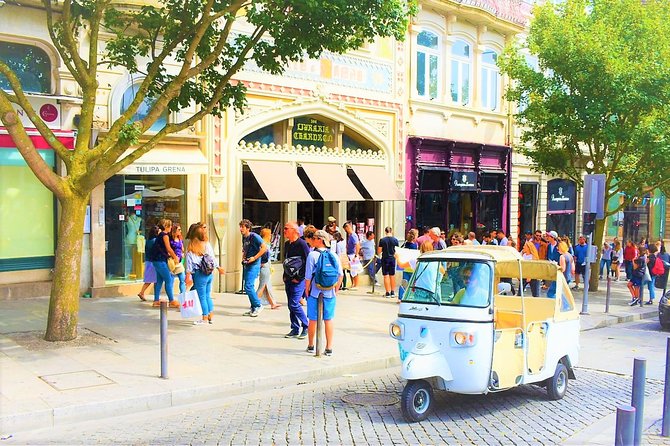
- A guide-led overview of Porto’s highlights with history, culture, and practical tips on what to do next
- Iconic viewpoints and bridge engineering from Arrábida Bridge to the riverside terraces
- Torre dos Clérigos and Livraria Lello are on the route but monument entrances are not included
- Port wine is included as a taste at a lookout point, not as a full bar stop
- Small vehicle reality check if you’re sensitive to bumpy cobblestones or traveling with more people than the tuk tuk suits
Why Porto works so well with a tuk tuk
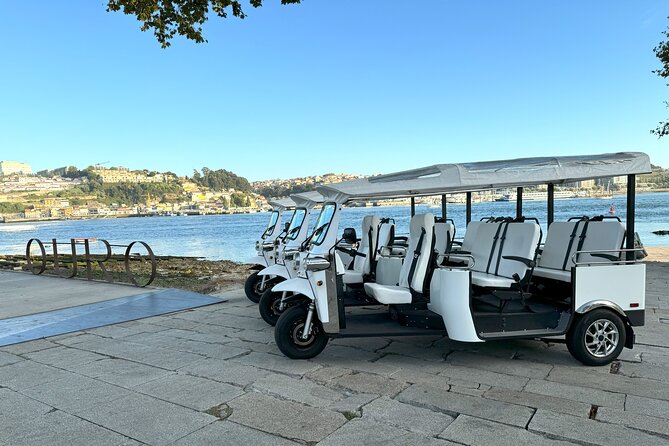
Porto is famous for two things that collide hard on a cruise day: steep streets and dramatic viewpoints. A tuk tuk tour solves both problems because you get transport without walking up every hill.
In 3 hours 30 minutes, you also need a plan. This tour is designed as a guided “read the city” experience, not a free-for-all. The guide’s live commentary is built for quick context, from maritime and industrial heritage to baroque churches and the city’s river power.
The vibe is also personal. It’s sold as private, and that usually means your guide can slow down for your pace and your questions. One more practical bonus: you get Port wine during the tour, so the tasting feels like part of the sightseeing, usually at a viewpoint where the scenery does the talking.
More tuk-tuk loops through the old streets:
- Porto: Guided Tour by Tuk-Tuk & Optional Douro River Cruise★ 4.5 · 5,980 reviews
- Discover Porto’s Highlights on a 2-Hour Private Electric Tuk Tuk★ 4.5 · 1,860 reviews
- Porto: Guided Tuk Tuk Tour★ 4.6 · 1,390 reviews
- Historic Porto by Private Electric Tuk Tuk to Top Landmarks★ 4.5 · 735 reviews
Price and what you really get for $106.93
For $106.93 per person, you’re paying for three things: the tuk tuk ride, an on-the-ground guide, and a structured route through the historic core. You’re not only paying for motion. You’re paying for someone to steer you through Porto’s “where do we go next” maze.
What pushes the value up is that many key stops are exterior and free to view. You can enjoy river terraces, plazas, and church fronts without extra ticket spend, and the Port wine glass is included. What can lower value for some people is this: monument entrances are not included, so if you want to go up Torre dos Clérigos or step inside Livraria Lello, you may need to pay extra and plan time.
There’s also a trade-off baked into short cruise excursions: this route is packed, so expect quick looks and photo pauses more than long sits at each site. If you want a long shopping circuit, you may feel a bit rushed.
Starting at the pier, then riding into the real city
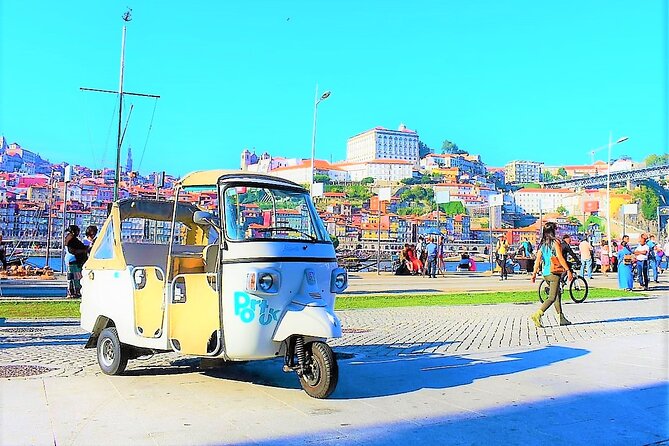
Cruise ports can be misleading. In Porto, you often meet pickup points that are not right in the historic center, so the first part of the day is basically the transition from “ship area” to “city life.”
This tour handles that with pickup offered from Leixões Port, Matosinhos Port, and Doca Norte, with the guide meeting you at the pier outdoor gate. The tour starts no later than 1 hour after the ship arrives, which matters because you have limited daylight and you need momentum fast.
You’ll also get a mobile ticket, and that helps reduce back-and-forth during check-in. The biggest practical win is pacing: you’re not spending your excursion figuring out local transport or negotiating taxis, you’re already moving toward the viewpoints and center streets.
Seafaring heritage and river engineering, the tour’s “big picture” run
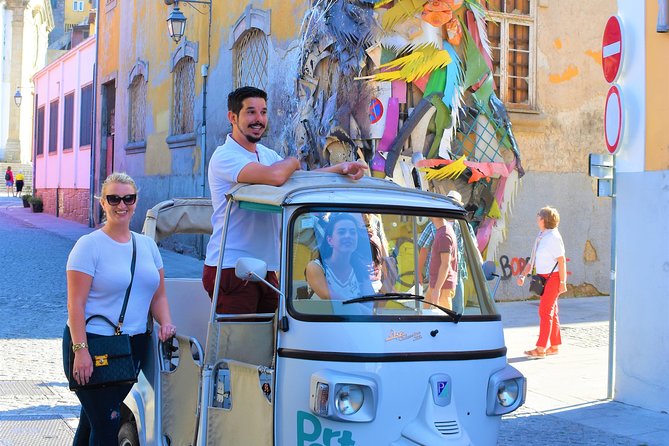
Early on, you’ll see a sculpture designed to reflect Porto and Matosinhos seafaring and industrial roots. It uses three support poles painted like local smokestacks and lighthouses, plus a net structure referencing the fishing industry. It’s a smart first stop because it frames Porto as a working city, not just postcards.
Next comes a hexagonal granite tower with a red balcony and lantern, plus a small annex with white plastered walls. It’s the kind of stop that feels quick, but it adds texture. Porto isn’t only about famous names. It’s also about how the city marks maritime and civic function in stone.
Then you get a greener pause in a grand garden area with major features. This part includes architectural highlights like a granite fountain, Nasoni obelisks, and a small romantic chalet built in 1874. There’s also a bandstand where concerts can happen, plus a public bathroom decorated with Art Nouveau tiles and English finishings. That last detail is one of those “only in Porto” things you’d never notice if you were just sprinting between ticket lines.
After the garden time, the route hits engineering scale: Arrábida Bridge. The bridge is a reinforced concrete arch over the Douro River, designed by Portuguese engineer Edgar Cardoso, and when it opened in 1963 it held a world record for concrete arch span. Even if you’re not an engineering nerd, it helps to see Porto’s bridges up close because the city’s river views are central to how you’ll understand where everything sits.
Passeio das Virtudes viewpoint and Cordoaria Garden
If you love river views, this part is for you. At Passeio das Virtudes, you look down toward the Douro mouth bar. You’ll also spot the Fountain of Virtudes and terraces stepping down toward São Pedro de Miragaia. Along the river you can see the former Customs House, which helps connect the viewpoint to Porto’s commercial past.
Then you shift into a calmer stop at Jardim de João Chagas, better known as Cordoaria Garden. This garden has a story you can actually picture: rope makers used to stay here for around 200 years. The landscaping is associated with the German designer Emile David, and the garden holds statues and modern sculpture accents including works connected with Porto 2001. This is a good breather between heavier monuments, especially if you want a quiet moment without losing the guided context.
The practical note: these stops are usually short. You’re meant to get the “what to notice” from your guide, then take a few photos and move.
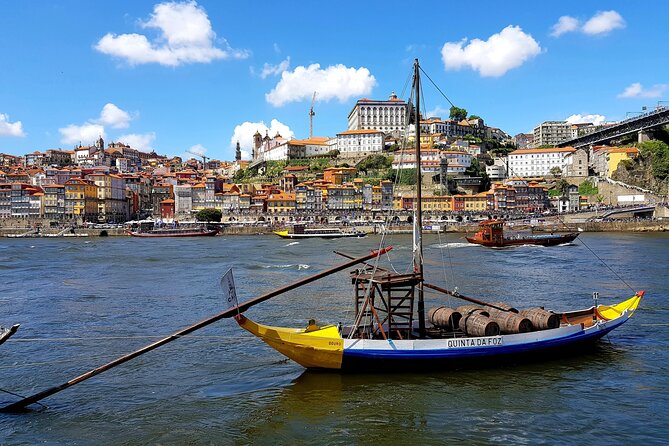
More rabelo boats pushing off the quay:
- From Porto: Douro Valley w/ Boat Tour, Wine Tasting & Lunch
★ 4.7 · 19,061 reviews - Complete Douro Valley Wine Tour with Lunch, Wine Tastings and River Cruise
★ 5.0 · 12,920 reviews - Porto: Douro Valley with Winery Lunch, Tastings & Cruise
★ 4.7 · 7,002 reviews - Porto: 6 Bridges Douro River Cruise
★ 4.3 · 6,472 reviews
Torre dos Clérigos climb, and how to plan for time
Torre dos Clérigos is one of Porto’s iconic silhouettes, and your guide will likely tie it to the baroque design work by Nicolau Nasoni. The tower is known for its climb, with a 240-step ascent that rewards you with city and Douro views.
Here’s the key planning point: the climb has an admission fee and it’s not included. The good news is you usually don’t need to commit to the tower if you’re low on energy. The view payoff is real, but it’s a choice. If you do want the climb, you’ll need to budget time so you’re not sprinting through later stops.
Also, keep expectations realistic. With a packed route, you often get a set amount of time at each highlight. That’s why it helps to decide early which “inside” moments matter to you most.
Livraria Lello and the reality of inside tickets
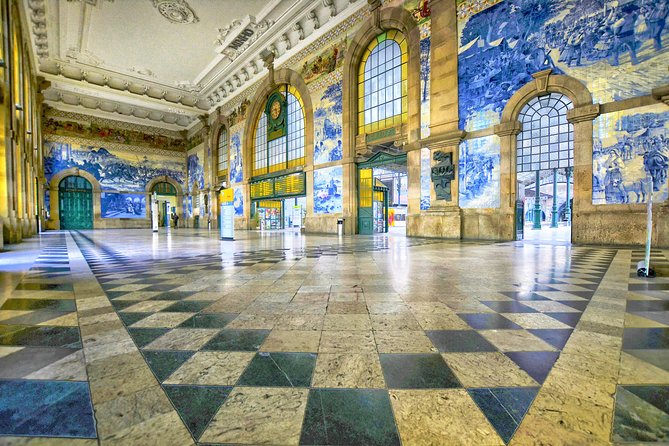
Livraria Lello is famous for its Art Nouveau façade with neo-Gothic details, and the inside is decorated with painted plaster that imitates wood. The staircase linking floors and the stained-glass skylight with the motto Decus in Labore are standout features.
But here’s the value question. Like the tower, the library entrance is not included. If you plan to go inside, treat it as a separate priority with extra time and ticket planning.
In feedback tied to this tour, I saw a consistent theme: people who wait too long for basic entry can miss out, because lines can eat the schedule. So if Livraria Lello is a “must,” plan around it. If it’s more of a “nice to see from outside,” you can still enjoy the architecture without turning the day into a ticket-management project.
Church stops: Carmo and Carmelitas for Porto’s rococo details
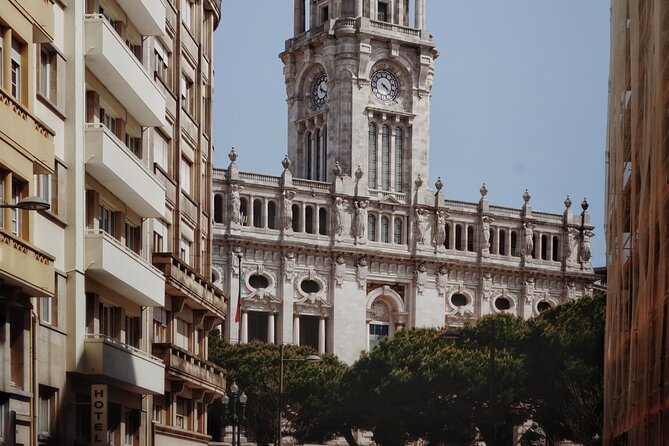
Porto’s churches can feel like stepping into a different century, and this tour includes two strong examples.
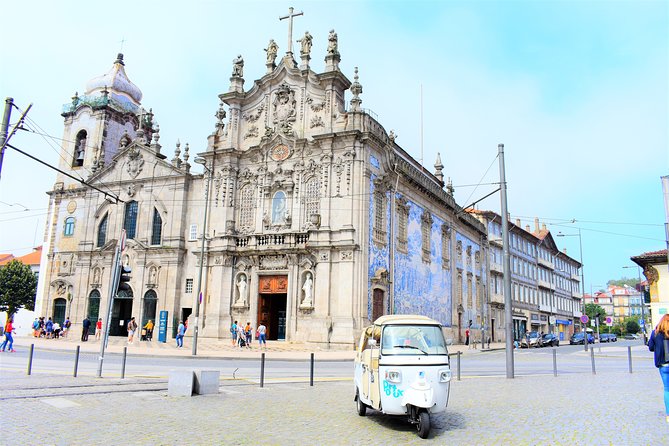
First is Igreja do Carmo, an 18th-century church noted for its rococo character and carved interior. In 1912, its lateral façade was covered with tilework designed by Silvestre Silvestri, with figurative scenes tied to devotion to Nossa Senhora. Even from outside, the tile details make the building feel more like a storybook than a static monument.
Then you have Igreja dos Carmelitas, a 17th-century church with a classical façade attributed to Nicolau Nasoni work, and an altarpiece in Porto rococo style described as stylistically groundbreaking. This stop is a good reminder that Porto’s artistry isn’t only in big names like towers and bookstores. Smaller churches can hit hard too, especially if your guide points out what to look for.
These are typically quick photo stops and short exterior views, unless you specifically choose to add time for interiors.
Bolsa Palace, Ferreira Borges, and the Ribeira area mood shift
As you move into the heart of the historic center, you’ll reach a square surrounded by Mercado Ferreira Borges and Palácio da Bolsa. There’s also a Monument to Infante D. Henrique there, built to mark a 5th centenary of his death and designed around Portugal’s navigation and faith themes.
Next is Palácio da Bolsa, a neoclassical National Monument with the Arabian Room as its headline interior feature. It’s also part of the Urban Wine Route. This palace is less about quick street photos and more about an “if you can, go inside” monument.
Nearby is Mercado Ferreira Borges, built in 1885 with iron architecture. It has been renovated into an entertainment venue, and Hard Club is now located there. If you like architecture, this area is a nice contrast: neoclassical form, iron structure, and the river city energy all in one zone.
Then you reach Ribeira, a square that’s thought to be among the city’s oldest. It’s tied to wine-funded urban remaking in the 18th century, and archaeological work later uncovered a 17th-century fountain. You’ll also see the Cube of the Ribeira sculpture and the St John the Baptist monument detail. One practical note: the area is closed to vehicles, so you’ll feel more pedestrian energy here than in other segments.
São Francisco church and the Dom Luís I bridge views
Igreja de São Francisco is a major highlight. Construction began in the 14th century, and it’s known for a gilded Baroque interior from the 17th and 18th centuries. The Tree of Jesse and the catacombs are key features, and the church is recognized as a UNESCO World Cultural Heritage site.
This is one of those stops where you’ll want to decide quickly what you want most: a quick exterior appreciation and maybe a peek, or committed inside time. Entrance is not included, and inside options can slow your day. Since the tour uses quick rhythm between major sights, consider which churches you want to treat as “deep visit” moments.
After that, you’ll cross into a bridge moment. The Dom Luís I bridge, designed by Teófilo Seyrig and inaugurated in 1886, has two overlapping iron decks. The bridge is 395 meters long, and its arch was celebrated as the world’s biggest forged iron arch at the time. Today, the upper deck is part of the Metro of Porto, connecting zones across the river toward Gaia.
Even if you don’t ride the metro, seeing the two-level structure helps you understand how Porto and Vila Nova de Gaia function as one system split by the Douro.
Serra do Pilar monastery terrace, then the modern arch bridge
Mosteiro da Serra do Pilar is a UNESCO site with a circular church plan and a dome ringed by a balcony. The cloister is also circular with 36 Ionic columns, noted as the only example in Portugal. It’s the kind of place where the geometry becomes part of the experience.
The real reason this stop lands is the terrace views. From up there you can look across the riverside of Porto and Gaia until you see the historic center, including the cathedral area and D. Luís I bridge. Turn the other direction and you can spot the Fontainhas area and the São João bridge.
Admission is free for this stop, which makes it a high value use of limited time.
Then the tour continues toward another major bridge feature. This is a Maillart-type arch bridge inaugurated in 2003, designed to replace the upper deck lane of the D. Luís I Bridge now used by the Metro. The arch span is listed as a world record, and bridge designers describe it as elegant. Even if you just take it as a wow moment, it adds a modern engineering “bookend” to the older bridges you saw earlier.
Praca da Batalha, theatre architecture, chapel tiles, and Bolhão Market
Praca da Batalha is a classic civic square with the D. Pedro V monument dominating the scene. You’ll also find the São João National Theatre and Cine-Teatro Batalha in the area. It’s a good place to see how Porto mixes royal symbolism, performance culture, and city life in one compact block.
Nearby, you’ll pass the São João Theatre building constructed in 1910 after the Real Theatre burned in 1908. The façade includes emblems representing themes like pain, quality, hate, and love. Again, this is more about exterior architecture for most people on a tuk tuk day, since entrances cost extra.
Then there’s a small chapel with façade and tile panels linked to scenes from the life of St Francis of Assisi and St Catherine. The exterior was covered with tilework in 1929, and the panels were recovered in 1982. This is another “quick but memorable” detail stop that adds a human art layer to all the big monument names.
Finally, you reach Bolhão Market, a neoclassical market dating to 1850, with two floors and specialized sections for fresh products like fish, meats, produce, and florists. The tough truth here is that it’s currently closed for refurbishment, so you’ll likely only get exterior time. If you were hoping for a full market wander, keep that expectation set.
Food and drink ideas: Port wine and what to do after
This tour includes an alcoholic Port wine glass. In practice, it tends to work as a small tasting, not a long bar stop, often poured at a lookout point. It’s a nice way to tie the river views to the wine culture Porto is known for.
The best move you can make is simple: ask your guide what to do next for lunch and what local sandwich to order. In feedback around this tour, guides like Anna and Fabio were praised for giving clear lunch suggestions and even estimating walk time back toward the port area.
If you’re short on time after the tour, I’d also use your guide as a map. Ask where to continue by walking and where to grab a quick meal without crossing the whole city on steep streets.
Who this tour fits best
This tour works best if you want a guided orientation that covers a lot of Porto highlights without tiring yourself out on hills. It’s ideal for:
- First-time Porto visitors on a cruise day
- People who want viewpoint time and monument context, not a deep slow museum day
- Anyone who likes photo stops plus a Port tasting moment
It may be less ideal if you:
- Need extended time inside ticketed monuments like Torre dos Clérigos or Livraria Lello
- Want lots of shopping time, since the route is built for highlights and efficient movement
- Have mobility limits or back issues because cobblestones can feel bumpy on a small vehicle
Should you book this private tuk tuk tour?
I’d book it if you want a fast, guided way to get your bearings in Porto, especially if you like bridges, viewpoints, and baroque and rococo church details. The included Port wine and the fact that many stops are exterior or free makes it feel like value for a short day.
I’d think twice if you expect a lot of inside monument time, or if you’re traveling with enough people that the tuk tuk size becomes uncomfortable. Also, if you need heavy shopping time, this route may not match your pace. Choose it when you want an organized highlights run, then spend your free time after the tour where you actually want to linger.
FAQ
How long is the private tuk tuk tour?
It runs about 3 hours 30 minutes.
What’s included in the price?
The tour includes the driver/guide, live commentary, a local guide, and an alcoholic Port wine glass. Monument entrance fees are not included.
Does the tour offer pickup from the cruise ports?
Yes. Pickup is offered from the main gate at Leixões Port, Matosinhos Port, and Doca Norte. The guide meets you at the pier outdoor gate.
What languages is the tour offered in?
English.
Are tickets for attractions included?
No. Entrance tickets for monuments are not included.
Is this tour really private?
It is sold as a private tour for your group only. A minimum of 2 people per booking is required.
Is the tour dependent on weather?
Yes. This experience requires good weather, and if it is canceled due to poor weather, you’ll be offered a different date or a full refund.
The Old City, Layer by Layer
- Douro Valley: Historical Sites, Wine Experience, Lunch & Cruise
★ 5.0 · 5,133 reviews - Porto: An Intimate Fado Show in a Historical Tavern
★ 4.8 · 2,055 reviews - Porto: Historic City Center Walking Tour
★ 4.7 · 1,172 reviews - Porto: Private Tour of the Historic City in a Ford T Car
★ 4.8 · 932 reviews
Fresh off the Porto quays



Tuk-Tuk Tours, compared.
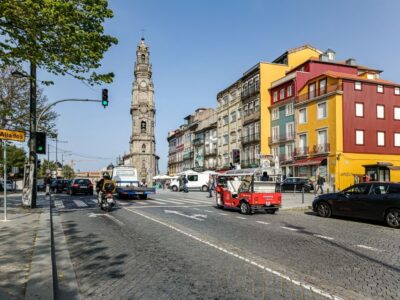
Guided Tour by Tuk-Tuk & Optional Douro River Cruise
Read our review →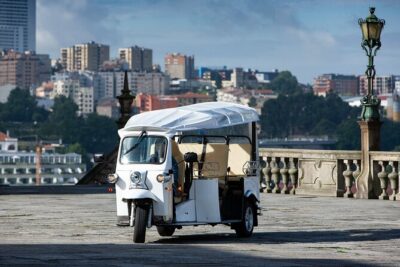
Discover Porto’s Highlights on a 2-Hour Private Electric Tuk Tuk
Read our review →
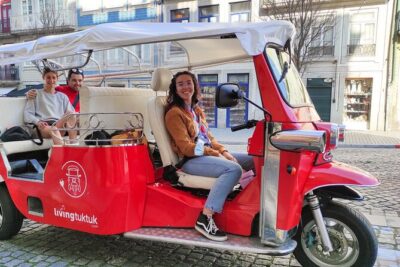
Historic Porto by Private Electric Tuk Tuk to Top Landmarks
Read our review →
Porto Guided Tour to the Historical Center on a Tuk Tuk
Read our review →
Oporto Tuk-Tuk Tour: Fast, Fun & Flexible – 1H to Full Day!
Read our review →
Browse the lists this tour appears in