
Reviewed · PORT WINE CELLAR TOURS
Porto Half-Day Guided Historical Tour with Port Cellar Visit and Tasting
Port tastes better with a history lesson. This half-day Porto outing from Living Tours blends major sights with a port cellar visit, and I like that you get plenty of on-foot photo pauses without worrying about parking.
The biggest payoff is the guided port tasting: you get context first, then you sample two types of Port. It is a fun, easy way to understand what you are drinking instead of just buying a bottle.
One thing to consider, the schedule is approximate and the route can be affected by local traffic and visit timing, so one stop may feel rushed on a busy day.
In This Review
- Key highlights worth marking
- Half-day timing that fits real vacation schedules
- Where the tour starts, and what you do when you arrive
- Sao Bento Railway Station: the 1900 cornerstone story
- Elite café and Santa Catarina Street: Art Nouveau in plain sight
- Clérigos Church: baroque drama and Nicolau Nasoni’s footprint
- Porto’s port tasting: learn first, sip second
- How the route feels in real life: crowds, walking, and language
- Price and value: what $41.13 really covers
- Who this tour suits, and who may want a different plan
- Should you book Living Tours half-day Porto historical walk with port tasting?
- FAQ
- How long is the Porto half-day guided historical tour?
- Where does the tour start and end?
- What language is the tour offered in?
- Do I need hotel pick-up or drop-off?
- What is included in the port experience?
- Are monument entrance fees included?
- Is food or drink included?
- How big is the group?
- Is there a follow-up walking tour included?
- What is the cancellation policy?
Key highlights worth marking
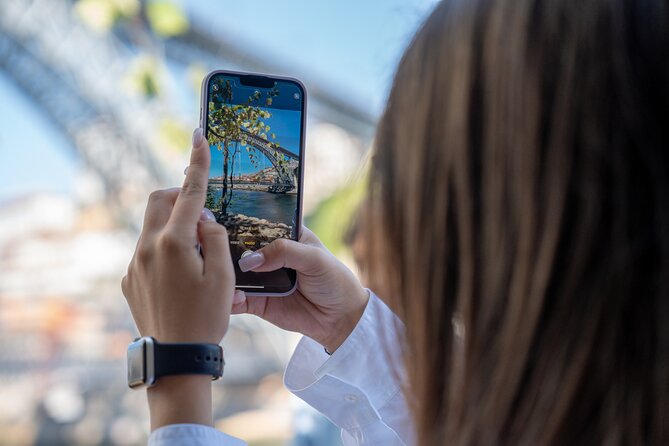
- Photo-friendly pacing on foot: Frequent stops let you grab pictures without the stress of finding parking.
- Sao Bento Station as a story, not just a stop: You hear how King Carlos I unveiled the corner stone in 1900 on the site of a former convent.
- Art Nouveau in Santa Catarina Street: The guide connects the Elite café to the pedestrian shopping life that still shapes this area.
- Clérigos Church with Nicolau Nasoni details: The mid-18th-century baroque work plus the architect’s burial adds real meaning to the architecture.
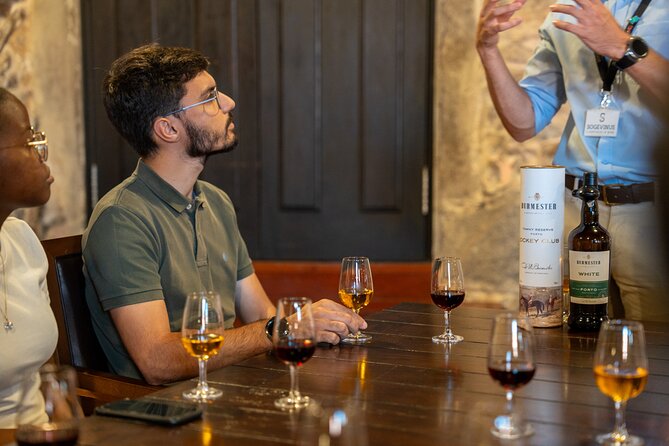
- Port tasting in its birthplace context: You tour the cellar with a guide, then taste two types of Port.
- Small-group feel up to 27 people: Easier conversation than the huge coach crowd.
Half-day timing that fits real vacation schedules
This tour is about 4 hours, and the timing is flexible because you can choose a departing time that matches your day. That matters in Porto, where you might want the morning for the river views and the afternoon for dinner reservations, or the opposite.
You also avoid the “all day” commitment. If you are trying to see the big landmarks plus do a port tasting, this length is a sweet spot. It is long enough to get orientation and still short enough that you do not feel fried by the end.
Group size is capped at 27, which is a comfort factor for a walking-focused itinerary. The tour vehicle is part of the flow too, and that helps when you want the guide to keep you moving between neighborhoods.
More cellars to walk through in Gaia:
- Porto: Bridges Cruise & Sunset & Port Wine Cellar Option★ 4.2 · 4,180 reviews
- Porto: Cálem Cellar Tour, Fado Show & Wine Tasting★ 4.4 · 3,530 reviews
- Porto: Cockburn’s Port Lodge Tour and Tasting★ 4.8 · 3,360 reviews
- Porto: City Train Tour, River Cruise & Wine Cellar★ 3.9 · 2,601 reviews
Where the tour starts, and what you do when you arrive
Meet at Living Tours, at Rua de Mouzinho da Silveira 352 to 354, 4050-418 Porto. The key moment is simple: when you arrive, you hand over your ticket to the official who meets the group.
Your tour ends at Rua de Alexandre Herculano, 4000-053 Porto. Since this is a central area with public transport nearby, it is usually easy to keep going after the tour without needing a long, complicated backtrack.
The tour uses a mobile ticket, so have it ready on your phone and do not wait until the last second at the meeting point.
Sao Bento Railway Station: the 1900 cornerstone story
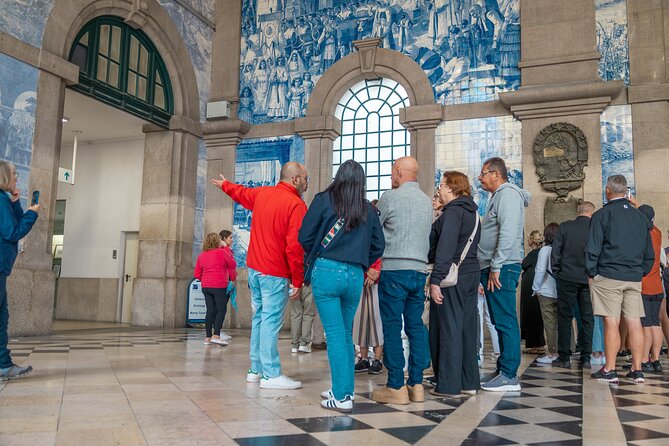
Sao Bento Railway Station is one of those Porto stops that feels famous the moment you see it. Here, though, the value is what the guide brings to it. You learn that the corner stone was unveiled in 1900 by King Carlos I.
Even better, the station sits on the site of a former convent, S. Bento de Avé Maria (Saint Benedict of Hail Mary). That gives you a sense of layers, how the place changed roles over time, instead of treating it like a static postcard.
The architecture details are also specific. The first project was designed by architect Marques da Silva, and the external lines reflect French influences that were current at the time. If you like tracing why buildings look the way they do, this is the kind of stop that rewards attention.
Practical note: the station is a great place to pause for pictures because it is structured for you to stop and look. If crowds build up, you can still get a feel for the building quickly.
Elite café and Santa Catarina Street: Art Nouveau in plain sight
Next up is a stop that feels smaller than the major churches, but it is memorable in a very Porto way. You visit the area linked to Elite café, which opened on 17 December 1921.
The location matters: Elite café was on Santa Catarina street, a pedestrian walkway known for shopping and for the finest members of society, then and now. That phrase is useful because it helps you place what you are seeing today into a longer social story, not just “people walk here.”
The decoration is where the stop turns into a photo moment. The café was known for its Art Nouveau look, with decoration by architect João Queiroz. Even if you only catch a glimpse from the street, the guide’s context makes it easier to notice the style details instead of zoning out.
This part of the tour also works as a mental reset. After a major station stop, it shifts you to street-level Porto, with a sense of how local daily life and design mixed together.
Clérigos Church: baroque drama and Nicolau Nasoni’s footprint
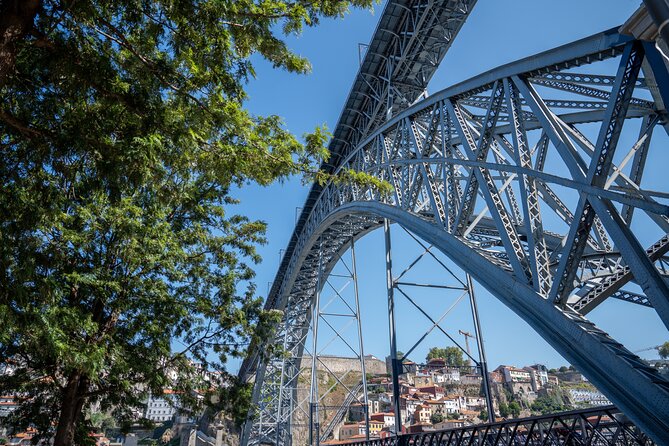
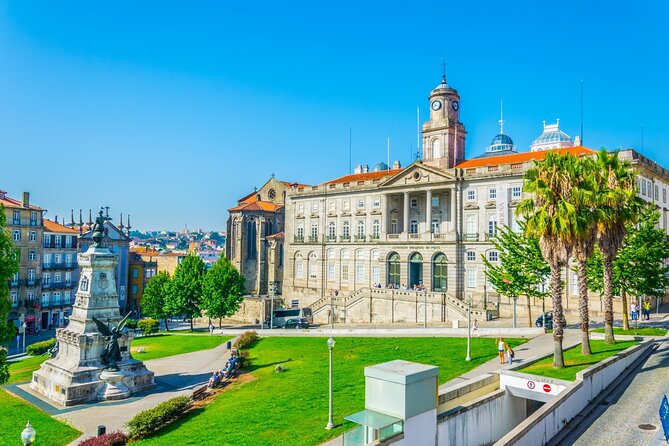
Clérigos Church is the kind of architecture that grabs you even when you are trying not to stare. Here, you get the useful version of the story: it is a baroque masterpiece dating from the mid-18th century, designed by Nicolau Nasoni, an architect of Italian origin.
A big part of the interest is how the guide connects Nasoni to the broader Porto and northern Portugal architectural scene. You learn he left his mark on many monuments around Oporto and the north, so this church is not an isolated work. It feels like one piece of a bigger puzzle of style and influence.
Then the stop gets personal. Nasoni, on his request, was buried in a small chapel at the church. The gateway is described as being at the same level as the top of the double bolster stairway. That detail may sound oddly specific, but it is exactly the kind of thing that makes you look twice at stairs, entrances, and how the space is organized.
If you care about why baroque buildings feel dramatic, this stop gives you the “why” without turning it into a textbook.
More eating and drinking in Porto:
- From Porto: Douro Valley w/ Boat Tour, Wine Tasting & Lunch
★ 4.7 · 19,061 reviews - Douro Valley Small-Group Tour with Wine Tasting, Lunch and Boat
★ 5.0 · 3,642 reviews - Porto: Douro Valley Tour with Wine Tasting, Cruise and Lunch
★ 4.7 · 2,714 reviews - Douro Valley Tour: Wine Tasting, Cruise and Lunch from Porto
★ 4.5 · 2,645 reviews
Porto’s port tasting: learn first, sip second
The highlight that most people book for is the cellar visit and tasting. After the walk through the older parts of the city, you switch gears from architecture to flavor and production.
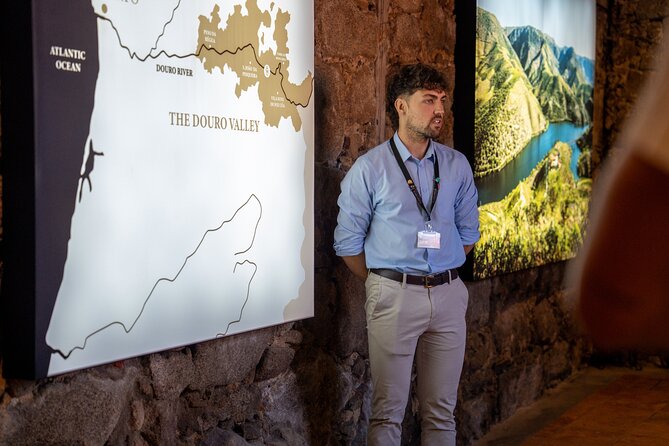
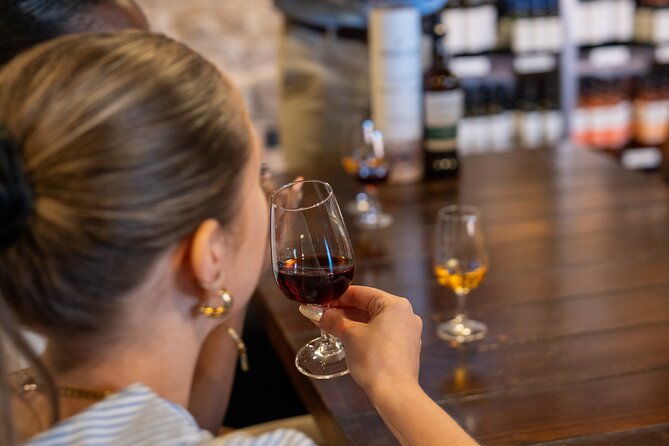
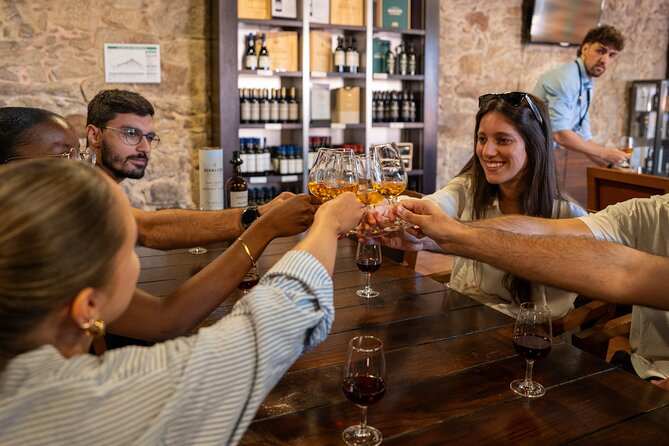
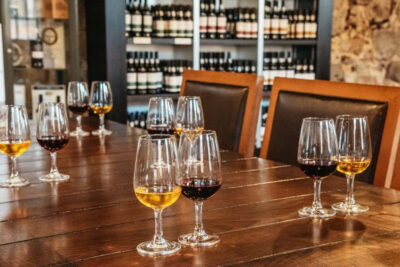
In this part, you get a guided tour of Port, followed by tasting two types of Port. The tour frames the experience around Port’s birthplace, so the point is not just drinking. It is understanding how Port fits into Porto’s identity.
This format makes the tasting more fun. If you start with context, you taste with your brain turned on. You are more likely to notice differences between the two styles you sample, instead of treating it like a quick “cheers and goodbye” stop.
The tasting also gives you a simple takeaway. Even if you do not buy anything, you walk away with a better sense of what kind of Port you enjoy, which helps if you later shop at a cellar store or a wine bar.
Timing is about 1 hour for this segment, which is a manageable commitment. You should still be able to continue your day afterward without feeling like the tour swallowed your entire afternoon.
How the route feels in real life: crowds, walking, and language
This is a guided half-day with multiple photo pauses and city stops, so comfortable shoes are a real must. You are on your feet often enough that you will want something supportive, even if the pace is not marathon-speed.
The experience is also subject to local traffic and visit schedules, and the overall duration is approximate. That is not a reason to worry, it is just smart expectations. A church stop might run a little long because of foot traffic. A photo moment might get adjusted if the area is busy.
Language is another practical piece. The tour is offered in English, but the information notes that tours are usually in one language, and a second language may be used. If you prefer a fully consistent English-only narration, it is worth being ready for the occasional shift in group dynamics.
Group size is capped at 27, and that is usually large enough for efficiency but small enough for you to ask questions during the guide-led parts, especially at the tasting.
Price and value: what $41.13 really covers
At $41.13 per person for about four hours, the value comes from combining three things that often cost more separately: a guided historical orientation, a port cellar visit, and a tasting.
Included in the price:
- Porto wine cellar visit and tasting
- Local guide
- Porto city walking tour, available from the day after your experience
Not included:
- Hotel pick-up and drop-off
- Monument entrance fees
- Food and drinks
- Personal expenses
So the math is mostly about what you would otherwise pay for a guide plus a tasting. If you were to do “a church walk” and “a port tasting” separately, you would likely spend more on transportation time, guide time, or tastings with less explanation.
One more value point: you get the tasting plus the story behind it. That is how you end up with a better memory of the day. A photo of a doorway is nice. A sense of why a building and a beverage matter to Porto is better.
Who this tour suits, and who may want a different plan
This tour is a strong match if you:
- want a starter tour for first-time Porto orientation
- like city history that stays specific, like the King Carlos I cornerstone detail and Nicolau Nasoni burial note
- care about Port beyond just buying a bottle
- have a limited time window and still want a guided experience
It may be less ideal if you:
- want a museum-style deep dive at each monument
- need hotel pick-up and would rather not meet at the agency location
- are expecting a guaranteed, slow paced stop at every single landmark without any schedule flexibility
If you are the type who wants to see Porto at a walking pace but still have a plan, this tour hits that balance.
Should you book Living Tours half-day Porto historical walk with port tasting?
Yes, you should book if your priority is a guided, efficient introduction to Porto that ends with a real tasting moment. The pairing of church and station context with the port cellar gives you a day that feels cohesive, not random.
I would especially choose this if you enjoy learning small details that change how you look at a place, like the 1900 cornerstone fact at Sao Bento Station and the burial specifics at Clérigos Church. Then you finish with two tasted Port styles, so your souvenirs are memories plus a clearer sense of what you actually like.
If you are short on time and want value in one package, this is the kind of booking that makes the rest of your Porto trip easier.
FAQ
How long is the Porto half-day guided historical tour?
It lasts about 4 hours, with timing approximate and subject to local traffic and visit schedules.
Where does the tour start and end?
It starts at Living Tours on Rua de Mouzinho da Silveira 352 to 354, 4050-418 Porto, Portugal, and ends at Rua de Alexandre Herculano, 4000-053 Porto, Portugal.
What language is the tour offered in?
English is offered, and the tour usually runs in one language, though a second language may be used.
Do I need hotel pick-up or drop-off?
No. Hotel pick-up and drop-off are not included.
What is included in the port experience?
The tour includes a Porto wine cellar visit and tasting, along with a local guide.
Are monument entrance fees included?
No. Monument entrance fees are not included.
Is food or drink included?
Food and drinks are not included.
How big is the group?
The tour has a maximum capacity of 27 travelers.
Is there a follow-up walking tour included?
Yes. A Porto City Walking Tour is included and is available from the day after your experience.
What is the cancellation policy?
You can cancel for a full refund up to 24 hours before the experience starts (based on local time). If you cancel less than 24 hours before, the amount paid is not refunded.
The Old City, Layer by Layer
- Douro Valley: Historical Sites, Wine Experience, Lunch & Cruise
★ 5.0 · 5,133 reviews - Porto: An Intimate Fado Show in a Historical Tavern
★ 4.8 · 2,055 reviews - Porto: Historic City Center Walking Tour
★ 4.7 · 1,172 reviews - Porto: Private Tour of the Historic City in a Ford T Car
★ 4.8 · 932 reviews
Fresh off the Porto quays




Port Wine Cellar Tours, compared.
Bridges Cruise & Sunset & Port Wine Cellar Option
Read our review →



Port Wine Lodges Tour Including 7 Port Wine Tastings (English)
Read our review →
Graham’s Port Lodge Tour with Premium Wine Tastings
Read our review →
Hop-on Hop-off Bus with Optional Cruise & Wine Cellar
Read our review →Browse the lists this tour appears in