
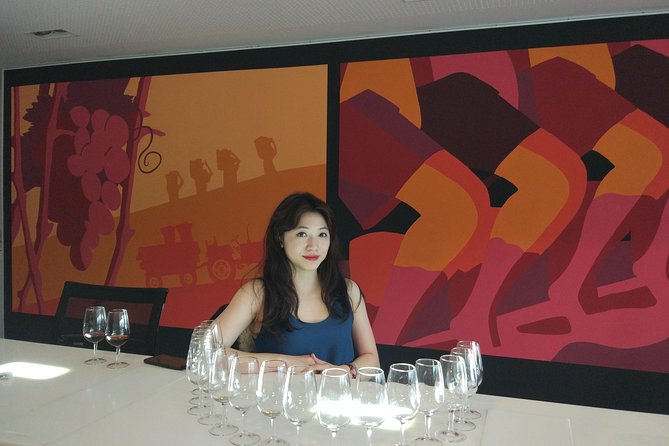
Reviewed · PORT WINE CELLAR TOURS
Port Wine Lodges Tour Including 7 Port Wine Tastings (English)
Port tastes better with a walk. This half-day tour strings together seven Port tastings with cellar visits and hands-on explanations, so you walk away knowing what you just drank. I like the balance of famous names and smaller houses, and I also like how the tasting lesson builds step-by-step through Port styles.
The main drawback to plan for is food. There’s no lunch or snacks included, so if you get hungry mid-afternoon, bring a light snack or time a meal after.
Logistics are simple: the group meets at Pilares da Ponte Pênsil on the Porto side near D. Luis Bridge (lower level) at 3:00 pm, and you’re done on the Gaia side at Av. de Diogo Leite 135. The tour is about 3 hours 30 minutes, all walking, with a maximum walking distance around 800 meters.
In This Review
- Key Port-Tasting Moments You’ll Get
- Start Smart: Finding the Meeting Point by D. Luis Bridge
- Porto to Gaia on Foot: Getting Oriented Before You Taste
- The Major Producer Stop: Museum, Cellar, and Reserve Tastings
- The Old Cellar Turned Visitor Center: Ruby Port and Cork Facts
- Douro Valley Interpretation Center: Workshop Tasting and Pairing Tips
- Value Check: Is $62.88 for 7 Tastings a Good Deal?
- How to Taste Better: Make the Most of Seven Port Styles
- Who Should Book This Porto Walkers Port Tour (and Who Should Skip)
- Should You Book This Port Wine Lodges Tour?
- FAQ
- What time does the tour start and where do I meet?
- How long is the Port wine lodges tour?
- How many Port tastings are included?
- Is lunch included?
- Is the tour mostly walking, and how far do we walk?
- Does the tour include entry tickets and fees?
- What is the minimum drinking age?
Key Port-Tasting Moments You’ll Get
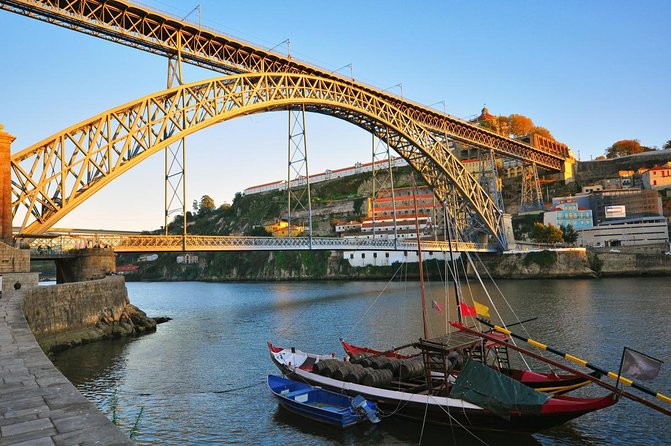
- Meet near D. Luis Bridge, then switch worlds on foot from Porto to Vila Nova de Gaia
- 7 tastings total, including Reserve White, Reserve Tawny, and a young Ruby Port
- Museum plus cellar tour at a major producer, with the Port process explained as you go
- Interactive old-cellar experience, including how barrels work and how cork is made
- Douro Valley interpretation center, followed by a tasting workshop with pairing tips
- Small group size (max 18), which makes it easier to ask questions and pace the tastings
Start Smart: Finding the Meeting Point by D. Luis Bridge
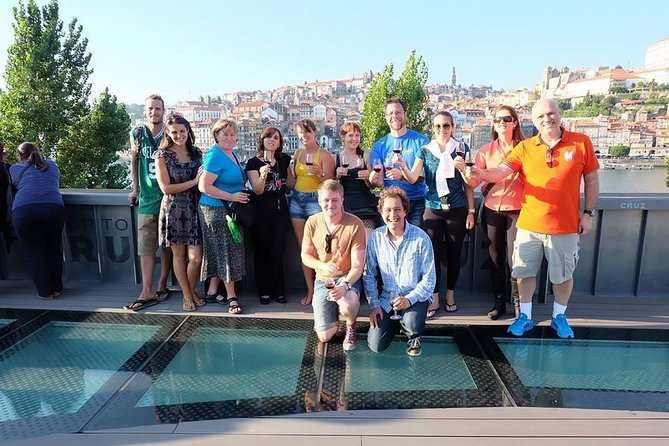
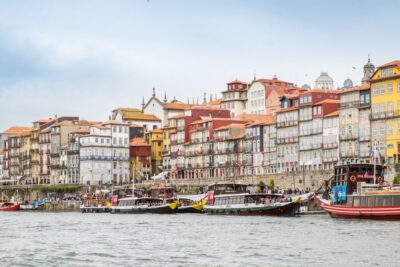
This tour begins on the Porto side, by the pillars of the old Pensil bridge, right next to D. Luis Bridge on the lower level. If you’re standing there and looking toward Gaia, you’re in the right zone. The meeting point is labeled with a red jacket that says porto walkers, so you should be able to spot your group quickly.
You start at 3:00 pm, which is a great time to do Porto to Gaia. Late-day light helps, and you avoid the worst of the midday heat. The session runs about 3 hours 30 minutes, and it’s designed so you’re mostly walking between stops rather than dealing with long bus transfers.
One practical note: the tour ends on the Gaia side at Av. de Diogo Leite 135. That means you should plan how you’ll get back to wherever you’re staying after the last terrace moment. Keep your cross-river plan in mind while you’re choosing the time for this tour.
More cellars to walk through in Gaia:
- Porto: Bridges Cruise & Sunset & Port Wine Cellar Option★ 4.2 · 4,180 reviews
- Porto: Cálem Cellar Tour, Fado Show & Wine Tasting★ 4.4 · 3,530 reviews
- Porto: Cockburn’s Port Lodge Tour and Tasting★ 4.8 · 3,360 reviews
- Porto: City Train Tour, River Cruise & Wine Cellar★ 3.9 · 2,601 reviews
Porto to Gaia on Foot: Getting Oriented Before You Taste
The first part is a walk through the Porto to Vila Nova de Gaia transition. You’ll head toward the shady cellars area, and you get orientation as you go. That matters more than it sounds. Port production is geographic, and you’ll understand why the houses cluster where they do once you see the riverfront and storage zone.
This is also where the tour stays realistic for most people. It’s all walking, but the farthest walk is listed as around 800 meters, so it’s not a long-distance hike. Since the itinerary is built around short travel legs and quick transitions, you get to spend your energy on tasting and learning instead of getting tired.
The group size is capped at 18, which helps keep the pace friendly. In a bigger crowd, tasting tours can feel rushed. Here, the structure is built for a half-day experience where each stop has a purpose.
The Major Producer Stop: Museum, Cellar, and Reserve Tastings
At the first lodge you’ll get a guided visit to a museum and cellar at one of the most prestigious Port producers. This is where you start connecting the dots between the bottle you’re holding and the systems behind it.
After the museum/cellar tour, the tasting follows with Reserve White and Reserve Tawny. That pairing is smart for learning because it forces you to notice style differences, not just sweetness. Reserve Tawny often tastes like time in a glass, while White Port gives you another angle on the Port spectrum. Your guide also works the big idea that Port is not one wine category, it’s a family of styles.
Why this stop feels valuable is that it teaches you how to distinguish Port types in a way you can repeat later. You learn the logic behind names and how producers categorize Port, so next time you’re shopping, you’re not just picking based on color.
A heads-up: this part can be very story-heavy, and one review noted there may not be huge time for lots of back-and-forth questions at every moment. If you love asking dozens of questions mid-lecture, plan to save your most important ones for pauses and tasting moments.
The Old Cellar Turned Visitor Center: Ruby Port and Cork Facts
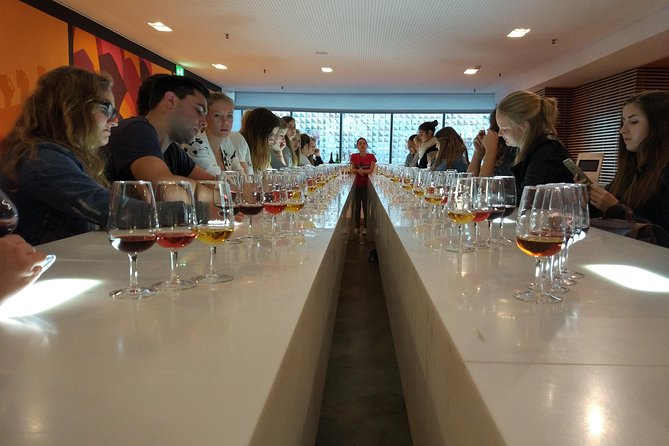
Next comes another Port house experience, in an old cellar that’s been transformed into an interactive visiting center. The tour shifts tone here from formal museum to hands-on learning, which helps keep your attention through multiple tastings.
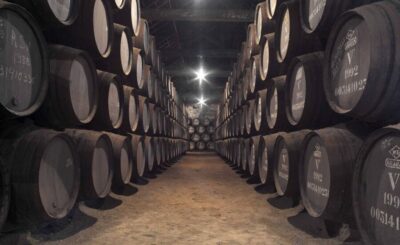
You’ll learn about barrels where Port is stored and how cork is produced. That detail is surprisingly useful. When you understand how storage and closure work, the tasting vocabulary gets easier. You’ll also taste a young Ruby Port here, which acts like a baseline. Ruby is often the Port style that makes you realize how age and storage changes flavor direction.
This stop also gives you a different way to understand Port production, not just a walkthrough of rooms. If you like explanations tied to what you’ll taste next, this is the segment that clicks.
Practical tip: because there are several tastings across different houses, pace yourself. Take a few minutes between tastings to clear your palate with water and small sips if it’s available. Don’t rush to finish each sample. The difference between styles becomes clearer when you let each one settle.
Douro Valley Interpretation Center: Workshop Tasting and Pairing Tips
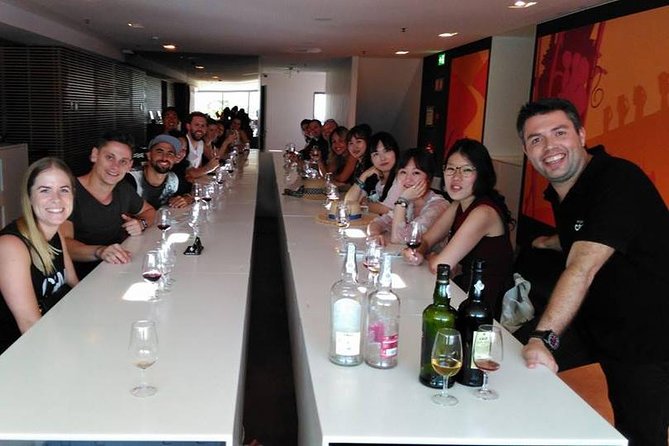
After the cellar learning, you move to an interactive Port wine interpretation center dedicated to the Douro Valley. This region is repeatedly described as the oldest wine region in the world, and the center’s job is to translate that long timeline into something you can actually grasp while you’re standing there.
The highlight here is an exclusive wine tasting workshop. You’ll taste different wines and learn how to pair Port with food. Pairing advice is the part many tasting tours skip, but it’s exactly how you make Port feel useful once you’re back home. Instead of treating Port like a sweet souvenir, you start thinking about when it works at the table.
The workshop format also keeps the pacing tighter than a standard sit-and-listen presentation. You’re tasting while learning, which helps you remember what you’re hearing.
Then you end at the center’s terrace with scenic views over Porto. It’s a nice payoff because you’ve walked all afternoon in the cellar zone. Even if you’re not a big view person, it’s a chance to reset your senses before the tour wraps.
More port poured across the river:
- Porto: Live Fado Show with Glass of Port Wine
★ 4.8 · 6,498 reviews - Porto: Fado & Port Wine in Traditional Portuguese Music Shop
★ 4.8 · 2,906 reviews - Porto: What is Fado? Commented Live Concert with Port Wine
★ 4.8 · 2,839 reviews - Porto: Douro River Boat Cruise with Port Wine Tasting
★ 4.8 · 1,627 reviews
Value Check: Is $62.88 for 7 Tastings a Good Deal?
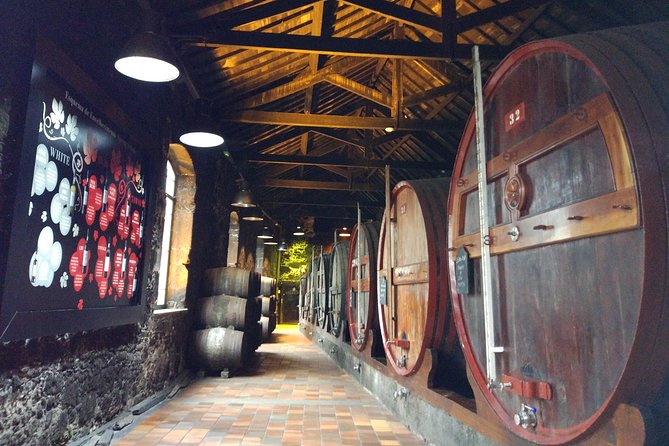
At $62.88 per person, this tour works out well when you look at what’s included. You’re getting 7 Port tastings, visit to 3 port houses, all entry tickets, an English local guide, and a walking-based format that avoids extra transport costs.
The bigger value is not just the number of sips. The tour is built to connect each tasting to a learning theme:
- Reserve styles (Reserve White and Reserve Tawny) teach you how Port ages and changes.
- Ruby anchors you in a fresher, more primary style.
- The interactive stops give you practical production context, like barrels and cork.
You also get a fixed, predictable duration of about 3 hours 30 minutes. If you only have a single half-day in Porto and you want something that doesn’t balloon into a full day, this is a solid fit.
Where value can drop for some people is food. There’s no lunch and no snacks included. Port tastings can add up, and by the time you reach later houses, you might feel it. If you’re the kind of person who needs food on a schedule, plan for a meal after the tour and consider a small snack beforehand.
How to Taste Better: Make the Most of Seven Port Styles
If you’re new to Port, don’t worry about memorizing everything. Focus on a few signals your guide likely highlights as you go. The goal is to build a mental shortcut you can use later in a shop.
Here’s what I’d pay attention to during your tastings:
- Sweetness level versus balance. Some Port feels fruit-forward, some feels more dried-fruit and nutty.
- Texture. You can often tell whether it feels lighter or more rounded after a few sips.
- Aroma direction. Notice whether it smells more like fresh fruit, cooked fruit, or older, deeper notes.
- Finish length. Longer finishes are often where you spot the “why” behind Reserve styles.
Also, use the walking segments. The tour gives you orientation while you move, and that context helps your brain connect the building to the wine. When you understand the storage and the production steps you just learned, the tasting becomes more than flavor guessing.
And if you’re a Port fan already, you’ll likely appreciate how the tour tries to teach you how to tell styles apart. That makes the tasting more than a drinking session. It becomes a guided comparison you can repeat.
Who Should Book This Porto Walkers Port Tour (and Who Should Skip)
This tour is best for you if:
- You want a half-day plan in Porto that lands you in the heart of Gaia’s cellar zone
- You like walking plus structured tasting
- You want to learn how Port styles are different, not just sample a few glasses
- You enjoy interactive museum-style experiences and pairing guidance
It might not be your top choice if:
- You hate wine tastings and prefer a low-alcohol outing
- You need food included with your tours. Here, lunch and snacks are not included, so you’ll rely on your own timing
- You want long free time at each stop. The tour is packed with multiple houses, so the flow is set by the itinerary
One more fit note: the tour allows service animals, and it lists that most people can participate. The walking is moderate and the farthest distance is listed around 800 meters, so it’s not a marathon.
Should You Book This Port Wine Lodges Tour?
Yes, I’d book it if you want the best kind of Port tour value: not just tasting volume, but a guided path through Port types, cellars, and food pairing. The combination of three port houses, interactive learning, and a finishing terrace view makes it feel like a complete outing rather than a quick stop-and-sample.
If you do book it, go in hungry for knowledge, not food. Bring a small snack if you think you’ll need it, and pace your sips so the last tastings still taste clear. Also, arrive early enough to find the red jacket at the meeting point near D. Luis Bridge, because being in the right spot saves time and stress.
FAQ
What time does the tour start and where do I meet?
It starts at 3:00 pm. Meet by the pillars of the old Pensil bridge on Porto’s side, next to D. Luis Bridge (lower level), at Pilares da Ponte Pênsil in Ribeira.
How long is the Port wine lodges tour?
The tour is about 3 hours 30 minutes (listed as 4 hours total, all walking).
How many Port tastings are included?
You’ll have 7 Port wine tastings during the tour, including Reserve White, Reserve Tawny, and a young Ruby Port.
Is lunch included?
No. Lunch, food, and snacks are not included.
Is the tour mostly walking, and how far do we walk?
Yes, it’s all walking. The farthest walk is listed as about 800 meters.
Does the tour include entry tickets and fees?
Yes. It includes wine lodge entry tickets and all fees and taxes.
What is the minimum drinking age?
The minimum drinking age is 18. If you want to bring a child over 6 years old, you must contact the operator, and paid entrance applies.
More Wine Days from Porto
- From Porto: Douro Valley w/ Boat Tour, Wine Tasting & Lunch
★ 4.7 · 19,061 reviews - Complete Douro Valley Wine Tour with Lunch, Wine Tastings and River Cruise
★ 5.0 · 12,920 reviews - Porto: Douro Valley with Winery Lunch, Tastings & Cruise
★ 4.7 · 7,002 reviews - From Porto: 2 Wine Regions, Farm-to-Table Lunch & Boat
★ 4.9 · 5,724 reviews
Fresh off the Porto quays





Port Wine Cellar Tours, compared.
Bridges Cruise & Sunset & Port Wine Cellar Option
Read our review →

Graham’s Port Lodge Tour with Premium Wine Tastings
Read our review →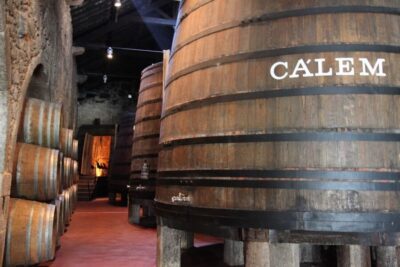
Hop-on Hop-off Bus with Optional Cruise & Wine Cellar
Read our review →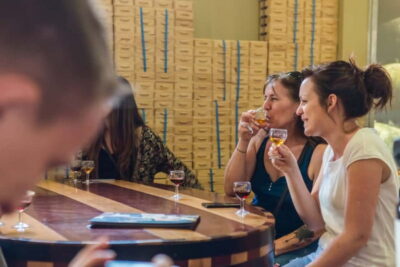
Magic Train Tour and Port Wine Cellar with Tastings
Read our review →Browse the lists this tour appears in