
Reviewed · HISTORICAL TOURS
Full-Day Portuguese Historical Villages Tour
A day like this turns Portugal into a story you can walk through. I love how the route starts with the ancient roots behind Portuguese identity, then makes it concrete with stone villages, castle architecture, and churches like Church of Santa Maria. I also like the pace you get with a private guide, so you are not just hopping between photo stops. One thing to plan for: it is a full day in the countryside, with several hours on the road and walking on uneven streets, so wear good non-slip shoes.
You leave Porto at 9:00 am and spend about 9 to 10 hours total, depending on traffic and visiting schedules. Pickup is available from hotels in Porto and Vila Nova de Gaia city center, or from the Living Tours office near São Bento if you prefer. Expect English narration and free admission at the sites on the route, but food and drinks are not included, so build in time for lunch on your own.
In This Review
- Key highlights at a glance
- Portugal before Portugal: why this day trip feels different
- The 9:00 am Porto pickup and the drive to Serra da Estrela
- Linhares da Beira: Lusitanian hill forts and flax fields
- Castelo de Linhares da Beira: fortress logic in stone
- Celorico da Beira: Mondego River, granite streets, and church art
- Celorico’s Castle and citadel feel
- Igreja da Misericórdia: Joanine façade and a high altar inside
- Igreja Matriz de Santa Maria: Baroque drama, Manueline windows, and Gothic portals
- Stop-by-stop pacing: what fits, what might not
- What you get from a private guide, not just a driver
- Price and value: is $414.55 per person fair?
- What to bring, and how to make the most of it
- Who should book this historical villages tour?
- Should you book from Porto?
- FAQ
- What time does the tour start?
- How long is the tour?
- Is hotel pickup included?
- Is this tour private?
- What language is the tour offered in?
- Are admissions included for the stops?
- Is food and drinks included?
- Do I get a ticket on my phone?
- Is there a free Porto walking tour included?
- When can I cancel for a full refund?
Key highlights at a glance
- Lusitanian origins explained in plain terms, tied to what you see in Linhares da Beira
- Church of Santa Maria with layers of faith, including an Islamic occupation theory and later Christian reconquest context
- Castle of Celorico da Beira and steep, old-quarter streets cut by the Mondego River
- Joanine and Baroque church details, including a façade style you do not see everywhere
- Private vehicle plus private guide, so your group stays together all day
Portugal before Portugal: why this day trip feels different
Most trips out of Porto focus on one thing, a viewpoint, a monastery, or one village. This one gives you something better: a sense of sequence. The guide sets up the idea of Portugal’s origins, and what was here before the country as you know it existed. You then test that idea on the ground, in places tied to ancient Iberian life and later medieval and reconquest eras.
If you like medieval stuff, this tour has the right ingredients. You are looking at fortress logic, church power, and the way mountain terrain shapes settlement. Even if you are not a “history nerd,” it is easy to follow because the stops are connected by geography. Serra da Estrela and the Mondego River are not just background scenery, they help explain why these towns grew where they did.
More of the old city, layer by layer:
- Douro Valley: Historical Sites, Wine Experience, Lunch & Cruise★ 5.0 · 5,133 reviews
- Porto: An Intimate Fado Show in a Historical Tavern★ 4.8 · 2,055 reviews
- Porto: Historic City Center Walking Tour★ 4.7 · 1,172 reviews
- Porto: Private Tour of the Historic City in a Ford T Car★ 4.8 · 932 reviews
The 9:00 am Porto pickup and the drive to Serra da Estrela
You start at 9:00 am with pickup from any hotel in Porto or Vila Nova de Gaia city center. If you are staying near São Bento or prefer a fixed meeting point, there is also a pickup at Living Tours, Rua Mouzinho da Silveira 350, Porto, next to Porto São Bento train station.
After pickup, you ride out toward the western slopes of Serra da Estrela. It is a long day, so I treat the drive as part of the experience rather than downtime. A private vehicle means you avoid awkward transfers, and a private guide means the narration can flow from stop to stop without losing time.
Timing note: the total duration is approximate and can stretch with local traffic and visiting schedules. Plan your next thing for later that afternoon or evening, not immediately after the tour.
Linhares da Beira: Lusitanian hill forts and flax fields
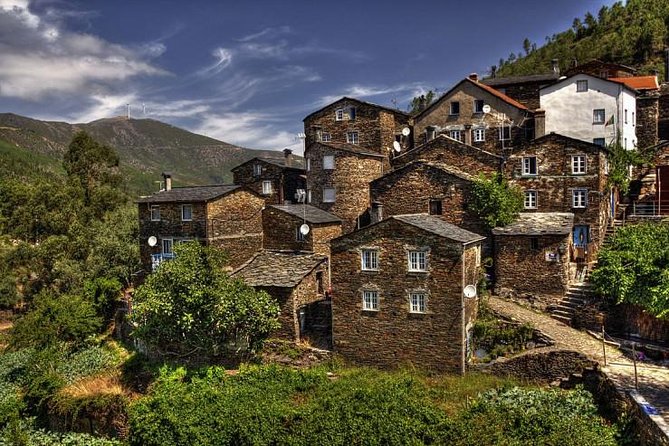
Linhares da Beira sits on the western slopes of Serra da Estrela, and that location matters. The guide frames it as a place originally linked to Lusitanian life, including the idea that the area around Montes Hermínios (the Lusitanian name for Serra da Estrela) had pastureland, water supply, and mountain protection.
Then comes the detail that makes the name click. The region’s old flax crop, linho in Portuguese, is tied to the meaning behind Linhares, literally flax fields. It is one of those connections that you would never guess just by looking at a map, yet once you hear it, you start seeing how a place is named after what sustained it.
What I like here:
- You get a clear explanation of the area’s ancient roots before you move into medieval stonework.
- The setting helps you understand settlement choices, not just timelines.
What to watch for:
- This is still outdoors and hilly. Even if the walk itself is not described in detail, you should be ready for uneven footing and short climbs.
Castelo de Linhares da Beira: fortress logic in stone
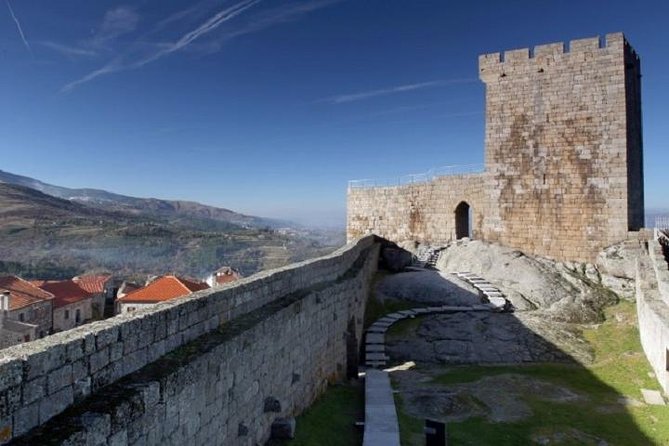
The castle visit is where “history talk” turns into something you can feel. The Castelo de Linhares da Beira is presented as a stop that connects the region’s older defensive landscape to later periods. This matters because castles are not random. They are built for control, visibility, and protection, and the terrain around Linhares da Beira helps explain why that is so.
If you enjoy medieval architecture, you will probably take your time here. Looking at the form and how the layout fits the land is a different kind of education than reading a label.
One practical note: you are spending part of the day walking around old structures. Bring sturdy shoes with good grip, especially if the cobbles or paths are slick.
Celorico da Beira: Mondego River, granite streets, and church art
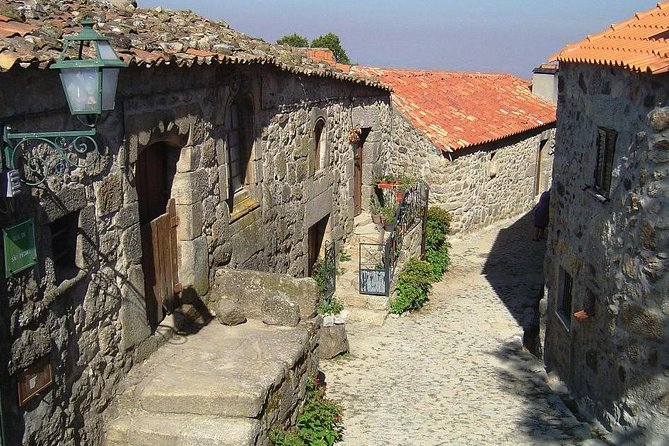
Celorico da Beira is at 550 meters above sea level and sits at the foot of Serra da Estrela, with the Mondego River crossing the area. The description you get on the ground is of mountain life shaped by water and stone. Granite predominates, and the town is cut by streams, giving you that sense of a landscape built around moving water.
Celorico da Beira also gives you the architectural mix that makes this tour more than just “old towns.” You see military architecture and different church styles in the same day, so you can compare what power looked like over time.
Some other granite-city outings to weigh
- From Porto: Braga and Guimarães Full-Day Trip
★ 4.6 · 3,951 reviews - Porto: Aveiro, Cruise, Costa Nova & Capela da Pedra Full Day
★ 4.6 · 1,039 reviews - Santiago de Compostela Full-Day Tour From Porto
★ 4.7 · 1,036 reviews - Small Group Geres National Park Full Day with picnic from Porto
★ 5.0 · 846 reviews
Celorico’s Castle and citadel feel
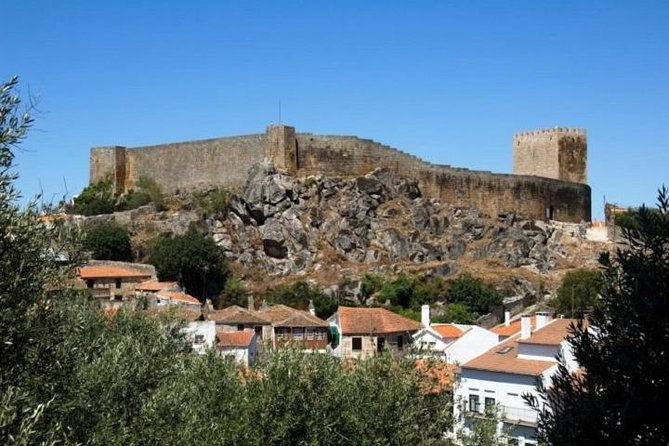
The Castle of Celorico da Beira is described as an ex-libris of military architecture, with a romantic-Gothic style and an irregular layout corresponding to the citadel, from the 10th century. Even without getting technical, you can appreciate the defensive logic. Irregular layouts usually mean the walls and bounds follow what the builders needed from the land.
Igreja da Misericórdia: Joanine façade and a high altar inside
Next, you visit Igreja da Misericórdia. The façade is noted as a beautiful example of Joanine art, and inside you get a rich high altar plus paintings by Isidro Faria.
This is one of the stops where I find people either speed through or slow down. If you like church decoration and Portuguese baroque and early 18th-century artistic styles, you will likely pause for longer here. If churches are not your thing, it is still worth it because the façade style contrasts nicely with the medieval fortress setting.
Igreja Matriz de Santa Maria: Baroque drama, Manueline windows, and Gothic portals
Finally, Igreja Matriz de Santa Maria is built over the low houses of the old quarter of the castle. The façade is described as baroque haughtiness, and in the narrow streets you can spot a rare collection of Gothic portals and Manueline windows.
That mix is why I like finishing with Celorico rather than going straight back to Porto. The streets around the old quarter help you see the churches in context, not as isolated buildings. And if you like “small discoveries,” this part gives you plenty of details that you would miss if you were only taking wide photos.
Stop-by-stop pacing: what fits, what might not
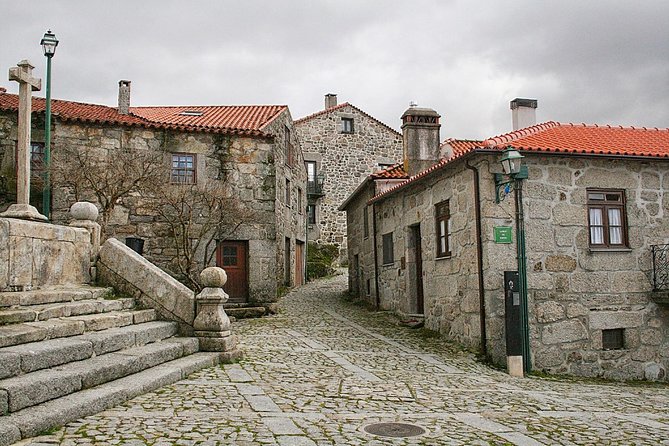
This tour is structured around a full day with multiple historic stops, and each one has a different “type” of interest.
- Linhares da Beira is more explanation and setting. You come away with meaning, then you see it made physical.
- Castelo de Linhares is the visual shift, more stone and fortification logic.
- Celorico da Beira is your architectural payoff, with church styles and street-level details you can actually notice as you walk.
If you have limited stamina, the biggest consideration is simply the amount of time you are out and the terrain. The good news is that this is guided, so the route can be made easier for your group, and the private vehicle saves you from extra waiting time.
What you get from a private guide, not just a driver
A private guide matters on days like this because the information is layered. The tour is not only “here is a church.” It is also “here is what might have been here before,” such as the Church of Santa Maria being linked by some authors to an earlier form during Islamic occupation, and later being donated in the 13th century to the bishop of Guarda by Afonso III of Portugal.
Even if you do not treat theories as facts, you still get a sense of how people re-used sacred spaces through changing rule and religion. That kind of explanation helps you look at buildings like evidence, not just monuments.
Also, the guide ties cultural identity back to what preceded the country. That is exactly what turns a collection of villages into a coherent experience.
Price and value: is $414.55 per person fair?
At $414.55 per person for a full day, this is not a budget day trip. But the value depends on how you travel.
Here is what you are paying for, based on what is included:
- a private vehicle for your group
- a private guide
- pickup from hotels in Porto and Vila Nova de Gaia city center
- admission tickets listed as free for the stops on the route
- a mobile ticket
- and a Porto City Walking Tour offered from the day after your experience
It also helps that the tour is in English and starts at 9:00 am, so you get a full workday’s worth of sight time without DIY navigation.
If you are traveling in a small group, the private format often makes the price feel more reasonable, especially when transport from Porto is included. If you are traveling solo and price sensitivity is high, the cost might feel steep compared with big-group tours.
My advice: if you care about understanding, not just checking boxes, this one is priced like an education day.
What to bring, and how to make the most of it
The review-style tip I would trust most here is simple: bring good non-slip shoes. You will be walking in old village streets and around historic structures. Even in good weather, surfaces can be uneven.
Other practical items:
- Comfortable layers, since mountain weather can shift.
- Water, since food and drinks are not included.
- A light plan for lunch, because you will need to handle it on your own during the day.
Also, keep your schedule flexible. The tour duration is approximate, and traffic or site hours can shift the end time. I do not schedule anything tight right after.
Who should book this historical villages tour?
Book it if you:
- want medieval towns with castle and church architecture
- enjoy the idea of Lusitanian roots and reconquest-era context
- like a private guide who can explain connections instead of just moving you along
- are staying in Porto or Vila Nova de Gaia and want a smooth pickup and out-and-back day
You might skip it if:
- you hate long road days
- you want a shorter half-day outing
- you have mobility limitations that make walking on old streets difficult
Should you book from Porto?
I would book this tour if your ideal Portugal day is part scenery and part story. The itinerary makes sense, because the stops build from ancient Iberian roots into medieval stone and church art. The private guide format is the real difference maker, especially for understanding why these places look the way they do.
If you are on the fence because of price, think about what you are getting: private transport, private guiding, and free admission at the featured sites, plus that Porto walking tour the next day. For the right traveler, it is a smart use of one full day.
FAQ
What time does the tour start?
The tour starts at 9:00 am.
How long is the tour?
The duration is approximately 9 hours, and it may run up to about 10 hours depending on local traffic and visiting schedules.
Is hotel pickup included?
Yes. Pickup is available from hotels in Porto or Vila Nova de Gaia city center. There is also an alternative pickup at Rua Mouzinho da Silveira 350, Porto, next to Porto São Bento train station.
Is this tour private?
Yes. It is a private tour/activity, and only your group will participate.
What language is the tour offered in?
The tour is offered in English.
Are admissions included for the stops?
The tour includes admission tickets that are listed as free for the stops in the itinerary.
Is food and drinks included?
No. Food and drinks are not included.
Do I get a ticket on my phone?
Yes. The tour includes a mobile ticket.
Is there a free Porto walking tour included?
Yes. You get a Free Porto City Walking Tour with Living Tours available from the day after your experience. It runs daily in English and Spanish at 9:30 am and 4:30 pm, departing from Rua Mouzinho da Silveira 352, Porto.
When can I cancel for a full refund?
The cancellation details show free cancellation up to 24 hours in advance for a full refund. The additional information also notes that cancellations within 48 hours or less will be fully charged. Check the terms shown during booking and follow the confirmation you receive.
Fresh off the Porto quays






Historical Tours, compared.

Historical Sites, Wine Experience, Lunch & Cruise
Read our review →

Private Tour of the Historic City in a Ford T Car
Read our review →

Historic Porto by Private Electric Tuk Tuk to Top Landmarks
Read our review →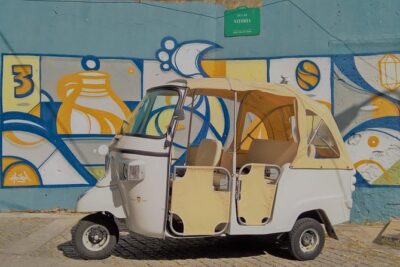
Porto Guided Tour to the Historical Center on a Tuk Tuk
Read our review →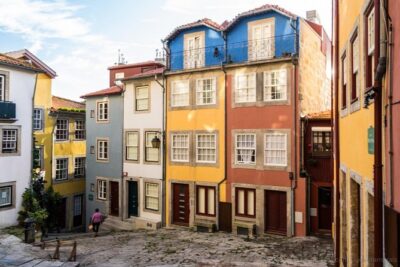
3-Hour Porto Jewish Heritage Walking Tour with Local Guide
Read our review →Browse the lists this tour appears in