
Reviewed · RIVER CRUISES
Quiet private yacht cruise along the bridges of the Douro River
A Douro bridge cruise is engineering porn, calmly done. On a private yacht ride from Marina do Freixo, you glide past six major bridge spans in about two hours, with time to take in Porto and Vila Nova de Gaia from the water. I like how the pacing stays relaxed, so you can actually look up at the structures instead of feeling rushed.
Two things I’d put at the top of my list: the onboard snacks table with local products plus a bottle of Lambrusco, and the simple comfort of having a restroom on board. You also get that true private feel, since it’s only your group, up to 8 people, not a crowd.
One consideration: this is a good-weather experience. If the Douro is acting up, you may be offered a different date or a full refund, so check conditions before you plan anything tight.
In This Review
- Quick highlights
- A quiet private yacht cruise under Porto’s bridge lineup
- Getting to Marina do Freixo (and what being private changes)
- The six-bridge route: what you’ll see and what each span means
- Stop 1: the first bridge you pass after leaving the marina
- Stop 2: a railway bridge moment
- Stop 3: D. Maria Pia Bridge (1877), Eiffel legacy in iron
- Stop 4: Porto-to-Gaia’s newest crossing, opened in 2003
- Stop 5: Dom Luís I Bridge (1886), Porto’s symbol and Gaia’s cellars
- Stop 6: the imposing highway road bridge (1963), giant concrete arch
- Snacks and Lambrusco: simple comfort that makes the ride feel complete
- The calm pace: safety, comfort, and even music choices
- Price and value: what $319.39 per group really means
- Who should book this Douro bridge cruise
- Should you book this cruise?
- FAQ
- How long is the cruise?
- What is the group size for this private yacht cruise?
- What’s included onboard?
- Is the tour offered in English?
- Is transportation to the marina included?
- What if the weather is poor?
Quick highlights
- Private group up to 8 so you can spread out and enjoy the ride on your schedule
- Six bridges in ~2 hours gives you a concentrated view of the Porto-to-Gaia skyline
- D. Maria Pia Bridge (1877), designed by Gustave Eiffel’s team legacy, is a true landmark moment
- Dom Luís I Bridge (1886) is often the most photogenic, especially for views toward Gaia cellars
- Modern Porto-Gaia span from 2003 adds a contrast to the older ironwork
- Snacks, local products, and Lambrusco, plus a restroom on board, make it easy to stay out on the river longer
A quiet private yacht cruise under Porto’s bridge lineup
This cruise is built for people who like their sightseeing with fewer interruptions. You’re on the water, moving slowly enough to notice the details, then slipping into the next bridge frame before your brain has time to overload.
What makes this special is the mix of time periods. In one stretch of river, you see older railway-era ironwork, a sleek modern crossing, and then a huge highway bridge defined by a giant concrete arch. It turns Porto from a postcard into a real, layered city, where infrastructure tells you how the region grew.
More time on the water in Porto:
- Complete Douro Valley Wine Tour with Lunch, Wine Tastings and River Cruise★ 5.0 · 12,920 reviews
- Porto: 6 Bridges Douro River Cruise★ 4.3 · 6,472 reviews
- Porto: Guided Tour by Tuk-Tuk & Optional Douro River Cruise★ 4.5 · 5,980 reviews
- Authentic Small Group Douro Wine Tour with Lunch & River Cruise★ 5.0 · 4,775 reviews
Getting to Marina do Freixo (and what being private changes)
You meet at Restaurante Marina do Freixo in Porto (N108, 4300-316). The activity ends right back at the same place, so you don’t have to plan another hop across town at the end.
Two practical details that matter: there’s no private transportation included, and the tour does list that it’s near public transportation. So I’d treat this as something you plug into your day once you already know how you’ll get to the marina area.
Going private, up to 8 people, changes the whole vibe. The reviews and overall setup point to calm, attentive hosting, plus a comfortable boat and a strong focus on safety. When you’re not sharing space with strangers, it’s easier to pick a side for photos, chat without yelling, and actually enjoy the ride instead of playing bridge-shoulder tag.
The six-bridge route: what you’ll see and what each span means
You depart the marina, then work through a full bridge sequence along the Douro. The stops are structured to give you clear moments on the water, so each bridge gets its turn as the “main character.”
Below is the route as you’ll experience it, with what to look for and the one possible downside of that stop type.
Stop 1: the first bridge you pass after leaving the marina
This is your opening bridge moment after departing Da Marina do Freixo. Since it’s the first bridge on the route, it’s a good time to get your bearings, settle in, and start scanning the skyline from the river.
Drawback to keep in mind: as the first stop, it can feel a bit like an intro, so if you’re the type who wants the most famous bridge right away, you’ll have to wait through a couple of spans for the big names.
Stop 2: a railway bridge moment
The second stop is a railway bridge. This is a nice shift from what you might expect from a typical sightseeing cruise because it nudges you toward the industrial story of the Douro, not just the pretty view.
Practical tip: if you’re into “how things work,” watch the geometry from the water. Railway bridges often read differently on a river cruise than from street level.
Possible drawback: if you mainly came for landmark bridges only, the “railway bridge” description is less iconic than the later named spans, so mentally label this as the warm-up.
More rabelo boats pushing off the quay:
- From Porto: Douro Valley w/ Boat Tour, Wine Tasting & Lunch
★ 4.7 · 19,061 reviews - Porto: Douro Valley with Winery Lunch, Tastings & Cruise
★ 4.7 · 7,002 reviews - From Porto: 2 Wine Regions, Farm-to-Table Lunch & Boat
★ 4.9 · 5,724 reviews - Douro Valley: Historical Sites, Wine Experience, Lunch & Cruise
★ 5.0 · 5,133 reviews
Stop 3: D. Maria Pia Bridge (1877), Eiffel legacy in iron
Next comes a standout: the D. Maria Pia Bridge, the oldest bridge connecting Porto to Gaia. It was inaugurated in 1877, designed under Gustave Eiffel influence, and it was the first railway bridge of the Douro.
This is one of those bridges where the age is part of the drama. From the river you can better appreciate the scale and the lattice feel, and you’ll understand why this crossing became such a reference point for the city.
What to look for: the bridge’s structure reads like a set of bold lines drawn across the water. Watch how it frames the banks as you move.
Possible drawback: because it’s older and visually detailed, it can tempt you to look at one section too long. Try to pull back and look at the whole span too, especially when the boat lines up with the center of the bridge.
Stop 4: Porto-to-Gaia’s newest crossing, opened in 2003
Then you hit the newest bridge in this set: the latest bridge between Porto and Gaia, opened in 2003.
Why I like this stop: it provides instant contrast. You go from 19th-century engineering energy to a modern design language, and the difference makes both eras easier to notice.
What to look for: the way the bridge’s modern lines sit against the older city backdrops. Even if you’re not a bridge nerd, your eye will catch the change.
Possible drawback: modern spans can feel less “ornate” than the older ones. If you came primarily for decorative ironwork, plan to treat this as a structural contrast rather than a beauty contest.
Stop 5: Dom Luís I Bridge (1886), Porto’s symbol and Gaia’s cellars
The fifth bridge is often considered the most beautiful on the Douro. It was inaugurated in 1886, designed by Théophile Seyrig, a disciple of Eiffel. It’s also the main symbol of Porto, and from the water you get views toward the historic center as well as toward the basements of Gaia.
This stop is a photo favorite for a reason. From the river level, you feel the bridge’s presence as part of the city, not just a structure overhead.
What to look for: when the boat positions you correctly, the bridge becomes a visual divider between Porto’s upper streets and Gaia’s famous cellar areas. That mix of city layers makes the moment feel more real than a single-view postcard.
Possible drawback: it’s popular for a reason, so the scenery is the priority. If you prefer quieter, less “main attraction” moments, this will be the one that steals your attention.
Stop 6: the imposing highway road bridge (1963), giant concrete arch
The final bridge is a big finish. This one is a road bridge (highway), inaugurated in 1963, and at the time it held a world record for the largest concrete arch at 270 meters.
Think scale. This is where the cruise stops feeling like “pretty urban views” and starts feeling like a clear demonstration of how the Douro corridor was built to move cars and people efficiently.
What to look for: the arch shape and how it dominates the river space. From the boat, it can feel both massive and oddly graceful.
Possible drawback: because it’s built to carry road traffic, it reads more like infrastructure than the older bridges’ decorative charm. If you want the most romantic moments, you might find the last stop more impressive than sentimental.
Snacks and Lambrusco: simple comfort that makes the ride feel complete
This cruise includes a snacks table of local products and a bottle of Lambrusco. You’re not asked to eat a heavy meal, but you get enough to feel looked after, especially on a two-hour outing.
If you’re the type who hates “food logistics” while sightseeing, this is exactly what you want. You’re already on the water, so you can snack without juggling timing, lines, or the question of where to sit.
One more plus: a restroom is on board. That sounds basic, but on a river cruise it’s the difference between enjoying the full time window and constantly thinking about timing.
Possible drawback: Lambrusco is what’s included. If you only drink non-alcoholic beverages, you might still enjoy the snacks, but the beverage choice is fixed by the inclusions.
The calm pace: safety, comfort, and even music choices
The overall impression from the experience details is that the crew focuses on safety, and the ride is comfortable. Multiple reviews highlight the friendliness and competence of the hosts and pilots, plus a smooth, secure feeling on board.
Another small detail that can make a big difference: the group can choose the music. That turns the cruise from passive sightseeing into an atmosphere you actually control.
Practical tip: bring a phone with a fully charged battery. With bridge after bridge and great photo angles, you’ll burn battery faster than you expect.
Price and value: what $319.39 per group really means
The price is $319.39 per group, up to 8 people, for about two hours. That’s where the math helps.
- If you book with a full group of 8, you’re effectively around $40 per person.
- If you’re only 2 or 3 people, the per-person cost climbs fast, since it’s priced per group.
So, this is best value when you can share it. I’d treat it as a friends, family, or couple-of-couples kind of outing. For solo travelers, it can still be worth it if you truly want privacy, but the price won’t feel as “bargain-y.”
Is it expensive? It’s in the mid-to-higher range for Porto. But compared with tours that run with crowds and require more time and transfers, the private format plus food inclusions and onboard comfort is the tradeoff you’re paying for.
Who should book this Douro bridge cruise
This is a great match if you want:
- Quiet, private time on the Douro with your own group
- A focused “bridge story” in a short window, not a long day of driving
- Easy onboard snacks and a restroom included
- A mix of old and new engineering, especially if you like Eiffel-era design and big concrete scale
You might choose a different option if:
- You dislike staying on a boat for the full 2 hours
- You’re hoping for a walking-focused cultural tour (this is primarily a river experience)
- You need the tour to align with a very exact schedule, since weather can affect the plan
Should you book this cruise?
If you’re in Porto and you like your sightseeing calm, this is a strong yes. The combination of private-only boating, snacks with local products and Lambrusco, and the bridge lineup from 1877 through 1963 makes it feel like a smart use of limited vacation hours.
Book it especially if you’ll go with 4+ people, so the per-person value makes sense. And if your trip window includes flexible weather time, you’ll feel more confident about enjoying the Douro instead of watching forecasts like a hawk.
FAQ
How long is the cruise?
It lasts about 2 hours.
What is the group size for this private yacht cruise?
It’s a private activity, and the price is per group for up to 8 people.
What’s included onboard?
You get a snacks table with local products and a bottle of Lambrusco, plus a restroom on board.
Is the tour offered in English?
Yes, it’s offered in English.
Is transportation to the marina included?
No, private transportation is not included. You’ll need to get to the meeting point on your own.
What if the weather is poor?
The experience requires good weather. If it’s canceled due to poor weather, you’ll be offered a different date or a full refund. Service animals are allowed.
Out Past the River Mouth
- Porto: Luxury 6 Bridges Yacht Cruise with Wine & Snacks
★ 4.9 · 708 reviews - Private tasting in the Douro (1 to 7 people) on a yacht for yourself
★ 5.0 · 559 reviews - Porto: Private Yacht Tour with Wine, Snacks & 6 Bridges
★ 5.0 · 515 reviews - Porto: Private Yacht Cruise with Local Wine, Snacks and 6 Bridges
★ 5.0 · 489 reviews
Fresh off the Porto quays
River Cruises, compared.
Complete Douro Valley Wine Tour with Lunch, Wine Tastings and River Cruise
Read our review →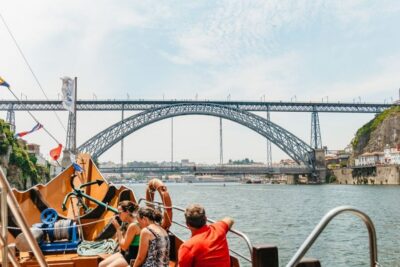
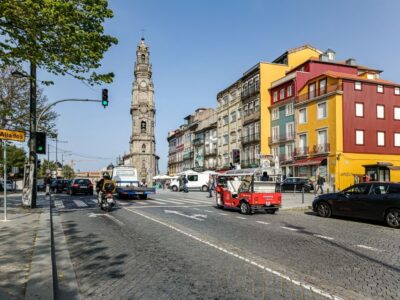
Guided Tour by Tuk-Tuk & Optional Douro River Cruise
Read our review →Authentic Small Group Douro Wine Tour with Lunch & River Cruise
Read our review →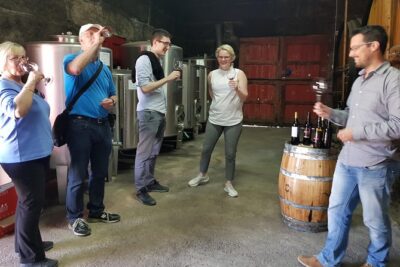
2 Vineyard Visits, River Cruise, Winery Lunch
Read our review →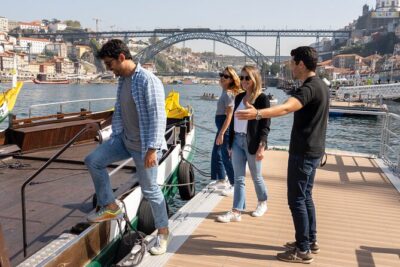
Porto Walking Tour, Lello Bookshop, River Cruise and Cable Car
Read our review →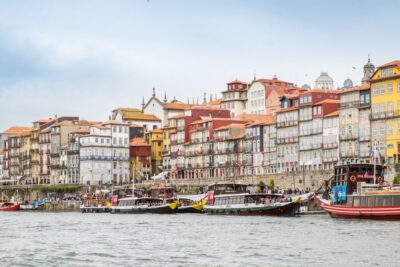
Browse the lists this tour appears in