
Reviewed · VINHO VERDE DAY TRIPS
Private tour to Ponte de Lima, Vinho Verde region
Ponte de Lima feels like a story you can walk through in one day. This private tour from Porto to the Vinho Verde region mixes Roman and medieval stonework with a local wine intro that makes the area easier to enjoy after you get back to town. I especially liked the way our guide slowed things down at key sights, and how the day included a real taste of regional wine rather than just photos. One thing to consider: you are committing a full 8 to 10 hours, and a few of the most interesting extras are optional and cost extra.
You’ll start with comfortable hotel pickup from central Porto and Gaia and ride in an executive vehicle with Wi-Fi, bottled water, and refreshments. The pacing is built for a private group, so you can ask questions and linger when something catches your eye. I do recommend planning for extra stops or purchases if you’re a wine person, because the lunch and tasting add-ons are not included.
In This Review
- Key highlights at a glance
- First, the ride out of Porto makes a big difference
- Entering Ponte Romana e Medieval, where the town’s name comes from
- Capela do Anjo da Guarda and Santo António da Torre Velha: small stops, strong payoff
- Vinho Verde at the interpretation center: a taste you can use later
- Taverna Vaca das Cordas: tradition tied to Corpus Christi
- Dona Teresa statue: the charter story from 1125
- Igreja Matriz de Ponte de Lima: late Gothic with layered eras
- Igreja da Misericordia: a single nave with a baroque-manierist spine
- Paço do Marquês and the old wall: towers, prison, and a defensive town
- Pelourinho and Largo de Camões: tax money built monuments
- Optional wine estates and tastings, what costs extra and why it’s worth it
- Calheiros wine tasting add-on (optional)
- Lunch
- Optional monastery and medieval tower near Refoios
- Price and value: what you get for $211.84 per person
- Who this Ponte de Lima and Vinho Verde day trip suits best
- Should you book this tour?
- FAQ
- How long is the Ponte de Lima and Vinho Verde private tour from Porto?
- What does the price include?
- Where is pickup offered?
- Are there optional wine tastings and extra sights?
- Is lunch included?
- Does it run in all weather?
Key highlights at a glance
- Roman-to-medieval Ponte de Lima bridge with both the Roman section and a larger medieval run, including a dry riverbed arch
- Guardian Angel Chapel (Capela do Anjo da Guarda), restored and reopened in 2022
- Vinho Verde interpretation center + tasting, a practical primer for what you are sipping
- Ponte de Lima churches and towers that show style changes over centuries, not just one era
- Optional wine estates like Paço de Calheiros, plus optional Refoios sites if you want more medieval texture
- Guide-led history and local restaurant suggestions, including how to keep exploring after the tour
First, the ride out of Porto makes a big difference
This trip is built as a private day outing, with pickup from hotels and B&Bs in central Porto and Gaia. Expect a smooth, comfortable ride in a luxury vehicle, with Wi-Fi, bottled water, and refreshments onboard. For a day that is mostly walking through historic cores, that comfort matters. You start fresh, not already tired from transit.
Also, it is in English, and you get a mobile ticket. That combination helps if you are not traveling with a thick stack of printed vouchers. And because it is private, you are not stuck with a big group that needs constant regrouping.
More vinho verde country from Porto:
- Porto Tapas and Vinho Verde Tour★ 5.0 · 113 reviews
- Minho Tour small group, Braga, Ponte de Lima, Viana, Vinho Verde Winery & Lunch★ 5.0 · 18 reviews
- From Porto Douro Valley Tour with Train and Vinho Verde★ 4.7 · 16 reviews
- Serra D´Arga Waterfalls, 7 Lagoons Tour with Picnic & Vinho Verde★ 5.0 · 7 reviews
Entering Ponte Romana e Medieval, where the town’s name comes from
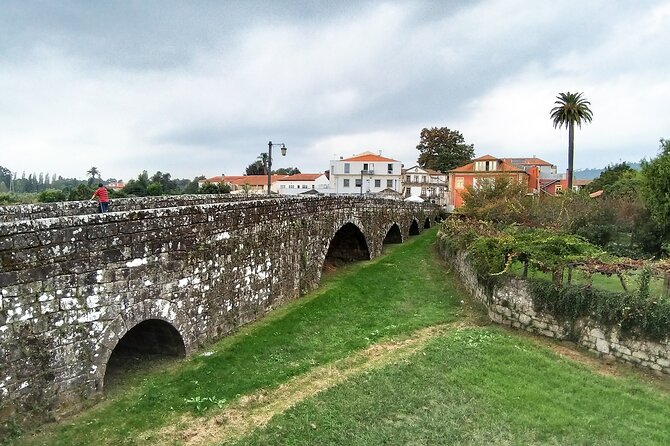
The day opens with Ponte Romana e Medieval, the signature bridge scene in Ponte de Lima. The bridge is listed as a set of two bridges in one, with a medieval section plus part of the older Roman crossing. That matters because it is not just an attractive structure. It is the physical clue to why the town grew where it did, and why the river and the crossing are inseparable from local identity.
You’ll see the larger medieval stretch beginning on the left bank. It runs toward the Church of Santo António da Torre Velha and passes it on two arches. Then there is the Roman section, described as having five arches starting from a large arch located in the dry riverbed area. That detail helps you understand what you are looking at, especially if you tend to assume one bridge equals one time period.
Admission is listed as free, and the stop is about 30 minutes. The drawback is simply this: bridges and church-adjacent areas can feel “short on time” if you like to linger for photos. If you want extra time here, ask your guide to slow down for the river arches.
Capela do Anjo da Guarda and Santo António da Torre Velha: small stops, strong payoff
Right by the Lima River and the old bridge, you get Capela do Anjo da Guarda. This chapel is classified as a National Monument (1978), and the dates are described as possibly 17th century, with a style suggestion of late Romanesque or early Gothic. The most practical detail here is the restoration timeline. It was restored in 2021, and the intervention opened in March 2022.
A chapel stop can sound like it might be too brief, but this one is a classic example of why guided context helps. When you know it is newly restored and where it sits relative to the Roman bridge section, the visit becomes more than a quick exterior glance.
Next is Igreja de Santo Antonio da Torre Velha. The current church look comes from a 19th-century reform ordered by the Confraternity of Santo António. Earlier, an hermitage existed and was documented since the 18th century, dedicated to Nossa Senhora da Esperança. You also learn about the way the church and the tower of the medieval enclosure coexisted until the mid-19th century, when the fence tower was demolished. That is why the church became known as Santo António da Torre Velha.
Both stops are listed at about 20 minutes each and have free admission tickets. If churches are not your thing, you might still appreciate the architecture-by-story approach: you are seeing how Ponte de Lima changed without everything getting torn down and replaced.
Vinho Verde at the interpretation center: a taste you can use later
Half the point of a day trip like this is what you carry home, not just what you see. The Vinho Verde segment does that well because it is not only about drinking. Stop 4 is Centro de Interpretacao e Promocao do Vinho Verde, and the visit includes:
- access to the permanent exhibition
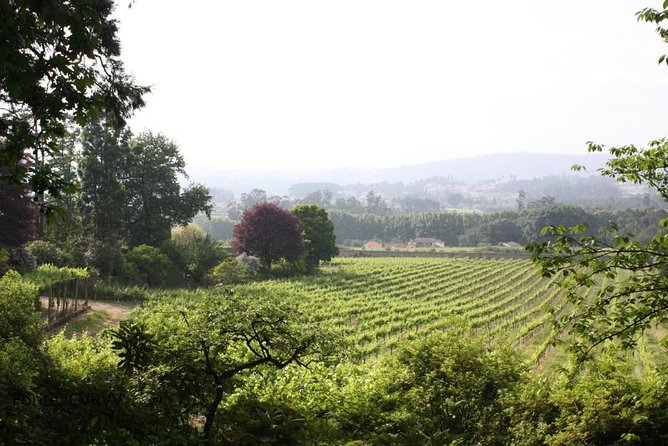
- access to a terrace with a small vineyard
- viewing a promotional film about the demarcated region
- a tasting of regional wine
The tasting component is usually the part that clicks. You learn what you are ordering later. And the terrace vineyard gives you a “why this place makes sense” moment, even if you are not a wine geography person.
One caution: the admission for this centre is listed as not included, and the exclusions note an admission fee of €3 per person tied to proof of Alvarinho. The exact wording can be a little confusing, so plan to ask your guide what they will need from you on the day. In practice, I’d rather be ready with whatever documentation they mention than get stuck when it is time to pay.
Expect about 30 minutes for the centre portion. It is a well-sized stop for a full day, especially since you then continue into the town core.
Taverna Vaca das Cordas: tradition tied to Corpus Christi
Next you visit Taverna Vaca das Cordas, anchored in a tradition described as dating back to the 15th century. The tradition takes place on the eve of Corpus Christi, in the late afternoon. The fun part of knowing that up front is this: your experience here will depend on your calendar.
You learn how the day works. The “Vaca das Cordas” race starts on Rua do Arrabalde, heads toward Largo da Matriz, and includes going around the church three times. Then it continues through the historic center to the river beach, where thousands try to dribble the animal or simply watch. Even if you are not there during the event itself, this stop helps you understand why the historic center and the Lima River are treated like part of one living stage.
The stop is listed at around 30 minutes and shows up with free admission. If you happen to visit near Corpus Christi, you’ll get the full culture effect. If not, you still get the storyline, which is what turns a random street stop into something you remember.
Other days out with Porto as the base:
- From Porto: Braga and Guimarães Full-Day Trip
★ 4.6 · 3,951 reviews - Best of Braga and Guimaraes Day Trip from Porto
★ 4.5 · 2,552 reviews - Aveiro and Costa Nova Half Day Tour from Porto with Boat Ride
★ 4.5 · 1,522 reviews - Porto: Douro Valley & Amarante Wine, Food & River Tour
★ 4.7 · 1,411 reviews
Dona Teresa statue: the charter story from 1125
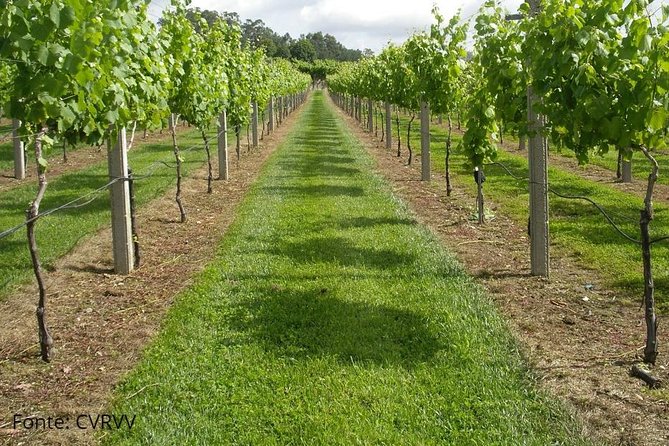
Estátua de Dona Teresa is a quick stop, about 30 minutes listed. It pays homage to Queen D. Teresa, credited with granting Ponte de Lima the charter of Vila in 1125.
That may sound like basic civic history, but it actually helps you read the town. Charters are not just paperwork. They often explain why a town’s market, legal status, and development follows the patterns it does. Seeing the statue when you are already immersed in bridges, churches, and old walls makes the founding story feel less abstract.
Igreja Matriz de Ponte de Lima: late Gothic with layered eras
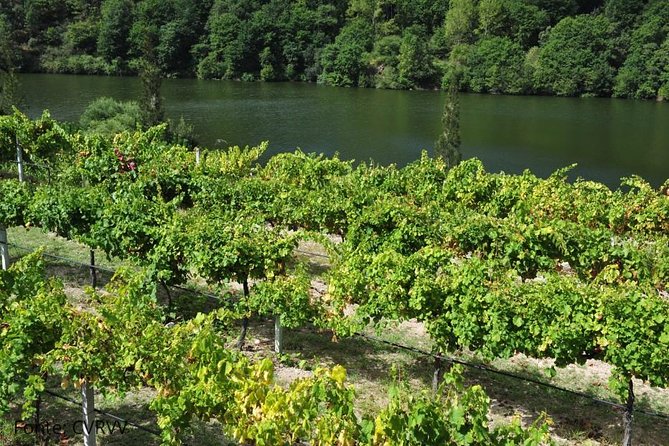
Igreja Matriz de Ponte de Lima is the late Gothic church that succeeded an older one. You learn that the older church grew from one nave to three over time. Inside, the highlight is the Chapel of Nossa Senhora da Conceição, which belonged to the Solar de Bertiandos.
Construction is described as starting with D. João I in 1425, with completion in 1446. But the bigger takeaway is that it underwent several transformations and extensions across centuries. Romanesque, Gothic, and Neoclassical elements are visible through overlapping styles. That is why a guided walk helps, because otherwise you might not know what you are seeing.
The stop is short, about 20 minutes, with free admission listed. If you want more time inside to look for specific style transitions, ask your guide if you can stretch the church visit by a few minutes and shorten another outside stop.
Igreja da Misericordia: a single nave with a baroque-manierist spine
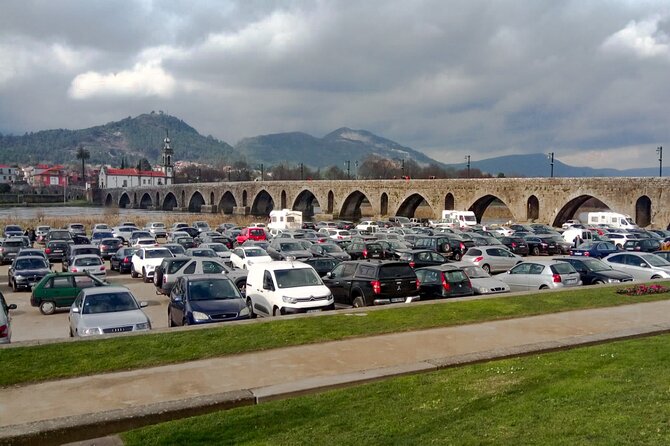
Igreja da Misericordia de Ponte de Lima ties to the Santa Casa da Misericórdia institution, dating back to 1530. The church is classified as a Property of Public Interest, and it is described as manierist and baroque in style, built in the 17th and 18th centuries.
You’ll see a single nave and a chancel with a coffered vault dated to 1638. There is also a main portico open laterally over the old cemetery, with the cemetery area now functioning as a churchyard enclosed by a railing. The porch veranda effect is a key visual cue for how this space handles both community use and sacred space.
This is another stop around 20 minutes with free admission listed. It is not flashy in the way some big-city churches are, but it gives you a sense of how religion, charity, and daily life intersected in Ponte de Lima.
Paço do Marquês and the old wall: towers, prison, and a defensive town

Paço do Marquês de Ponte de Lima is a 15th-century stone building that currently houses the Military History Interpretation Center. It is not included for admission, and the stop is about 30 minutes. Even if you do not pay to go inside, this is still a useful reference point, because it anchors the theme of power and defense that follows.
Then you shift to Torres de São Paulo and da Cadeia Velha. Together with the wall that unites them, these two towers are described as the most notable works remaining from the old Ponte de Lima wall. Besides the towers, the wall historically included doors and towers, such as the Expectation Tower and Postigo Tower.
This set was built in the 14th century during D. Pedro I’s reign. The Torre de Cadeia Velha, also known as Porta Nova, is tied to major improvements made on a preexisting tower, part of the 14th-century walled village. The prison district is linked to King Manuel’s works, completed in 1511. That prison angle can surprise people, but it makes the town’s fortification logic feel more real.
The stop is listed at about 20 minutes, and free admission is indicated.
Pelourinho and Largo de Camões: tax money built monuments
Two quick heritage markers round out the town walk.
First is Pelourinho de Ponte de Lima. The pillory is attributed to the 16th century and described as built on the beach, almost in front of São Paulo tower. In the early 19th century, it received weapons from the United Kingdom of Portugal, Brazil and the Algarve. It was demolished at the end of the liberal struggles, then rebuilt at the time of the Estado Novo in front of the City Hall using fragments identified as coming from the primitive monument.
That sequence gives you a snapshot of how political change leaves physical scars and reconstructions behind.
Then comes Largo de Camoes. The Fonte Nobre in Largo de Camões was completed in 1603 after a false tax was levied in 1580 on consumer goods like precious salt. The revenue funded what you can enjoy today as a monument. The fountain’s location was moved, too. It was built in what was then one of the main gateways to the town wall, at Largo Dr. António Magalhães, and later transferred to Largo de Camões in 1929. Renaissance design is attributed to João Lopes, described as a master from the local area.
Both of these stops are relatively short, with free admission noted. They are ideal when you want “small but meaningful” sights that still teach you something practical.
Optional wine estates and tastings, what costs extra and why it’s worth it
Wine is the headline here, but you control how deep you go.
Calheiros wine tasting add-on (optional)
There is an optional visit to the cellar of Quinta do Paço de Calheiros, priced at 25€ per person. That option is described as a boutique cellar visit with tasting of three wines: Paço de Calheiros, 100% Loureiro fermented and aged in stainless steel, Conde de Calheiros 100% Loureiro aged in oak barrels, plus a red sparkling wine also produced at the Quinta.
Separately, the exclusions list an admission fee for a guided visit to Paço de Calheiros and A de ga, with three tastings of Alvarinho for 35€ per person. Since these are separate price points, treat them as different formats or experiences. Ask your guide what is planned for your group and which one you are being offered.
In either case, the value is pretty clear: you go beyond one tasting and learn how style shifts happen through aging choices and grape handling. If you already know you love Loureiro and Alvarinho, this is the part where you can turn a day trip into a mini wine education.
Lunch
Typical lunch with entry, main dish, drink, dessert, and coffee is listed as €30 per person, with wine included in that total. That is not cheap, but it may be fair if you want one simple, organized meal without hunting menus.
If you’re budgeting tightly, you can always skip the lunch option and plan your own, but the tour as described includes no lunch by default.
Optional monastery and medieval tower near Refoios
If you want more structure and fewer wine glasses, there are optional stops:
- Mosteiro de Santa Maria de Refoios do Lima (optional) with extra time listed at 20 minutes, not included
- Quinta da Torre de Refoios (optional) at 20 minutes, not included
Refoios is described as a monastery founded in the 12th century by D. Afonso Ansemondes for Canons of the State of Santo Agostinho. The building has gone through changes and now houses facilities of the Escola Superior Agrária de Ponte de Lima, near Refoios de Lima’s parish church. The monastery is classified as a Property of Public Interest since 1939.
The Quinta da Torre de Refoios is a 14th-century medieval defensive tower, classified since 1996. It is described as well preserved and located inside a housing tourism estate.
These add-ons work best if you enjoy slowing down for quieter heritage and do not mind paying extra for the extended stops.
Price and value: what you get for $211.84 per person
The price is $211.84 per person, and the itinerary runs about 8 to 10 hours. At this level, you are paying for three things:
1) private vehicle transport with comfort features like Wi-Fi and refreshments
2) an organized route through Ponte de Lima’s highlights
3) guide-led context that explains what you are actually looking at
Many stops along the route are listed with free admission tickets. The paid components tend to concentrate in wine and food. That is a smart structure for value, because you can decide how much you want to spend on tastings and meals.
If you plan to add the Paço de Calheiros experience and a lunch, your day can become a full packaged experience at a higher total cost. If you keep it lighter and focus on the town sights plus the wine interpretation tasting, you’ll stay closer to the base value.
One practical note: the exclusions list small extra fees like the €3 admission fee for the Wine Interpretation Centre, and the wine-related add-ons. I treat those as part of the real budget, even if they are optional.
Who this Ponte de Lima and Vinho Verde day trip suits best
This tour fits you if:
- you want a private pace and easy logistics from Porto
- you like architecture that shows change over time, not just one perfect era
- you want a practical intro to Vinho Verde you can use when ordering later
It is also ideal if you appreciate guide storytelling. In my experience, the best part is when the guide connects the dots. Our guide, Carlos, took extra time to travel at our pace, explained what we were seeing in detail, and added history of the area. He also offered useful recommendations for other nearby areas and local restaurants close to where you are staying. That kind of after-the-tour help is worth a lot, especially if you want to keep exploring without guessing.
If you only want a quick taste of wine and zero church stops, this might feel like too much walking through heritage sites. But if you like a balanced day with both culture and wine, it is a strong match.
Should you book this tour?
Yes, if you want a low-stress day that mixes Ponte de Lima’s main heritage sights with a real Vinho Verde introduction. The private setup, comfortable ride, and guide-led context make the day feel efficient without being rushed. You also get flexibility, because wine estates and extra Refoios sites are optional.
Skip it only if your schedule is tight, you dislike churches and historic stonework, or you want to build the whole day around wine only. In that case, you might prefer a route that focuses on wineries and minimizes the walking through town monuments.
FAQ
How long is the Ponte de Lima and Vinho Verde private tour from Porto?
It runs about 8 to 10 hours.
What does the price include?
The tour price includes private luxury transport with Wi-Fi, bottled water, and refreshments, plus personal accident and civil liability insurance. The tour is offered in English, and pickup is available from central Porto and Gaia.
Where is pickup offered?
Pickup is offered to hotels and B&Bs in central Porto and Gaia.
Are there optional wine tastings and extra sights?
Yes. Paço de Calheiros cellar visits and tastings are optional and cost extra. There are also optional stops for Mosteiro de Santa Maria de Refoios do Lima and Quinta da Torre de Refoios, which are not included.
Is lunch included?
No. Typical lunch is listed as not included and is priced at €30 per person.
Does it run in all weather?
The experience requires good weather. If it is canceled due to poor weather, you will be offered a different date or a full refund.
More Wine Days from Porto
- From Porto: Douro Valley w/ Boat Tour, Wine Tasting & Lunch
★ 4.7 · 19,061 reviews - Complete Douro Valley Wine Tour with Lunch, Wine Tastings and River Cruise
★ 5.0 · 12,920 reviews - Porto: Douro Valley with Winery Lunch, Tastings & Cruise
★ 4.7 · 7,002 reviews - Porto: Live Fado Show with Glass of Port Wine
★ 4.8 · 6,498 reviews
Fresh off the Porto quays





Vinho Verde Day Trips, compared.
Minho Tour small group, Braga, Ponte de Lima, Viana, Vinho Verde Winery & Lunch
Read our review →
From Porto Douro Valley Tour with Train and Vinho Verde
Read our review →Serra D´Arga Waterfalls, 7 Lagoons Tour with Picnic & Vinho Verde
Read our review →
Private Vinho Verde Wine Tour from Porto with Lunch & Tastings
Read our review →
Vinho Verde Experience with 2 Wineries and Lunch
Read our review →
Browse the lists this tour appears in