Reviewed · WINE TOURS
Private Tour to Lamego and Viseu, the Dão wine region
Baroque steps and cathedral towers in one day. This private outing links Douro River bridge stops to major sights in Lamego and Viseu, then gives you optional time in the Dão wine region. I like how the pacing keeps changing, so you get viewpoints, architecture, and a wine-minded finish without feeling stuck in one mode.
I particularly loved two things: the 686-step climb at the Sanctuary of Nossa Senhora dos Remédios, and the cathedral-culture contrast between Lamego’s Romanesque-to-Gothic changes and Viseu’s fortified-looking Sé. If you want an easy start, my other big plus is the smooth, human side of the day, with Carlos being responsive and handling Porto pickup without fuss.
One possible drawback: several of the most “wine and interiors” moments are optional and ticketed, like the Palace of the Counts of Anadia, Casa do Santar tastings, and the Grão Vasco Museum, so your final spend can creep up if you add multiple extras.
In This Review
- Key things to know before you go
- A Private Day Out of Porto to Lamego and Viseu (with Dão Wine Options)
- Price and Logistics: What $304.85 Per Person Buys You
- Douro River Bridge Stops: Tiny Detours with Real Engineering Stories
- Castelo de Lamego: A 543-Meter Viewpoint with Layered Past
- Lamego Cathedral and the Painted Ceilings by Nicolau Nasoni
- Sanctuary of Nossa Senhora dos Remédios: The 686 Steps That Pay Off
- Se Catedral de Viseu: Fortified-Looking Gothic with Archaeology Underfoot
- Palace of the Condes de Anadia: Baroque Interiors and an Optional Guided Visit
- Optional Dão Wine Stops: How to Add Tastings Without Losing the Day
- Casa do Santar, part of the Dão wine region
- Solar do Vinho do Dao, a tasting start point
- Grão Vasco Museum and Artistic Stop Options
- How I’d Plan Your Day Order: Pace, Comfort, and Priorities
- Should You Book This Private Tour to Lamego and Viseu?
- FAQ
- What time does the tour start?
- Is pickup offered from Porto?
- How long is the tour?
- Is this tour private or shared?
- What is included in the price?
- What entrances or activities cost extra?
- Are any major monuments free to enter?
- Are group discounts available?
- Do I need good weather?
- Can service animals join?
Key things to know before you go
- Private logistics from Porto, with hotel pickup options and a luxury vehicle that includes Wi-Fi and bottled water
- 686 steps at the Sanctuary of Nossa Senhora dos Remédios, plus fountains and chapels along the staircase
- Two different cathedral experiences in one day, Lamego’s layered façade and Viseu’s older, towered Sé
- Palace of the Counts of Anadia is the big interior splurge, with an optional guided visit and a chapel on-site
- Dão wine add-ons that match the route, from a wine reception center to estate-style tastings
- Many core monuments have free entry, which helps the day feel good value overall
A Private Day Out of Porto to Lamego and Viseu (with Dão Wine Options)
This is the kind of day that works well when you want your sightseeing to feel intentional. You start with drive-time texture around the Douro, then land in historic centers where architecture actually tells a story with materials, dates, and style changes you can see with your own eyes.
In Lamego, you get a castle site, a cathedral that shifted over many centuries, and a sanctuary famous for its staircase. In Viseu, you shift to Gothic grandeur at the Sé Catedral, then you have the option of going even deeper inside the Palace of the Counts of Anadia and art at the Grão Vasco Museum.
And then there’s the Dão part. Even if you skip every wine ticket, you still get a wine-region setting and a logical finish point through the Dão Wine Route experience. If you do add wine time, you can tailor it to your pace rather than being forced into a single tasting stop.
More quintas pouring further up the valley:
- From Porto: Douro Valley w/ Boat Tour, Wine Tasting & Lunch★ 4.7 · 19,061 reviews
- Complete Douro Valley Wine Tour with Lunch, Wine Tastings and River Cruise★ 5.0 · 12,920 reviews
- Porto: Douro Valley with Winery Lunch, Tastings & Cruise★ 4.7 · 7,002 reviews
- Porto: Live Fado Show with Glass of Port Wine★ 4.8 · 6,498 reviews
Price and Logistics: What $304.85 Per Person Buys You
At $304.85 per person, this private tour is not a bargain bus deal. But it can feel fair value when you compare what you get for the money: transport in luxury vehicles, with Wi-Fi, bottled water, refreshments, and a relaxing ride. You also get personal accident and civil liability insurance, which matters on a long day that includes a lot of walking.
Because this is private, your schedule can make sense for your group, and you are not trying to coordinate dozens of people at multiple timed entrances. The itinerary is also designed so that several major monuments show up as free, including the stops at Castelo de Lamego, Lamego Cathedral, Santuario Nossa Senhora dos Remédios, and Viseu Cathedral.
Still, be realistic about one thing: the most “expensive-looking” items are marked as optional, like the Palace of the Counts of Anadia, Casa do Santar tastings, and the Grão Vasco Museum. If you add multiple extras, your day becomes less of a fixed-price outing and more like a choose-your-own-adventure budget.
Douro River Bridge Stops: Tiny Detours with Real Engineering Stories
Before you even reach Lamego, the day gives you two bridge moments that explain how infrastructure evolves. One metal bridge was built by King D. Luís I at the end of the 19th century to cross the Douro by road. It was later deactivated in the mid-20th century because the wooden deck degraded, then rehab work gave it a new use in an urban and landscape context, connecting it to a network of footpaths along the Douro.
The second stop, also a bridge highlight, is known as the Régua road bridge. Built in 1934 by the Companhia Nacional de Caminhos de Ferro to connect Peso da Régua and Lamego, it was adapted for road use because the rail works were not completed. This one is especially interesting visually because of its masonry construction, rather than the iron-heavy bridge designs typical of the era.
Why I think this matters for your day: it breaks up the drive so you feel like you are traveling through the region, not just getting transported to monuments. It also gives you quick context for the Douro area, which makes the rest of the cultural stops feel less random.
Castelo de Lamego: A 543-Meter Viewpoint with Layered Past
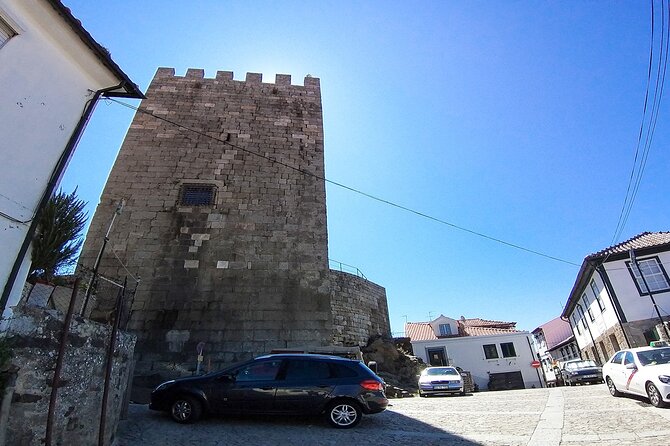
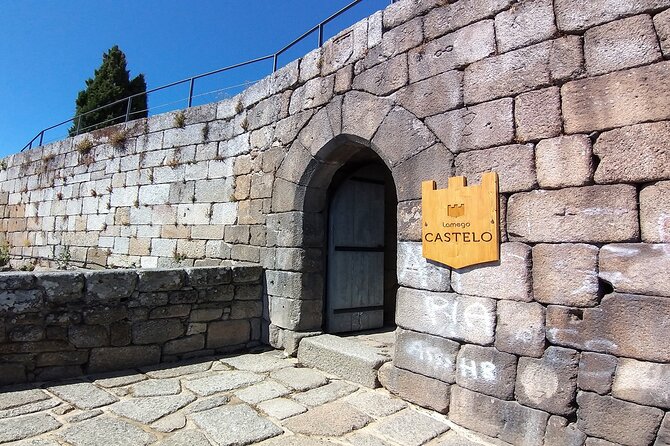
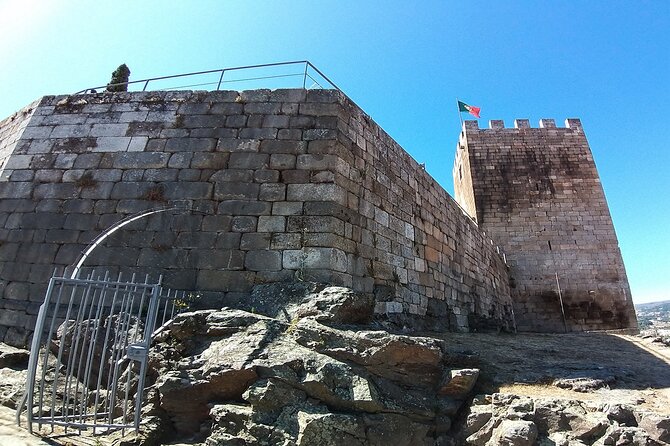
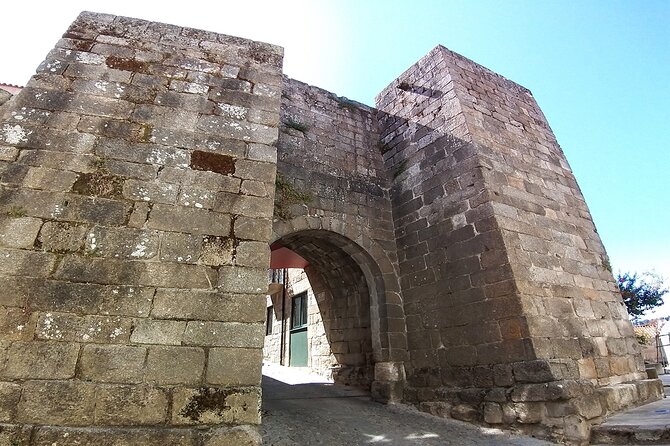
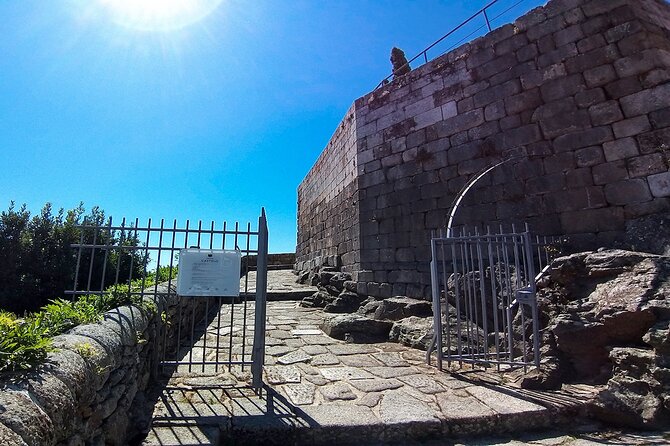
Castelo de Lamego is classified as a National Monument (since 1910), and the building timeline stretches back to the 12th century. The site sits at 543 meters above sea level, with a walled perimeter and an irregular plan that matches the terrain.
A neat thing here is the idea of continuity and reuse. This was a spot used by a Lusitanian fort before the castle, then later occupied by the Visigoths between the 5th and 7th centuries. After that, from the 18th century onward, the village came under Muslim rule until the Christian Reconquest period.
If you’re into architecture and defensive design, look for how the keep fits with the rest of the perimeter and how the restoration in the 19th century returned it after its military function fell into disuse. It is not a long stop, but it is a strong “set the stage” moment, especially because you get a sense of why people built up here in the first place.
Lamego Cathedral and the Painted Ceilings by Nicolau Nasoni
At Lamego Cathedral, the date range alone is a good reason to pause and look carefully. It dates from the 12th century, likely linked to D. Afonso Henriques, but it underwent reconstructions in the 14th, 16th, 17th, and 18th centuries, which significantly changed its original Romanesque profile.
The main façade is an early 16th-century work by architect João Lopes. It mixes flamboyant Gothic forms with the emergence of Renaissance elements, so you can literally spot style transition in stone. Inside, the ceiling paintings were done in the first half of the 18th century by the Italian painter-architect Nicolau Nasoni, and they frame Bible episodes with an architectural theme.
If you want a practical tip for this stop: spend a minute adjusting your eye to ceilings and façade details. This cathedral works best when you slow down just enough to notice that “one building” is really many rebuilds stacked over time.
There’s also a 16th-century cloister and two chapels from the same period, which is a nice payoff if your group likes quiet corners more than constant photo stops.
Some other granite-city outings to weigh
- Discover Porto’s Highlights on a 2-Hour Private Electric Tuk Tuk
★ 4.5 · 1,860 reviews - Porto PRIVATE TOUR With Locals: Highlights & Hidden Gems
★ 5.0 · 984 reviews - Porto: Private Tour of the Historic City in a Ford T Car
★ 4.8 · 932 reviews - Porto: Private tour in the Douro (1 to 4 people) on a boat just for you
★ 5.0 · 744 reviews
Sanctuary of Nossa Senhora dos Remédios: The 686 Steps That Pay Off
This is one of those places people remember because it feels physical. The Sanctuary of Nossa Senhora dos Remédios is famous as an Ex Libris of Lamego and is listed as a Property of Public Interest.
The main feature is the staircase with 686 steps that leads up to the church at the top of the mountain. The sanctuary itself is an 18th-century replacement for an earlier 14th-century chapel, and it is described as a version of the famous Bom Jesus church in Braga.
Along the staircase, you find fountains, chapels, obelisks, and other monuments built into the flights. Nicolau Nasoni also left his mark on some of the works here, with special emphasis on a granite fountain next to the sanctuary.
The value for your day is simple: you get viewpoint time plus Baroque theater in one package. One consideration is stamina. Even if the climb is accessible to many people, the sheer number of steps makes it wise to plan based on your group’s comfort. If you do it, treat it like a slow climb, not a sprint.
Se Catedral de Viseu: Fortified-Looking Gothic with Archaeology Underfoot
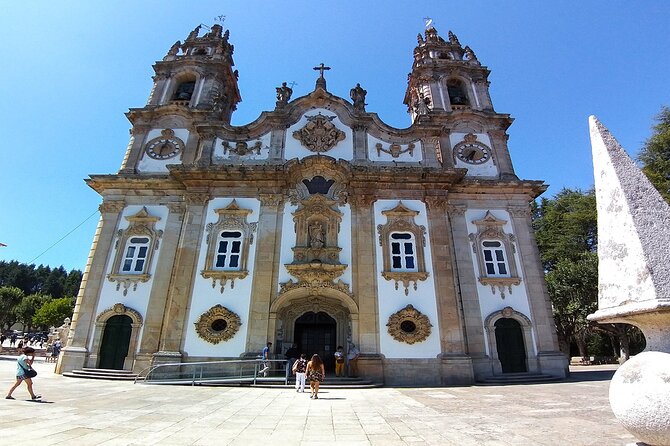
Viseu’s Sé Catedral is a landmark you can spot from a distance thanks to its big towers and its appearance of a fortified church on a promontory. It is also one of the city’s oldest buildings.
The setting matters because the cathedral is built on the site of a primitive temple from the Suevo-Visigothic era, and archaeological excavations have recently revealed that earlier structure. Construction began to take shape in the 12th century under the first king of Portugal, D. Afonso Henriques, then it underwent major renovation in the 13th century during D. Dinis reign.
This is why the cathedral feels layered even before you read anything. Multiple periods left their mark, so you are not seeing one uniform “style museum piece.” You are seeing a living building shaped by time, politics, and repair.
If you have limited time, I’d focus on the tower massing from the outside and then shift your attention to stained glass and sculpture once you’re inside. This stop is free and short, so it works well even if your group needs breaks during the day.
Palace of the Condes de Anadia: Baroque Interiors and an Optional Guided Visit
The Palácio dos Condes de Anadia is the most “pay for access” stop on paper, and for a reason. It is an 18th-century estate originally linked to one of Portugal’s richest families, the Counts of Anadia.
You get an exterior that carries Baroque style with intricate carvings and decorations, then an interior that is just as grand on the inside: ornate ceilings, frescoes, and furniture from the 18th and 19th centuries. There’s also a chapel dedicated to Saint Francis of Assisi.
This palace is offered as a guided tour option, with an optional ticket listed at €10 for the palace. There’s an even more expensive option that adds wine tasting, but you only need that if you want to pack the day with both architecture and cellar-style time.
Is it worth paying? If you like interior details and not just façades, I think yes. The rest of the day leans toward outdoor structure and quick, high-impact stops. This is where you slow down in rooms and let the decoration land.
Optional Dão Wine Stops: How to Add Tastings Without Losing the Day
This tour has a built-in wine logic. It doesn’t dump you into random tastings far from the cultural stops. Instead, it offers Dão Wine Route related options at points that make sense after you’ve had your cathedral and palace fix.
Casa do Santar, part of the Dão wine region
The Vila Jardim option includes a guided tour of Casa do Santar, a historic wine estate dating back to the 16th century. It is known for high quality wines, particularly Dão red wines made from the Touriga Nacional grape variety. The property includes a 17th-century mansion, a chapel, and a vineyard.
This option includes wine tasting and is listed at €22.50. There is also a similar alternative option mentioned elsewhere for a vineyard with aroma introduction and tasting, but the core idea is the same: a guided estate visit that teaches you what you are tasting and why.
Solar do Vinho do Dao, a tasting start point
The Solar do Vinho do Dao is tied to the Rota dos Vinhos do Dão. It serves as the reception center for visitors and also works as a small wine cellar with wines from the farms on the route.
You can get leaflets and information on where wine gets treated properly in Viseu, and you are given a glass. The stop is listed as a short 30 minutes option, and tasting pricing is described as free for some references or at a symbolic price.
This is a smart “if we’re not too hungry for wine yet” option. You can keep it short, learn the basic framework of Dão, and still have energy for the rest of the day.
Grão Vasco Museum and Artistic Stop Options
If your group is art-minded, the Museu Grao Vasco option is right next to the cathedral in Viseu, in the former bishops’ palace from the 16th century.
The museum’s centerpiece is its collection of altarpiece paintings associated with Vasco Fernandes (c. 1475 to 1542), known as Grão Vasco, plus collaborators and contemporaries. The museum also includes objects and figurative supports originally intended for liturgical practices, spanning Romanesque to Baroque.
If you add the museum, think of it as a follow-on to the cathedral. You start by seeing the cathedral as a building, then you continue by seeing the art tied to churches across the region. The museum ticket is listed as €4.00 extra, and the stop time is 30 minutes.
How I’d Plan Your Day Order: Pace, Comfort, and Priorities
This is an 8 to 10 hour day starting at 8:00 am, so you will want to choose what matters most before you go. If you want maximum wow factor, prioritize the big physical and architectural stops: sanctuary climb, then cathedral towers, then the palace interior if you can justify the optional ticket.
If you’d rather keep the day lighter, you can skip the longer wine add-ons and just do the Solar do Vinho do Dao, which is shorter. If you are art-first, add Grão Vasco Museum and keep the wine tastings to one stop.
Comfort-wise, plan around the 686 steps. You do not have to conquer everything at maximum speed. With a private format and luxury vehicle breaks, your group can regroup when needed.
Also, keep your mental energy for detail. This itinerary rewards looking. The differences between Romanesque-to-Gothic layering, Baroque stair architecture, and towered Sé cathedral design are easier to appreciate when you are not rushing.
Should You Book This Private Tour to Lamego and Viseu?
I would book it if you want a focused day that mixes major Portuguese architecture with optional Dão wine time, without turning the day into a stressful checklist. The value improves because several headline sites are listed as free, and the transport includes practical comfort items like Wi-Fi, bottled water, and refreshments.
Book it confidently if your group likes Baroque stairways, cathedral façades with changing styles over centuries, and an option to see how noble life looked inside the Palácio dos Condes de Anadia.
Skip or trim add-ons if you prefer a strict budget or you are not into museum interiors or tastings. The base day is strong, but the extras can stack up quickly.
If your travel style is hands-on and detail-oriented, this is one of those private itineraries that feels thoughtfully assembled, not random. And if Carlos is your point person, you likely start the day with smoother coordination, including Porto pickup that is handled without drama.
FAQ
What time does the tour start?
The start time is 8:00 am.
Is pickup offered from Porto?
Yes, pickup is offered, and the tour is described as starting in Porto with pickup options.
How long is the tour?
It runs about 8 to 10 hours.
Is this tour private or shared?
It is a private tour/activity, so only your group participates.
What is included in the price?
Transport in luxury vehicles with Wi-Fi, bottled water, and refreshments, personal accident and civil liability insurance, and the tour is set up as private logistics for your group.
What entrances or activities cost extra?
Extra items include the Grão Vasco Museum (€4.00), the Palace of the Counts of Anadia guided visit ticket (€10.00), and several optional wine experiences and tastings, such as Casa do Santar tasting (€22.50) and other listed tasting options.
Are any major monuments free to enter?
Several stops are listed as admission ticket free, including Castelo de Lamego, Lamego Cathedral, Santuario Nossa Senhora dos Remédios, and Se Catedral de Viseu.
Are group discounts available?
Yes, group discounts are listed as available.
Do I need good weather?
Yes. The experience requires good weather, and if it is canceled due to poor weather you are offered a different date or a full refund.
Can service animals join?
Yes, service animals are allowed. Most people can participate as well.
Fresh off the Porto quays




Wine Tours, compared.
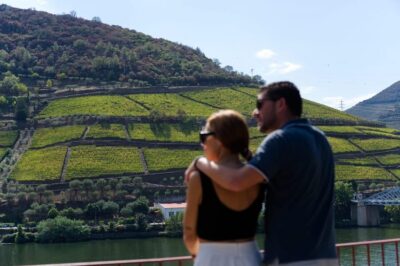
Douro Valley w/ Boat Tour, Wine Tasting & Lunch
Read our review →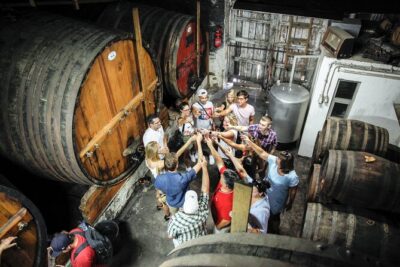
Complete Douro Valley Wine Tour with Lunch, Wine Tastings and River Cruise
Read our review →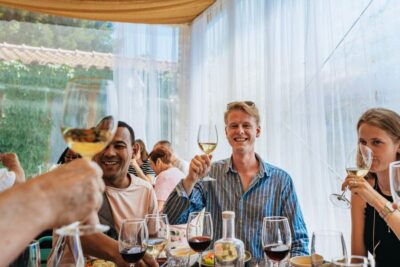
Douro Valley with Winery Lunch, Tastings & Cruise
Read our review →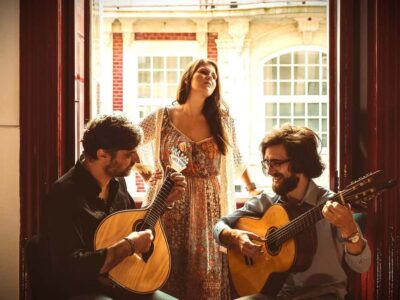

Historical Sites, Wine Experience, Lunch & Cruise
Read our review →Authentic Small Group Douro Wine Tour with Lunch & River Cruise
Read our review →