
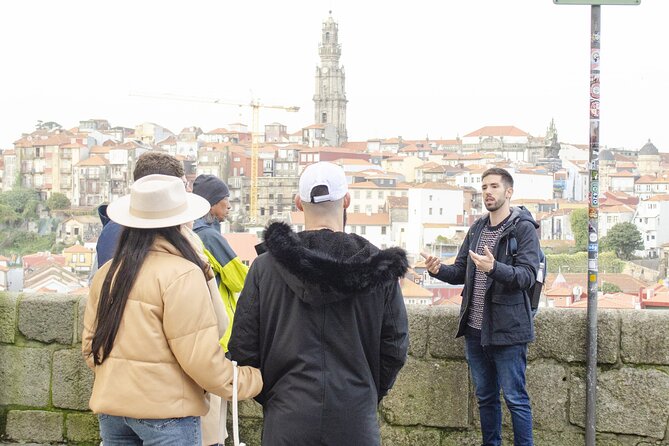
Reviewed · WALKING TOURS
Porto Walking Tour
Three hours to get Porto right. This Porto walking tour links major sights with straight talk about Portugal and the city, from the Cathedral area down to Ribeira. I especially love the way the guide keeps the story moving, and how the walk includes a port tasting so history has a taste. One thing to plan for, though, is the hilly, cobbled streets and plenty of steps.
The route is built for getting your bearings fast, with key landmarks placed logically so you are not zig-zagging around town. You also get small-group energy, typically up to 15 people, which makes it easy to ask questions and linger when something catches your eye. The only possible drawback is that this is a walking tour, so if you want minimal stairs and flat pavement, Porto may test your patience.
In This Review
- Key highlights to look for
- Getting Oriented: Start at Rua de São Filipe de Nery, Finish at Ribeira
- From Porto Cathedral to the Oldest Streets: How the City Got Its Shape
- Jardim da Cordoaria to Clérigos Tower: Salazar-Era Power and Church Dominance
- Miradouro da Vitória: Napoleon’s Invasion and the Portuguese Civil War
- Avenida da Liberdade to São Bento Station: Tiles, Tiles, and More Tiles
- Port Wine Tasting and Practical Tips for Enjoying It
- Is This Porto Walking Tour Worth Booking? Who It Fits and Who Should Pass
- FAQ
- FAQ
- How long is the Porto Walking Tour?
- What is the meeting point and where do you end?
- What time does the tour start?
- What language is the tour offered in?
- Do I get a mobile ticket?
- How much does it cost?
- What is the group size limit?
- Is there free cancellation?
Key highlights to look for
- Small-group pace (max 15): more questions, less rushing, easier conversation.
- Port tasting and light snack: one focused stop where you learn how to appreciate port wine.
- Views from Miradouro da Vitória: a strong photo moment tied to 19th-century stories.
- São Bento Station as an endpoint: you finish inside a world-famous tile-filled landmark.
- Clérigos and Cordoaria area context: the guide connects church power, law, and the Salazar-era setting.
- Ends by Ribeira and the Douro: a handy springboard for your next stop along the river.
Getting Oriented: Start at Rua de São Filipe de Nery, Finish at Ribeira
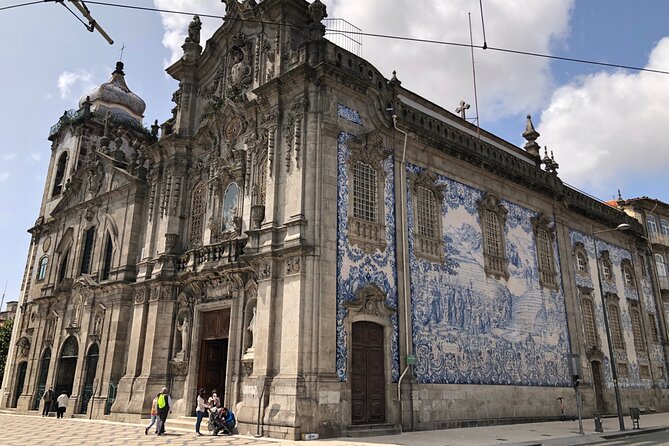
This is a classic “do it early” Porto tour. It starts at 10:00 am near Rua de São Filipe de Nery, and you end at Praça Ribeira, right by the Douro River. That matters because it puts the tour’s finish in one of the most useful locations for the rest of your day. After São Bento, you are positioned to wander toward Ribeira’s waterfront at your own pace, instead of starting over.
The tour runs about 3 hours, and the group is capped at 15 people. You can expect a steady walk and stops that feel like quick chapters, not lectures. It is also designed to be practical: you get a mobile ticket, it is offered in English, and it is noted as near public transportation. Service animals are allowed too.
One more practical point, Porto is walkable but not flat. Based on how guests describe the route, expect steep gradients, cobbled streets, and some stairs. Wear grippy shoes and bring a little water, even if the tour feels like it moves quickly. If weather is poor, the tour requires good conditions, so you might see schedule changes if it cannot run outdoors as planned.
More Porto on foot:
- Porto Walking Tour, Lello Bookshop, River Cruise and Cable Car★ 5.0 · 3,354 reviews
- Experience Porto’s Charm: 3-Hour Guided Walking Tour★ 5.0 · 2,432 reviews
- Porto: 3-Hour Guided City Highlights Walking Tour★ 4.8 · 2,050 reviews
- Porto: Wine Tasting with Tapas Walking Tour★ 4.4 · 1,541 reviews
From Porto Cathedral to the Oldest Streets: How the City Got Its Shape
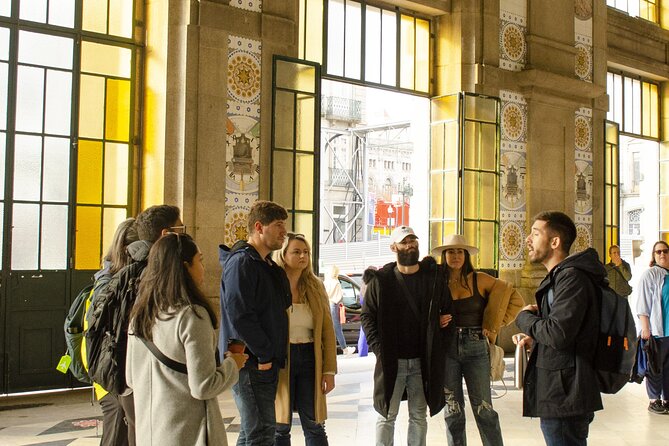
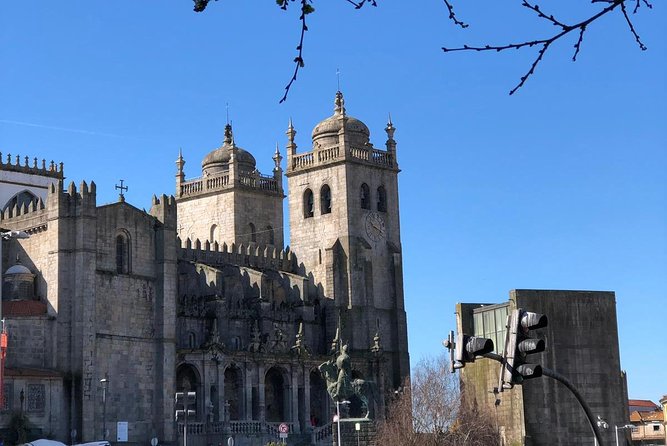
The tour’s first big anchor is the area near the Porto Cathedral. This is the kind of opening stop that helps you understand why Porto looks the way it does. From there, the guide connects Portugal’s wider history to the city’s development, so later landmarks make more sense. You do not just see buildings, you learn what they were trying to protect, project, or control.
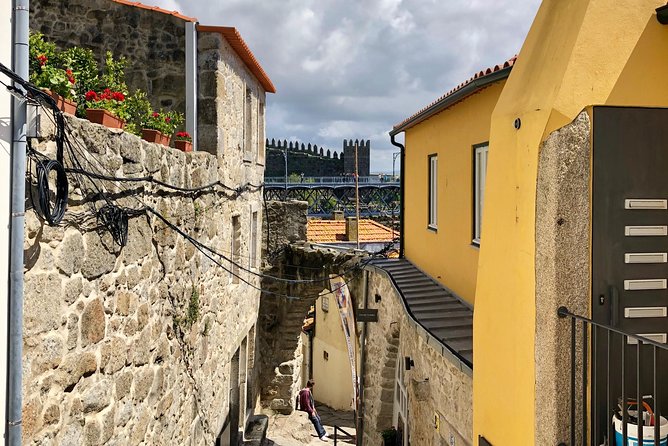
Next comes a walk through Porto’s oldest traditional neighborhood. The angle here is continuity, how customs and community life persist even as empires and power shifts change the backdrop. The guide ties in early influences, including the era of Roman invasions, and then jumps forward to modern Porto. That makes the streets feel less like an open-air museum and more like a living place with layers.
What I like about this part is that it gives you context before the scenic stops. When you reach the viewpoints and the grand stations later, you are not just taking photos, you are reading the city like a map. This is also where you can ask questions about what you are seeing, because you are still close to the start and the group is not yet worn down by the longest climbs.
If you like tours that keep moving but do not skip the why, this neighborhood section hits the sweet spot. Just remember, if you are sensitive to uneven stone sidewalks, Porto’s historic cores will still demand good footing.
Jardim da Cordoaria to Clérigos Tower: Salazar-Era Power and Church Dominance
Porto’s storytelling gets political without getting dry. You pass through the Jardim da Cordoaria area and the tribunal do Porto, where the guide brings in the dictatorship of Salazar. You can think of it as learning how power shows up in architecture. Courts, civic spaces, and prominent institutions often reflect who had authority, and how that authority tried to look legitimate.
From there, you move toward the Torre dos Clérigos, often treated as Porto’s ex-libris. Even if you only catch it from the street, it sets the tone. The Clérigos tower is not subtle, and the guide uses that visibility to explain how church influence shaped parts of the city’s identity. In one guest account, the tour started near Clérigos and included time inside the church, with the added bonus of avoiding lines at that moment. If that timing works out for your group, it is a real advantage, but do not assume it will always be perfect.
Between these stops, you also get a tour-style route that strings monuments together without feeling random. You may see references to other major sights along the way, like the kind of famous bookstores and streets that pop up on first-time Porto photo lists. The key is that the guide connects them to the wider story, instead of treating every corner as a separate event.
Consider this the “how Porto became Porto” stretch. It includes some uphill motion, but it is also where the tour starts to feel like a guided walk through cause and effect. You will likely leave with a better sense of why law and religion both mattered in shaping public life.
Miradouro da Vitória: Napoleon’s Invasion and the Portuguese Civil War
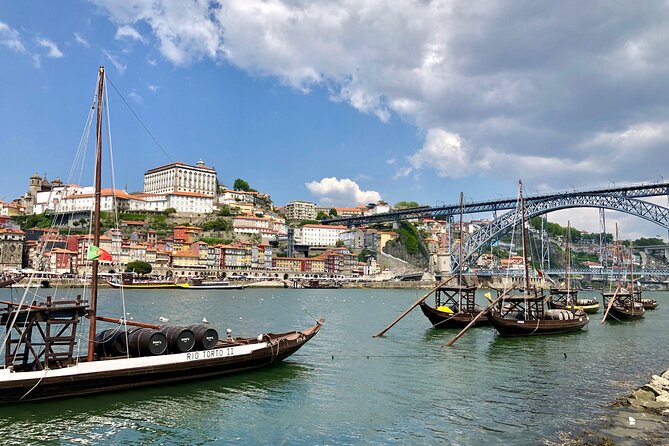
If Porto has a best class on storytelling with a view, it is Miradouro da Vitória. You climb to this viewpoint after passing more monuments and moving along the route toward Rua and Avenida areas that help you understand the city’s layout. Then the guide focuses on two 19th-century themes: the Napoleonic invasion and the Portuguese Civil War.
The value of this stop is not just the view, it is what the view teaches. Standing high above Porto forces your brain to picture distances and defensive geography. Suddenly, conflicts feel more grounded. You are not reading history from a page, you are seeing why the city’s position mattered.
Guests also describe this section as a highlight because it balances big events with real human perspective. The guide keeps the pacing friendly and makes room for questions. If you are traveling with friends who like photos, this is the moment you can say yes to, because you will actually have context for what you are photographing.
This is also a good “pause point” before the final stretch. Expect some steps and a viewpoint that may require careful footing depending on pavement conditions. But the payoff tends to be worth it because the city looks different once you get above it.
Avenida da Liberdade to São Bento Station: Tiles, Tiles, and More Tiles
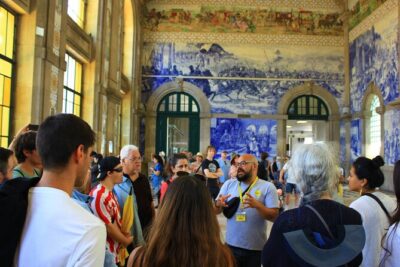
After the viewpoint, you work your way down via Avenida da Liberdade, then finish inside Estação de São Bento. This ending is not an afterthought. São Bento is described as an old convent and one of the most beautiful train stations in the world, and the tour leans into why.
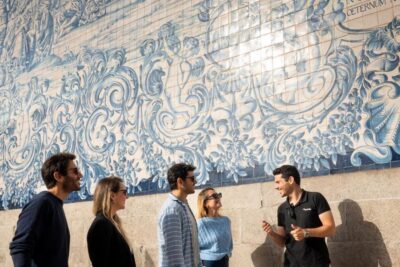
The big visual payoff is the station’s famous tile panels. You get a guided look at how the artwork is made and how the station was built, so it reads like a design and craftsmanship lesson, not just decoration. In particular, one account noted the guide explaining the tile depictions and even the artist’s process. That sort of detail is what turns a landmark stop into something you remember later.
Ending here is smart for your itinerary. You have seen the city’s historical spine, and now you land in a place that feels both local and monumental. It also gives you natural next options. You can head toward Ribeira after the tour, or keep exploring around the station without feeling lost.
One small consideration: finish-station means you might be around crowds depending on train times. The tour’s small group size helps, but plan to move with the flow rather than trying to stand in one place forever.
Elsewhere in Porto, worth a look before you book:
- The Unvanquished Tour in Porto City Center
★ 5.0 · 26,497 reviews - From Porto: Douro Valley w/ Boat Tour, Wine Tasting & Lunch
★ 4.7 · 19,061 reviews - Complete Douro Valley Wine Tour with Lunch, Wine Tastings and River Cruise
★ 5.0 · 12,920 reviews - Porto: Douro Valley with Winery Lunch, Tastings & Cruise
★ 4.7 · 7,002 reviews
Port Wine Tasting and Practical Tips for Enjoying It
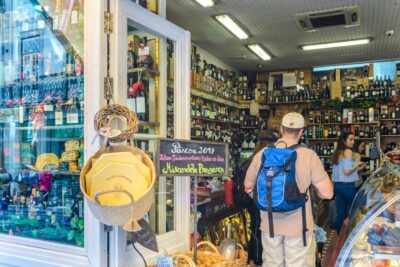
This tour includes a port tasting and a light snack. In one description, it is a single glass, which keeps the experience from dragging. That is a good balance on a walking tour, because you want the tasting to support the story, not become a separate activity that steals time from the rest of the walk.
What makes the port stop valuable is the explanation. Guests describe the guide teaching how to appreciate port wine and even how to check providence and quality at the tasting. You learn what to pay attention to, and that makes your later purchases in Porto feel more informed. Instead of ordering what looks good, you can ask better questions and taste with intent.
If you do not drink alcohol, the data does not say whether there are substitutes. So the practical move is to mention it when you book, or at least be ready to participate with curiosity rather than expecting a free swap.
Also, given how much walking you do and how steep some sections are, the snack is not trivial. A small bite before or during the tasting can keep energy steady. Bring a bottle of water if you can, especially on warm days, because Porto streets can be hotter than they look.
Is This Porto Walking Tour Worth Booking? Who It Fits and Who Should Pass
For the price of $24.14 per person, this tour feels like strong value because you get three things most Porto tours try to do separately: a guided sweep of major sights, a viewpoint stop with historical context, and a structured tasting. Three hours also means it fits easily into a first day without hijacking your entire schedule.
The experience is best for people who want history that connects to streets, not history that stays in textbooks. It also fits travelers who like small-group guides. Multiple accounts highlight guides such as Nuno, Sid, and David, with praise for friendly, funny delivery and willingness to answer questions. That combination matters. If you are the type who likes to ask why a building looks the way it does, you will likely enjoy the back-and-forth feel.
Who should consider passing? If you have limited mobility, or you hate slopes and uneven paving, the route can be demanding. Even when the pace is described as easy, Porto’s terrain does not change. Plan for cobbled streets, gradients, and steps, and you will be happier.
If your main goal is to get oriented quickly, this tour is a smart move. It sets you up for self-guided exploring afterward, especially because it ends at Ribeira, where you can keep the river views going.
FAQ
FAQ
How long is the Porto Walking Tour?
It is about 3 hours.
What is the meeting point and where do you end?
You start near Rua de São Filipe de Nery and you finish at Praça Ribeira, next to the Douro river.
What time does the tour start?
The start time is 10:00 am.
What language is the tour offered in?
The tour is offered in English.
Do I get a mobile ticket?
Yes, the tour uses a mobile ticket.
How much does it cost?
The price is $24.14 per person.
What is the group size limit?
The tour has a maximum of 15 travelers.
Is there free cancellation?
Yes. You can cancel up to 24 hours in advance for a full refund. Cancellation less than 24 hours before the start is not refunded.
Fresh off the Porto quays




Walking Tours, compared.
Porto Walking Tour, Lello Bookshop, River Cruise and Cable Car
Read our review →
Experience Porto’s Charm: 3-Hour Guided Walking Tour
Read our review →

Walking Tour, Lello Bookshop, Boat and Cable Car
Read our review →Browse the lists this tour appears in