
Reviewed · WALKING TOURS
Porto Walking Tour with Audioguide on Your Smartphone
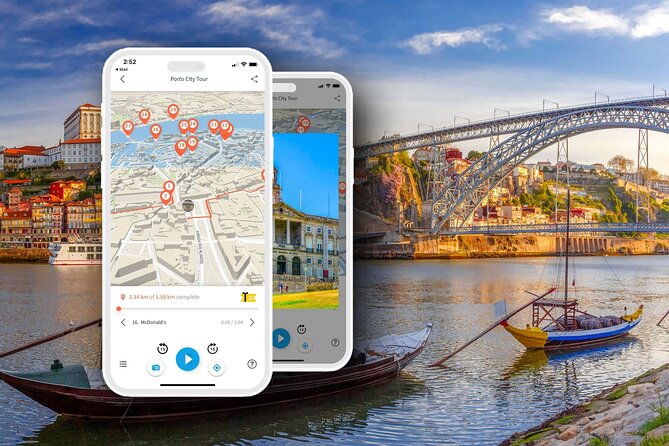
Porto looks best at walking speed, and this self-guided audio route keeps you moving. You’ll follow a set loop through Porto’s icon sights and key tile churches, guided by 29 historian narrated recordings you can replay any time. I really like that it is phone-based, so you can pause, start, and restart without juggling a group.
Two highlights for me are the offline map that helps you navigate city streets smoothly, and the way the route threads together very different Porto scenes, from São Bento’s azulejo hall to the river views at Serra do Pilar. The main drawback is also practical: you need your own smartphone and headphones, plus you’ll want your phone charged before you start.
In This Review
- Key points before you walk
- Porto walking tour with smartphone audioguide: what it feels like
- Price of $8.45 and what that buys you in real life
- Meeting at São Bento and using the route like a local
- The tile trail: São Bento, Saint Ildefonso, and Chapel of Souls
- Stop 1: São Bento Railway Station
- Stop 2: Church of Saint Ildefonso
- Chapel of Souls on Rua de Santa Catarina
- Porto for coffee and custard: Majestic Café and Fábrica da Nata
- Majestic Café, Belle Époque style
- Fábrica da Nata for warm pastel de nata
- Markets and local life at Bolhão
- Downtown monuments: City Hall and the bookish spectacle at Livraria Lello
- Porto City Hall on Avenida dos Aliados
- Livraria Lello, 1906 and a red spiral staircase
- Views and towers: Clérigos Tower and the Olive Gate Fountain
- Torre dos Clérigos
- Olive Gate Fountain
- City icons with personality: McDonald’s Imperial Porto and Porto Cathedral
- McDonald’s Imperial Porto
- Porto Cathedral, Sé do Porto
- Medieval symbols: Pillory of Porto and the Fernandine Walls
- Pillory of Porto (Pelourinho do Porto)
- Muralhas Fernandinas do Porto
- Palácio da Bolsa, Mercado Ferreira Borges, and Church of Saint Francis
- Mercado Ferreira Borges
- Palácio da Bolsa
- Church of Saint Francis, plus catacombs
- Serra do Pilar and the Luís I Bridge: Porto’s river-view payoff
- Mosteiro Santo Agostinho da Serra do Pilar
- Dom Luís I Bridge
- Vila Nova de Gaia and Port wine cellars: how to finish strong
- Timing and walking comfort in a 2h 30m route
- Should you book the Porto audioguide walk?
- FAQ
- Is this tour self-guided or do I meet a guide?
- What language is the audioguide available in?
- How long is the walking tour?
- What do I need to bring?
- Does the tour include audio and navigation tools?
- Where do I start and end?
- Can I get a refund if plans change?
Key points before you walk
- 29 historian narrated recordings help you connect the dots between major landmarks
- Offline map + illustrations make it easy to spot what you are looking at
- 2 hours 30 minutes, lots of short stops, so it feels efficient without feeling rushed inside one place
- One-year access means you can walk the route again the next day, or replay stops later
- Small cap of 20 travelers (even though it is self-guided), which usually means the route stays easy to follow
- No entry fees built in, so you control how many interiors you want to pay to see
Porto walking tour with smartphone audioguide: what it feels like
Think of this as your own personal “city storyteller” running on your phone. You start at São Bento Station and work through Porto in a logical way, landmark to landmark, with audio segments timed to short stopovers. It is designed for you to keep moving, but it still gives you time to look closely at details like tilework, facades, and viewpoints.
The big value is not just hearing facts. It is the pacing. With 29 audio recordings across a long list of famous places, you get enough context to stop and notice what makes each stop Portuguese, not just postcard pretty. You’ll also get illustrations so you can recognize what you’re seeing even when a building is partly hidden by crowds or street angles.
And yes, you can repeat it. The audio guide comes with one-year access in your chosen language, and that means you can come back and redo the route when you have fresher energy, better light, or time to linger at one or two places.
More Porto on foot:
- Porto Walking Tour, Lello Bookshop, River Cruise and Cable Car★ 5.0 · 3,354 reviews
- Experience Porto’s Charm: 3-Hour Guided Walking Tour★ 5.0 · 2,432 reviews
- Porto: 3-Hour Guided City Highlights Walking Tour★ 4.8 · 2,050 reviews
- Porto: Wine Tasting with Tapas Walking Tour★ 4.4 · 1,541 reviews
Price of $8.45 and what that buys you in real life
At $8.45 per person for about 2 hours 30 minutes, this is an inexpensive way to do a structured walk without paying for an in-person guide. You are paying for the audio layer, the route support, and the historical narration, not for ticketed museum time or attractions.
If you’re budgeting tight, this format helps. Many “guided” walking tours cost much more because you are paying for a person to deliver the information. Here, the cost goes into the app experience: 29 recordings, an offline map, and a route you can follow again during your access window.
The trade-off is that you must do the “little chores” yourself. Download the app, activate your purchase, bring headphones, and keep your phone ready. That effort is small, but it is real, and it can make or break the experience if you show up undercharged.
Meeting at São Bento and using the route like a local
Your walk begins at Porto São Bento, Praça de Almeida Garrett, 4000-069 Porto. The tour ends back at the same meeting point, so the route is looped, not point-to-point.
You’ll use a mobile ticket and then the audio guide app for iPhone and Android. You should plan to start with your phone fully set up. The instructions clearly say you will have to download the audio guide mobile app, activate your purchase, and follow what the guide tells you. I strongly suggest you do that before you step into the first busy square.
One more thing: you’ll want headphones. The tour does not include them, so bring wired or Bluetooth. Also keep an eye on time. This is built as a sequence of short stops, so you can hit a lot of famous places while still staying within the 2h 30m rhythm.
The tile trail: São Bento, Saint Ildefonso, and Chapel of Souls
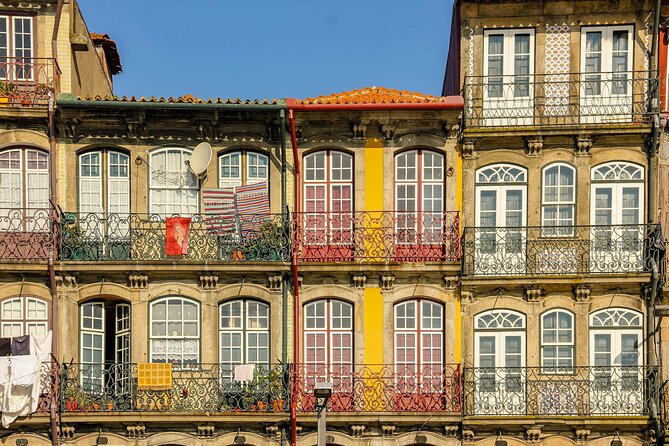
The smartest way to enjoy this route is to start with tiles and really look. Porto is known for azulejo tile art, and this walk puts it in front of you early and often.
Stop 1: São Bento Railway Station
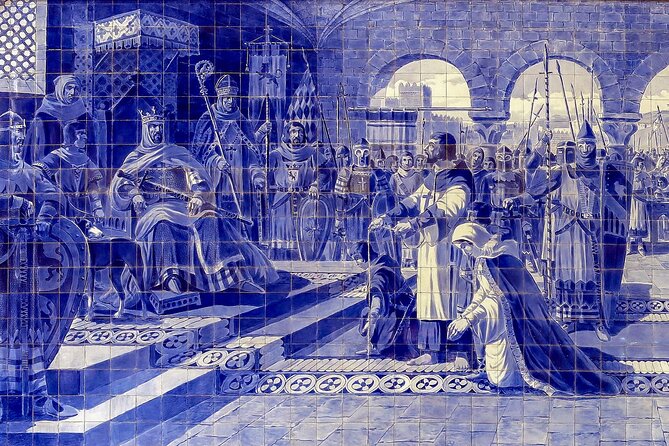
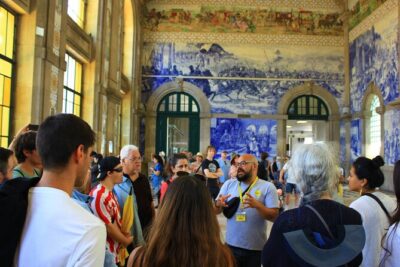
São Bento is where the tour hits you with scale. The grand hall is famous for blue-and-white tile panels depicting Portugal’s history, with over 20,000 tiles. Opened in 1916, the station blends French Beaux-Arts style with local identity. Even if you do not go inside long, pause long enough to scan the panels like a story.
Practical note: this is a working station, so you’ll want to keep an eye on your footing and your timing, especially if there are trains or commuter crowds.
Some other granite-city outings to weigh
- Porto: Self-Guided Bike and Boat Tour with Port Wine Tasting
★ 4.7 · 52 reviews - Porto Scavenger Hunt and Sights Self-Guided Tour
★ 4.5 · 21 reviews - Self-Guided Bike to Surf”N”Food Pack
★ 4.6 · 13 reviews - Self-guided tour Bike + Surf
★ 5.0 · 6 reviews
Stop 2: Church of Saint Ildefonso
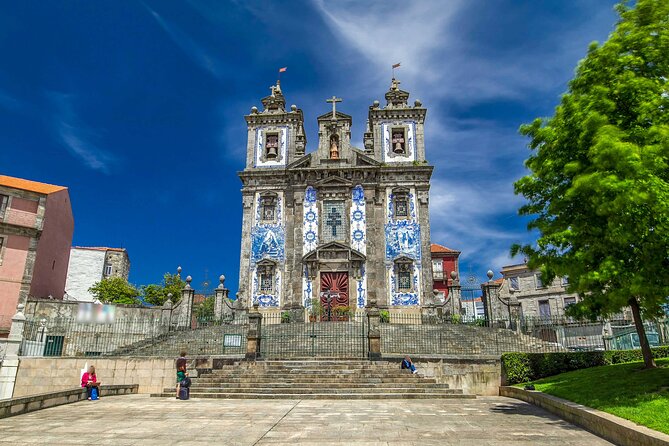
Next comes another visual feast. The Church of Saint Ildefonso, built in 1739, is known for a façade covered with over 11,000 blue-and-white azulejo tiles showing scenes from Saint Ildefonso’s life. Inside, there’s a grand altar and intricate woodwork, so you can switch from street-level façade watching to interior detail if you choose to step in.
If you only have a few minutes at each stop, focus on the façade composition first. Tiles can look busy until you understand the structure of the scenes.
Chapel of Souls on Rua de Santa Catarina
You’ll also reach the Chapel of Souls, an 18th-century chapel famed for its blue-and-white tiles on the façade. The scenes depict the lives of Saint Francis and Saint Catherine. This stop is a great “pause and look up” moment because the tile coverage is the point.
If you are taking photos, do it carefully. Because the façade is the artwork, you’ll want to keep your camera angle steady rather than rushing from one corner to another.
Porto for coffee and custard: Majestic Café and Fábrica da Nata
This route is not only churches and towers. It gives you two iconic food moments that feel like part of Porto’s identity, not just snacks.
Majestic Café, Belle Époque style
The Majestic Café, opened in 1921, is an elegant Belle Époque stop. It is known for ornate mirrors, intricate woodwork, and grand chandeliers. Historically, it served as a meeting place for intellectuals and artists, and today it is a classic place to slow down with a Portuguese coffee and a pastel de nata.
You do not need to order anything fancy to enjoy the setting. Even a drink can turn this from a quick photo stop into a memory.
Fábrica da Nata for warm pastel de nata
Then comes the sweet tradition at Fábrica da Nata. This bakery focuses on freshly baked pastéis de nata, with a crispy crust and creamy filling. The tour experience emphasizes watching the pastries being made, eating them warm with cinnamon, and pairing them with espresso.
Practical tip: plan your timing. Custard is best when it is warm, and you do not want to rush the rest of the walk because you stopped too long here. Consider taking a short window for pastry and coffee, then jump back into the route.
Markets and local life at Bolhão
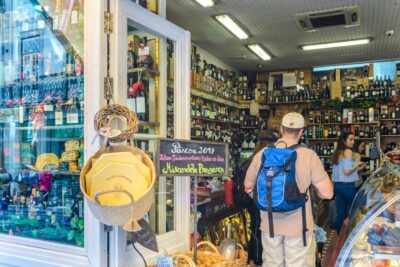
After the café and bakery moments, you shift into everyday Porto at Bolhão Market. It has been a hub for fresh produce and local foods since 1914, and it has recently been restored. Expect lively stalls with seafood, cured meats, cheeses, and pastries, plus conversations with friendly vendors.
This stop is valuable because it anchors the route in real daily life. A lot of Porto tours focus on monuments. This one gives you a sense of how people actually shop and snack in the middle of the city.
If you plan to buy anything edible, bring a little cash and keep your pace. Market floors can be uneven, and you’ll likely want to keep headphones in because the audio narration is still driving the schedule.
Downtown monuments: City Hall and the bookish spectacle at Livraria Lello
Two of Porto’s biggest “I have seen this in photos” moments show up on the downtown stretch.
Porto City Hall on Avenida dos Aliados
At Porto City Hall, you’ll see a neoclassical building completed in 1957 with an imposing tower and a grand staircase. It sits right on Avenida dos Aliados, so it also acts as a focal point for city events and celebrations.
If you like architecture, look at the stonework and the way the tower dominates the streetscape. It is the kind of building that makes the whole area feel organized.
Livraria Lello, 1906 and a red spiral staircase
Then you reach Livraria Lello, widely known as one of the world’s most beautiful bookstores. Established in 1906, the building features a neo-Gothic façade, intricate wood carvings, and a famous red spiral staircase. It is often linked with J.K. Rowling’s inspiration for Harry Potter, which adds pop-culture appeal to an otherwise serious architectural stop.
This is also a place where you will feel the difference between “seeing it once” and “understanding it.” Try to do more than one glance: look at the façade first, then the staircase, then any carvings you can spot quickly.
Views and towers: Clérigos Tower and the Olive Gate Fountain
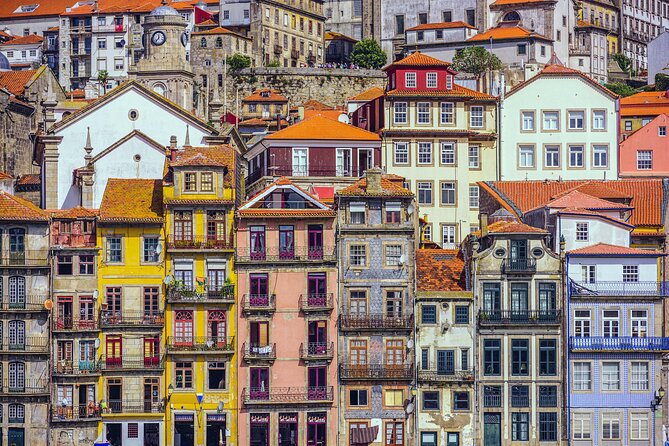
Porto has plenty of viewpoints, and this route feeds you both the big headline view and some quieter history.
Torre dos Clérigos
The Clérigos Tower, part of the Clérigos Church, is completed in 1763 and rises 75 meters. The tour encourages you to climb 225 steps for panoramic city views. Even if you choose not to climb, the architecture matters and the position is important for understanding Porto’s skyline.
If you climb, take your time on the way down. Stairs are where knees protest, especially after a long walking stretch.
Olive Gate Fountain
Near the ancient city walls, you’ll find the Olive Gate Fountain, a small but historic reminder of medieval water supply. It is positioned as a heritage symbol, and that makes it a nice contrast after the grand tower.
This is the kind of stop that makes the route feel like more than a list. It shifts you from landmarks-as-spectacle to landmarks-as-context.
City icons with personality: McDonald’s Imperial Porto and Porto Cathedral
Not everything on this route is religious or royal. You’ll also pass a playful twist on classic street scenes.
McDonald’s Imperial Porto
The McDonald’s Imperial Porto, often noted as the most beautiful McDonald’s in the world, is housed in a historic 1930s café on Avenida dos Aliados. The interior style is Art Deco with grand chandeliers and stained glass windows.
This stop works if you like atmosphere. You are not coming for the menu. You are coming because Porto loves the unexpected, and this is a reminder that everyday places can still be design-forward.
Porto Cathedral, Sé do Porto
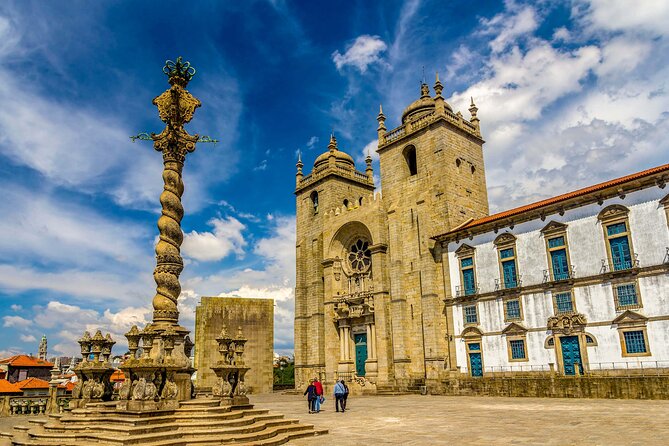
Next is Porto Cathedral (Sé do Porto), dating back to the 12th century. It is Romanesque in its core, but you’ll notice Gothic influence in the cloister, where traditional azulejo tiles decorate the space. The terrace offers views over Porto, which ties this section of the walk to the viewpoint theme.
If you want one “big payoff” moment in this segment, do the terrace time. Short, focused view time often beats long inside time when you only have about two and a half hours total.
Medieval symbols: Pillory of Porto and the Fernandine Walls
Porto’s medieval identity shows up most clearly around its cathedral area and its fortifications.
Pillory of Porto (Pelourinho do Porto)
In front of the cathedral, you’ll see the Pillory of Porto, a twisted stone column that once supported the city’s medieval justice practices. Today it is a visible historical monument, right next to one of Porto’s most important religious sites.
This stop is great for history-minded visitors because it connects faith spaces with civic life in the same small area.
Muralhas Fernandinas do Porto
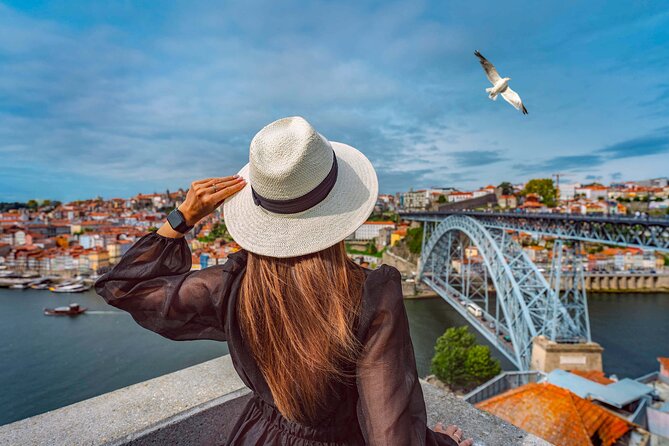
Later, you’ll reach the Fernandine Walls, medieval fortifications built in the 14th century under King Fernando I. Not all sections survive, but important viewpoints remain, such as the area near Guindais Stairway where you get views over the Douro River and the Ribeira district.
This is where the walk starts to feel like a “why Porto looks the way it does” lesson. Walls explain the city’s street layout and the way the river shaped everything.
Palácio da Bolsa, Mercado Ferreira Borges, and Church of Saint Francis
These stops are for you if you like interiors and architectural storytelling.
Mercado Ferreira Borges
The Ferreira Borges Market is a 19th-century iron-and-glass structure. It began as a market and now hosts cultural events, including concerts and exhibitions. It is also associated with Hard Club.
Even if you do not go inside for an event, the structure itself is worth a look because it shows how Porto reused older industrial-style spaces.
Palácio da Bolsa
At Palácio da Bolsa, you’ll get a major architecture moment. Built as Porto’s city stock exchange, the palace features lavish interiors, including the Arab Room inspired by Moorish design. Guided tours reveal its history and show off details like woodwork and chandeliers.
Since entry tickets are not included in the tour price, you’ll need to decide if you want to pay for the interior based on your interests. If you love ornate spaces, this is the place to consider spending extra time or money.
Church of Saint Francis, plus catacombs
Then comes Church of Saint Francis (Igreja de São Francisco). Its façade is relatively simple, while the interior is dramatically decorated with gilded wood carvings. The underground catacombs add extra historical weight.
This stop is a good “choose your pace” moment. If you have energy for interiors, you’ll likely feel the biggest payoff here. If you want just exterior context, at least take a slow walk up to the façade and let the audio framing guide your eye.
Serra do Pilar and the Luís I Bridge: Porto’s river-view payoff
This part turns the walk toward wide views and river energy. You’ll move from medieval walls toward a panoramic perspective that helps the entire city click.
Mosteiro Santo Agostinho da Serra do Pilar
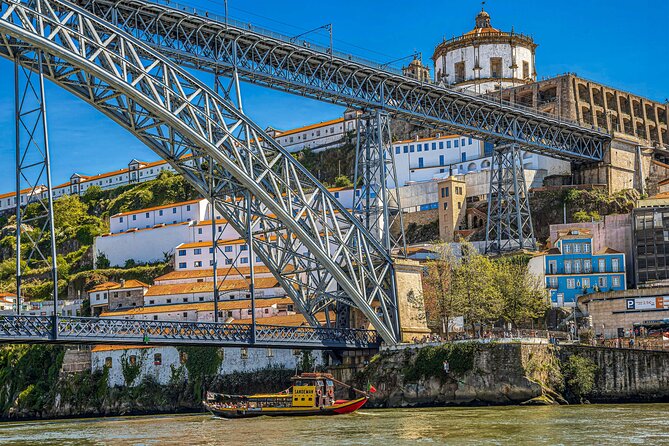
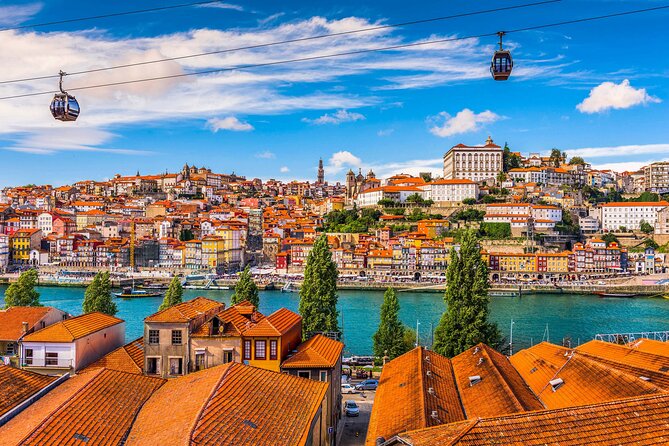
At Serra do Pilar, you reach a UNESCO-listed monastery with one of the best viewpoints in Porto. It features a circular church inspired by the Pantheon in Rome. It was once a military outpost, which helps explain why the viewpoint and fortification mindset belong together.
If you like “place + purpose” connections, this is one of the most logical stops on the route.
Dom Luís I Bridge
Next is the Luís I Bridge, completed in 1886, designed by a student of Gustave Eiffel. It is a double-deck iron bridge connecting Porto and Vila Nova de Gaia, and it is famed for views from the upper deck.
Make time for the bridge section, especially if you catch decent light. The walk makes the bridge feel like a landmark you cross, not just a photo you shoot.
Vila Nova de Gaia and Port wine cellars: how to finish strong
The route finishes in Vila Nova de Gaia, the gateway to Porto’s Port wine lodges. You’ll be guided across the idea of cellars, tastings, and tours, with suggestions to stroll Cais de Gaia and consider a rabelo boat cruise.
The tour also points you toward the world-famous lodges for guided experiences and tastings, such as Graham’s, Sandeman, and Taylor’s. That is great if your next move is to book a cellar visit.
Two practical thoughts here. First, Port tastings can add time, so decide if you are treating Gaia as a quick walk-through or a longer food and wine evening. Second, the route already covers a lot, so give yourself permission to stop early if your legs are done.
Timing and walking comfort in a 2h 30m route
This route works because the stops are short. Many are described as about 5 to 10 minutes, which means you are not lingering for long inside each building. That is ideal if you want a broad “orientation to Porto” without sacrificing every hour to one attraction.
It also means you should plan your expectations. You’ll learn why each place matters, but you won’t have time for a full museum day.
What to bring that actually matters:
- Headphones (required)
- A charged smartphone so the app and audio stay reliable
- Comfortable shoes for continuous city walking
- A quick snack plan, since the route includes café and bakery stops but food is not included
Should you book the Porto audioguide walk?
Book it if you want structure without scheduling stress. This is a strong choice for independent travelers who like to move at their own speed, want a history thread that makes the monuments easier to understand, and appreciate being able to revisit the same route later thanks to one-year access.
Skip it or reconsider if you dislike app-based navigation. You need headphones, and the experience depends on you setting up your phone properly. Also, if you want long interior visits at every major site, you might find the time window tight.
If you want a smart, cost-friendly way to see a lot of Porto in one go, this walk is a good match. It connects tiles, cathedrals, markets, bookstores, and river views into one coherent route, and it does it for a price that leaves room in your budget for coffee, custard, and whatever you choose to pay for inside.
FAQ
Is this tour self-guided or do I meet a guide?
This is a self-guided experience, so there is no in-person guide at the meeting point. You will follow the route and audio on your smartphone.
What language is the audioguide available in?
The tour is offered in English.
How long is the walking tour?
It lasts about 2 hours 30 minutes.
What do I need to bring?
You need your own smartphone and your own headphones. Entry tickets and food are not included.
Does the tour include audio and navigation tools?
Yes. It includes an audio guide app for iPhone and Android, an offline map with a route, 29 audio recordings narrated by a professional historian, and illustrations to help you recognize landmarks.
Where do I start and end?
You start at Porto São Bento, Praça de Almeida Garrett, 4000-069 Porto, Portugal and it ends back at the meeting point.
Can I get a refund if plans change?
Yes, you can cancel for free up to 24 hours in advance for a full refund. If you cancel less than 24 hours before the start time, the amount you paid is not refunded.
Fresh off the Porto quays






Walking Tours, compared.
Porto Walking Tour, Lello Bookshop, River Cruise and Cable Car
Read our review →
Experience Porto’s Charm: 3-Hour Guided Walking Tour
Read our review →

Walking Tour, Lello Bookshop, Boat and Cable Car
Read our review →Browse the lists this tour appears in