

Reviewed · WALKING TOURS
Porto: Walking Tour Through History, Culture & Amazing Views
Porto hits you fast, especially from above. This tight 150-minute walk strings together Clérigos Tower area sights, the story-rich azulejos tradition, and panoramic viewpoints that make you slow down and look around. Two things I love here are the literary magic stop at Lello Bookstore and the way the route turns Porto’s landmarks into a clear story, not random sightseeing. One drawback to plan for: the pace is on foot and the tour is not suitable for wheelchair users.
The best part is the variety. You get the big-ticket visuals, São Bento Station’s blue tile murals, then you step toward the Douro River for a sweep of bridges, wine cellars, and the historic cityscape. The other practical win is that your local, English-speaking guide keeps the walk moving while still sharing what each place means.
Bring comfortable shoes, and if the weather is rough, expect slippery cobbles and fewer photo-ready moments. Still, the route is packed enough that you will likely feel you used your time well.
In This Review
- Key highlights you should care about
- Starting at Clerigos Tower: your Porto history kickoff
- Lello Bookstore: the literary stop people actually remember
- Azulejos in the streets: why the blue tiles matter
- São Bento Station: murals that act like a history lesson
- Heading to the Douro: panoramic views and the Dom Luís I Bridge
- The Port wine story, seen in the right place
- Porto City Hall and Porto Cathedral: two landmark finales
- Value at $4.71 for 150 minutes: where the money goes
- Who this walking tour suits best
- Practical tips to make those 150 minutes work
- Should you book this Porto walking tour?
- FAQ
- Where does the tour start?
- How long is the Porto walking tour?
- What is included in the price?
- Is food included?
- What languages are the tour guides?
- What should I bring?
- Is the tour wheelchair accessible?
- Can I cancel for a refund?
Key highlights you should care about
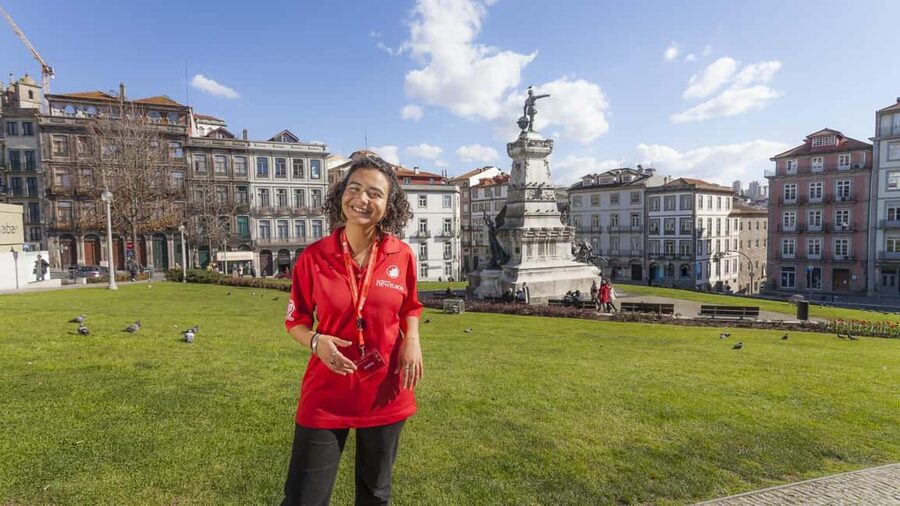
- Start at Clérigos Tower and get oriented with the statue of Bishop António Ferreira Gomes right away
- Lello Bookstore connection to popular literature, plus time to appreciate the building itself
- São Bento Station azulejo murals where the tilework does the talking
- Panoramic viewpoints toward the Douro and the quick hit of the Dom Luís I Bridge
- Port wine story along the riverbanks, tied to what you actually see in Porto
- Porto City Hall and Porto Cathedral to finish with two major landmark buildings
Starting at Clerigos Tower: your Porto history kickoff
The tour begins at the statue of Bishop António Ferreira Gomes, opposite Clérigos Tower. This is a smart start point because you get your bearings in the historic core right away. Clérigos is one of the easiest landmarks to navigate from, so you are not spending your first minutes hunting for the right street or meeting point.
From there, the walk naturally threads through the places that define how Porto developed: religious power, literary culture, and the city’s later shift into trade and maritime wealth. Your guide sets the tone with the kinds of details that make buildings feel less like backdrops and more like chapters. It helps that the tour is short enough, 150 minutes, that you will stay focused instead of getting tour-fatigue.
More Porto on foot:
- Porto Walking Tour, Lello Bookshop, River Cruise and Cable Car★ 5.0 · 3,354 reviews
- Experience Porto’s Charm: 3-Hour Guided Walking Tour★ 5.0 · 2,432 reviews
- Porto: 3-Hour Guided City Highlights Walking Tour★ 4.8 · 2,050 reviews
- Porto: Wine Tasting with Tapas Walking Tour★ 4.4 · 1,541 reviews
Lello Bookstore: the literary stop people actually remember
One of the most talked-about moments is the Lello Bookstore. Even if you are not chasing pop-culture links, the stop works because it is about more than the name. The bookstore is widely associated with the imagination of Harry Potter’s world, and that connection is the hook that pulls you in.
What I like about this kind of stop on a walking tour is that you learn how Porto carries culture in unexpected ways. Your guide explains why Lello became so beloved, and you get to see it in context of the surrounding streets instead of treating it like an isolated photo-op.
Practical note: you will want your camera ready, but also keep a little patience for crowds. This is a popular spot, and the best photos usually come when you step back and frame the façade with the street lines.
Azulejos in the streets: why the blue tiles matter
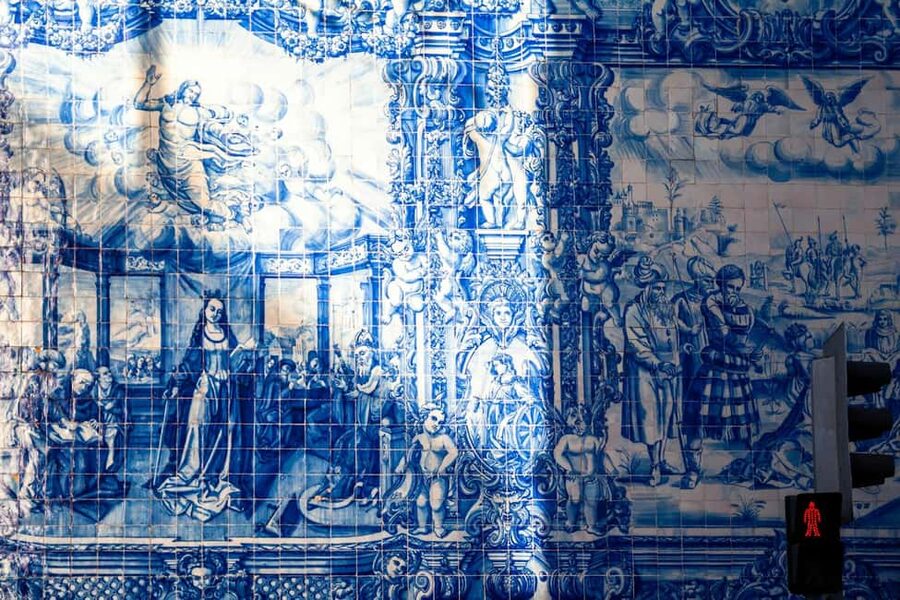
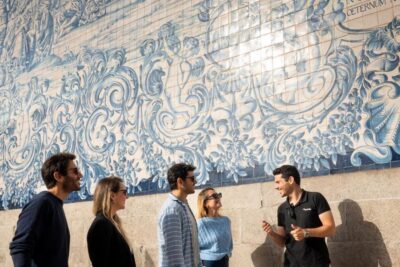
Porto’s streets are a walking gallery of azulejos, the iconic blue-and-white tilework. You do not just get one big display here. You get chances to spot the tiles as you move, which makes the whole city feel like a living museum.
Your guide points out what you are looking at, so the tiles stop being just pretty decoration. They become a visual language, tied to Porto’s artistic and cultural identity. This is where the tour earns its value for first-timers. Instead of memorizing locations, you start understanding patterns: how tiles appear on façades, stations, and landmark buildings across the city.
If you like photography, this portion is also a confidence builder. You can test angles at street level, then later aim for bigger compositions when you reach the river viewpoints.
São Bento Station: murals that act like a history lesson
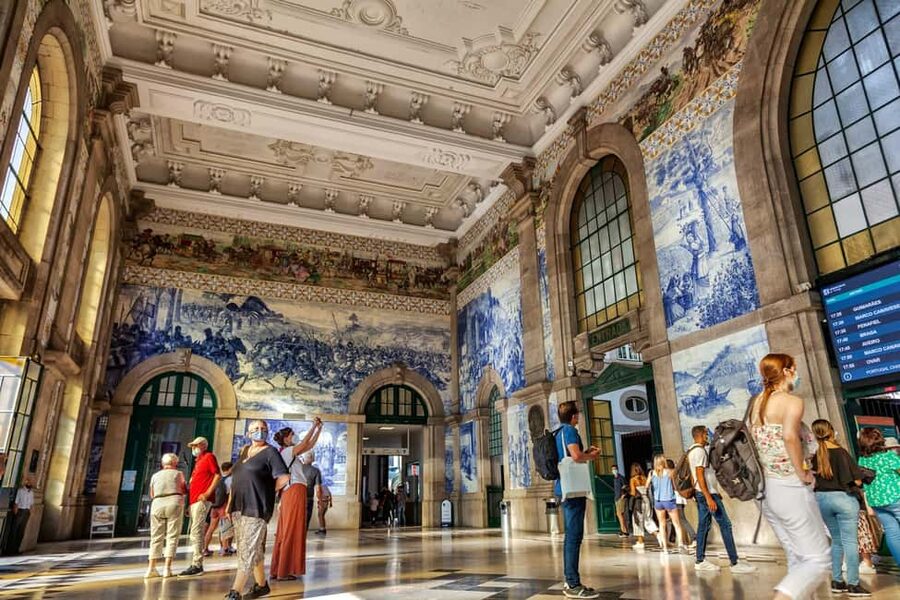
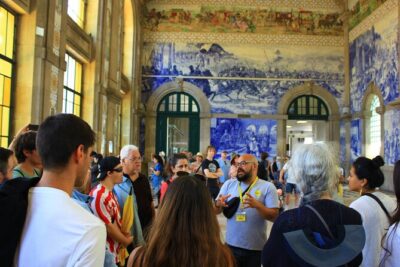
Then you reach the centerpiece for many people: São Bento Station. The station is famous for its breathtaking azulejo tile murals, and this stop is one of the easiest ways to understand why Porto’s tiles are so admired. From a distance, you see the blue massing. Up close, the details start to resolve into scenes.
What makes this station work on a tour is the timing. You have already been hearing stories about Porto’s past, so the murals connect to those themes instead of feeling random. Your guide walks you through what the tilework represents and how it reflects events and eras that shaped the region.
If you want the best experience here, slow down. Give yourself a minute to stand back, then move in for detail. Even if you only spend a few minutes with each mural, your brain will register the flow of scenes better than if you try to rush through.
Heading to the Douro: panoramic views and the Dom Luís I Bridge
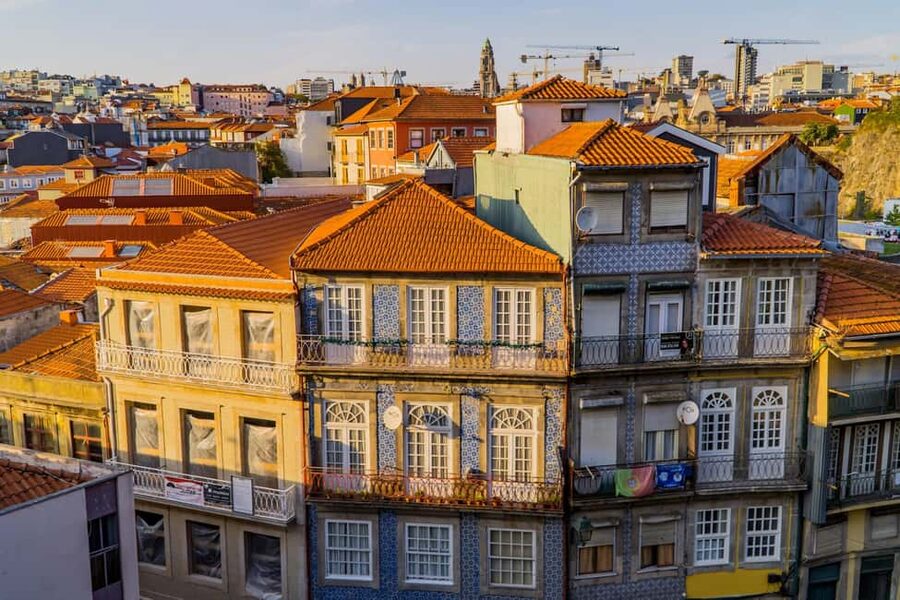
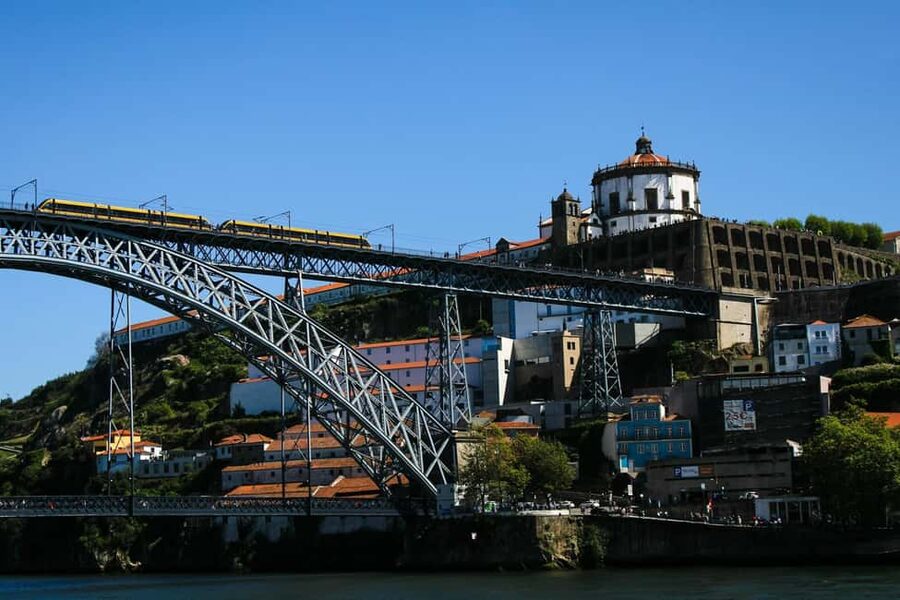
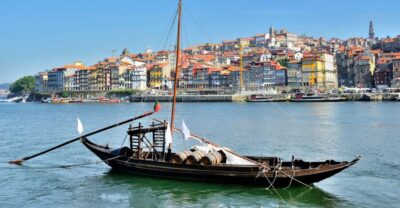
After the station, the tour turns toward the water with a payoff: stunning panoramic views over Porto’s historic cityscape, with the Douro River in the mix. This is where Porto changes mood. The streets narrow, then suddenly you get breadth, rooftops, and the sense of a working, historical waterfront.
You will see the impressive Dom Luís I Bridge, one of Porto’s most recognizable structures. Your guide ties it to how the river shaped movement and commerce. The bridge is visually striking, but the explanation makes it feel practical too, not just dramatic.
Then comes the iconic riverbank viewpoint, where you can look toward the areas associated with the wine industry. The guide explains the Port wine cellars along the waterfront, and you will likely catch yourself glancing around to see how the city’s layout connects to the trade story.
Weather matters here. If it is gray or windy, the views can still be worthwhile, but you may have less sharp visibility. If it is clear, this is the section where you will want to linger, because the skyline and river create a natural photo backdrop.
More of the old city, layer by layer:
- Douro Valley: Historical Sites, Wine Experience, Lunch & Cruise
★ 5.0 · 5,133 reviews - Porto: An Intimate Fado Show in a Historical Tavern
★ 4.8 · 2,055 reviews - Porto: Historic City Center Walking Tour
★ 4.7 · 1,172 reviews - Porto: Private Tour of the Historic City in a Ford T Car
★ 4.8 · 932 reviews
The Port wine story, seen in the right place
Port wine is one of Porto’s big exports, and it can feel like a slogan unless you connect it to geography. This tour does that by guiding you along the river perspective, where the cellars and water are part of the same scene.
Your guide connects the rise of the port wine industry to the larger arc of Porto’s growth, including the era of exploration. That matters because you understand why the city invested in river infrastructure, warehouses, and the whole winemaking supply chain. You are not only learning wine trivia. You are learning why the city is built the way it is.
If you are a wine person, you will probably want to add a cellar visit afterward. The tour keeps entrance costs separate, so you can decide on your own pace whether to pay for tastings or museum-style visits based on what you actually want to do next.
Porto City Hall and Porto Cathedral: two landmark finales
The walk finishes with major architectural anchors: Porto City Hall and the Porto Cathedral. This ending feels right. After the river views, you return to the city’s power centers, which helps close the loop between trade, culture, and religion.
At Porto City Hall, you get the sense of civic identity. It is the kind of building you remember because it signals how Porto sees itself as a serious, established city, not just a stopover. Your guide frames it within the story you’ve been following, so it does not feel like you simply walked past another impressive façade.
Then comes Porto Cathedral, a place that carries weight in both architecture and meaning. It is the kind of stop where a guide can really help, because cathedrals are layered. Even if you are not focused on every detail, you will understand the key ideas behind the building and what you are looking at while you stand there.
This ending is also a practical win. It leaves you close to central areas where it is easy to plan dinner and a post-walk wander without needing a transport puzzle.
Value at $4.71 for 150 minutes: where the money goes
Let’s talk value in plain terms. At around $4.71 per person for a 150-minute guided walk, you are paying for two things: direction and interpretation. You are not just buying a route. You are buying a guide who can explain why these places matter and help you connect the dots between them.
That is especially valuable in Porto because the city is visually rich, but it is easy to get lost in photo stops without learning anything. Here, the guide keeps you moving through a focused set of high-impact landmarks: Lello, tilework at São Bento, river viewpoints, the wine story, and then the cathedral and civic buildings.
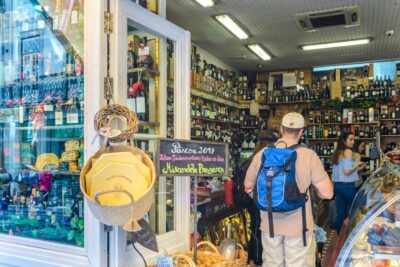
Also, your tour includes insider tips on where to eat, drink, and explore after the walk. That kind of local guidance can easily save you time, and sometimes money, because you avoid the most touristy dead ends.
If you are trying to do Porto in a smart, time-efficient way, this price-to-time ratio is hard to beat.
Who this walking tour suits best
This tour is a strong fit if you want a guided overview that feels practical and story-driven.
Best for:
- First-timers who want the core Porto highlights in a short window
- People who enjoy azulejos and want the meaning behind them, not just the photos
- Travelers who like panoramic viewpoints and want the river and bridge context
- Anyone who prefers a guided pace with local tips at the end
Less ideal for:
- Wheelchair users, since it is not suitable
- Anyone who struggles with walking for about 2.5 hours on city streets, including uneven surfaces
If you are traveling with a mix of interests, this itinerary usually works because it balances culture, landmark architecture, and views.
Practical tips to make those 150 minutes work
These are the small things that make the walk smoother and more enjoyable.
- Wear comfortable shoes. Porto’s center has uneven, historic surfaces.
- Bring a light layer if the weather turns. One booking noted that the weather can be harsh, and you will want to stay comfortable.
- If you care about photos, use the station and viewpoints for your “stop and shoot” moments, then keep moving through the street azulejo spotting. You will see more that way.
- When the guide offers recommendations for food and drinks, take notes or screenshot. You will thank yourself later when you are deciding what to do after the tour.
Language note: the guide is live, and the tour runs in English and Spanish, so you get full commentary, not just a self-guided audio playlist.
Should you book this Porto walking tour?
If you want a fast, friendly way to understand Porto’s iconic sights, I think this is a smart booking. The highlights are exactly the kinds of places that make Porto unforgettable, São Bento Station and the river viewpoint especially, and the storytelling helps them click together. The price is low for what you get, and the included tips give you a built-in plan for what comes next.
I would book it if:
- You have limited time and want a structured walk
- You care about cultural context, not just checklists
- You want a guide who can explain the connections between landmarks, exploration-era stories, and the port wine industry
Skip it or consider another option if:
- You need wheelchair accessibility
- You prefer long museum time over walking and viewpoint stops
If you fall in the first group, this tour is an efficient route through Porto’s most meaningful scenes, with just enough time to enjoy them before your next stop.
FAQ
Where does the tour start?
The tour starts at the statue of Bishop António Ferreira Gomes, opposite Clérigos Tower.
How long is the Porto walking tour?
The duration is 150 minutes.
What is included in the price?
It includes an expert English-speaking local guide and insider tips on where to eat, drink, and explore in Porto.
Is food included?
No, food and drinks are not included. Optional entrance to paid attractions is also not included.
What languages are the tour guides?
The tour is available with live guides in English and Spanish.
What should I bring?
You should wear comfortable shoes.
Is the tour wheelchair accessible?
No, it is not suitable for wheelchair users.
Can I cancel for a refund?
You can cancel up to 24 hours in advance for a full refund.
Fresh off the Porto quays





Walking Tours, compared.
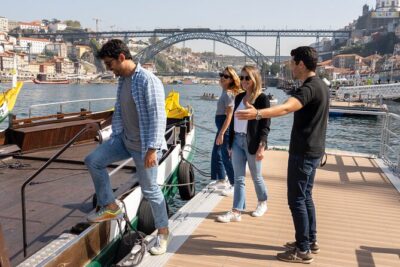
Porto Walking Tour, Lello Bookshop, River Cruise and Cable Car
Read our review →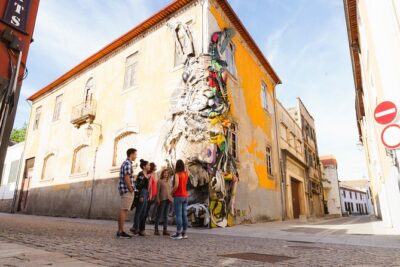
Experience Porto’s Charm: 3-Hour Guided Walking Tour
Read our review →

Walking Tour, Lello Bookshop, Boat and Cable Car
Read our review →Browse the lists this tour appears in