Reviewed · MORNING
Porto private morning Tour, discover the most iconic attractions
Porto is best when someone drives. This private morning tour strings together the city’s most iconic sights, then throws in real local details along the way. I especially love the luxury vehicle comfort and the onboard Wi-Fi, which keep the whole 4 hour loop moving smoothly. The main catch is that the itinerary hits many ticketed places, and several entry fees are not included.
Pick-up is a big deal here. You get transport in an executive vehicle, plus bottled water and refreshments, so you start fresh and stay comfortable. If you can, ask for Carlos S, since that name shows up with praise for professional, on-the-roads explanations and thoughtful tips.
This is ideal if you want a fast, high-impact introduction to UNESCO Porto, without spending your morning figuring out routes, lines, and timing. Just be ready for a packed feel, because a private tour can still mean brief stop-and-look moments at some stops.
In This Review
- Key things that make this private Porto highlights tour worth your time
- Private Porto morning, luxury vehicle comfort, and a driver set up for real sightseeing
- From Avenida dos Aliados energy to D. Pedro IV in Praça da Batalha country
- Mercado do Bolhão: why this market matters beyond the photos
- Praça da Batalha and Teatro São João: battle origins and theater drama
- Fernandine Wall and medieval edges: Porto’s old boundary lines
- Porto Cathedral and the São Bento tile story: medieval stone plus painted history
- Café Majestic, the Relógio das Galerias clock, and Porto’s Belle Époque face
- Livraria Lello and the Art Nouveau doorway that turns into a ticket decision
- Clérigos Tower and Carmo and Carmelitas: baroque scale and a hidden space between churches
- Church of Gold and Palacio da Bolsa: Porto’s artistic excess and money-power architecture
- Jardim do Morro and the Douro edge: viewpoints that give your photos context
- Bridges over the Douro: D. Maria Pia to São João Bridge, with engineering facts worth hearing
- Fort São João Baptista, Castelo do Queijo, and the sea defensive line
- Art, music, and modern Porto stops: Serralves, Casa da Música, Leixões, and more
- What the price includes, and what you may pay extra for
- Optional add-ons if you want to turn this morning into a full Porto day
- Should you book this Porto private morning tour?
- FAQ
- How long is the Porto private morning tour?
- What is the price per person?
- Is pickup included?
- Is this tour private?
- What language is the tour offered in?
- Does the tour include onboard Wi-Fi?
- Are tickets for Livraria Lello and Clérigos Tower included?
- What about admission for other major sights like Palácio da Bolsa and Church of São Francisco?
- Can I cancel and get a full refund?
- What if the weather is poor?
Key things that make this private Porto highlights tour worth your time
- A UNESCO Porto circuit with a mix of squares, churches, and viewpoint stops across Porto and beyond
- Onboard Wi-Fi plus refreshments, so you can keep planning as you go
- Driver storytelling that connects the dots, from medieval walls to 20th century tiles at São Bento
- Icon stops with photo windows, like Clérigos Tower, Livraria Lello, and the bridge viewpoints
- Bridge hopping with real engineering context, including Ponte D. Maria Pia and São João Bridge
- Optional add-ons that extend the experience into Douro sunset, Port tasting, or fado nights
Private Porto morning, luxury vehicle comfort, and a driver set up for real sightseeing
This is a private tour, so it’s just your group. That matters in Porto, because the city rewards people who can slow down for the right moments, while still keeping the day efficient. You get transport in luxury vehicles with maximum comfort, extra equipment tailored to your needs, and a relaxing setup that is made for a morning run of major sights.
The onboard extras are practical, not fancy. There is Wi-Fi so you can check the next stop, map the best photo angle, or confirm plans. Bottled water and refreshments mean fewer snack-and-search detours. You also have personal accident and liability insurance included, which is a quiet comfort when you’re doing a lot in a short window.
One more point: pace. A 4 hour tour sounds short until you see how many places are in the mix. This style works when you treat it like a highlights circuit. You’ll get to see, read, and photograph, but not always to linger for long inside every ticketed site.
Some other granite-city outings to weigh
- Discover Porto’s Highlights on a 2-Hour Private Electric Tuk Tuk★ 4.5 · 1,860 reviews
- Porto PRIVATE TOUR With Locals: Highlights & Hidden Gems★ 5.0 · 984 reviews
- Porto: Private Tour of the Historic City in a Ford T Car★ 4.8 · 932 reviews
- Porto: Private tour in the Douro (1 to 4 people) on a boat just for you★ 5.0 · 744 reviews
From Avenida dos Aliados energy to D. Pedro IV in Praça da Batalha country
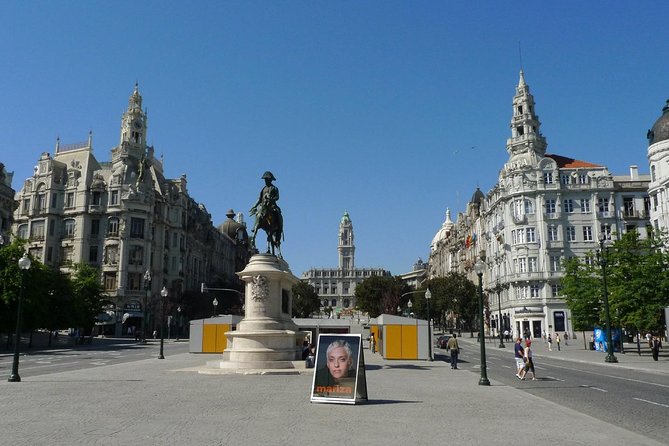
The tour begins in central Porto at Praça da Liberdade, and then swings into the heart of the city’s identity. Early on, you’ll see the wide avenue lined by buildings from the 1920s to 1940s, and the way the Cardosas building frames the southern end. It’s a strong “you are in the real center” moment.
Right near D. Pedro Square, the statue of D. Pedro IV (the Liberator) anchors the scene. This area can feel a little confusing at first because the square is contiguous with Avenida dos Aliados, so the tour helps you orient fast instead of wandering.
After that, the tour heads to historic squares where Porto shows how layers build on each other. You are not just looking at one era. You’re seeing how the city moved from medieval constraints into later civic space.
Mercado do Bolhão: why this market matters beyond the photos
Mercado do Bolhão is one of Porto’s most emblematic markets, classified as a property of public interest. The building dates from 1850 and uses a striking two-floor structure in neoclassical style.
What I like about this stop is that it teaches you how markets actually function. Outside, the market fronts multiple streets, which makes it feel like part of the neighborhood, not a sealed-off tourist stage. Inside and around it, you’ll find specialized areas focused on fresh products, including fish, butchery, vegetables, and flowers.
The practical win: it’s a free admission stop, so you can walk through without adding another ticket decision to your morning. You get the atmosphere, and you can still keep the day on schedule.
Praça da Batalha and Teatro São João: battle origins and theater drama
Next up is Praça da Batalha, a historic square with a name tied to an older battle around the 10th century. The story is a bit ironic, because the name sounds like it could be about something more recent, but it refers to a defeat that led to widespread destruction in Porto and other places.
Around the square, urbanization in the 1800s turned it into a key public space. One of the most important nearby landmarks is Teatro São João. The theater opened in 1798 and was built for operas and dramatic performances. Its story took a sharp turn with a fire on the night of April 11-12, 1908.
This stop is short, but it’s a smart reminder of something Porto does well: it ties big moments to specific streets. When you understand the naming and the landmark history, your pictures look better, because you know what you’re framing.
Fernandine Wall and medieval edges: Porto’s old boundary lines
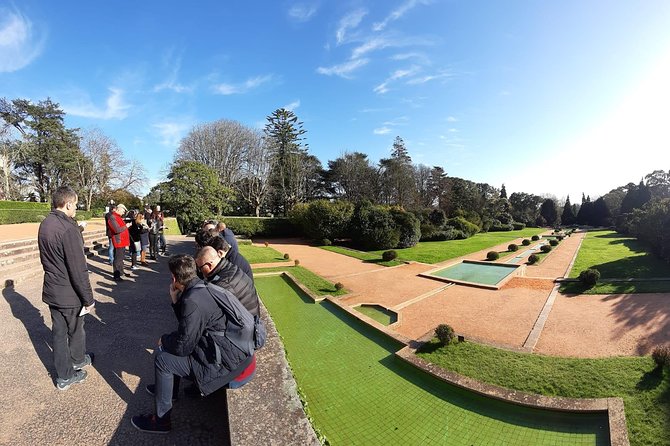
You’ll also get a look at a major medieval defensive wall that began in the 14th century during D. Afonso IV and was largely completed later, in D. Fernando’s reign (1409 is tied to the name). It expanded to cope with the city’s growth.
Later, once the wall was less useful for military defense, parts began to be demolished in the 18th century. Some sections survived, which is why you can still see traces today.
This stop is valuable even if you’re not a architecture fanatic. It explains why Porto’s historic center feels like a maze with surprises. The city’s layout makes more sense when you remember that walls shaped movement first, and city planning followed later.
Elsewhere in Porto, worth a look before you book:
- The Unvanquished Tour in Porto City Center
★ 5.0 · 26,497 reviews - From Porto: Douro Valley w/ Boat Tour, Wine Tasting & Lunch
★ 4.7 · 19,061 reviews - Complete Douro Valley Wine Tour with Lunch, Wine Tastings and River Cruise
★ 5.0 · 12,920 reviews - Porto: Douro Valley with Winery Lunch, Tastings & Cruise
★ 4.7 · 7,002 reviews
Porto Cathedral and the São Bento tile story: medieval stone plus painted history
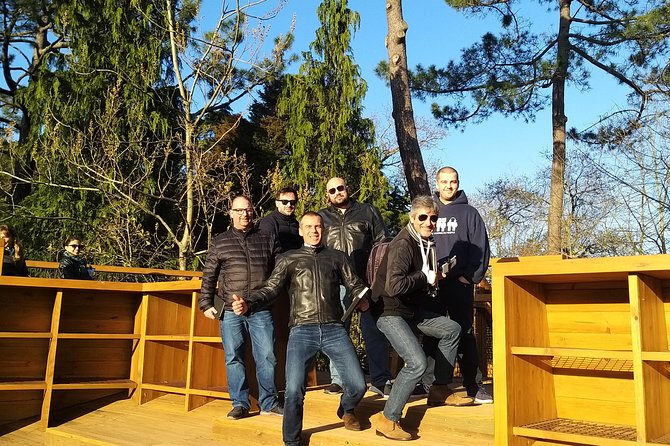
Porto Cathedral is a 12th/13th century building that grew and adapted over centuries, with renovations reaching their final configuration in the 20th century. The key idea is continuity: it keeps the initial medieval cathedral layout even as details changed.
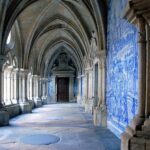
Inside, the highlights include the Gothic Chapel of St. John the Evangelist and its cloister, plus the expansion of the chancel. There is also the Chapel of the Blessed Sacrament with a silver altar.
Then the tour shifts to São Bento Railway Station, built in the early 20th century on the site of a former 16th century convent. The station’s glass and iron vestibule was designed by architect Marques da Silva, and the place is famous for tilework.
The vestibule is decorated with around twenty thousand painted tiles by Jorge Colaço, covering the evolution of transport and major historical events, plus everyday ways of life of Portuguese people in this region. This is one of those stops where you’ll either rush or actually watch. If you take your time for even a few minutes, you’ll realize the tiles aren’t random decoration. They are a visual timeline.
São Bento is free entry, which makes it a high-value pause in a schedule full of ticket decisions.
Café Majestic, the Relógio das Galerias clock, and Porto’s Belle Époque face
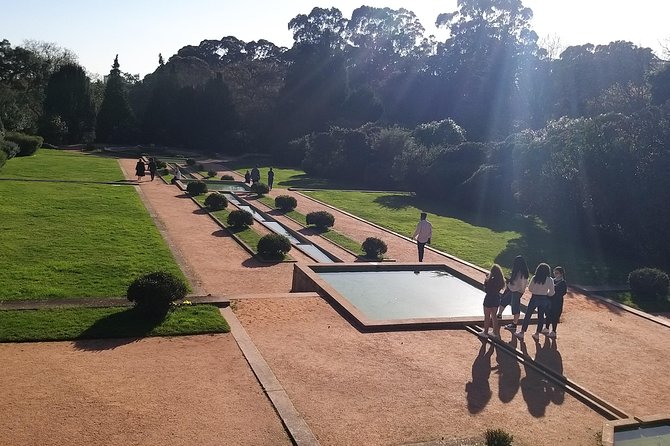
Café Majestic is a classic Belle Époque stop. Opened in 1921 on Rua Santa Catarina, it’s known for ornate Art Nouveau style inside, with marble, gilded mirrors, and intricate woodwork. Even if you don’t order, you get a real sense of how Porto’s café culture shaped social life.
Around the corner, you can also see the Relógio das Galerias Palladium, an ornate clock with a carillon and four statues that perform every three hours. The statues represent key Porto figures: Saint John (São João), Prince Henry the Navigator (Infante D. Henrique), Almeida Garrett (writer), and Camilo Castelo Branco (novelist). As the bells sound, the figures emerge and parade on the façade.
This is not just a “look up and move on” moment. It’s a reminder that Porto likes to put history on display in everyday spaces, not only in museums.
Livraria Lello and the Art Nouveau doorway that turns into a ticket decision
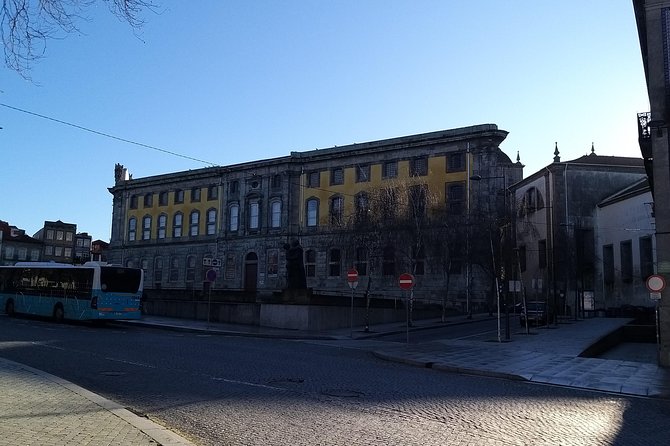
Livraria Lello is one of the biggest names on any Porto list, and the tour includes time to see it. The bookstore building opened in 1906, and its Art Nouveau façade includes Neo-Gothic details.
Inside, the library decor uses painted plaster meant to imitate wood. The staircase connecting floors is a standout, and it’s also noted as one of the early examples of reinforced concrete in Porto. The skylight is also a big moment, with stained glass and a monogram and motto.
The practical part: entry is not included as standard. If you want less stress, there is an optional Gold Ticket that includes priority and booking, priced per person. If you’re the type who hates last-minute ticket lines, this is the choice that turns the stop into a smoother experience.
Clérigos Tower and Carmo and Carmelitas: baroque scale and a hidden space between churches
Clérigos Tower is one of Porto’s signature silhouettes. Built in the first half of the 18th century by Nicolau Nasoni, it’s a Baroque monument that earns its fame with a panoramic payoff. Climbing involves 240 steps, and the view includes Porto and the Douro River.
The stop is short, but the tower is the kind of place where you either want the climb or you accept the exterior views. The ticket is not included, so plan for extra costs if you want up-top time. As a fun fact, the tower appeared in the 2021 Hollywood blockbuster Suicide Squad.
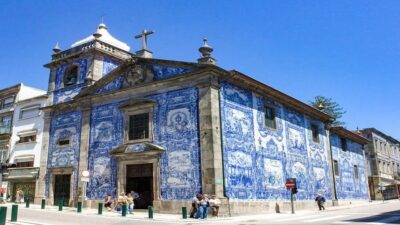
Then the tour moves into the Carmo and Carmelitas area. Igreja do Carmo and Igreja das Carmelitas are both Baroque landmarks, and Igreja do Carmo is especially known for azulejos on the exterior. Between them, there’s Casa Escondida, also called the Hidden House, wedged into the dense city layout.
This is a quick, clever stop. You learn how Porto’s architecture solved space problems long before it became a tourist “moment.”
Church of Gold and Palacio da Bolsa: Porto’s artistic excess and money-power architecture
Porto’s religious art can be wildly detailed, and the Church of São Francisco is a perfect example. It’s often described as the Church of Gold because of the exuberance of carved woodwork inside. You can also see the Tree of Jesse, and there are catacombs.
This is a UNESCO World Cultural Heritage highlighted spot, and it’s treated with respect here. Admission is not included, so if you want to step inside, budget for the optional ticket for the Church of Gold.
Right after that, the tour includes Palácio da Bolsa, a neoclassical building associated with the Commercial Association of Porto. It dates from 1842, designed by Joaquim da Costa Lima, and built on the site of a former convent destroyed in a fire during the Siege of Porto.
The big highlight is the Arab Room. There’s also an option for a guided tour of the Palácio da Bolsa, which is not included by default. If you care about what you are seeing, that extra guide time can be worth it.
Jardim do Morro and the Douro edge: viewpoints that give your photos context
Once the tour moves toward Gaia and the riverfront side, the vibe changes to open sky and wide angles. Jardim do Morro is a public park with panoramic views, developed in the 20th century. It works as a calm reset between more intense architecture stops.
Then you can see Monastery of Serra do Pilar on the Douro bank in Vila Nova de Gaia. The monastery belongs to the Order of St. Augustine, with construction beginning in 1538 in stages over centuries. The big architectural note is the circular shapes of the church and cloister, which are rare and visually strong.
Serra do Pilar is recognized as a National Monument, and it’s part of the UNESCO World Heritage listing that includes Porto’s historic center and the Luís I Bridge.
Bridges over the Douro: D. Maria Pia to São João Bridge, with engineering facts worth hearing
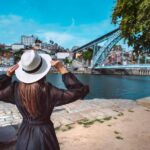
Porto’s bridges are where the city stops being just pretty and starts being impressive. The tour includes multiple bridge viewpoints and the story behind each.
You’ll see the suspension bridge officially called D. Maria II, inaugurated in 1843 and later deactivated after four years due to insecurity concerns. Today, only two stone pillars remain shaped like obelisks, so it becomes a “history trace” stop.
Then comes Ponte D. Maria Pia, created to replace that suspension bridge. It’s described as Gustave Eiffel’s first masterpiece, inaugurated in Porto in 1877, and it stayed in use for 114 years before São João Bridge took over. It’s a biarticulated arch with a single-track rail board and truss pillars. The admission for this bridge viewing is free.
Next is São João Bridge. It was inaugurated on March 30, 2003, and it replaced the top section of the Luís I Bridge where the Porto Metro line passes. The bridge has a deck 371 meters long and 20 meters wide, with a Maillart-type arch described as slender by experts, including a span-arrow ratio detail and a 280 meter arch span.
It’s not just engineering trivia. Hearing the details makes your photos more meaningful, because you can spot the structure and understand why it looks the way it does.
Fort São João Baptista, Castelo do Queijo, and the sea defensive line
On the waterfront side, the tour shifts to military architecture with Fortress São João Baptista and Castelo do Queijo, both tied to protecting the coast and the Douro entrance.
Fort São João Baptista is an example of Portuguese military architecture built at the end of the 16th century, with later modern fortresses added in the 17th century and access gate changes in the 18th. It’s a free admission stop and a good breather if you want something different from churches and palaces.
Castelo do Queijo, or Fort São Francisco Xavier, was built in the 17th century to protect against pirates from North Africa. It’s located on a rocky hill shaped like cheese, which is how it got its name. Again, admission is free.
These stops work well when you want a Porto that reaches beyond the postcard center.
Art, music, and modern Porto stops: Serralves, Casa da Música, Leixões, and more
Not every highlight here is old. Porto also loves modern culture and public art, and the tour includes several stops that broaden your view.
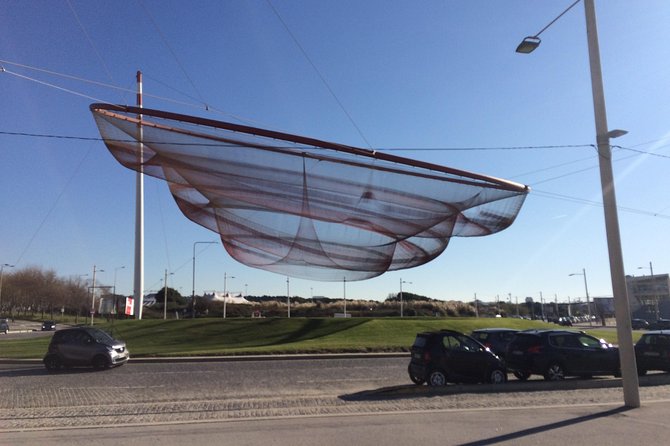
Sculpture She Changes, nicknamed Anemone, is a public artwork by Janet Echelman, made from a moving net that looks like anemone motion with the wind. If you catch it on a breezy day, you’ll understand why it draws attention.
Leixões Port is included as well. It’s tied to cruise operations, and the tour frames how the port’s cruise growth changed the number of visitors to Porto in recent years.
Serralves is a major contrast stop. Serralves Park holds Art Deco architecture and carefully designed gardens over 18 hectares. There is the Art Deco Casa da Fundação (Serralves House) built in the 1930s, and the area is linked to the Museum of Contemporary Art, the Art Deco House, and leisure facilities like shops and places to eat.
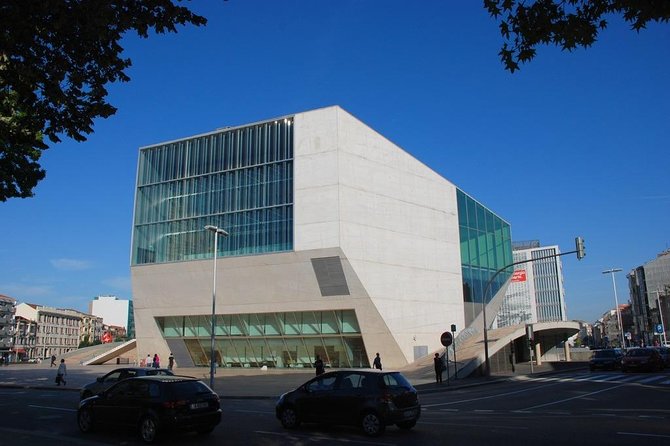
Then you get Casa da Música, Porto’s main concert hall in the Boavista area. Designed by Rem Koolhaas and inaugurated in 2005, it’s a contemporary architecture icon. Admission is not included for the concert hall itself, but the exterior and design experience can still be a big moment depending on timing.
Finally, Praça de Mouzinho de Albuquerque is included for the Monument to the Heroes of the Peninsular War, with a 45 meter tall statue of an obelisk and groups representing Portuguese and English unity against French forces.
What the price includes, and what you may pay extra for
At $185.02 per person for about 4 hours, this private tour sits in the “value for time” category, not the “budget walk-around” category. You are paying for a dedicated private driver, plus transport in luxury vehicles with Wi-Fi, bottled water, refreshments, and included insurance.
That makes sense if you want maximum sight coverage in a short morning and you like having someone connect history and architecture in plain language. It also matters if you’re traveling with mobility considerations, because vehicle transport reduces long transfers.
The tradeoff: tickets for several major attractions are not included. Examples include Livraria Lello (Gold Ticket priority and booking optional), Clérigos Tower (skip-the-line ticket optional), guided tour for Palácio da Bolsa (optional), and Church of São Francisco (Church of Gold). If you want Port wine experiences, fado, or a Douro cruise, those are also separate add-ons.
Optional add-ons if you want to turn this morning into a full Porto day
If you want to keep the momentum going, there are several optional extensions.
A private Douro River Cruise Sunset experience runs about 2 hours. It’s priced per person, and it is described as a private journey with views of Porto and Vila Nova de Gaia, plus the iconic six bridges and a serene look into the Douro Valley.
There’s also an Exclusive Dona Antónia Port Wine Cellars tour, about 1h30, with tasting of 5 Port wines named after Dona Antónia. This includes a guided walk through historic cellars and is meant as a focused story of how Dona Antónia Adelaide Ferreira shaped the Port wine destiny.
For the evening, there are fado options. One package combines a traditional dinner with a fado concert and transport included. Another option is a 1 hour fado concert with Port wine tasting, scheduled daily at 18:00 and 19:30. Both are priced separately and require booking as optional activities.
Should you book this Porto private morning tour?
Book it if you want a structured Porto overview in a short time window, and you like having a driver who helps you understand what you’re seeing, not just where to stand for photos. This tour is especially good for first-timers who want a UNESCO-focused highlights route covering squares, markets, cathedral, tilework, major churches, and multiple bridge perspectives.
Skip it or adjust expectations if you plan to visit every ticketed interior without extra spending. The default includes transport and guidance, but not entry fees for key places like Clérigos Tower and Livraria Lello, and that can change your total cost.
One final practical tip: if your dates are fixed, book ahead. This tour is often reserved about 76 days in advance, and it depends on good weather. If conditions are bad, you can be offered a different date or a full refund.
FAQ
How long is the Porto private morning tour?
It runs for about 4 hours.
What is the price per person?
The price is $185.02 per person.
Is pickup included?
Yes. Pickup is offered from downtown hotels and B&Bs in Porto and Gaia, and the tour starts at Praça da Liberdade 19, 4000-322 Porto.
Is this tour private?
Yes. It is a private tour/activity, so only your group participates.
What language is the tour offered in?
The tour is offered in English.
Does the tour include onboard Wi-Fi?
Yes. The vehicle includes Wi-Fi, plus bottled water and refreshments.
Are tickets for Livraria Lello and Clérigos Tower included?
No. Livraria Lello Gold Ticket and Clérigos Tower skip-the-line tickets are not included in the base price, but they can be added as optional items.
What about admission for other major sights like Palácio da Bolsa and Church of São Francisco?
Guided tour of Palácio da Bolsa and Church of São Francisco (the Church of Gold) tickets are not included in the base tour price, but optional ticket add-ons are listed.
Can I cancel and get a full refund?
Yes. You can cancel up to 24 hours in advance for a full refund. If you cancel less than 24 hours before the start time, the amount paid is not refunded.
What if the weather is poor?
This experience requires good weather. If it is canceled due to poor weather, you are offered a different date or a full refund.
Fresh off the Porto quays



Morning, compared.