Reviewed · PRIVATE
Porto private afternoon tour, discover the most iconic attractions
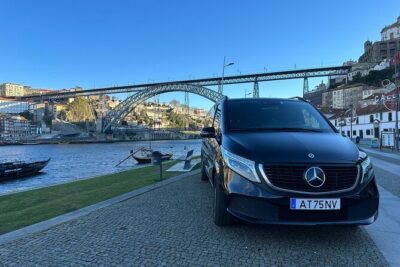
Porto in one focused afternoon. This private tour packs the iconic Porto sights into a 4-hour route with hotel pickup and a smooth ride between stops, so you spend less time figuring out transit and more time looking at the real stuff.
I love the convenience: pickup at your hotel, Wi-Fi in the vehicle, and a comfortable pace that keeps the walk doable. I also love the “how it all connects” feeling, especially around São Bento Station tiles and the city squares that act like outdoor living rooms.
The only real drawback is you will hit several must-sees with tickets not included, including the Torre dos Clérigos climb and Livraria Lello, plus you need good weather since the schedule depends on it.
In This Review
- Key highlights you should know before you go
- How the tour works, and why the timing feels smart
- Avenida dos Aliados and Praça de D. Pedro, the big-city opener
- Mercado do Bolhão and Plaza da Batalha, where Porto smells like Porto
- The old city walls and Gothic facades, the “how Porto grew” lesson
- Porto Cathedral and São Bento, two icons you can’t fake
- Café Majestic and the Palladium clock, Belle Époque with a pulse
- Rivoli Theater and the University building, architecture with a civic role
- Igreja do Carmo, the Hidden House, and why Porto’s architecture is clever
- Torre dos Clérigos and Livraria Lello, the ticketed highlights
- Museums and gardens: Palácio de Cristal and transport history
- “Golden Church” and Palácio da Bolsa, when Porto turns ceremonial
- Bridges and viewpoints: from D. Maria Pia to Serra do Pilar
- Fort São João Baptista and Castelo do Queijo, the coastline defenses
- Leixões, the Anemone sculpture, Serralves, and Casa da Música
- Praça de Mouzinho de Albuquerque, and the option to keep going
- Price and value, what $185.43 buys you
- Who this tour is best for
- Should you book this Porto afternoon tour?
- FAQ
- Is pickup included?
- How long is the tour?
- Is this a private tour?
- What language is the tour offered in?
- What is included in the price?
- Which attractions have free admission?
- Which major stops require tickets not included?
- Are optional activities included?
- What happens if the weather is bad?
- What is the cancellation policy?
Key highlights you should know before you go
- Private group pace, so you are not stuck with random group timing
- Hotel pickup and Wi-Fi, making the afternoon feel effortless
- São Bento’s 20,000 painted tiles, one of Porto’s most memorable indoor stops
- Clérigos Tower and Lello, two of the city’s ticketed headline sights
- Bridges and river viewpoints, with multiple classic and modern crossings from Porto into Gaia
- Optional add-ons like a sunset Douro cruise or Dona Antónia Port cellar tasting
How the tour works, and why the timing feels smart
This is an afternoon-style, 4-hour private experience designed to hit a lot of Porto without turning into a marathon. The stops are short, often 10 to 15 minutes, so think photo, quick orientation, and a moment to really notice details, not long museum-style wandering.
The value starts with the logistics. Pickup is offered, and your vehicle is set up for comfort with Wi-Fi, bottled water, and refreshments. If you have already walked Porto on your own, you know how easy it is to lose half a day to transit and “where do we go next?” stress. This tour helps you get your bearings fast.
Also, the tour is offered in English, which matters if you want the history to land clearly. Reviews for this experience emphasize that the guide knows the territory and can connect the dots in a way that makes the city feel organized instead of random.
Some other granite-city outings to weigh
- Discover Porto’s Highlights on a 2-Hour Private Electric Tuk Tuk★ 4.5 · 1,860 reviews
- Porto PRIVATE TOUR With Locals: Highlights & Hidden Gems★ 5.0 · 984 reviews
- Porto: Private Tour of the Historic City in a Ford T Car★ 4.8 · 932 reviews
- Porto: Private tour in the Douro (1 to 4 people) on a boat just for you★ 5.0 · 744 reviews
Avenida dos Aliados and Praça de D. Pedro, the big-city opener
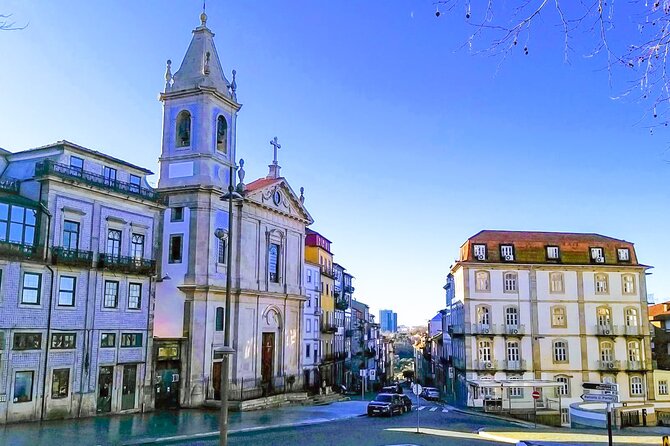
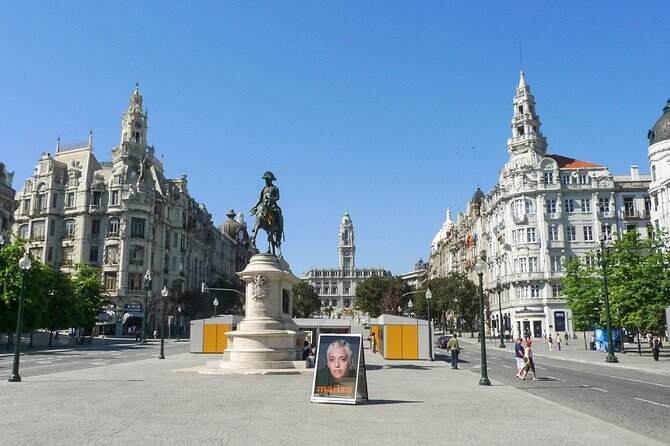
You start at Avenida dos Aliados, one of Porto’s grand showpiece avenues. It is lined with architecture from the 1920s through the 1940s, with a mix of civic and elegant energy. This is the kind of street that instantly tells you Porto is not only old churches and tiled facades, it is also a modern European city with serious presence.
From there you move into Praça de D. Pedro, where Avenida dos Aliados merges right into the square. The statue of D. Pedro IV, the Liberator, is right there in front of Palácio das Cardosas. Even if you do not study kings, the composition helps you understand Porto’s center: major civic buildings, public space, and a statue that anchors the whole area.
Tip for your first stop: take 30 seconds to look back at what you just walked. The avenue and square are designed to read well from a distance, so this is an easy moment to get a feel for the geography of the old and new parts of town.
Mercado do Bolhão and Plaza da Batalha, where Porto smells like Porto
Mercado do Bolhão is one of the city’s most emblematic markets. It dates to 1850 and sits in a neoclassical two-story structure. The key thing here is not just the building, it is the way the market is organized: fishmongers, butchers, horticultural products, and florals around surrounding streets that define the market’s edges.
You get only around 15 minutes, so you will not become a market expert. But that is exactly why it works on a half-day route. You can look at the stalls, spot the local focus on fresh produce, and then move on with your eyes opened for what you will see later while you explore independently.
Next comes Plaza da Batalha, a historic square tied to a battle dating back to roughly the 10th century, when Porto faced defeat connected to Almançor. The square’s meaning is layered, and its story runs through time. You also see how Porto used urban development to turn historical ground into major public space, with urbanization noted around 1861.
A practical note: markets and squares can be lively. If you are sensitive to crowds, keep your timing tight, listen for the guide’s cues, and focus on the architecture and layout rather than trying to linger in every aisle.
The old city walls and Gothic facades, the “how Porto grew” lesson
In Porto, the best way to understand the present is to see where the city once stopped growing. You get a look at the defensive wall project that began in the 14th century during the reign of D. Afonso IV, with the name connected to completion in the reign of D. Fernando. Most of it is gone now, but you can still recognize how the city expanded beyond earlier fortifications.
Right after that, the tour points you toward a Gothic-origin building dating to the 15th century, with changes in the 17th century including a Renaissance portal and gilded interior carvings. This is a good example of why Porto feels layered. The city keeps building, then keeps remodeling, then keeps leaving traces.
If you want to “read” Porto faster, focus on transitions: where Gothic becomes Renaissance, where medieval logic gives way to later decorative style. Those shifts are visible in how portals look, how interior ornament changes, and how churches adapt over centuries.
Porto Cathedral and São Bento, two icons you can’t fake
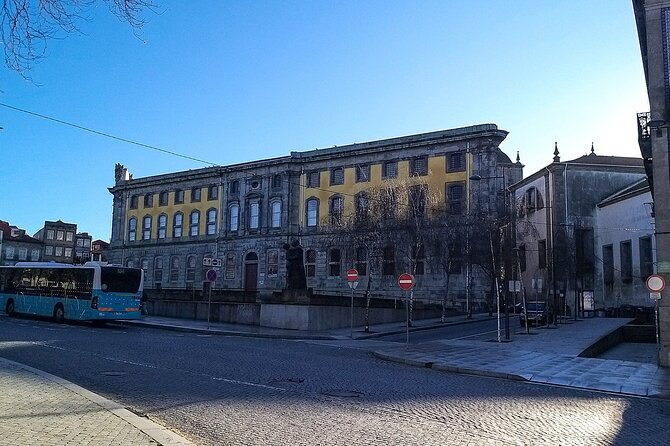
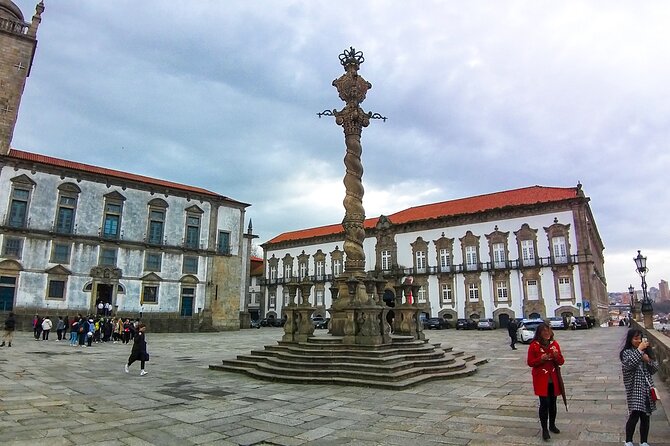
The Cathedral of Porto is a 12th/13th-century structure expanded and renovated through the centuries, with a final configuration noted in the 20th century. The tour calls out highlights like the Gothic chapel of São João Evangelista and its cloister, plus features around the chancel and the Chapel of the Blessed Sacrament with its silver altar.
This is one of the stops where tickets are not included, so plan for that ahead. Still, even if you only get a shorter look, the exterior and immediate interior context usually help you understand why Porto’s religious architecture is considered so important.
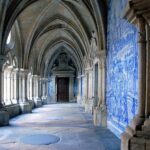
Then you hit São Bento Railway Station, built in the early 20th century on the site of a former 16th-century convent. The station vestibule has a glass and iron structure designed by Marques da Silva, and the wall is decorated with around 20,000 painted tiles by Jorge Colaço. The tiles tell scenes from Portuguese life and transport history in the region, so it is both art and local storytelling.
This is one of the best included-feeling moments in the route because it is free and you can appreciate it without committing to a long ticket line. Do not rush. Stand back far enough to see a scene as a whole, then come closer for the fine work.
Elsewhere in Porto, worth a look before you book:
- The Unvanquished Tour in Porto City Center
★ 5.0 · 26,497 reviews - From Porto: Douro Valley w/ Boat Tour, Wine Tasting & Lunch
★ 4.7 · 19,061 reviews - Complete Douro Valley Wine Tour with Lunch, Wine Tastings and River Cruise
★ 5.0 · 12,920 reviews - Porto: Douro Valley with Winery Lunch, Tastings & Cruise
★ 4.7 · 7,002 reviews
Café Majestic and the Palladium clock, Belle Époque with a pulse
Café Majestic opened in 1921 and is tied to Porto’s Belle Époque era. The building’s Art Nouveau style, with marble, gilded mirrors, and ornate woodwork, gives you a very different Porto mood than churches and markets.
Even though the stop is short, it is a fun palate cleanser. You can pause for coffee or pastries if you want, and it also gives you a sense of how the city’s creative crowd built social life around these elegant spaces.
Nearby is the Palladium, an ornate clock with a carillon and four statues that emerge and parade every three hours. It is right near Rua Santa Catarina, and the figures represent key Porto figures: Saint John, Prince Henry the Navigator, writer Almeida Garrett, and novelist Camilo Castelo Branco.
If you time it right, it becomes a mini show in the middle of your walk. If you do not catch it, the clock is still a great photo spot, and the story ties to Portugal’s literary and exploration history.
Rivoli Theater and the University building, architecture with a civic role
The tour passes by the Rivoli Theater area, including the move from the 1913 National Theater to the later Rivoli Theater opening in 1932 adapted for cinema and performing arts. You also get a sense of how city changes can force building renovations and repurposing.
You also see the neoclassical building designed by Carlos Amarante, financed by the Literary Subsidy, a tax on wine in 1803. It is currently associated with the University of Porto, with the rectory and Natural History Museum located there. This kind of stop matters because it shows Porto as a city that invests in education, not just monuments.
In practical terms, these are good “walk past but notice the details” moments. Since the tour time is limited, you do not need deep museum time here. Just look for how Porto’s neoclassical lines sit next to older Gothic and Baroque forms.
Igreja do Carmo, the Hidden House, and why Porto’s architecture is clever
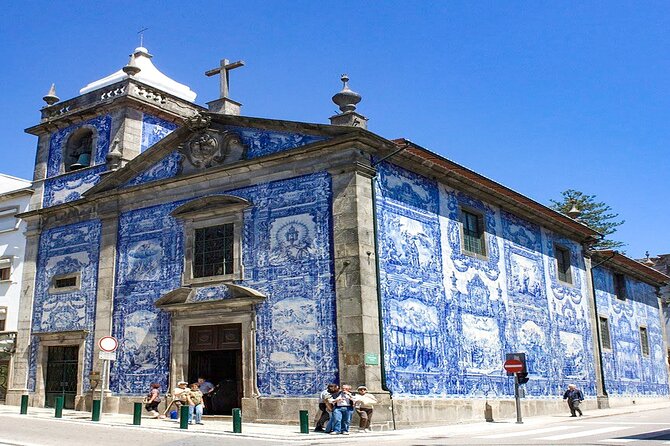
The Igreja do Carmo area is a visual reward. The Church of Carmo has intricate architecture and exterior ceramic tiles, and across the street the Church of the Carmelites brings a dramatic Baroque facade.
Then the tour highlights something small but memorable: the Hidden House, a tiny space tucked between the two churches. It is basically a solution to building in a densely packed urban area. This is the kind of detail you would easily miss if you were just walking on your own. On a short tour, that matters.
Best way to enjoy this stop: stand still, look at the gap between the buildings, and try to imagine how planners squeezed space where there was no easy space. Porto’s city fabric is full of moments like this.
Torre dos Clérigos and Livraria Lello, the ticketed highlights
Torre dos Clérigos is a Baroque work by Nicolau Nasoni from the first half of the 18th century. The climb is 240 steps, and the reward is panoramic views over Porto and the Douro River. Tickets are not included, and this is one of the stops where you should consider your comfort with stairs.
It is also a pop-culture trivia bonus. The tower appeared in the 2021 Hollywood blockbuster Suicide Squad. You can treat that as a fun conversation starter, not a reason to go.
After the tower comes Livraria Lello, housed in a building opened in 1906 with an Art Nouveau facade and neo-Gothic details. Inside are painted plaster features, plus a famous staircase connecting floors and a large stained-glass skylight.
Tickets are not included unless you book specific options, and a Gold Ticket with priority and book access is listed as an extra. If you want to maximize your time and reduce waiting, that priority option may be worth considering.
Small practical advice: if you are sensitive to enclosed spaces or crowds, go in with a game plan. Look at the staircase, then the skylight, then choose one area to linger. Otherwise, the building can distract you from the one thing you came for, the wow factor.
Museums and gardens: Palácio de Cristal and transport history
The tour includes a stop at the oldest public museum in Portugal, located since 1942 in Palácio dos Carrancas. The museum is focused on fine arts, decorative arts, and archaeology.
You also get time at Palácio de Cristal Gardens, a Romantic era setting from the 19th century designed by German landscape architect Émile David. The gardens cover eight hectares in the city center and keep elements of the original plan, including Jardim Émille David and areas like Avenida das Tílias. The balconies over the Douro River are a big part of the viewpoint energy, even when you are just doing a quick stop.
Then there is the Electric Car Museum, opened as a set featuring trams and other light rail vehicles, plus an example of American horse-drawn trolley buses first introduced to Porto in 1872. It sits in the former Massarelos power station. If you like the engineering side of cities, this stop tends to be a nice surprise.
“Golden Church” and Palácio da Bolsa, when Porto turns ceremonial
The tour hits the São Francisco Church, known for its golden interior and wood carvings. The Tree of Jesse is noted as a highlight, and the catacombs are part of the church experience. It is classified as a National Monument and has UNESCO World Heritage Site status since 1996.
Another key stop is Palácio da Bolsa, the headquarters of the Porto Commercial Association. It is neoclassical, designed by Joaquim da Costa Lima and built in 1842 after the former São Francisco Convent was destroyed in a fire during the siege of Porto. The big highlight is the famous Arab Room.
Your ticket situation can vary here based on which parts the operator includes, and an additional guide fee is listed for the visit to the Stock Exchange Palace. The practical takeaway is simple: if Palácio da Bolsa and the Arab Room matter to you, check what is included before you arrive.
Bridges and viewpoints: from D. Maria Pia to Serra do Pilar
Porto’s bridges are not just transportation. They are skyline makers. This tour weaves them into the route, with classic and modern crossings and viewpoints across the Douro.
You see Ponte D. Maria Pia, built to replace an earlier suspension bridge, designed as Gustave Eiffel’s first major masterpiece with Theóphile Seyrig. The structure includes a bi-articulated arch supporting a single track rail deck via lattice pillars. Admission is listed as free.
You also get the Vila Nova de Gaia viewpoint direction through Jardim do Morro, a public hill garden with panoramic views and wide paths.
Then comes Mosteiro da Serra do Pilar, with a circular church and cloister design considered remarkable in European classical architecture. Construction began in 1538 under the Order of Saint Augustine, and stages of construction changed the original plan. It is now a religious, cultural, and military site, with UNESCO status tied to the Historic Center of Porto and related elements.
You also pass the Arrábida Bridge. It was opened in 1963, sits 70 meters above average water level, and is described as having bronze sculptures atop its large pillars. This gives you a modern counterpoint to the older stone and iron bridge silhouettes.
If you only do one viewpoint stop, I would personally give extra attention to Jardim do Morro and the Serra do Pilar area. They are among the spots where the Douro River suddenly explains why Porto looks the way it does.
Fort São João Baptista and Castelo do Queijo, the coastline defenses
The tour continues along coastal-defense style landmarks.
Fort São João Baptista is described as Portuguese military architecture built at the end of the 16th century to protect the coast and the entrance to the Douro. Modern fortresses were added in the 17th century, with an access gate built in the 18th century.
Then Castelo do Queijo, Fort São Francisco Xavier. It was built in the 17th century to protect the coast from North African pirates and sits on a rocky hill shaped like cheese, which is exactly how it got its nickname. Admission is listed as free for this stop.
These are great stops for photos and for understanding Porto’s reach beyond the historic core. Even if you do not go inside, the fort setting makes the city feel strategic.
Leixões, the Anemone sculpture, Serralves, and Casa da Música
The tour also includes more contemporary and artsy Porto edges.
Leixões Cruise Terminal is mentioned as a key cruise hub. The area increased cruise operation after the new Cruise Pier in April 2011, and the data notes strong growth in passengers and ships.
Then there is the sculpture She Changes, popularly called Anemone, by Janet Echelman. It is designed for Porto and Matosinhos and looks like a huge fishing net that moves with the wind. It is one of those works you have to see in motion to fully get.
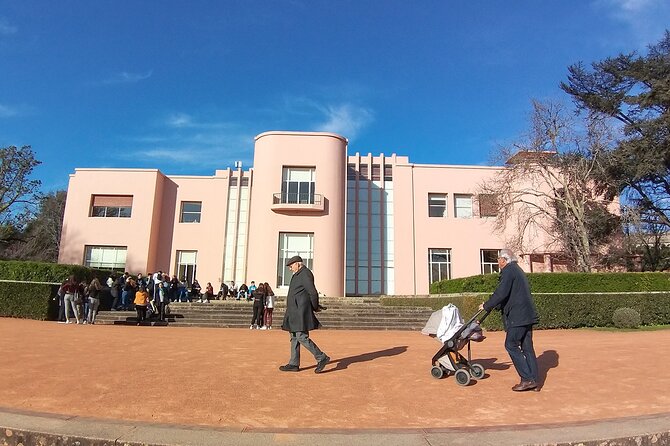
Serralves is another arts stop. The Serralves Foundation house, built in the 1930s, is an Art Deco example used for exhibitions and events. The park is described as spreading over 18 hectares, with Casa Arte Deco, the Museum of Contemporary Art, and even a forest. The designer of Parque de Serralves is Jacques Greber.
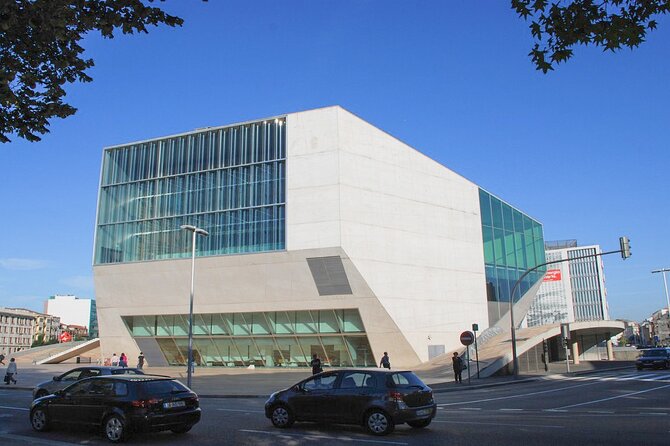
Finally, Casa da Música is included. It is Porto’s main concert hall, designed by Rem Koolhaas, opened in 2005, and considered an icon of contemporary architecture.
These stops also help balance the tour. If you spend a day thinking only about churches and bridges, Porto can start to blur. Serralves and Casa da Música refresh your eyes and show a city that keeps building.
Praça de Mouzinho de Albuquerque, and the option to keep going
The tour ends with Praça de Mouzinho de Albuquerque, featuring a 45 meter statue in the center, the Monument to the Heroes of the Peninsular War. It represents the union of Portuguese and English forces against the French Napoleonic armies, with details including the lion and eagle symbolism.
After that, you can choose optional add-ons, if you want to turn your Porto afternoon into a full evening plan.
- Private Douro River Cruise at sunset is listed as an option with a 2-hour experience, with a focus on views of Porto, Vila Nova de Gaia, and the bridges.
- Dona Antónia Port cellar visit is another option, including a walk through historic cellars and a tasting of five Port wines.
- Fado night with traditional dinner is listed with transport included and a start time around 20:00.
- Fado show with Port wine is also listed, with daily times at 18:00 and 19:30.
If you are the type who wants culture on rails after a morning of sights, these add-ons work well. If you want to keep the afternoon light, you can skip them and head out on your own for dinner.
Price and value, what $185.43 buys you
At $185.43 per person for about 4 hours, the price is mainly for the private format, the guide, and the transportation package. The vehicle includes Wi-Fi, bottled water, and refreshments, and the tour includes personal accident and civil liability insurance.
What is not included is just as important. Some of the most famous stops require paid entry if you want them fully, including Torre dos Clérigos and Livraria Lello. A few other specific entry and tour fees are also listed as extra, such as the Dona Antónia Port visit, and optional fado meals or shows.
So the value equation depends on what you want to see. If your must-sees include Lello and the tower, this tour can still be a strong buy because it bundles the logistics and gives you a fast, curated route. If you are happy with exteriors and free entries, you might spend less on admissions on your own, but you would lose the guide-led structure and the smooth vehicle pacing.
Who this tour is best for
This tour fits especially well if you:
- Want a private group rather than a bus full of strangers
- Like architectural and historical context, not just selfies
- Prefer a comfortable ride between clusters of sights
- Plan to add a sunset Douro cruise or a Port-focused experience later
It is also a good match for couples and small groups who want a guided “greatest hits” walk without feeling rushed. If you love deep museum time, you will want to pair this with separate longer visits after.
Should you book this Porto afternoon tour?
I think it is a smart booking if you want structure and local interpretation in a short window. The guide-driven history moments help the stops feel connected, and the mix of Porto icons like Mercado do Bolhão, São Bento, Clérigos Tower, Lello, and the bridges is exactly what first-time visitors usually want.
If you hate waiting in ticket lines or you do not want stairs, review the ticketed stops in advance and plan around them. And since the experience requires good weather, bring a backup plan for rain.
If your goal is to see the highlights, get oriented, and then decide what to do next, this is one of the better ways to do it.
FAQ
Is pickup included?
Yes. Hotel pickup is offered, and the meeting point is Avenida dos Aliados, Av. dos Aliados, 4000 Porto, Portugal. The tour ends back at the meeting point.
How long is the tour?
The duration is approximately 4 hours.
Is this a private tour?
Yes. It is listed as private, with only your group participating.
What language is the tour offered in?
It is offered in English.
What is included in the price?
Transportation in luxury vehicles with Wi-Fi, bottled water, refreshments, and a relaxing atmosphere is included, along with personal accident and civil liability insurance.
Which attractions have free admission?
São Bento Railway Station is listed as free. Café Majestic, Igreja do Carmo, Hidden House, and Castelo do Queijo are also listed as free in the provided details. Palácio de Cristal Gardens are free, and Jardim do Morro and Ponte D. Maria Pia are listed as free as well.
Which major stops require tickets not included?
Livraria Lello (Gold Ticket priority and book is listed as extra), the Tower of the Clergy (ticket listed as extra), and the Cathedral of Porto are indicated as not included.
Are optional activities included?
No. The private Douro River cruise, Dona Antónia Port cellar visit, fado night with dinner, and fado show are listed as optional and priced separately.
What happens if the weather is bad?
The experience requires good weather. If it is canceled due to poor weather, you are offered a different date or a full refund.
What is the cancellation policy?
Free cancellation is available. You can cancel up to 24 hours in advance for a full refund, and changes within 24 hours of the start time are not accepted.
Fresh off the Porto quays



Private, compared.
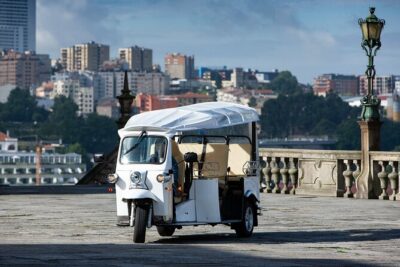
Discover Porto’s Highlights on a 2-Hour Private Electric Tuk Tuk
Read our review →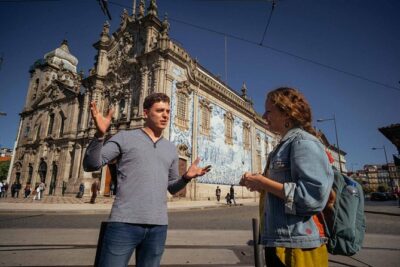
Porto PRIVATE TOUR With Locals: Highlights & Hidden Gems
Read our review →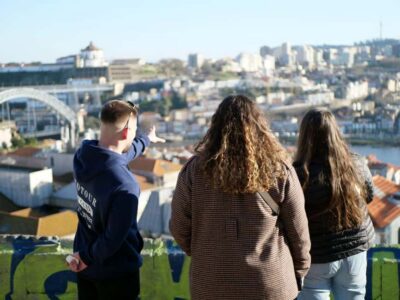
Private Tour of the Historic City in a Ford T Car
Read our review →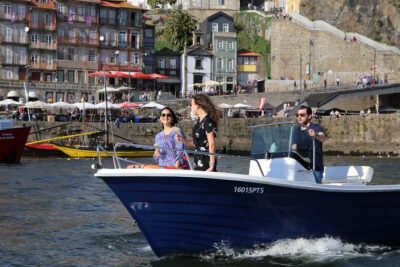
Private tour in the Douro (1 to 4 people) on a boat just for you
Read our review →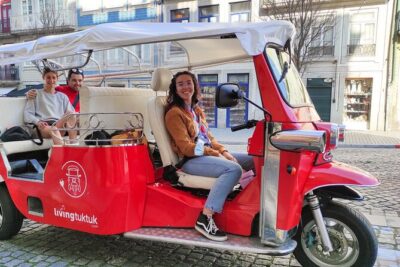
Historic Porto by Private Electric Tuk Tuk to Top Landmarks
Read our review →
Porto Private Food and Drink Tasting Tour with Local
Read our review →