Reviewed · TICKETS
Porto: Monastery of Leça do Balio & Open Sculpture Ticket
A stone monastery day in Porto is never boring. I love the Gothic stone carvings and the calm cloister garden feel right away, even in a busy travel city. One thing to plan for: you will be walking, and the highlights reward a slower pace.
What makes this ticket worth your time is the mix of old and new, built around the monastery’s medieval role and its modern cultural life. You can pair the monastery visit with an exhibition, plus Álvaro Siza Vieira’s Open Sculpture component, and that adds variety without stretching your schedule.
If you hate self-guided museums, this may feel a bit more free-form than you want. You do get help on site, including an audio option, but there is no guided tour included in the basic experience.
In This Review
- Key things to know before you go
- Leça do Balio: a fortified monastery tied to pilgrims and power
- What Álvaro Siza Vieira’s restoration changes (and what it keeps)
- Your self-guided flow: audio support and room-by-room pacing
- Exhibitions inside the monastery, including People in Motion and the current themes
- Open Sculpture on the Camino de Santiago: art you can pace
- Cloister garden serenity: the pause that turns into the highlight
- Price and value: where your $11 goes on this 1-day plan
- Getting there from Porto: bus routes that actually work
- What to pack and how to make it comfortable
- Should you book the Leça do Balio and Open Sculpture ticket?
- FAQ
- How long is the Monastery of Leça do Balio and Open Sculpture experience?
- How much does it cost?
- What is included with the ticket?
- Is a guided tour included?
- What language support is available?
- Where is the meeting point?
- Is food or beverage included?
- Is the site accessible?
- What is the cancellation policy?
Key things to know before you go
- National Monument since 1910, and it’s tied to the Caminhos de Santiago pilgrim route
- Restoration by Álvaro Siza Vieira, blending medieval authenticity with new contemplation spaces
- Exhibitions inside the monastery, including the Livraria Lello Foundation’s People in Motion
- Open Sculpture on the Camino de Santiago, included depending on the ticket option you choose
- Audio tour via a downloadable app is available, which helps you move room to room without feeling lost
Leça do Balio: a fortified monastery tied to pilgrims and power
The Monastery of Leça do Balio sits in Porto’s Norte Region area, and it works on two levels at once. On the surface, you’re walking into a historic site with serious Gothic details, stonework, and an atmosphere built for quiet. Underneath that, it’s also a place that makes sense of why people traveled, prayed, fought, and negotiated across centuries.
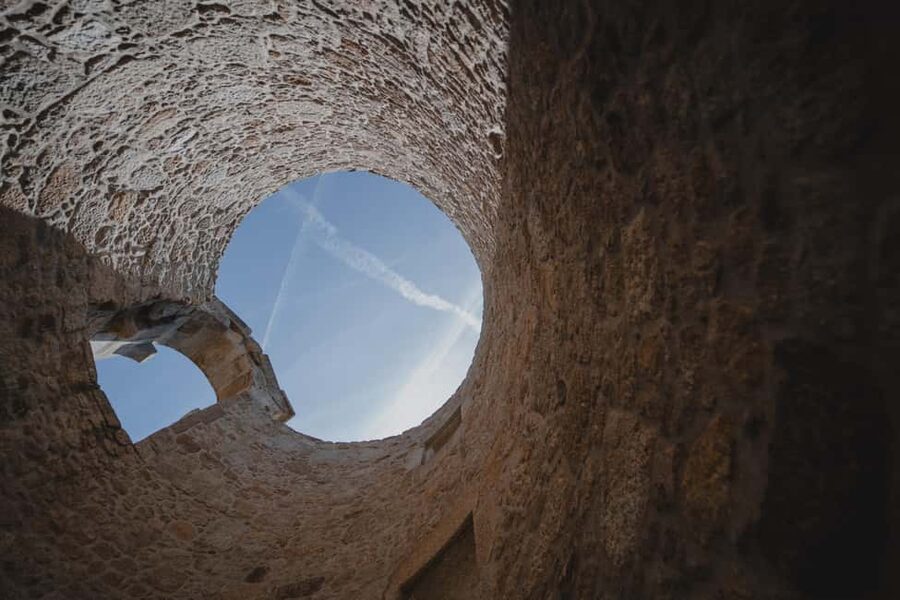
Start by treating the building like a fortress with spiritual purpose. The monastery’s fortified architecture reflects the reality of its medieval role. The Order of the Knights Hospitaller of St. John of Jerusalem established itself in the region for religious, hospital, and defensive functions, and you can still read that logic in the way the site is shaped for protection. It’s not just postcard architecture, it’s practical architecture for a pilgrim flow.
Then, connect it to the bigger Portuguese story. This was a stage for important moments, including the marriage of King Fernando I and Leonor Teles in 1372. That matters because it explains why the monastery wasn’t only about private worship. It was also a political and social center when power needed a credible, high-profile place.
And that’s why I like the ticket format here. You’re not only paying for entry. You’re stepping into a site that connects geography, religion, and national history, then watching it get used again for modern conversation and art.
Some other granite-city outings to weigh
- Porto: Spiritus Multimedia Show Entry Ticket★ 4.5 · 6,403 reviews
- Porto: Torre dos Clerigos Entrance Ticket★ 4.6 · 6,395 reviews
- Porto: Livraria Lello Entry Ticket & Foundation Option★ 3.9 · 4,834 reviews
- Porto: World of Discoveries Entry Ticket★ 4.5 · 2,922 reviews
What Álvaro Siza Vieira’s restoration changes (and what it keeps)
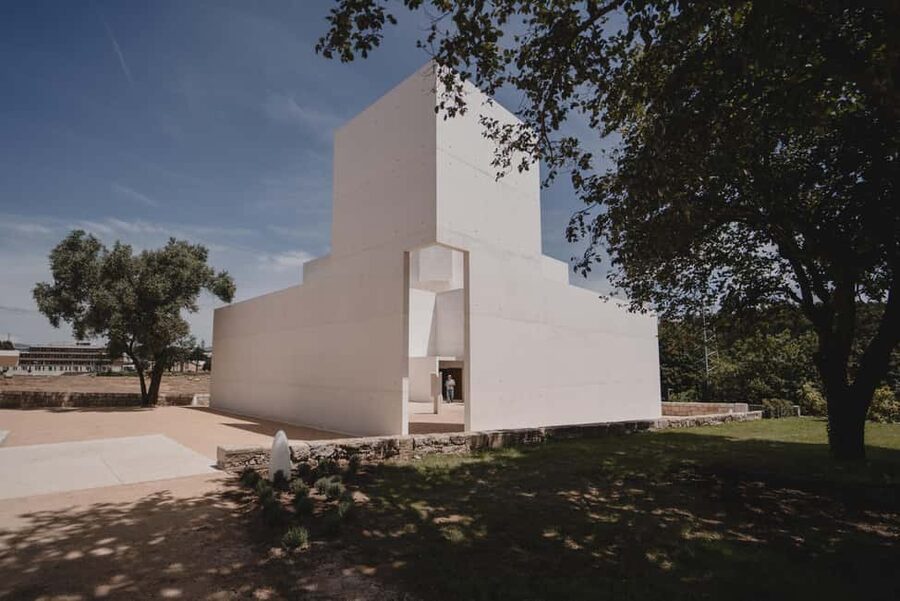
One of the best reasons to add this monastery to your Porto day is the restoration approach. The project, led by architect Álvaro Siza Vieira, is designed to preserve medieval authenticity while integrating new spaces for reflection, art, and culture.
What you should look for as you move through the monastery is the contrast between time periods without the site feeling split in two. The restoration returned patrimonial dignity and social purpose. It also created functional modern areas, including an exhibition centre and an ecumenical space. You’ll also hear about the future Garden of Thought, which gives you a sense that the site is still evolving, not frozen behind glass.
In practical terms, this kind of restoration helps visitors. Medieval buildings can sometimes feel like they exist mainly as ruins. Here, the new spaces give you places to pause and reorient yourself. That makes it easier to appreciate the Gothic stone carvings and the overall design choices rather than just rushing from room to room.
Your self-guided flow: audio support and room-by-room pacing
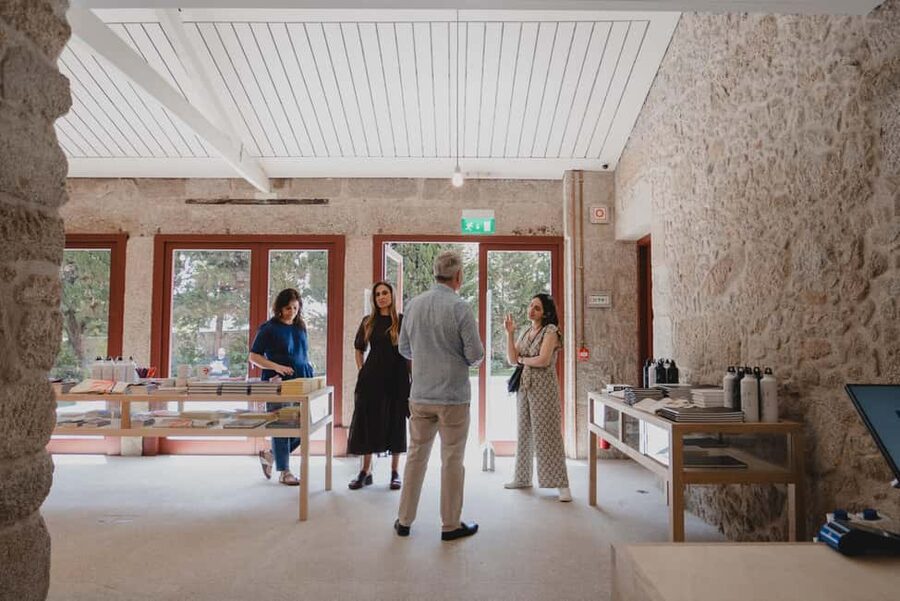
This ticket is set up for independent visiting, and that’s not a flaw if you use the tools on offer. When I visited in this context, the staff suggested downloading an app for an audio tour, and that tip genuinely helps. It means you can walk at your own speed while still getting clear explanations room by room.
If you’re planning your time, aim for a gentle rhythm:
- Start with the monastery spaces first, so the architecture anchors everything else
- Then shift into exhibitions once you already understand the setting
- Finally, use the Open Sculpture part to close the loop on how contemporary art sits beside the old pilgrim route
This is also where small-group setups can make a difference, even if you’re self-guided. You get a human welcome at the start, which lowers the usual friction for visitors who aren’t sure where to begin.
Also, you don’t need to treat the monastery like a checklist museum. The cloister area is designed for stillness, and the experience works best when you let that calm land on you.
Exhibitions inside the monastery, including People in Motion and the current themes
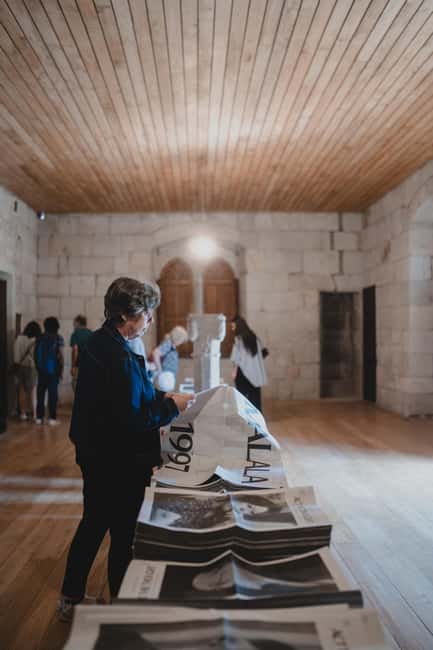
The monastery’s modern purpose comes through most clearly in its exhibitions. The Livraria Lello Foundation is involved, and right now the renovated spaces host People in Motion. This exhibition explores migrations of people, ideas, and cultures through sculpture, literature, and photography.
You don’t need specialist knowledge to get something out of this. The content theme matches the monastery itself. A pilgrim route is, at heart, a movement story. People arrive from somewhere else, carry ideas, trade stories, and leave behind impressions. So when an exhibition turns those themes into art and images, it stops feeling like an add-on and starts feeling like a continuation of the site’s identity.
There’s also a real-world bonus: the exhibition program can include other timely topics. On the visit described, there was an exhibition focused on fake news, and it felt relevant because it pushes you to think about how facts travel, how misinformation spreads, and why checking sources matters. Whether you catch that exact theme or another during your dates, the key idea is the same: this place uses contemporary culture to spark reflection, not just to fill space.
If you want to make the most of exhibitions in a historic building, plan to spend time looking slowly. The monastery gives you a physical frame for thinking, and the best payoff is when you connect the themes to what you see in stone around you.
Open Sculpture on the Camino de Santiago: art you can pace
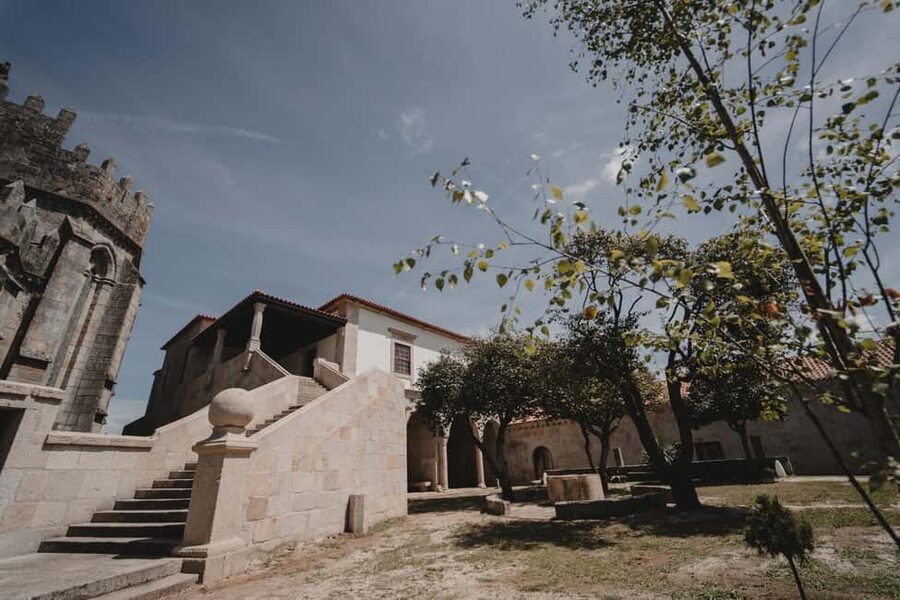
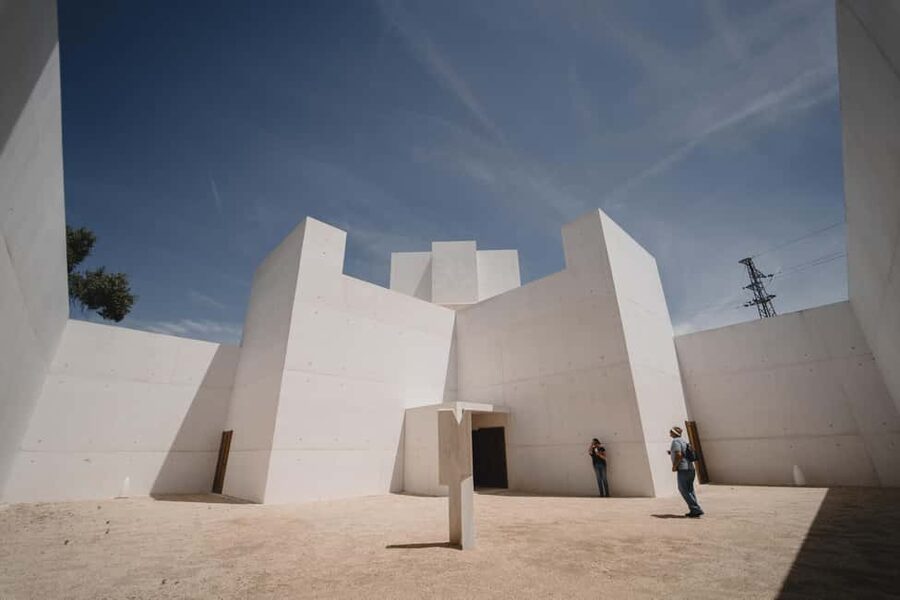
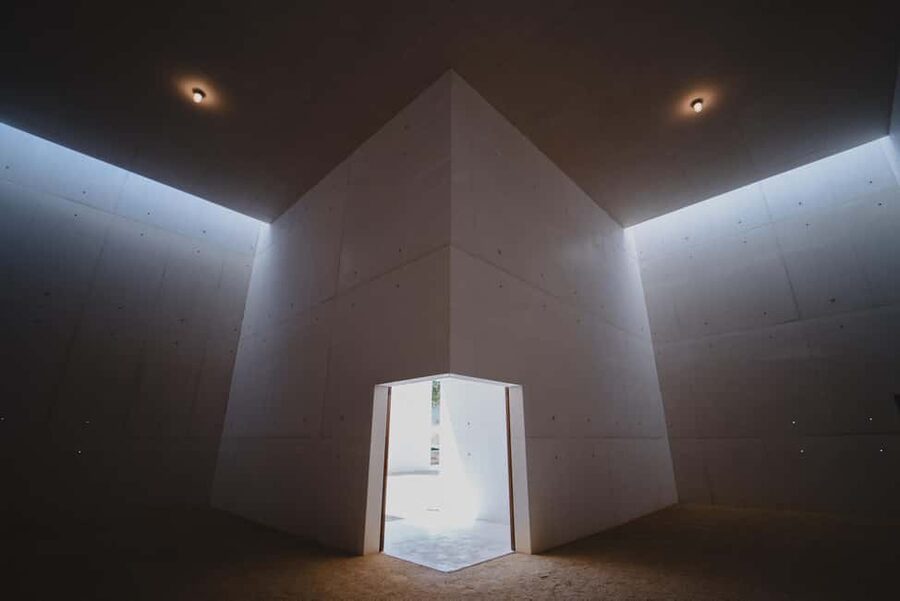
After you’ve taken in the monastery and its exhibition spaces, the ticket can include Álvaro Siza Vieira’s Open Sculpture along the Camino de Santiago. Whether it’s included depends on the option you select, so check your ticket details before you arrive.
This part matters because it changes how you experience the day. Instead of everything happening inside, you shift to a more walk-and-look rhythm that feels closer to the pilgrim mindset. Open-air sculpture has a way of refusing museum habits. You see pieces from different angles, you notice light changes, and you naturally adjust your pace.
It also helps you appreciate why Siza Vieira is central to this story. He’s not only a restorer here. His presence connects architectural preservation with contemporary interpretation. You’re essentially traveling through an ongoing conversation between past and present, framed by art placed where movement already happens.
One detail worth seeking out if you care about architecture: the Open Sculpture includes a sculpture by Álvaro Siza Vieira himself, and that can be a satisfying moment if you like the idea of an architect contributing directly to what you’re standing in.
Elsewhere in Porto, worth a look before you book:
- The Unvanquished Tour in Porto City Center
★ 5.0 · 26,497 reviews - From Porto: Douro Valley w/ Boat Tour, Wine Tasting & Lunch
★ 4.7 · 19,061 reviews - Complete Douro Valley Wine Tour with Lunch, Wine Tastings and River Cruise
★ 5.0 · 12,920 reviews - Porto: Douro Valley with Winery Lunch, Tastings & Cruise
★ 4.7 · 7,002 reviews
Cloister garden serenity: the pause that turns into the highlight
The cloister garden is where your visit can quietly reset. A monastery can feel like a study of time, but gardens are what make that time feel livable. Even with a compact visit, the cloister area creates a sense of distance from the outside world.
This is also where you’ll understand why new contemplative spaces were part of the restoration plan. The site isn’t only protected history. It’s meant to be used thoughtfully today. Sitting for a few minutes there does more for your memory of the visit than taking one extra photo.
If you’re the kind of traveler who usually rushes, make a point of slowing down here. Pick a bench area, breathe, and then return to looking at the stone carvings with fresh eyes.
Price and value: where your $11 goes on this 1-day plan

At about $11 per person for a 1-day visit, this ticket is built for value. You’re not just buying a single attraction. You’re getting access to the monastery itself, plus entry to exhibitions. Depending on the option, the combo can also include Open Sculpture and potentially the Lello Library component.
That pricing makes sense if you plan to use the full set of included parts. If you only go for the monastery and skip the exhibition and sculpture, the value drops. If you do use the combo fully, you’re paying for multiple layers of experience:
- Medieval architecture you can explore at your own pace
- Contemporary exhibition content that connects to the site’s meaning
- Outdoor art tied to the Camino route
A smart strategy is to treat it like a curated day rather than a quick stop. Aim for enough time to move through the monastery properly, spend time with the exhibition theme, and still have energy for the sculpture portion if it’s included in your selected option.
Getting there from Porto: bus routes that actually work
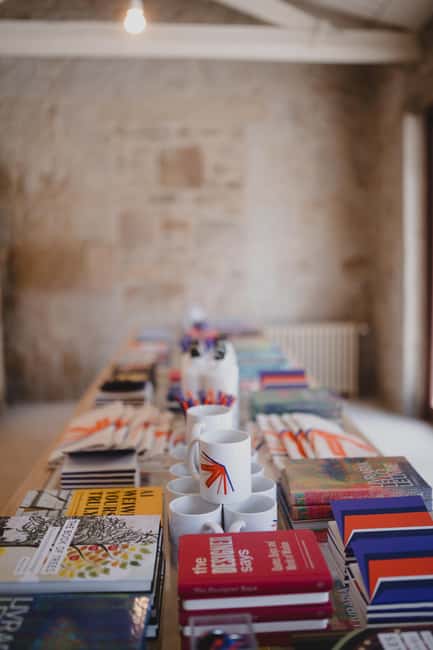
The activity lists several bus routes in the Porto area, and this is helpful because it avoids you guessing how to get there. Based on the route options provided, these are good starting points:
- STCP 505 from Hospital de São João to Mercado de Matosinhos, about 15 minutes
- Unir 5024 from Casa da Música to Lionesa, about 15 minutes
- Unir 6003 circular route via Lionesa, about 10 minutes
- Unir 5023 circular route via Matosinhos and the A4, about 20 minutes, with connection through Matosinhos (Leça do Balio Station)
If you’re mapping this out, choose the route that aligns with where you’ll already be spending your Porto day. The monastery is a nice fit for a morning or early afternoon slot, since the visit involves walking and you’ll want time for the cloister pause and the exhibition space.
What to pack and how to make it comfortable
You’ll want comfortable shoes. The visit involves walking, and the open-air sculpture portion can make that more noticeable. Plan on layers as well. Porto weather can shift, and outdoor art plus indoor stone spaces can feel different in temperature.
Also, bring your patience for a site that’s both historic and active. You’re not just looking at old walls. You’re entering a living cultural center with exhibitions, concerts, debates, and educational activities happening in the wider cycle. Even if you catch only part of that, the atmosphere is built to support it.
Should you book the Leça do Balio and Open Sculpture ticket?
Book it if you like architecture that has purpose, not just looks. This combo fits perfectly if you want a calm monastery visit plus modern art and an exhibition program that connects to movement, migration, and how ideas travel.
Skip it if you only want a quick exterior stop, or if you need a fully guided tour to feel satisfied. This experience works best when you use the audio app support and give yourself time to wander, read, and sit.
If you’re spending a day around Porto and want something that feels authentic, quiet, and thoughtfully restored, this is a strong use of time. The monastery’s stone carvings, the audio-friendly self-guided pace, and the Open Sculpture option are the three pieces that make it click.
FAQ
How long is the Monastery of Leça do Balio and Open Sculpture experience?
It’s valid for 1 day. Check availability to see starting times.
How much does it cost?
The price listed is $11 per person.
What is included with the ticket?
Entry ticket to the Monastery and access to exhibitions. The combo can include Open Sculpture, and if selected, the Lello Library as well.
Is a guided tour included?
No. A guided tour is not included.
What language support is available?
Portuguese and English.
Where is the meeting point?
The meeting point is tied to public bus routes, including STCP 505, Unir 5024, Unir 6003, and Unir 5023.
Is food or beverage included?
No. Food and beverage are not included.
Is the site accessible?
Yes, the space is fully accessible for people with mobility impairments.
What is the cancellation policy?
The activity is non-refundable.
Fresh off the Porto quays




Tickets, compared.
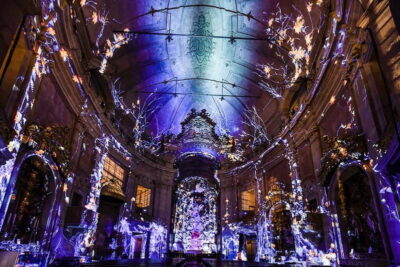
Livraria Lello Entry Ticket & Foundation Option
Read our review →



Guimarães & Braga Tour with Entry Tickets and Lunch
Read our review →