
Reviewed · JEWISH HERITAGE TOURS
Porto Jewish Heritage Walking Tour Small group
Porto has a Jewish story in plain sight. This 3-hour walk traces Jewish life back to the 12th century and threads you through Porto’s stairways and alleys, including the Escadas da Esnoga. You end with a changing view of the city near Parque das Virtudes, after walking through spots that shaped everyday life.
I like two things most. First, the tour connects big moments to small streets, so names like Rua Sant’ana and Rua do Comércio do Porto feel real, not like trivia. Second, you get an entry into a hidden synagogue, the kind of stop that is hard to find and easy to miss on your own.
One caution: this is a moderate-walking tour with stair climbing and old-city surfaces. It is not suitable for mobility impairments, so wear supportive shoes and plan for uneven steps.
In This Review
- Key takeaways
- Entering the Porto you only see on foot
- Start at Vimara Peres, then trace the 12th-century story
- Rua Sant’ana and Rua do Comércio do Porto: where life met trade
- Igreja de S. Bento da Vitória and the view that changes everything
- Escadas da Esnoga: stairs as part of the story
- Virtudes Garden and Montanha dos Judeus: finishing with context and air
- The hidden synagogue stop: the most practical reason to book
- Captain Arthur Carlos de Barros Basto and the modern connection
- Inquisition and the New Christians: what to listen for on the route
- Guide style and group size: why small feels better here
- Pricing at about $57: what you get for the money
- What to wear and how to pace yourself
- Who this walking tour suits best
- Should you book the Porto Jewish Heritage Walking Tour?
- FAQ
- How long is the Porto Jewish Heritage Walking Tour?
- Where do we meet, and where does the tour end?
- What is included in the price?
- What languages are available for the tour?
- Is the tour suitable for people with mobility impairments?
- Can I cancel, and is the booking flexible?
Key takeaways
- 12th-century Jewish presence in Porto and how it fit alongside Christian neighbors
- Escadas da Esnoga and a route through alleys, staircases, and viewpoints
- Hidden synagogue access, plus context you can carry into other parts of the city
- Captain Arthur Carlos de Barros Basto (Abraham Israel Ben-Rosh) and the modern link to the Kadoorie Mekor Haim Synagogue
- Inquisition-era pressure on New Christians, explained as part of Porto’s local story
- Small-group energy, English, Portuguese, or Spanish, and kids free until age 12
Entering the Porto you only see on foot
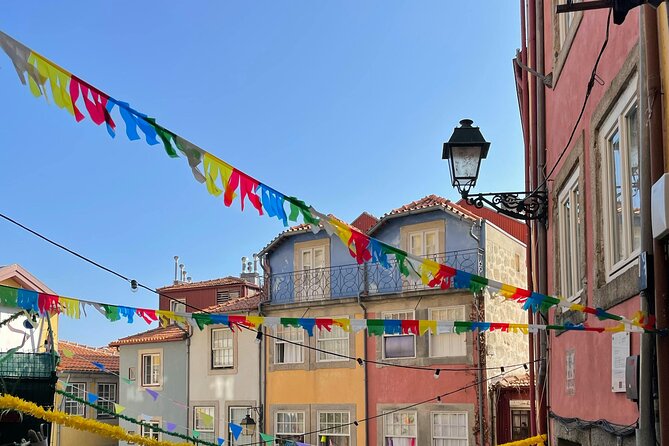
Porto rewards slow attention, and this tour is built for that. You’ll walk through tight lanes, steep bits, and sudden changes in perspective. That matters here because Jewish heritage in Porto is not all in one big monument. It’s scattered, layered, and sometimes hidden behind ordinary doorways.
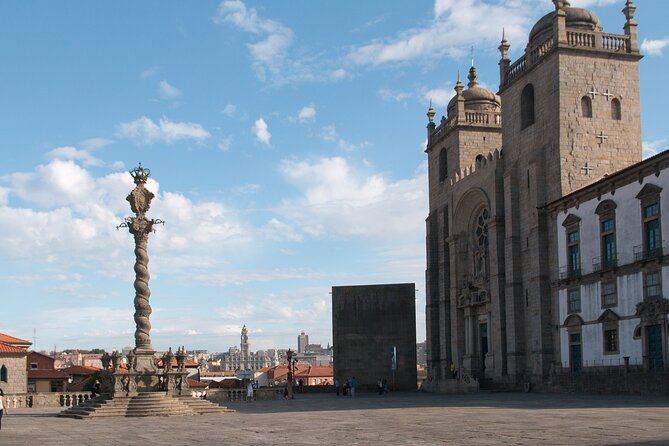
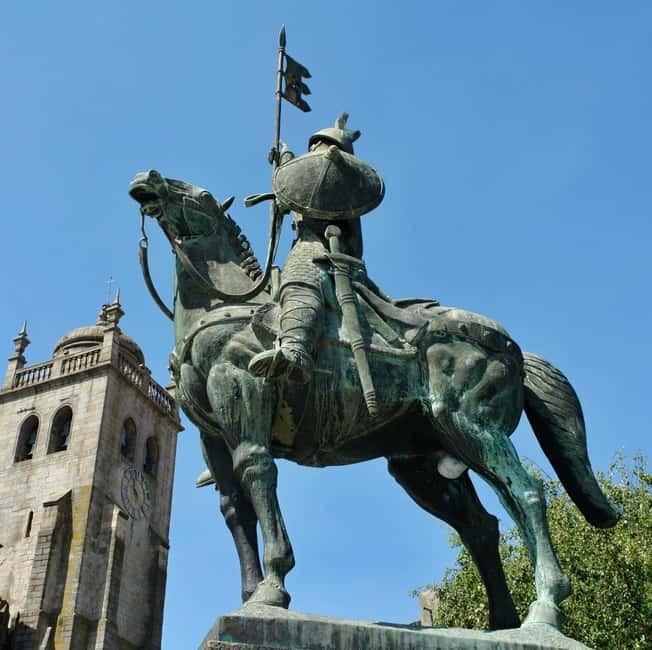
The experience starts at the Vimara Peres Statue at the Cathedral of Porto. From there, you move into the older fabric of the city, where streets and staircases guide the narrative. You will cover about 2.5 hours of sightseeing within a total 3-hour tour, so it feels like a focused outing rather than a long haul.
You also get a small-group format, and that is a plus when you want to ask questions. The tour runs in English, Portuguese, and Spanish, so you can usually get a smooth explanation no matter what language you book in.
More Jewish heritage walks in Porto:
- 3-Hour Porto Jewish Heritage Walking Tour with Local Guide★ 4.5 · 396 reviews
- Porto: Jewish Heritage Walking Tour★ 4.7 · 266 reviews
- Jewish Walking Tour of Porto★ 4.5 · 46 reviews
- Porto: Half-Day Jewish Tour★ 4.8 · 30 reviews
Start at Vimara Peres, then trace the 12th-century story
Beginning at the Cathedral area might sound like a random start for a Jewish heritage walk, but it helps you set the stage. Your guide frames Porto’s Jewish story as something tied to the city’s growth, trade, and shifting power. You’re not only learning dates. You’re learning how a community could be present, active, and visible, even while relationships with wider society changed over time.
A key theme early on is coexistence in the earlier period, reaching back to the 12th century. You’ll hear how Jewish communities lived alongside local Christians and also formed commercial ties. That perspective is useful, because it prevents the story from turning into one single theme of conflict. It’s more human than that, and more realistic.
As you walk toward the older streets, you begin noticing how Porto’s layout shapes memory. When streets bend, climb, or narrow, you understand why people met where they did, prayed where they could, and traveled with what was practical.
Rua Sant’ana and Rua do Comércio do Porto: where life met trade
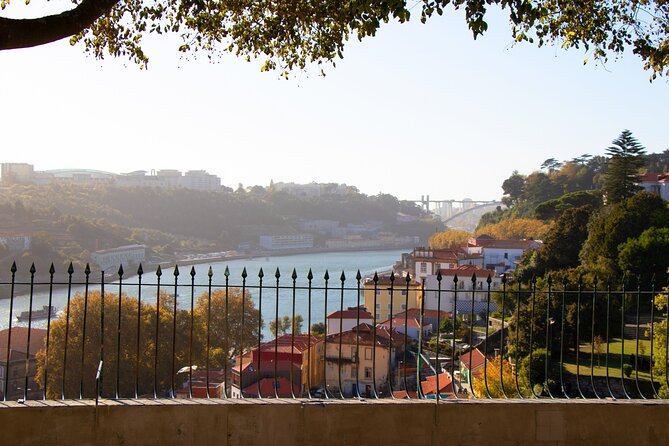
You’ll pass through Rua Sant’ana and Rua do Comércio do Porto, two names that sound like ordinary street signs until you connect them to daily life. This part of the tour is where the “so what” clicks.
Jewish heritage here is not only about worship. Your route emphasizes work, commerce, and neighborhood patterns. You’ll hear that wealthier Jewish families settled in specific parts of the area, and that business relationships between Jews and Christians played a meaningful role in Porto’s life.
Why I think this matters for you: Porto can be tourist-heavy, and it’s easy to get stuck in a museum mindset. A walk like this keeps you grounded in the real city rhythms, the same streets people used to shop, talk, conduct business, and move between home and community spaces.
If you like history that connects to what you can see on the pavement, this section is a strong reason to book.
Igreja de S. Bento da Vitória and the view that changes everything
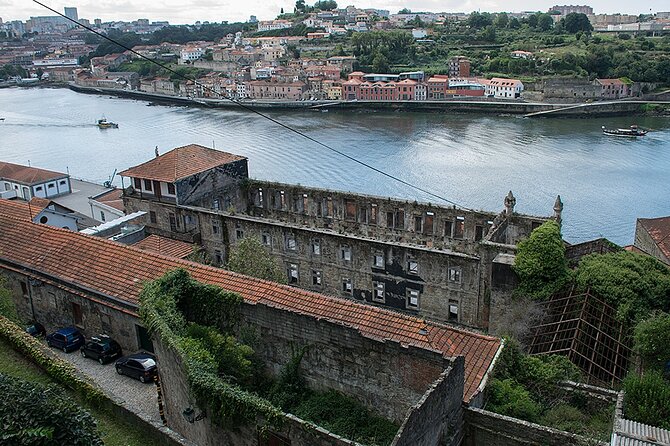
Your tour route includes Igreja de S. Bento da Vitória. Even if you’re not going in for a full interior visit, the location helps explain how religious and cultural stories overlap in Porto.
From there, you reach a viewpoint area at Vitória. This is where the tour earns its keep as a walking experience. Views do more than show pretty panoramas. They help you imagine old movement patterns, where people gathered, and how the city’s slopes shaped separation or connection between neighborhoods.
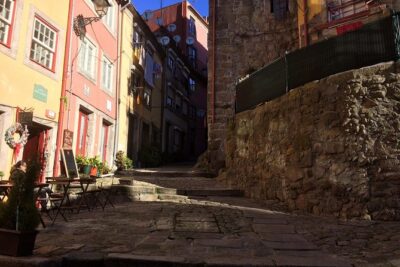
After the viewpoint, the pace shifts toward stair climbing. That’s where Porto turns physical. The route includes the Escadas da Esnoga (Synagogue Steps), and those stairs are not just a photo stop. They give you a physical sense of how steep, compact neighborhoods were, and why access and visibility mattered.
Escadas da Esnoga: stairs as part of the story
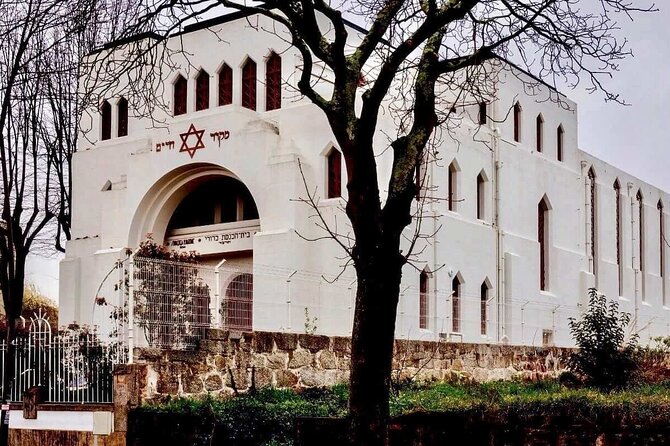
This is one of the most memorable parts of the day, mainly because it is so specific. The Synagogue Steps make the tour feel concrete. You’re walking the geometry of the past instead of only hearing about it.
You’ll learn to connect the steps to the idea of hidden or constrained worship spaces. Porto’s Jewish community navigated public life, religious practice, and the reality that certain places were safer or more discreet than others.
This is also the point where your guide’s tone becomes important. In the best versions of this tour style, the guide doesn’t treat these steps as a standalone curiosity. Instead, they fold them into the larger story: community organization, places of prayer, and later pressure from hostile forces.
If you’re the type who likes to ask questions, this is a great moment. You can point at a street or staircase and ask how people moved through this exact area.
More Porto on foot:
- Porto Walking Tour, Lello Bookshop, River Cruise and Cable Car
★ 5.0 · 3,354 reviews - Experience Porto’s Charm: 3-Hour Guided Walking Tour
★ 5.0 · 2,432 reviews - Porto: 3-Hour Guided City Highlights Walking Tour
★ 4.8 · 2,050 reviews - Porto: Wine Tasting with Tapas Walking Tour
★ 4.4 · 1,541 reviews
Virtudes Garden and Montanha dos Judeus: finishing with context and air
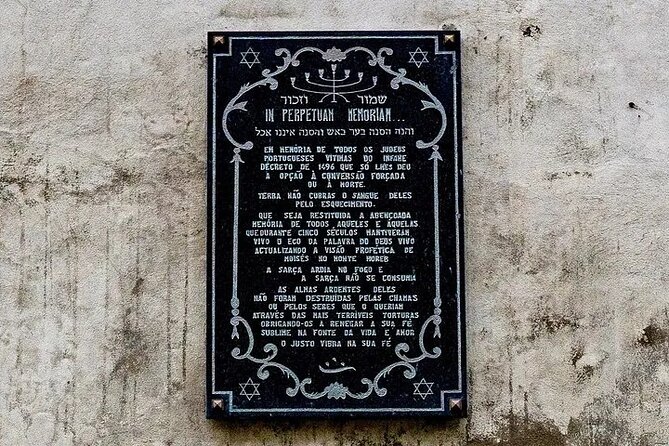
Your walk continues to the Virtudes Garden, then toward the Montanha dos Judeus (Mountain of the Jews). These final stops help you tie together the entire route.
They work because they shift the experience from street level to a wider sense of place. Gardens and hilltop viewpoints are also good for reflection, and you get time to process how Porto’s story connects to bigger regional events.
The Montanha dos Judeus name is a strong anchor. It keeps the theme visible even as the physical landscape changes. By the time you reach the end point at Parque das Virtudes, you should feel like you can read the neighborhood differently, not just recognize a list of attractions.
The hidden synagogue stop: the most practical reason to book
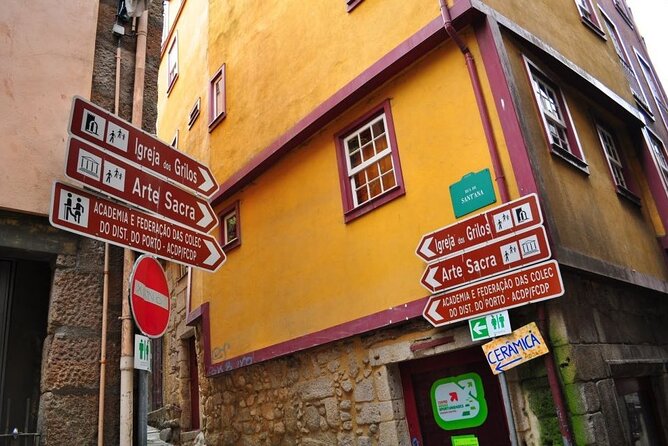
If you do only one thing, do this: plan your schedule so you can take the hidden synagogue entry as part of the tour. That included visit is the difference between a walk that teaches and a walk that really changes what you think you know.
The day’s story builds toward that moment. You’ll start with early coexistence and community life, then move through neighborhood sites tied to worship and identity, and finally reach a place you do not stumble upon by accident.
This is also where your guide’s explanation becomes key. Your understanding should click between what you see inside and what you heard earlier outside. You are not only collecting facts. You are learning how Jewish life adapted to the city and, later, to danger.
Captain Arthur Carlos de Barros Basto and the modern connection
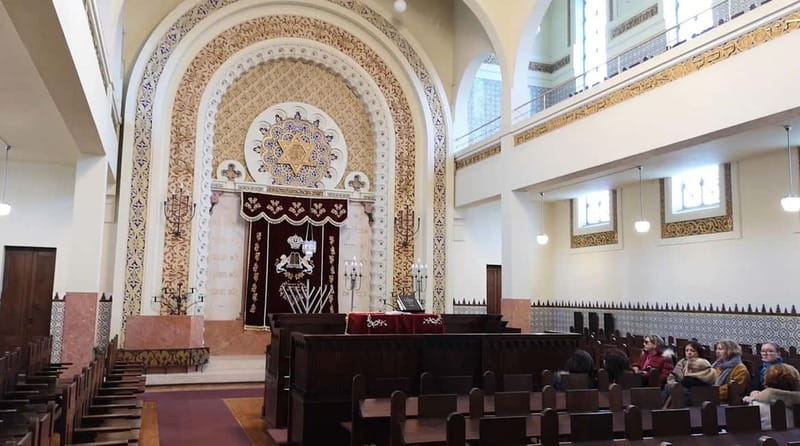
A major figure in Porto’s Jewish heritage story is Captain Arthur Carlos de Barros Basto, also known as Abraham Israel Ben-Rosh. Your guide uses his story to connect past and present, including his role in helping rebuild and support Porto’s Jewish community.
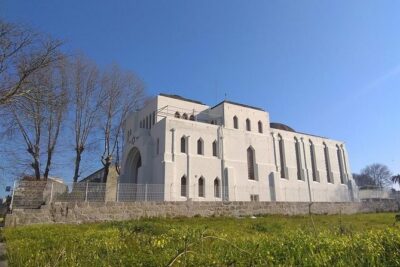
You will also hear how he contributed to the construction of the Kadoorie Mekor Haim Synagogue. This part is valuable because it shows that heritage is not only something you study in the past tense. It’s something people worked to recover, support, and continue.
That modern connection helps you understand why Jewish heritage tours can feel emotional even when the streets look unchanged. They aren’t just looking backward. They’re mapping continuity.
Inquisition and the New Christians: what to listen for on the route
Porto’s story also includes the Inquisition and the persecution of New Christians. Your tour explicitly covers this theme, and it shapes much of what you hear as you move through the city.
For you, the practical payoff is context. Even if you are not a specialist in Iberian history, you’ll come away with a framework for why certain Jewish traces became harder to see, why identities were pressured, and how fear can shape where people lived and worshipped.
One small consideration: if you want specific details like counts of New Christian families who fled Porto, or whether individuals returned to Judaism after the official end of the Inquisition, you may need to ask your guide directly. The tour gives you the big story and the local meaning, but you’ll get the best results by treating it as a conversation, not a worksheet.
Guide style and group size: why small feels better here
The guide, Maria Sanchez, comes up again and again in the tour experience. People describe her as warm, personable, and clear in English, with a strong command of the wider story of Jews in Portugal and Spain.
That matters for a walking tour, because you’re constantly switching settings. Street corners, stairways, churches, gardens, and viewpoints all demand explanation in quick bursts. A good guide does not rush. They keep you oriented so the story does not scatter.
Group size also helps. When you’re in a group of around five, the tour can move at a human pace, and questions are easier to fit in. That means you are more likely to understand the “why” behind the “what.”
Pricing at about $57: what you get for the money
At about $57 per person for roughly 3 hours, this tour is priced like an experience with real included value, not just a walking lecture.
What you are paying for:
- A professional local guide
- Taxes and insurance
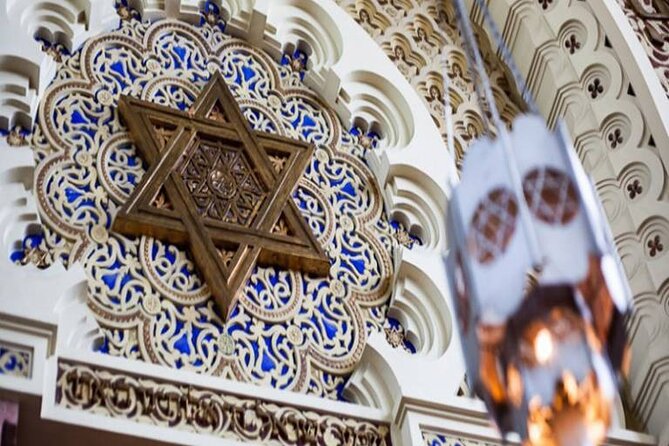
- Entry into a hidden synagogue
- Free participation for kids until age 12
That entry detail is the big value piece. Many heritage walks rely on outdoor stops alone, but here you get an indoor moment tied to the story. Add in the fact that the route includes stair climbing and several distinct neighborhood segments, and the price starts to feel more like paying for access and interpretation than for a simple stroll.
My take: if Jewish heritage is a priority for your Porto trip, this is a fair deal.
What to wear and how to pace yourself
You should plan on a moderate amount of walking, including stair climbing like the Synagogue Steps. Comfortable shoes are not optional here. You’ll be walking through older neighborhoods where surfaces can be uneven and slopes can add up.
It is also marked as pet friendly, which is great if you travel with a small companion and want to bring them along for an outdoor-heavy portion of the day.
Language-wise, you can choose English, Portuguese, or Spanish. If you’re sensitive to speed, pick the language you’re most comfortable with so questions come easily.
Who this walking tour suits best
I would book this if you:
- Want Porto history that connects religion, identity, and everyday life
- Like walking routes with specific, named stops rather than vague area exploration
- Enjoy learning the story behind small streets and staircases
- Want some Inquisition-era context without getting lost in pure politics
I would skip it if:
- You need step-free access. This tour is not suitable for mobility impairments.
- You dislike stair-heavy routes. Even if you can handle walking, the Synagogue Steps change the effort level.
If you’re visiting for a short time, this is one of the better ways to get a focused slice of Porto beyond the usual highlights.
Should you book the Porto Jewish Heritage Walking Tour?
Yes, if you want a guided walk that teaches you how Jewish life shaped Porto’s streets, trade, and worship spaces, and you care about real access like the hidden synagogue entry. The route is compact, the themes are clear, and the guide support is a big part of why the experience lands.
Also book it if you enjoy asking questions. The story includes difficult topics like the Inquisition and persecution of New Christians, and having a guide who can explain both early coexistence and later pressure helps you keep the whole timeline in your head.
Just come prepared for stairs and old-city walking, and you’ll get a day that feels like Porto with new eyes.
FAQ
How long is the Porto Jewish Heritage Walking Tour?
The tour lasts 3 hours.
Where do we meet, and where does the tour end?
You meet at the Vimara Peres Statue at the Cathedral of Porto. The tour finishes at Parque das Virtudes.
What is included in the price?
The price includes a professional local guide, taxes and insurance, entry into the hidden synagogue, and free participation for kids until age 12. Gratifications are not included.
What languages are available for the tour?
The tour is offered with a live guide in English, Portuguese, and Spanish.
Is the tour suitable for people with mobility impairments?
No. It is not suitable for mobility impairments, since the route involves walking and staircases.
Can I cancel, and is the booking flexible?
You can cancel up to 24 hours in advance for a full refund. You can also reserve now and pay later.
The Old City, Layer by Layer
- Douro Valley: Historical Sites, Wine Experience, Lunch & Cruise
★ 5.0 · 5,133 reviews - Porto: An Intimate Fado Show in a Historical Tavern
★ 4.8 · 2,055 reviews - Porto: Historic City Center Walking Tour
★ 4.7 · 1,172 reviews - Porto: Private Tour of the Historic City in a Ford T Car
★ 4.8 · 932 reviews
Fresh off the Porto quays





Jewish Heritage Tours, compared.
3-Hour Porto Jewish Heritage Walking Tour with Local Guide
Read our review →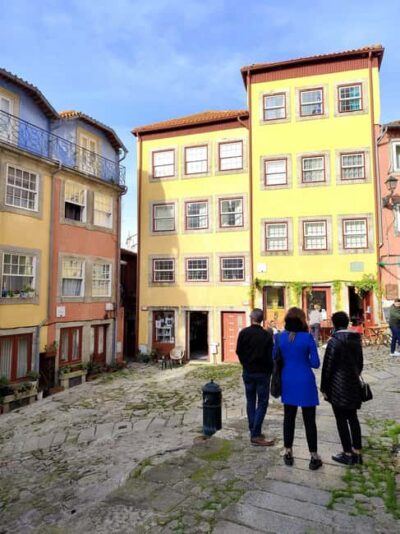
Porto Old Jewish Quarters Half-Day Walking Tour
Read our review →
Porto Jewish Heritage Walking Tour Small group
Read our review →Browse the lists this tour appears in