
Reviewed · WALKING TOURS
Porto: Historical Center Walking Tour
Porto’s old streets click into focus fast. This 2.5-hour Historical Center walking tour keeps you moving across the city’s UNESCO heart while you get the big ideas in the right order. I love how it starts at Sé Cathedral and Paço Episcopal, then makes the religious backbone of Porto feel real. I also love the way you work your way from Ribeira up toward the Juderia do Olival, with all those alley turns and stairway moments that match the city’s hilly layout. The only real drawback is that it is not a fit if you have mobility limitations or get tired on slopes and steps.
The guide, Lucas, is a key part of why this tour works. He’s personable, highly engaged, and good at adjusting the walk to what you care about, not forcing a script on everyone. You also get English or Spanish guiding, so you can actually follow the story as you go.
At $32 per person, you’re paying for a tight route plus a local who can connect the dots fast. If you want a solid first look at Porto without building a half-day plan from scratch, this is a smart use of time.
In This Review
- Key highlights I’d put on your must-know list
- Entering Porto’s UNESCO core, without getting lost in it
- Meeting at Estátua de Vímara Peres, then walking straight into history
- Sé Cathedral to Ribeira: learning Porto’s port-city personality
- Palácio da Bolsa and Vitória: trade meets power
- Climbing the historic loop: St. Francis, the defensive wall idea, and the center’s shape
- Clérigos Church, then up toward Juderia do Olival
- Livraria Lello and Cordoaria: famous monuments, in a workable walking flow
- Avenida dos Aliados and São Bento Station: Porto’s public face
- Lucas the guide: why the story lands while you walk
- Practical pace: what you’ll feel on your legs
- Price and logistics in plain terms: is $32 good value?
- Should you book the Porto Historical Center Walking Tour?
- FAQ
- Where does the tour start?
- How long is the Porto Historical Center Walking Tour?
- How much does it cost?
- What languages is the live guide available in?
- What should I bring?
- Is the tour suitable for people with mobility impairments?
- What is the cancellation policy?
- Is there a reserve now, pay later option?
- Are there any rules about alcohol or behavior?
- What’s included in the price?
Key highlights I’d put on your must-know list
- A focused 2.5-hour circuit through Porto’s historic core, with a clear sense of how districts relate to each other
- Sé Cathedral and Paço Episcopal to understand how faith shaped the city
- Ribeira and the riverside port vibe, plus defensive-wall routing around the center
- Juderia do Olival added via alleys and stairways, so the “uphill Porto” feels purposeful
- Cordoaria area monuments on the same walking flow as the city’s famous stops
- Lucas’s local advice, including a recommendation for port wine from smaller producers
Entering Porto’s UNESCO core, without getting lost in it
Porto is the kind of city where you can wander for hours and still feel like you missed something important. This tour fixes that problem in a practical way. In about 2.5 hours, you cover a chunk of the Historical Center that connects landmarks, neighborhoods, and viewpoints into one logical path.
The focus is the UNESCO-listed Historic Center of Porto, recognized since 1996. That matters because it means your walk isn’t just “pretty buildings.” You’re moving through areas that explain why Porto grew the way it did, from religious influence to trade power to the defensive shape of the city.
The route also works well because it isn’t only flat-stroll sightseeing. You’ll experience the city’s ups and downs, especially as you shift from the river zone toward the older quarters. That’s more than exercise. It’s how you get a real feel for the city’s structure.
More Porto on foot:
- Porto Walking Tour, Lello Bookshop, River Cruise and Cable Car★ 5.0 · 3,354 reviews
- Experience Porto’s Charm: 3-Hour Guided Walking Tour★ 5.0 · 2,432 reviews
- Porto: 3-Hour Guided City Highlights Walking Tour★ 4.8 · 2,050 reviews
- Porto: Wine Tasting with Tapas Walking Tour★ 4.4 · 1,541 reviews
Meeting at Estátua de Vímara Peres, then walking straight into history
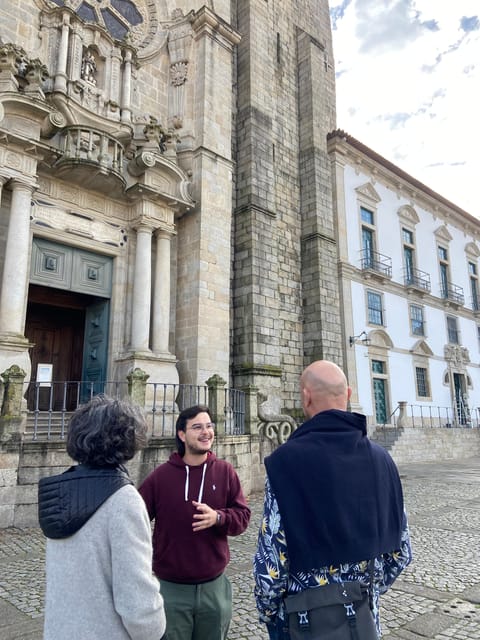
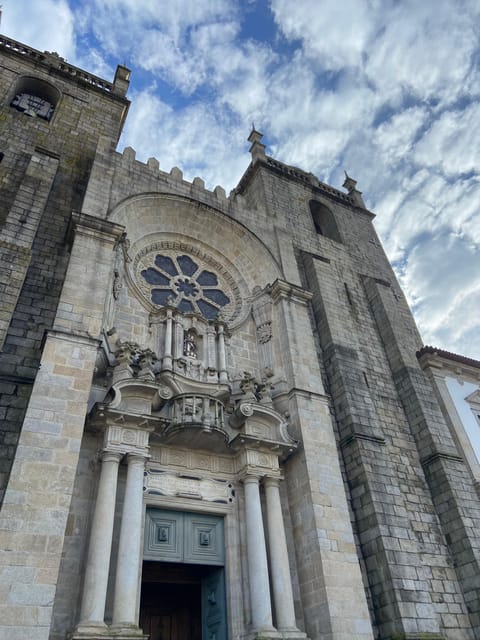
Your tour starts next to the Vimara Peres statue near the Sé Cathedral of Porto. That’s a good meeting point if you like to arrive, orient, and start moving quickly. The location also sets expectations right away, because Sé Cathedral is the anchor for what you’ll learn next.
From there, you spend time at Porto Cathedral (Sé). Even if you’re not a church-history fan, the payoff is how it frames Portugal’s broader Judeo-Christian influences, and why religion was part of everyday power, not just decoration. It gives you context for why later you’ll see other buildings tied to authority, wealth, and civic life.
Then you connect that story to the Paço Episcopal, the Episcopal Palace area. The key idea here is simple: once you understand that the church held major social influence, several stops around the center start making more sense.
A small practical note: this tour moves. You’ll get guided time at key places, but it’s not the kind of pace where you can linger for long photos at every corner. Plan on enjoying the views while still keeping up.
Sé Cathedral to Ribeira: learning Porto’s port-city personality
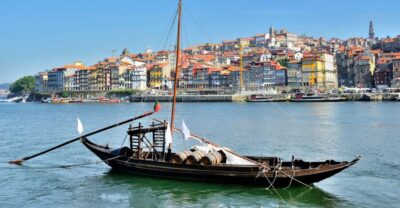
After the cathedral area, the walk drops toward Ribeira, Porto, the riverside traders’ neighborhood. This is where Porto shifts from stone-and-spires to daily life and river commerce. The guide’s job here is to make the connection feel immediate, not like a lecture.
Ribeira is often the first place you hear about when people talk about Porto, but seeing it as part of a larger walk makes it more meaningful. You understand why a port city builds both physically and culturally around the river. Traders, routes, and the flow of people shaped the streets as much as architecture did.
This stretch also helps you get your bearings for the rest of the day. By the time you leave Ribeira behind, you’ll have a clear mental map: riverfront zone below, older and higher neighborhoods above, and a loop through the historic fabric that helps you “read” the city.
If you like street-level atmosphere, this leg is a highlight. If you get motion-sick or hate uneven ground, take it steady. Some sidewalks and lanes can feel narrow, and you’ll be on your feet continuously.
Palácio da Bolsa and Vitória: trade meets power
One of the most impressive contrasts in this walk is how you shift from the riverside vibe to the city’s statements of power and money. You’ll spend time around Palácio da Bolsa, a stop that’s tied to Porto’s commercial identity.
What makes this worth your attention is the way the guide connects trade, civic authority, and the built environment. It’s not only “look at the fancy building.” You learn how commerce and leadership shaped what got built, and where.
Then you move through Vitória, Porto, another district stop that helps you understand how the center is stitched together. These are the kinds of neighborhoods you might skim past if you only follow a loose sightseeing checklist. Here, they land at the right moments in the story, so you feel the order of growth instead of seeing a random scatter of landmarks.
Climbing the historic loop: St. Francis, the defensive wall idea, and the center’s shape
A smart part of the experience is the way it uses the old defensive-wall concept to loop around the historic core. You follow the path linked to the 14th-century defensive wall. Even if you cannot physically spot every section like a map-reading expert, the guide’s explanation helps you “see” the logic.
Why does that matter? Because Porto was not built like a modern grid. It developed around protection, movement, and the practical needs of a growing city. When you understand that, streets stop feeling random and start feeling inevitable.
Along this loop, you’ll encounter major landmarks such as St. Francis Church. You’ll also be reminded of other iconic anchors in the center like the Palace of Justice and Clérigos Tower, which sit in your mental timeline as the walk progresses.
This part of the tour is great if you like structure. It’s also a reminder to wear comfortable shoes, because looping around means you’re not just going from A to B. You’re walking the contours of old Porto.
More of the old city, layer by layer:
- Douro Valley: Historical Sites, Wine Experience, Lunch & Cruise
★ 5.0 · 5,133 reviews - Porto: An Intimate Fado Show in a Historical Tavern
★ 4.8 · 2,055 reviews - Porto: Historic City Center Walking Tour
★ 4.7 · 1,172 reviews - Porto: Private Tour of the Historic City in a Ford T Car
★ 4.8 · 932 reviews
Clérigos Church, then up toward Juderia do Olival
The walk continues with Clérigos Church, a stop that helps you connect religious influence, city identity, and the architectural “signature” Porto is known for. This is one of the places where the guide’s storytelling really pays off, because the landmark isn’t isolated. It’s part of the larger pattern you’ve already started to notice.
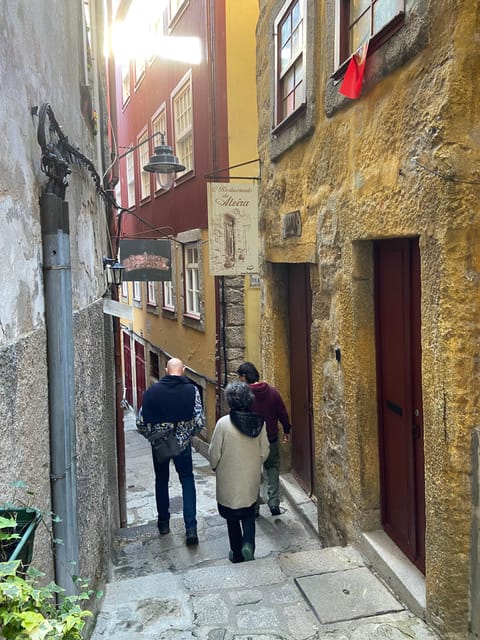
From there, the route pushes you into the uphill mood of the center, with the walk reaching the Jewish Quarter of Juderia do Olival. The highlights mention alleys and stairways, and that’s exactly the kind of movement that makes this experience feel like the real Porto and not just a photo line.
You’ll learn how the neighborhood fits into Porto’s longer Judeo-Christian framework. The value here is that you don’t just hear a name. You physically experience the neighborhood’s placement within the city’s structure, which makes the history stick better in your head.
One consideration: if stairs are a problem for you, or if you need long breaks, this isn’t the gentlest option. The tour is designed as a walk through multiple districts, not a sit-and-warm-up plan.
Livraria Lello and Cordoaria: famous monuments, in a workable walking flow
When the walk includes Livraria Lello & Irmão, it hits one of the most famous stops in Porto. Even if you’re already aware of it, the benefit of seeing it on a guided route is how it fits into the rest of the city. You’re not just checking off a bucket-list stop. You’re getting context for why this area became a cultural magnet.
Close by, the experience highlights Cordoaria, described as an area with famous monuments. In practice, that means this part of the tour gives you a cluster of city identity moments without forcing you to retrace your steps.
You’ll also see the route touch other well-known anchors mentioned in the walk overview, including the Stock Exchange Palace and the Clérigos Tower area. Even when you spend only a limited amount of time at each spot, the guided pacing helps you feel like you understand what you’re looking at.
I recommend keeping your photo expectations realistic here. You will want pictures, but your best results come from capturing a few key angles and letting the rest be about soaking up the street feel and the guide’s connections.
Avenida dos Aliados and São Bento Station: Porto’s public face
Next you reach Avenida dos Aliados, one of Porto’s central, civic-feeling streets. This is a nice contrast after the tighter historic lanes. It helps you understand how the city’s everyday energy sits alongside all the older landmarks.
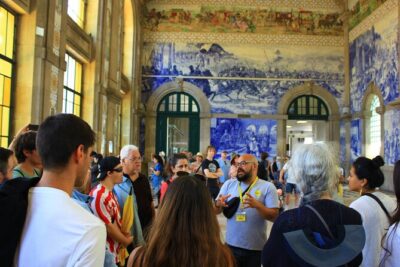
Then comes São Bento Station, where you spend about 30 minutes. This is one of the longer time blocks on the route, so it gives you space to slow down a bit and absorb a stop that feels like a public gateway.
The value of including São Bento Station is that it’s part of the city’s real rhythm. You’re not only looking at museum-like points. You’re seeing where daily routes intersect with historic Porto.
If you’re traveling on limited time, this is also a practical stop. It anchors your route to a place you can recognize later, which helps if you want to keep exploring after the tour ends.
Lucas the guide: why the story lands while you walk
The experience lives or dies with the guide, and Lucas seems to hit the mark. People specifically praise how he is entertaining and adaptable, not stiff. That matters because everyone’s interests differ. Maybe you care more about the religious influence, or maybe you’re most interested in city planning and neighborhood shape. Lucas adjusts the emphasis as you go.
You’ll also get answers that go beyond basic facts. The tour is educational in a way that feels like it belongs in your brain, not like a quiz. You should finish with a better sense of how Porto fits together, and not just a set of isolated sights.
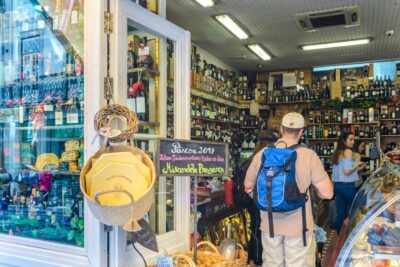
One more standout detail from the guide’s style is his practical local advice. He’s known for recommending where to taste port wine from smaller producers. That’s a great benefit if you want to turn the walk into a more satisfying afternoon, not just a nice morning stroll.
Practical pace: what you’ll feel on your legs
This is a walking tour, and it shows. You’ll move between multiple stops that include alleys and stairway sections, especially as you transition from river area to higher neighborhoods.
So do two things in advance:
- Wear comfortable shoes. Not stylish shoes with no grip.
- Dress in comfortable clothes that can handle a bit of walking time outdoors.
The tour also has basic behavior rules. Intoxication is not allowed, and you should expect a respectful environment. Littering and nudity are also listed as not permitted, which keeps things sensible for a shared public walk.
Group-wise, plan on a steady guided pace. You’ll get guided time at each stop, but you’re not touring at a slow museum speed. If you want lots of solo wandering, set aside extra time after the tour so you can follow your own curiosity.
Price and logistics in plain terms: is $32 good value?
At $32 per person for 2.5 hours, you’re buying three things: a curated route through the UNESCO core, live guiding in English or Spanish, and a local who can connect monuments to neighborhood meaning.
If you tried to replicate this yourself, you’d likely end up with either an overly long walk that still feels scattered, or a route that skips uphill areas like the Juderia do Olival approach. The guide’s value is in sequencing, timing, and the explanations that make each stop feel like part of one story.
Also, this format saves your time at exactly the moment you need it most. First-time in Porto? You get your bearings fast. Second-time in Porto? You can still pick up context you might miss on a self-guided wander.
Should you book the Porto Historical Center Walking Tour?
Book it if you want a smart first look at Porto and you like the idea of understanding how the city grew, not only what to photograph. It’s especially good for:
- People who want a structured route in a limited time window
- Anyone interested in how religion, trade, and city planning shaped the Historical Center
- Travelers who appreciate local guidance that includes real-world tips, like port wine recommendations
Skip it if you need step-free access or you’re not comfortable with hills and stairway walking. And if you love a slow, meandering sightseeing style with lots of independent stops, you may find this tour feels a bit too efficient.
If your goal is to get oriented and leave with a stronger sense of Porto’s layout and meaning, this one is a solid choice.
FAQ
Where does the tour start?
The meeting point is next to the Vimara Peres statue near the Sé Cathedral of Porto.
How long is the Porto Historical Center Walking Tour?
It lasts 2.5 hours.
How much does it cost?
The price is $32 per person.
What languages is the live guide available in?
The tour is offered in English and Spanish.
What should I bring?
Bring comfortable shoes and comfortable clothes.
Is the tour suitable for people with mobility impairments?
No, it is not suitable for people with mobility impairments.
What is the cancellation policy?
You can cancel up to 24 hours in advance for a full refund.
Is there a reserve now, pay later option?
Yes. You can reserve now and pay later, meaning you can book your spot and pay nothing today.
Are there any rules about alcohol or behavior?
Intoxication is not allowed. Littering and nudity are also not allowed.
What’s included in the price?
It includes the walking tour and a local tour guide.
Fresh off the Porto quays






Walking Tours, compared.
Porto Walking Tour, Lello Bookshop, River Cruise and Cable Car
Read our review →
Experience Porto’s Charm: 3-Hour Guided Walking Tour
Read our review →

Walking Tour, Lello Bookshop, Boat and Cable Car
Read our review →Browse the lists this tour appears in