
Reviewed · CITY TOURS
Porto City Tour with Wine Tasting
Porto can feel like a blur of stairs and tiles, so plan one smart half-day. This Porto City Tour with Wine Tasting strings together the key sights in a small group and adds a real Port wine tasting stop in the Douro river landscape. You get a guide, an air-conditioned vehicle, and a route that helps you understand why Porto looks the way it does.
I especially like how the tour hits the city’s visual “language” fast. You’ll stand inside São Bento Railway Station for its 20,000 painted tiles, then move on to big landmarks like Clerigos and the Porto Cathedral area. The icing on the cake is the bridge and river views before you wind down with a cellar tour and tasting.
The main thing to consider is pacing. It’s a half-day with moderate walking, and there is no bathroom on board the vehicle, so you’ll want to plan for quick stops and a steady rhythm.
In This Review
- Key highlights at a glance
- Starting in central Porto, then moving like locals
- São Bento Railway Station: your shortcut to Portugal’s story in tile form
- The Santa Catarina pause: Art Nouveau energy from Elite Café
- Clerigos Tower: the baroque skyline point you can’t miss
- Porto Cathedral: Romanesque bones in the historic center
- Livraria Lello and book-lovers’ Porto stops: see the building, then decide
- Luis I Bridge and Douro River views: the Porto to Gaia moment
- Wine cellar tour and tasting in Gaia: what Port tasting teaches you
- How the 4 hours usually feels in real life
- Price and value: is about $40.94 worth it?
- What to know before you go: the small logistics that make or break it
- Who this tour suits best (and who should skip it)
- Should you book Porto City Tour with Wine Tasting?
- FAQ
- How much does the Porto City Tour with Wine Tasting cost?
- How long is the tour?
- Where does the tour start and end?
- What’s included in the price?
- Is hotel pickup or drop-off included?
- Do I pay admission for Porto Cathedral?
- Is there a bathroom on board the vehicle?
- What should I wear?
- Is the tour offered in English, and can I cancel for a refund?
Key highlights at a glance
- São Bento’s tile gallery: 20,000 azulejos turned into a fast lesson on Portugal’s story
- Baroque Clerigos Tower: photo-worthy views and clear explanations of its dramatic style
- Romanesque Porto Cathedral: one of Porto’s oldest monuments, worth slowing down for
- Luis I Bridge crossing: metal bridge plus Douro River panorama as the route link
- Wine cellar time in Gaia: guided tour and Port tasting included, so it feels complete
- Maximum 20 travelers: enough small-group attention without it turning into a private bubble
Starting in central Porto, then moving like locals
The tour starts at R. de Mouzinho da Silveira 352, in central Porto, and ends around Rua de Alexandre Herculano. That matters, because this is set up as a walking-and-driving loop through the core sights, not a drive-by bus ride where you stay seated the whole time.
You’ll also want to keep a realistic expectation for how you’ll move. You’re in and out of the vehicle, and the walking is described as moderate. There’s no bathroom on board, so I’d treat this like a sightseeing sprint rather than a casual stroll where you can duck back whenever you feel like it.
Dress is smart casual, which is good news because Porto can mean rain, wind, or both. Bring comfortable shoes you trust for uneven stone sidewalks. And if you’re traveling with kids or have specific needs, it can help to ask ahead, since guides in past departures have tried to accommodate families when possible.
More quintas pouring further up the valley:
- From Porto: Douro Valley w/ Boat Tour, Wine Tasting & Lunch★ 4.7 · 19,061 reviews
- Complete Douro Valley Wine Tour with Lunch, Wine Tastings and River Cruise★ 5.0 · 12,920 reviews
- Porto: Douro Valley with Winery Lunch, Tastings & Cruise★ 4.7 · 7,002 reviews
- Porto: Live Fado Show with Glass of Port Wine★ 4.8 · 6,498 reviews
São Bento Railway Station: your shortcut to Portugal’s story in tile form
The first big “wow” is São Bento Railway Station. This is one of those places where the guide’s commentary turns a pretty interior into something you actually remember. You’ll step inside and see its famous painted tiles, and the key detail is the scale: about 20,000 tiles.
Here’s what makes it more than decoration. The station’s corner stone was unveiled in 1900 by King Carlos I, and it sits on the site of an older convent, S. Bento de Avé Maria. The design project involved architect Marques da Silva, and the building’s outer lines show French influences from the era.
What you’ll love is how easy it is to take in. You can walk slowly, look up, and still follow along with the story the guide tells. And since admission here is free, it’s a high value stop that doesn’t eat up your budget.
A small practical note: this is an indoor highlight at the start, so it can help you get your bearings for the rest of the day. If Porto feels confusing later, you’ll have an anchor memory right away.
The Santa Catarina pause: Art Nouveau energy from Elite Café
After the station, the route includes a stop connected to Santa Catarina Street and Elite Café. It opened on 17 December 1921, and it’s tied to Art Nouveau decoration that once helped enliven the pedestrian shopping scene for Porto’s well-heeled crowd.
You might not spend a full sit-down here, but I like that the tour does this. It reminds you Porto isn’t only medieval stone and church domes. It also has early 20th-century style that shows how the city evolved as a social and commercial hub.
If you’re doing photos, this kind of stop is perfect for a quick reset. You get a fresh visual style, a change of pace from the religious architecture, and then you move into the tower and cathedral zones.
Clerigos Tower: the baroque skyline point you can’t miss
Then comes the Clérigos Tower, described as the city’s ex-libris. The guide’s job here is to help you see the baroque logic behind the drama. The tower’s style is credited to Nicolau Nasoni, and the point is movement: baroque design uses repeated motifs and sculptural rhythm to make a structure feel alive.
If you like architecture, you’ll appreciate that the explanation is tied to what you’re actually seeing. Instead of just saying it’s impressive, the guide helps you notice why it’s impressive.
Even if you do not climb the tower, it helps to know what to look for around it. It’s the kind of landmark that gives your photos context. Later, when you cross the river, you’ll notice how Porto’s buildings stack up against the horizon and why a tower like this becomes a navigational signal.
Porto Cathedral: Romanesque bones in the historic center
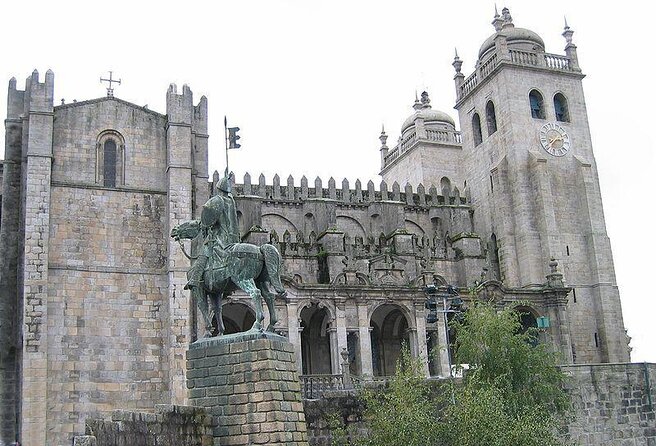
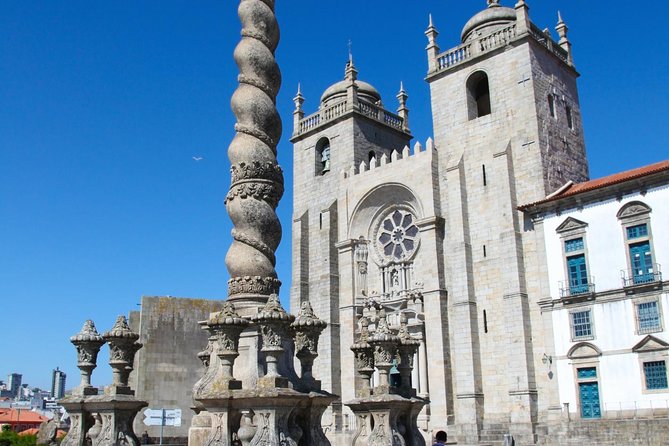
Porto Cathedral, Catedral do Porto, is one of the oldest and most important monuments, placed right in the center of the historic district. This stop is scheduled for 45 minutes, which is a good amount of time if you want to read, look closely, and not feel rushed.
One of the best parts here is the Romanesque architecture angle. Romanesque often means strong, sturdy forms, and it gives Porto a different personality than the later baroque flourishes. The guide’s explanations can help you spot the style differences so you are not just collecting landmarks, you’re building a mental map of time periods.
Admission here is not included, so treat that as a heads-up for budgeting. If you plan to go inside, bring a bit of cash or card readiness and be ready for a separate ticket decision.
More eating and drinking in Porto:
- Douro Valley Small-Group Tour with Wine Tasting, Lunch and Boat
★ 5.0 · 3,642 reviews - Porto: Cálem Cellar Tour, Fado Show & Wine Tasting
★ 4.4 · 3,530 reviews - Porto: Cockburn’s Port Lodge Tour and Tasting
★ 4.8 · 3,360 reviews - Porto: Douro Valley Tour with Wine Tasting, Cruise and Lunch
★ 4.7 · 2,714 reviews
Livraria Lello and book-lovers’ Porto stops: see the building, then decide
The tour includes a stop at Livraria Lello. The building, as it’s known today, was inaugurated on 13 January 1906, shaped by the vision of engineer Francisco Xavier Esteves.
This stop is ideal for two kinds of people. If you love book culture and design, you’ll enjoy learning how a landmark became part of Porto’s modern identity. If you are more of a “show me the street scene” person, the quick stop gives you a clean photo moment and a break from heavier architecture.
Because the provided details do not list an included ticket, I’d approach this as a viewing and orientation stop. If you want to go in, you’ll need to decide separately based on what your day feels like after the cathedral.
Luis I Bridge and Douro River views: the Porto to Gaia moment
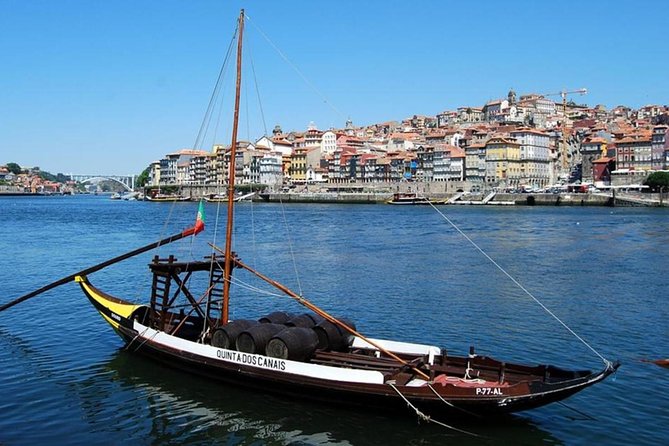
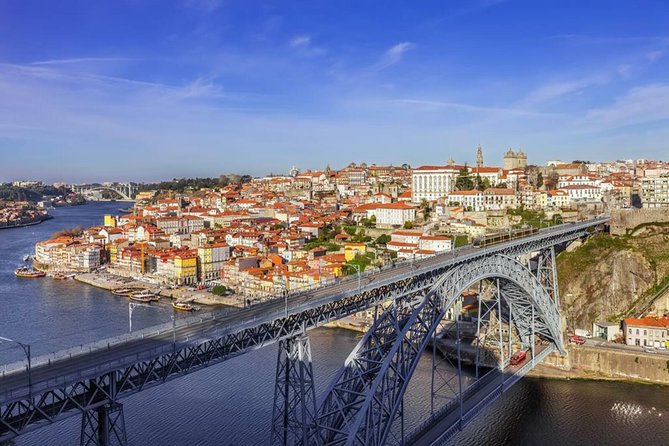
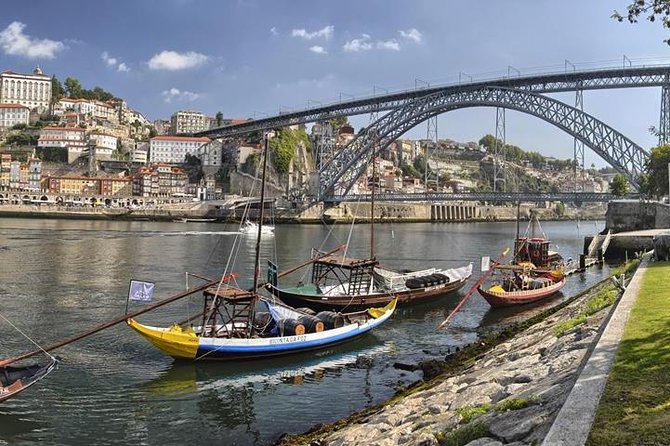
Crossing the Luis I Bridge links Porto with Vila Nova de Gaia across the Douro River. The bridge itself is metal and built between 1881 and 1888, with a design described as two decks.
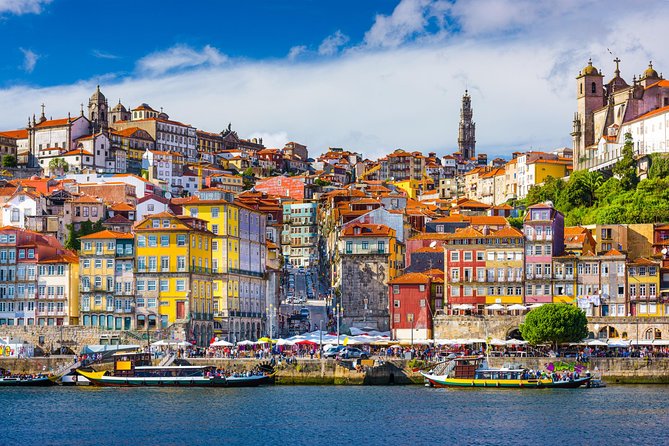
What makes this part of the tour work is timing and viewpoint. This is your visual switch from Porto’s historic center to the Gaia side where Port cellars cluster. You look at the river, you watch the city lines shift, and you start to understand the geography behind the wine trade.
It’s also just a nice sensory break. You’ve been inside buildings or close to them. Then you get open-air views, wind on your face, and a better sense of scale.
If you’re prone to motion sickness, this kind of bridge crossing usually isn’t an issue, but the fresh air helps. Dress warm enough that you can enjoy the river moment even if weather turns.
Wine cellar tour and tasting in Gaia: what Port tasting teaches you
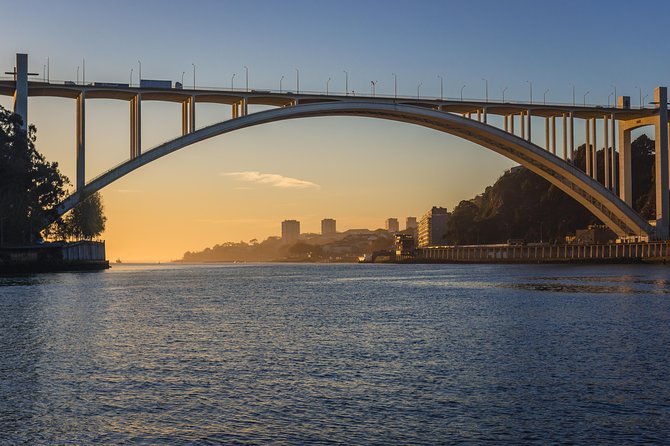
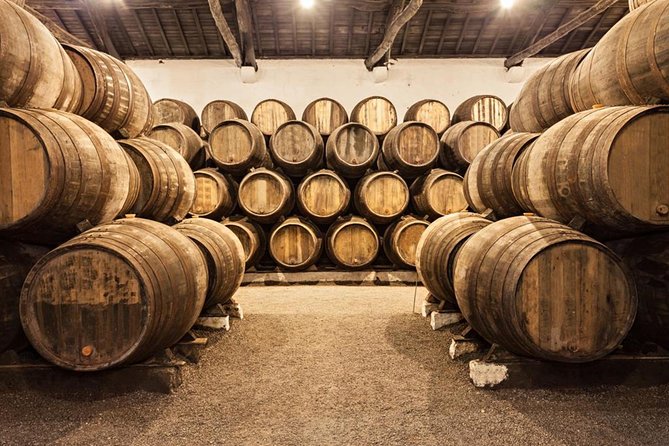
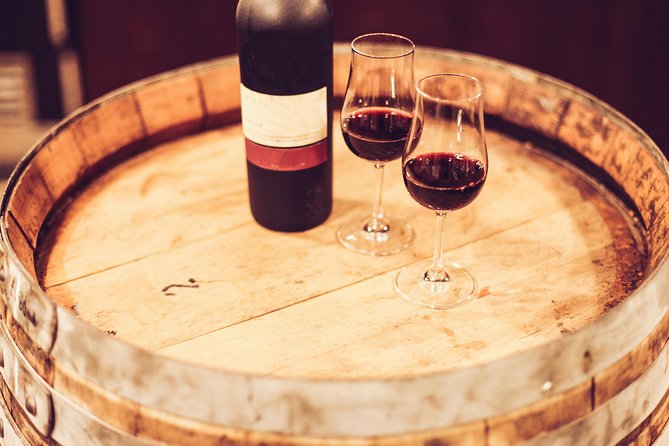
The final segment is the wine experience: a guided tour and Port wine tasting in a famous cellar in Porto’s wine country side, Vila Nova de Gaia. This portion runs about one hour and includes alcoholic beverages.
What I like about this setup is that it’s not just tasting with no context. You’ll hear about the history and commercial significance of Port. The guide connects it back to the Douro Valley, where Port grapes grow, and explains how Port is a fortified wine.
That matters because Port tastes different depending on style, aging, and the way it was produced. Even with one tasting flight, the explanation helps you make sense of what you’re sipping. You’re not just drinking, you’re learning the why behind the flavors.
One practical tip: if you tend to get lightheaded with alcohol, pace yourself. You’ll be walking and visiting sights earlier, and then tasting comes at the end. Stick to water between sips if you can.
This stop is also where the value of the tour really shows. Your entrance ticket for the wine tasting is effectively bundled into the tour price, so it’s easier to compare against paying for a separate half-day plus a tasting later.
How the 4 hours usually feels in real life
This tour is about four hours on the clock, and the walking is described as moderate. The challenge with half-day tours is not the total time, it’s the distribution. You may spend more time on foot than you expect, especially early in the day when the route stacks multiple major landmarks.
A good way to manage expectations is to treat it like a highlight montage with guided stops, not an open-ended explore. The cathedral stop is 45 minutes, the station is 30 minutes, and the wine cellar portion is an hour. The rest are shorter stops and move-along segments.
So if your ideal Porto day is slow and aimless, this won’t be that. But if you want a structured start, especially for a first visit, it works. You’ll leave with a strong sense of where everything sits relative to the river and the historic center.
Price and value: is about $40.94 worth it?
At about $40.94 per person for roughly four hours, I think this lands in the fair-value zone, mainly because the wine experience is included. You’re paying for a professional guide, an air-conditioned vehicle, and guided alcoholic tastings at a Porto wine cellar.
Also, the group size cap matters for value. With a maximum of 20 travelers, you should get enough time for questions and photo stops without feeling like you’re part of a crowded commuter train.
There are a couple of costs you might still face. Porto Cathedral admission is not included, and entrance fees for other specific attractions are not listed in the provided details. If you plan to go inside multiple ticketed sites, factor that into your overall budget.
Bottom line, the price makes sense when you treat the wine tasting as a core feature, not an optional bonus.
What to know before you go: the small logistics that make or break it
This is where the biggest differences show up between smooth tours and frustrating ones. The meeting point is a specific address in central Porto, and the tour ends on Rua de Alexandre Herculano. If you’re arriving from a cruise ship or a different part of the city, build extra time into your day and aim to arrive early.
Also, since there is no bathroom on board, do not assume you can wait until the middle of the day. Stop when the guide offers chances, especially near major indoor locations.
Language is English, but the tour may be operated by a multilingual guide, depending on the departure. That can be fine, but if you need very specific language support, it’s worth checking what’s confirmed for your date.
Finally, the tour can be changed without prior notice. That doesn’t always mean bad news, but it does mean you should stay flexible. Porto weather can also shift plans quickly, so keep your day light.
Who this tour suits best (and who should skip it)
This tour is a great fit if you want a guided hit list of Porto’s must-sees, plus Port tasting, without stitching together multiple bookings. It’s especially good for first-timers who want the city’s structure explained: tiles inside, towers above, cathedral in the center, then a river crossing, then wine in Gaia.
It’s also a decent pick for people who like small-group attention. Guides such as Claudia, Joao, Paulo, and Carlos have been praised for being friendly and for shaping the day with clear commentary, and that kind of guiding style makes the stops feel connected rather than random.
If you dislike walking, or you need frequent bathroom access, you may find the pacing annoying. The tour includes moderate walking and no on-board bathroom. Also, if you arrive late or struggle to find the start point, it can become stressful because the day runs on timing and group movement.
Should you book Porto City Tour with Wine Tasting?
If you’re visiting Porto for the first time and you want a smart half-day that teaches you what you’re looking at, I’d book it. The mix of São Bento tiles, Clérigos Tower, Porto Cathedral, and a Luis I Bridge river moment sets you up for understanding Porto fast, then the guided Port tasting in Gaia gives the day a satisfying finish.
Book with confidence if you can show up on time at the central meeting point and you’re comfortable with moderate walking. Skip or choose something else if you want a slow, linger-all-day Porto experience, or if finding meeting points from your exact arrival location is likely to be hard.
One last thought: bring comfortable shoes, keep water handy, and go in curious. This tour is at its best when you treat it like a guided lesson, not just a checklist.
FAQ
How much does the Porto City Tour with Wine Tasting cost?
The price is $40.94 per person.
How long is the tour?
The tour lasts about 4 hours.
Where does the tour start and end?
It starts at R. de Mouzinho da Silveira 352, 4050-418 Porto, Portugal, and ends at Rua de Alexandre Herculano (4000 Porto).
What’s included in the price?
The tour includes a professional guide, an air-conditioned vehicle, and alcoholic beverages for the guided tour and tasting in a Porto wine cellar.
Is hotel pickup or drop-off included?
No. Hotel pick up and drop off are not included.
Do I pay admission for Porto Cathedral?
Porto Cathedral admission is not included.
Is there a bathroom on board the vehicle?
No, there is no bathroom on board the bus.
What should I wear?
Dress code is smart casual.
Is the tour offered in English, and can I cancel for a refund?
The tour is offered in English, and you can cancel up to 24 hours in advance for a full refund.
Fresh off the Porto quays






City Tours, compared.
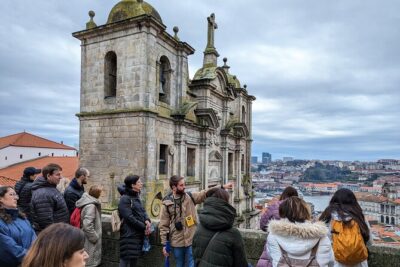
The Unvanquished Tour in Porto City Center
Read our review →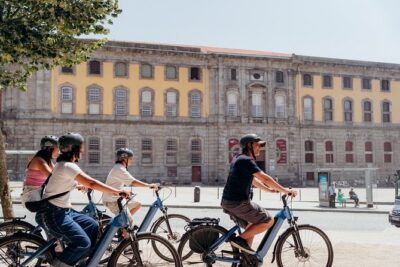
3-Hour Porto Highlights on a Electric Bike Guided Tour
Read our review →
City Highlights 3-Hour Guided Electric Bike Tour
Read our review →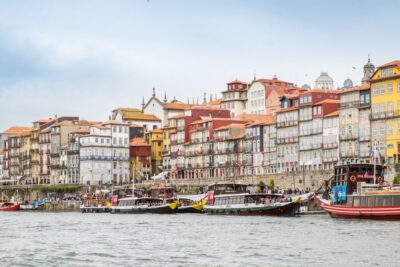

Discover Porto’s Highlights on a 2-Hour Private Electric Tuk Tuk
Read our review →
The highest-rated traditional fado concert (downtown)
Read our review →Browse the lists this tour appears in