
Reviewed · WALKING TOURS
Porto and Gaia: Walking Tour of Douro’s Two Riversides
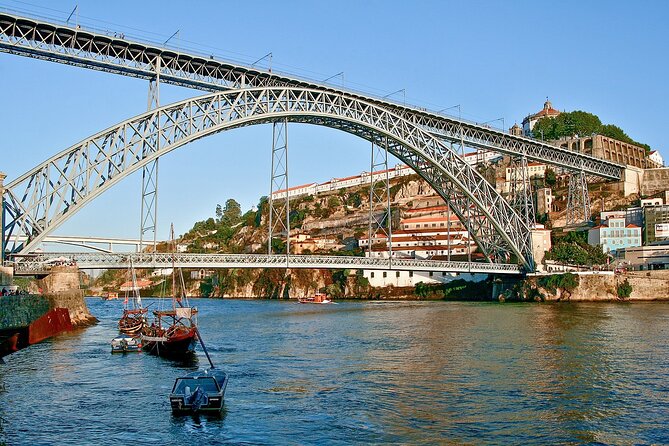
Porto and Gaia tell one story. This small-group walk strings together two sides of the Douro, with a real crossing and a guide who keeps the history readable. You start in Porto’s historic heart, move through key sights, then finish in Vila Nova de Gaia near the port-cellar zone, where you can stretch the evening with a drink.
I love how easy the meeting point is, and how the tour leans on strong guiding. People in this program can be like Sofia, a former architect, or Susana, with upbeat pride in the city, plus other guides such as Michael and Arturo who clearly know how to answer questions without making it a lecture. One thing to consider: some parts of the water element and the final port sipping are not the same for every day, so you should be ready for a slightly different ending plan and any extra charges for tastings.
In This Review
- Key points you should know
- Getting started at Jardim do Infante Dom Henrique, then walking into old Porto
- Palácio da Bolsa area and St. Francis Church: the architecture stops that make Porto click
- Casa do Infante and Ribeira Square: Porto’s old center as a living place
- Alminhas da Ponte and the 1809 bridge story that adds weight
- Crossing the Douro on foot toward Gaia: views, pace, and what’s included
- Finishing in Gaia near the cellar district, plus how to handle the optional port sip
- Price and value for a 2-hour Porto and Gaia walk
- Who this tour suits best, and how to make it enjoyable
- Should you book Porto and Gaia: Walking Tour of Douro’s Two Riversides?
- FAQ
- How long is the walking tour?
- What time does the tour start, and where does it meet?
- Where does the tour end?
- What language is the guide speaking?
- Is the port tasting included?
- Is free cancellation available?
Key points you should know
- Meet right in the action at Jardim do Infante Dom Henrique, with a clear address and start at 2:30 pm
- Small group, max 15 means you get more back-and-forth with the guide and fewer crowds
- Porto sights you can actually place on a map: Bolsa area, St. Francis Church zone, Casa do Infante, Ribeira Square
- Alminhas da Ponte adds meaning with the 1809 bridge-collapse memorial and bridge stories
- End in Gaia near cellars so you can add a tasting after the walk, if you want
Getting started at Jardim do Infante Dom Henrique, then walking into old Porto
The tour starts at Jardim do Infante Dom Henrique, right by the heart of historic Porto. It’s a smart way to begin because you get oriented fast: this isn’t a random street ramble. The square connects directly to Prince Henry the Navigator, a name that shows up all over Portuguese discovery-era stories. Even if that period isn’t your thing, it gives you a baseline for what shaped the city that grew into maritime trade and wealth.
The route is also timed for an easy late afternoon pace. At 2:30 pm, you’re walking in daylight long enough to enjoy viewpoints and architecture, but you still finish with time to decide what to do next in Gaia.
Group size matters here. With a max of 15 people, you’re more likely to hear the guide’s answers to questions, not just the ones right beside you. This is the kind of walk where you might actually start chatting with fellow travelers, then realize you all have the same goal: see Porto and understand it without rushing.
Practical tip: wear shoes with decent grip. Porto’s historic streets and riverfront sections can be uneven, and you’ll appreciate comfort once you start thinking about the final part near the Douro.
More Porto on foot:
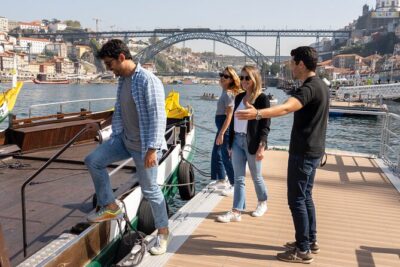
- Porto Walking Tour, Lello Bookshop, River Cruise and Cable Car★ 5.0 · 3,354 reviews
- Experience Porto’s Charm: 3-Hour Guided Walking Tour★ 5.0 · 2,432 reviews
- Porto: 3-Hour Guided City Highlights Walking Tour★ 4.8 · 2,050 reviews
- Porto: Wine Tasting with Tapas Walking Tour★ 4.4 · 1,541 reviews
Palácio da Bolsa area and St. Francis Church: the architecture stops that make Porto click
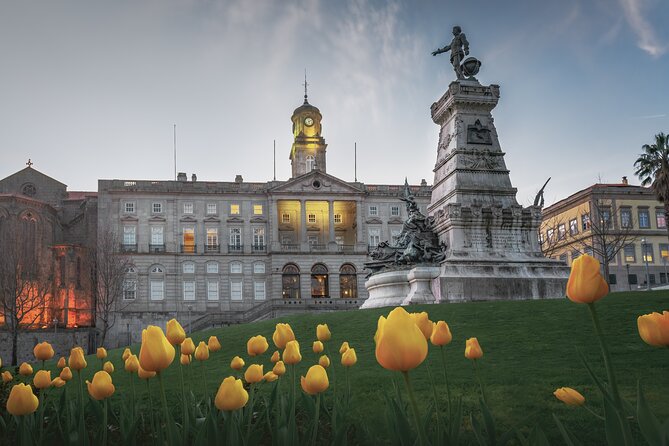
After the starting square, you move into some of Porto’s most recognizable monuments. One highlight is the Portugal’s first Stock Exchange Palace, a stunning building that quickly teaches you how Porto traded its way into importance. It’s not just a pretty facade. The guide’s job is to help you read the building like a clue, tying architecture to how the city worked.
Next comes the Church of St. Francis. If you’ve seen a lot of churches while traveling, this one can still surprise you because it shows how faith shaped daily life and public identity. The point of this stop on a walking tour is to slow down for a moment and see the building as a statement of values, not just another landmark photo.
Here’s what I’d watch for as you listen: the guide usually frames these sights as part of a pattern. Porto wasn’t only about ships and warehouses. It was also about civic pride, religious devotion, and the money needed to build impressive public spaces.
Admission note: the tour doesn’t include tickets at every stop. The first listed segment notes admission not included, while the Alminhas da Ponte part is free, and the Douro river crossing has an included admission element. So if you want to go inside buildings like Bolsa or the churches, budget a little extra depending on what is accessible that day and what you personally want to see up close.
Casa do Infante and Ribeira Square: Porto’s old center as a living place
At some point, the walk does the most useful thing a guide can do in a historic city: it links monuments to daily life. You’ll pass the UNESCO World Heritage house in Porto’s historic center, a must-see if your interest includes how Porto’s story began. The guide’s explanations help you place the site in the larger city narrative, so it doesn’t feel random.
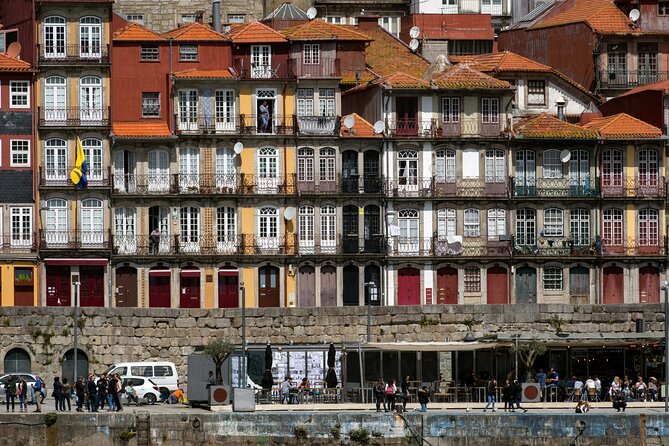
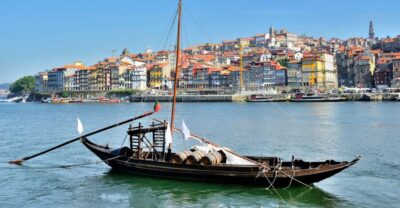
Then you reach Ribeira Square, one of Porto’s oldest and liveliest spots on the Douro’s edge. This is where the city’s geography becomes obvious. The river isn’t background scenery. It’s the reason the neighborhood grew, the reason the buildings face the water, and the reason so much of Porto’s energy gathers here.
Ribeira is also a good reality check. You’ll see the city doing what it does best, working, eating, meeting, and moving in small rhythms. That makes the rest of the tour feel less like a checklist and more like a story that continues.
If you get a guide with strong energy, you’ll feel it here. The more confident guides like Susana or Arturo tend to connect what you’re seeing to why it matters today: the city still runs on its relationship with the river, just with different industries and different crowds.
Alminhas da Ponte and the 1809 bridge story that adds weight
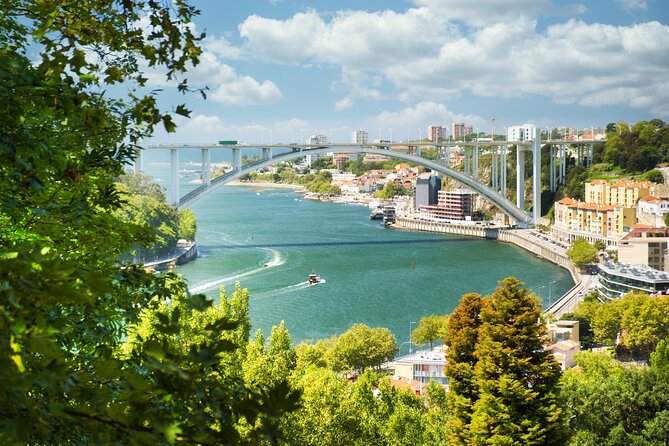
One of the most thoughtful stops is Alminhas da Ponte, the monuments that honor the tragic collapse of the bridge in 1809. It’s a small area, but it adds meaning to what might otherwise be just another river crossing on your itinerary.
Why it works: it turns Porto’s bridges from sightseeing objects into historical turning points. Bridges are practical, but they are also political and economic. When a bridge fails, it changes routes, business, and public trust. That’s the kind of context a good guide brings to a short stop, and it makes you look at the riverfront differently.
This part is also marked as free, which is a nice bonus if you’re trying to keep costs controlled. You can spend your money on the optional things you really want, instead of feeling like the tour is nickel-and-diming you from start to finish.
The guide then shares stories of bridges that connect places and people across time, including French invasions, kings, legends, and heroes. Even if you’re not the type to remember dates, you’ll probably remember the feeling: Porto’s identity keeps returning to conflict, trade, rebuilding, and survival.
Crossing the Douro on foot toward Gaia: views, pace, and what’s included
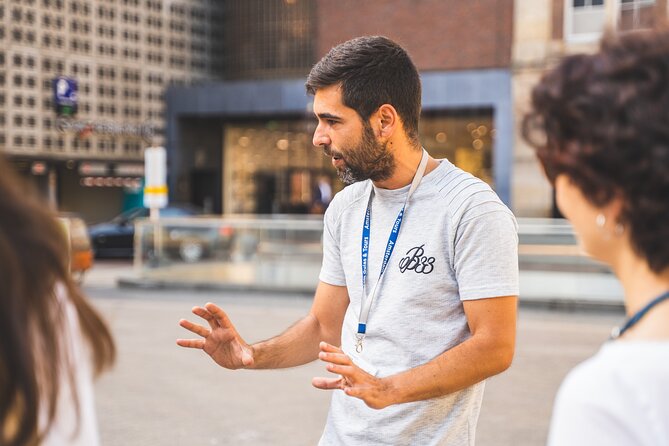
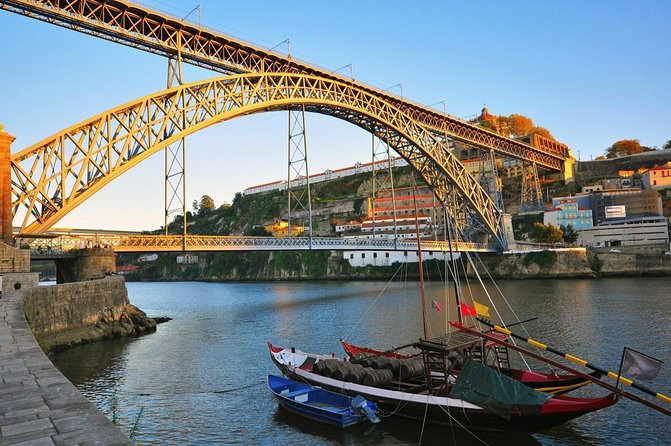
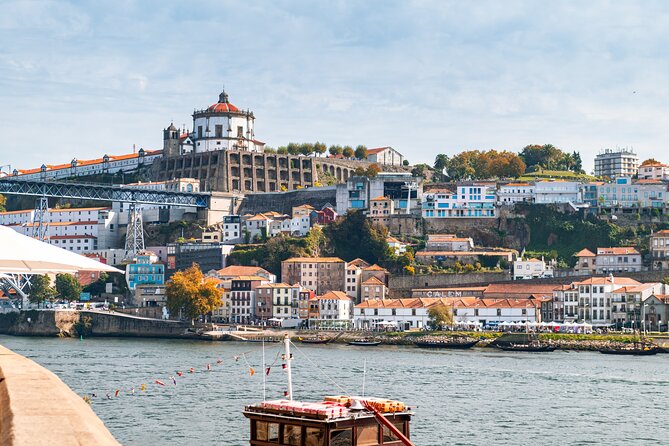
The walking continues to the Douro River segment, where you actually cross on foot and enjoy the surroundings. This is a key moment. You’re not just seeing the river from afar. You’re feeling its scale by moving through the city’s bridge logic and riverfront layout.
The tour notes that admission ticket for this part is included. That matters because it means you’re paying once for the experience flow, rather than worrying about an extra ticket right when you’re most focused on the views.
Also, this is the moment to slow down a bit mentally. Porto and Gaia feel like two cities that share one heartbeat. You’ll likely notice how the tone changes as you get closer to Gaia, where the port-cellar world becomes more obvious. Even before you reach the final stop, you start seeing the business side of the river story.
One practical consideration: there can be a water element tied to the overall crossing experience, and not every day runs exactly the way the brochure suggests. In at least one case, a water taxi plan didn’t operate, and the group continued the river crossing by walking and adjusting the ending. My advice is simple: if a boat segment matters to you, check with the provider day of or confirm in advance what is included on your exact departure.
Elsewhere in Porto, worth a look before you book:
- The Unvanquished Tour in Porto City Center
★ 5.0 · 26,497 reviews - From Porto: Douro Valley w/ Boat Tour, Wine Tasting & Lunch
★ 4.7 · 19,061 reviews - Complete Douro Valley Wine Tour with Lunch, Wine Tastings and River Cruise
★ 5.0 · 12,920 reviews - Porto: Douro Valley with Winery Lunch, Tastings & Cruise
★ 4.7 · 7,002 reviews
Finishing in Gaia near the cellar district, plus how to handle the optional port sip
The tour ends in Vila Nova de Gaia at Largo Joaquim Magalhães 4, close to an especially interesting cellar area. The finishing energy here is different from Porto. Porto feels medieval and lively, while Gaia feels more purpose-built around wine trade.
The experience description includes finishing in a winery to sip local port, and that sip is an extra expense. That means the tour is structured so you can finish with a taste option, not forced into a specific tasting package. If you want to keep your night light, you can skip it and head for dinner instead.
If you do go for the tasting, choose with your own style. Some wine stops are more about a short pour and a quick story, while others offer more time and variety. If you want a fuller port experience, consider pairing this walk with a separate tasting at a major cellar later on. For instance, Graham’s came up as a recommended choice in one well-liked example.
How to make the most of the ending:
- Arrive ready to choose, not just to drink. Decide whether you want a quick sip or a longer tasting.
- If you have time, wander the cellar area after the walk, because the atmosphere changes block by block.
- If you end near a prominent cellar, you’ll likely have good options nearby without needing extra transport.
Price and value for a 2-hour Porto and Gaia walk
At $36.74 per person for about 2 hours, you’re paying for three things: a guide, a curated route through high-impact sights, and at least one included admission element tied to the Douro segment. This isn’t a bargain tour in the sense of being bare bones, but it is also not priced like a private, ticket-heavy day.
Here’s how I judge the value:
- You get an expert local guide speaking English and Spanish. Even if you only want English, bilingual guides often help when questions come from different angles.
- The route covers multiple standout Porto and Gaia anchor points, including major architecture and UNESCO recognition.
- The group stays small, which is what turns a walking tour into a conversation.
Potential cost creep is the only watch-out. The tour marks some admission as not included, and the port sip is extra. So your final total might go up depending on whether you want to enter every building and how you handle the tasting.
If you’re traveling with a flexible budget and you love Porto’s blend of river, churches, and trading history, it feels fair. If you want only free outdoor sights, you may spend more than you planned.
Who this tour suits best, and how to make it enjoyable
This works well for first-time visitors who want a focused route that still feels personal. If you like architecture and you also like context, the guide stops are timed to keep you from forgetting what you just saw.
It also suits couples and solo travelers who don’t want a huge group. Since the max is 15, the vibe is more friendly and less like mass transit.
You should probably pass or adjust expectations if:
- You only want a free outdoor walk and hate paying additional tickets.
- You care a lot about a specific boat or water segment, and you dislike changes on the day. In that case, confirm the exact plan before you go.
Finally, bring the right mindset. The best walking tours in Porto are the ones where you stop looking for perfect photos and start looking for meaning, the reason a square exists, the reason a church sits where it does, the reason the riverfront shaped neighborhoods.
If you do that, the whole Porto-to-Gaia arc starts to make sense fast.
Should you book Porto and Gaia: Walking Tour of Douro’s Two Riversides?
Book it if you want a 2-hour, small-group Porto and Gaia walk that connects the big sights to the city’s river-driven identity. The guide quality is a real strength here, with examples like Sofia, Susana, Michael, and Arturo showing how much personality and explanation you can get on a short route.
Skip it or confirm details first if you’re counting on a specific water or boat element to be operating exactly as advertised, or if you want no extra costs at the end. The ending is near Gaia cellars, and the port sip is extra, so plan for an optional add-on.
If you’re flexible and you like learning while walking, this is one of the best ways to compress the Porto and Gaia story into an afternoon that still leaves you free to keep exploring afterward.
FAQ
How long is the walking tour?
It’s listed as about 2 hours.
What time does the tour start, and where does it meet?
The start time is 2:30 pm. The meeting point is Jardim do Infante Dom Henrique, R. do Infante Dom Henrique, 4050 Porto, Portugal.
Where does the tour end?
The tour ends at Largo Joaquim Magalhães 4, 4400-174 Vila Nova de Gaia, Portugal, close to a port cellar area.
What language is the guide speaking?
The guide is listed as speaking English and Spanish, and the tour offering is in English.
Is the port tasting included?
The tour includes finishing in a winery to sip local port, but it’s described as an extra expense, so you should expect to pay for the tasting.
Is free cancellation available?
Yes. You can cancel for a full refund up to 24 hours before the experience’s start time.
Fresh off the Porto quays





Walking Tours, compared.
Porto Walking Tour, Lello Bookshop, River Cruise and Cable Car
Read our review →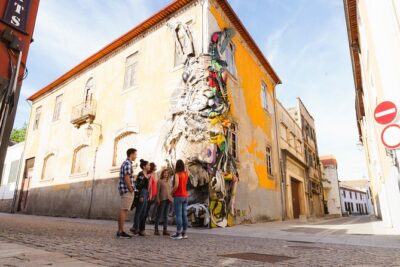
Experience Porto’s Charm: 3-Hour Guided Walking Tour
Read our review →

Walking Tour, Lello Bookshop, Boat and Cable Car
Read our review →Browse the lists this tour appears in