
Reviewed · WALKING TOURS
Porto and Gaia: Walking Tour of Douro’s Two Riversides
Two rivers, one great walking loop. This Porto and Gaia tour connects the past and the present on the Douro River in a tight, story-packed 2 hours. I especially love the way you start with the Infante of Sagres birthplace and then move through the city like the Age of Discoveries is still in the stones.
I also like the balanced mix of landmark faith and everyday neighborhood life, from the Church of Saint Francis to Ribeira and Barredo. The one thing to plan for is the walking, plus it is not suitable for wheelchair users.
In This Review
- Key highlights at a glance
- Starting at Infante Dom Henrique, the story-before-you-walk moment
- Palacio da Bolsa to Church of Saint Francis, power and faith in the same walk
- Casa do Infante, Ribeira and Barredo, Porto’s older street life
- Cais da Ribeira and the Douro River, why this city begins at the water
- Alminhas of the Bridge and Dom Luís Bridge, a crossing that feels like a scene
- Vila Nova de Gaia, wine cellars lore and the UNESCO Serra do Pilar
- Half Rabbit urban art and Convento de Corpus Christi, then and now in the same view
- The Port wine story, explained without a tasting trap
- Group size, pace, and what the 2 hours actually feels like
- Who this walking tour suits best
- What to do before and after for best value
- Should you book Porto and Gaia: Walking Tour of Douro’s Two Riversides?
- FAQ
- How much does the tour cost?
- How long is the walking tour?
- Where does the tour start?
- Is the tour suitable for wheelchair users?
- Are food and drinks included?
- What languages is the guide available in?
- How big is the group?
- Do I visit a winery during the tour?
- What happens if there are only a few people booked?
- What is the cancellation policy?
Key highlights at a glance
- Henry the Navigator origins at Infante Dom Henrique: You begin at the square tied to Portugal’s maritime beginnings.
- Short guided stops that actually land: About 15 minutes at each major site so you never feel rushed but still move.
- Porto’s oldest areas in real streets: Ribeira and Barredo get context, not just photos.
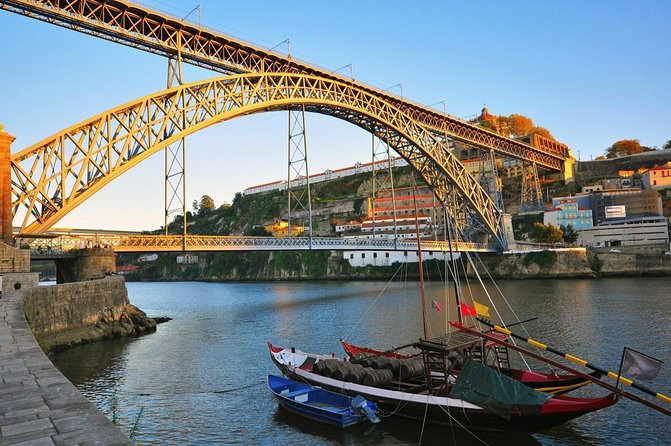
- Crossing on foot via Dom Luís Bridge: A classic view moment with the bridge’s stories attached.
- Gaia’s UNESCO stop at Serra do Pilar: You get the dramatic viewpoint without needing a separate day plan.
- Modern urban art meets historic convent legend: You’ll see both the Half Rabbit sculpture and Convento de Corpus Christi.
Starting at Infante Dom Henrique, the story-before-you-walk moment
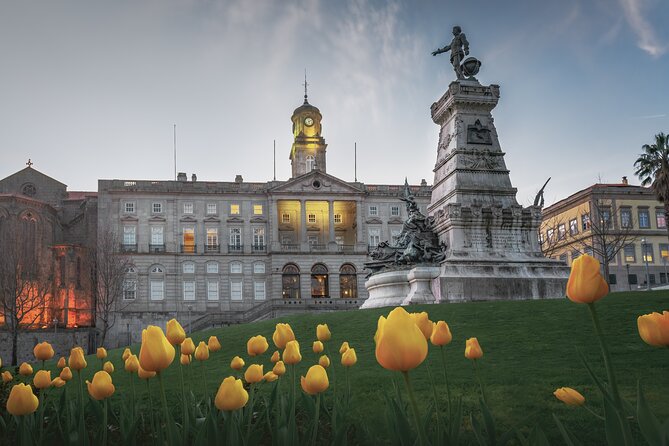
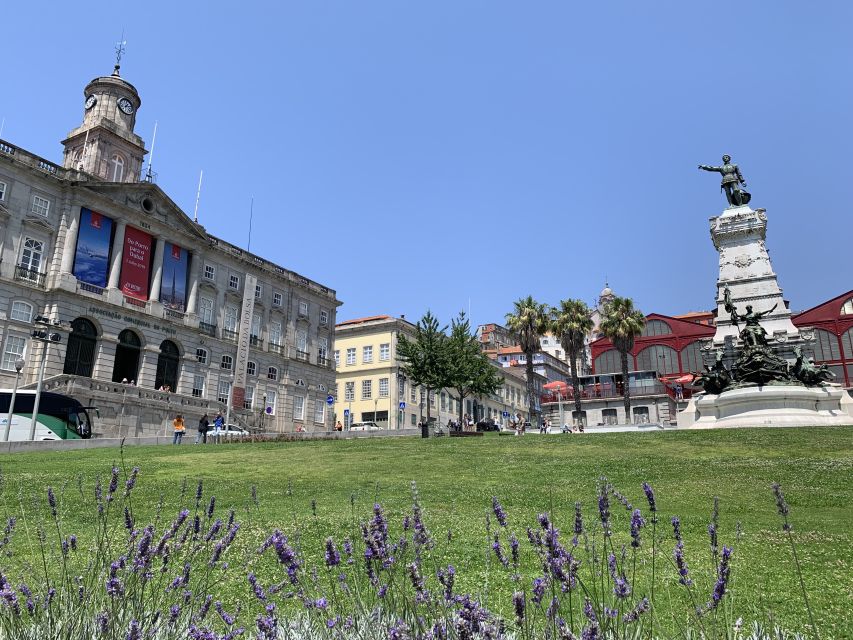
Your tour begins at Jardim do Infante Dom Henrique, at the foot of the statue with a blue umbrella. This matters because Henry the Navigator, also called the Infante of Sagres, is more than a schoolbook name here. The guide uses that starting point to explain how Porto helped shape Portugal’s early push outward across the sea.
What I like is how the first minutes set a theme: Portugal’s global reach did not start in a vacuum. You get the story behind how Portugal came to span four continents, and it’s tied to place, not vague dates. If you like history that explains why cities are built the way they are, this framing helps everything after make sense.
Also, you’ll quickly spot the Palacio da Bolsa nearby. The Porto Stock Exchange is the first in Portugal, and it is a standout architectural presence. Even with only a brief guided look, you learn how civic power and trade have long been part of Porto’s identity.
More Porto on foot:
- Porto Walking Tour, Lello Bookshop, River Cruise and Cable Car★ 5.0 · 3,354 reviews
- Experience Porto’s Charm: 3-Hour Guided Walking Tour★ 5.0 · 2,432 reviews
- Porto: 3-Hour Guided City Highlights Walking Tour★ 4.8 · 2,050 reviews
- Porto: Wine Tasting with Tapas Walking Tour★ 4.4 · 1,541 reviews
Palacio da Bolsa to Church of Saint Francis, power and faith in the same walk
The tour’s rhythm is designed for attention. You’ll get a guided visit of about 15 minutes at key stops, then move on while the guide continues the thread of stories. That pacing works well when you want meaning without spending half your day waiting inside.
At the Church of Saint Francis, expect a short but focused guided experience of one of Portugal’s most beautiful churches. Faith in Portugal is not only religious, it is cultural, and this stop shows how art, devotion, and civic life overlap. You’ll also get the kind of context that helps you read a church beyond “pretty facade.”
A practical note: churches can have different lighting and quiet rules than outdoor streets. If you wear light layers, you will stay comfortable because you may spend a bit more time standing in place than you expect.
Casa do Infante, Ribeira and Barredo, Porto’s older street life
Next comes Casa do Infante, another 15-minute guided stop. This is one of those places where the guide connects the person and the timeline to the city itself. The message is simple: Porto’s role in Portuguese history is not abstract, it is anchored in neighborhoods and buildings.
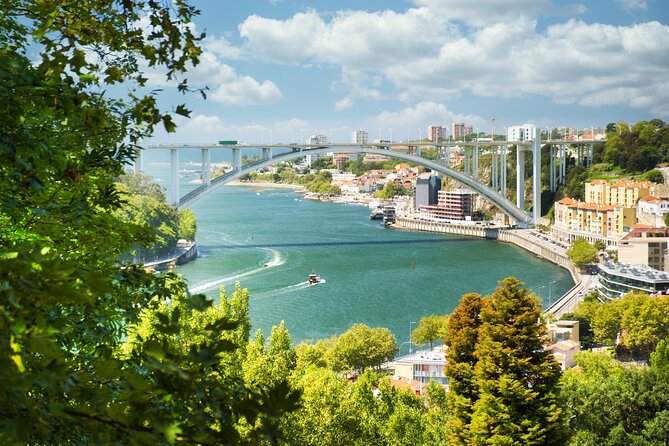
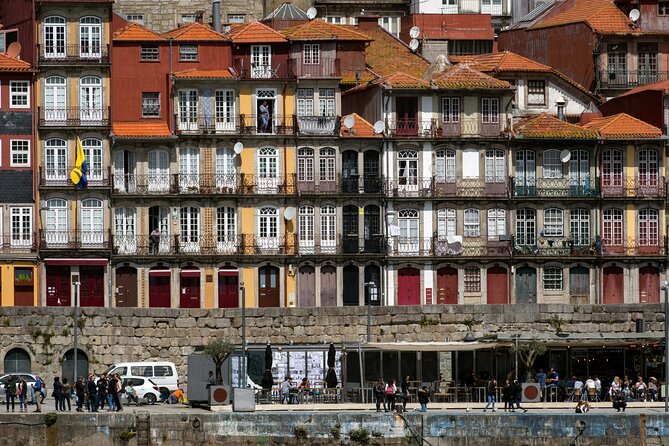
Then you shift into walking mode through Ribeira and Barredo, Porto’s oldest neighborhoods. This part is one of the best values of the whole tour because you are not just passing through the postcard areas. You learn old customs and how the Douro River helped create the city in the first place, so the streets feel earned rather than staged.
Ribeira and Barredo also bring you into the present-day tension. The guide talks about how tourism and gentrification are reshaping historic streets, so you see both the charm and the pressure. I like that the walk acknowledges change without turning it into a lecture.
If you’re the type who likes to pause and look up, this is where you’ll get the most satisfaction. You’ll have small opportunities to notice details while the guide explains what they meant then and what they mean now.
Cais da Ribeira and the Douro River, why this city begins at the water
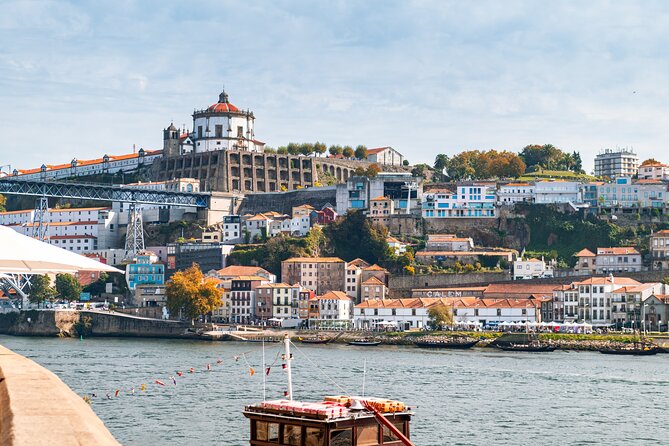
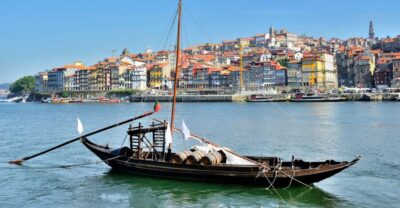
The Cais da Ribeira stop is basically where Porto’s relationship with the river becomes visual. Here, the Douro is not a view, it is the city’s engine. Porto, like many major cities, was born on its banks, and you get that vital role explained clearly.
This is also where the tour starts layering in the “men and myths” side of local history. On Porto’s side, you’ll hear stories of bridges, French invasions, royalty, legends, heroes, and villains. It sounds dramatic, but the guide keeps it grounded in what you can see and walk to.
If you are short on time, this is a smart way to get orientation fast. In about 2 hours you’re not only seeing famous points, you’re learning how they connect.
Alminhas of the Bridge and Dom Luís Bridge, a crossing that feels like a scene
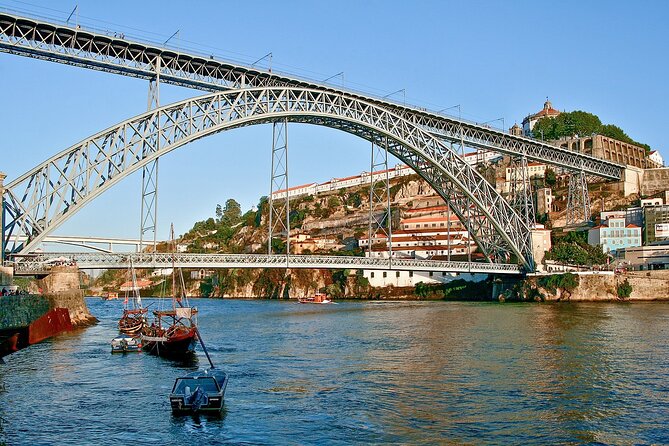
One of your guided stops is the Alminhas of the Bridge, which gives you a chance to notice how religious tradition shows up even in street corners and routes. Then you head toward Dom Luís Bridge, where the guide will bring the bridge’s story into focus.
Crossing Dom Luís Bridge on foot is a classic Porto moment, and the guide adds the context so it is more than an Instagram stop. From the bridge you see the shape of the two riverbanks and understand why the Douro defines the city’s layout.
The walking segment after the bridge is short, about 10 minutes, but it feels like a transition from one identity to another. Porto on one side, Gaia on the other, even though locals treat them as inseparable.
Wear shoes with good grip here. The bridge experience is great, but you want to stay comfortable because you will be standing and walking on a real working structure.
Elsewhere in Porto, worth a look before you book:
- The Unvanquished Tour in Porto City Center
★ 5.0 · 26,497 reviews - From Porto: Douro Valley w/ Boat Tour, Wine Tasting & Lunch
★ 4.7 · 19,061 reviews - Complete Douro Valley Wine Tour with Lunch, Wine Tastings and River Cruise
★ 5.0 · 12,920 reviews - Porto: Douro Valley with Winery Lunch, Tastings & Cruise
★ 4.7 · 7,002 reviews
Vila Nova de Gaia, wine cellars lore and the UNESCO Serra do Pilar
Once you reach Vila Nova de Gaia, the tour opens up the second half of the story. Gaia is separate technically, but culturally it is tied to Porto, especially through wine. You’ll get guided time in Gaia, including views and explanation connected to the famous wine cellars.
Even though the tour does not include a winery visit, you still learn how Port wine fits the bigger picture. The guide explains why it is special and why it is neither just wine nor simply Port. That distinction matters because it changes how you think about the product and its history, rather than treating it as a souvenir.
You’ll also visit the Serra do Pilar Monastery, a UNESCO World Heritage Site. This stop is a highlight if you like viewpoints with a reason behind them. The guide’s explanation helps you understand what makes the monastery significant, and why Gaia feels like a perfect counterpoint to Porto.
If you like your sightseeing with a little “why does this matter” added, this is a strong segment.
Half Rabbit urban art and Convento de Corpus Christi, then and now in the same view
Gaia is where you get a contrast that feels very current. The tour includes modern, controversial urban art, including the striking Half Rabbit sculpture. It is easy to treat street art as random decoration, but the guide ties it to city life and identity.
Right after, you’ll head to the Corpus Christi Convent (Convento de Corpus Christi). This is where historic legend enters the picture in a serious way. The contrast works well because it shows two different ways a city tells stories, one in architecture and ritual, the other in street-level art.
I like how the tour refuses to choose one side of the city. You end up with a fuller picture of how Porto and Gaia talk to visitors, and how residents might experience the same streets differently depending on what they value.
The Port wine story, explained without a tasting trap
No winery visit means you are not paying time or money for a structured tasting. Instead, the guide focuses on the story behind Port wine, using it as a lens for the whole region.
You’ll learn why Port wine is unique and how it became its own thing in the market. The key point is that the guide frames it as more than a simple category. It is not only wine, it is also tied to history, tradition, and trade patterns that shaped the Douro.
If you already know you do not want a heavy tasting session, this tour is a good fit. You still get the context that makes later cellar visits feel more informed.
Group size, pace, and what the 2 hours actually feels like
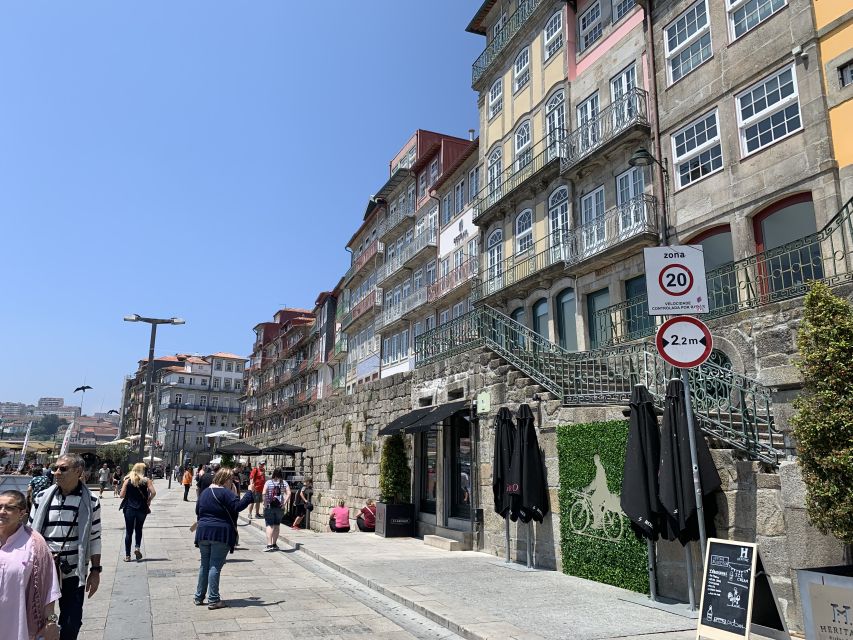
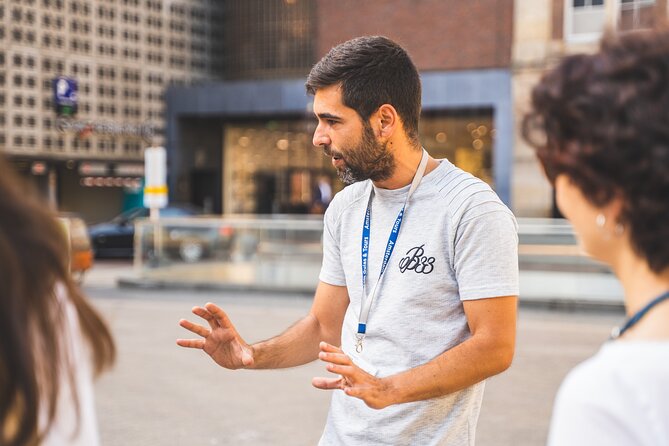
This is a small group tour, limited to 10 participants, and the guide is fluent in English or Spanish. That small group size matters because you’ll be able to hear explanations clearly at each stop and keep walking without constant bottlenecks.
The total duration is 2 hours, with guided segments around 15 minutes at major stops. Between them you get short walks that keep the energy up, including the bridge crossing and the move from Porto to Gaia.
This pacing is ideal if you are doing Porto for the first time and want a compact way to connect landmarks with neighborhood context. It is also a good plan when you want to fit two banks into one day without committing to a longer day tour.
Who this walking tour suits best
This tour fits best if you:
- Enjoy history that points to real places, not just facts on a slide.
- Want both Porto and Gaia in a single session, including a UNESCO stop.
- Like a mix of architecture, churches, neighborhoods, and street art.
- Prefer a guided narrative over a self-guided scavenger hunt.
It may not be your choice if you hate walking, need a wheelchair-friendly plan, or want food and drink as part of the activity. The tour itself does not include food or drinks, so plan to grab a snack before or after based on your schedule.
What to do before and after for best value
Because you pay $32 per person for a 2-hour guided loop, you’ll get the most value by showing up ready to move. I suggest wearing comfortable shoes and keeping a light layer in mind, since you may spend more time outdoors than you expect.
After the tour, you’re in a great position to choose your next step. If you want to continue the theme, you can use what you learned to guide a longer walk in Ribeira or Barredo, or return to Gaia for more of the convent and viewpoint areas.
If you are hungry, treat the tour as the brain part of the day and plan the food yourself. That way you do not feel rushed by a set schedule.
Should you book Porto and Gaia: Walking Tour of Douro’s Two Riversides?
I’d book this if you want a focused introduction that links Porto’s maritime origins to the river and then carries you across to Gaia’s UNESCO viewpoint and historic convent atmosphere. It is a smart use of time, especially with the small group size and the guide’s story-driven approach.
You should skip it if walking is a deal breaker for you, or if you specifically want a winery tasting as the main event. Since this tour does not include food and drinks or a winery visit, it is built for understanding, not for sampling.
One extra reason to consider it: one guide you might meet, Eric, has been praised for being one of the best guides the reviewer had and for making the tour feel like more than a standard checklist. That kind of guiding style is exactly what turns a city walk into a memory you can keep.
If you’re trying to decide between a quick see-everything route and a smaller, story-first experience, this one leans story-first in a practical way. For $32 and 2 hours, it gives you a lot of Porto and Gaia, with meaning attached.
FAQ
How much does the tour cost?
The tour price is listed as $32 per person.
How long is the walking tour?
The duration is 2 hours.
Where does the tour start?
It starts at Jardim do Infante Dom Henrique, at the foot of the statue with a blue umbrella.
Is the tour suitable for wheelchair users?
No, it is not suitable for wheelchair users.
Are food and drinks included?
No, food and drinks are not included.
What languages is the guide available in?
The live guide is available in Spanish and English.
How big is the group?
The group is small, limited to 10 participants.
Do I visit a winery during the tour?
No, the tour does not include visiting a winery. You will hear about Port wine as part of the stories on the Gaia side.
What happens if there are only a few people booked?
With less than 4 participants, the tour could be cancelled.
What is the cancellation policy?
Free cancellation is available if you cancel up to 24 hours in advance for a full refund.
Fresh off the Porto quays





Walking Tours, compared.
Porto Walking Tour, Lello Bookshop, River Cruise and Cable Car
Read our review →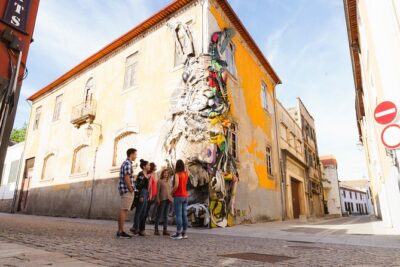
Experience Porto’s Charm: 3-Hour Guided Walking Tour
Read our review →

Walking Tour, Lello Bookshop, Boat and Cable Car
Read our review →Browse the lists this tour appears in