
Reviewed · SIX BRIDGES CRUISES
Porto 6 Bridge Boat Tour & Wine Tasting Experience
Nine bridges, one great river.
This Porto Douro River boat tour is built around movement, not waiting. You glide through the historic heart of Porto, pass major bridges, and end with a Port wine tasting in Vila Nova de Gaia, so you get big views plus a real local drink in about 2 hours.
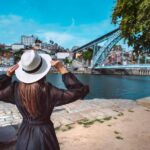
I especially like the tight route planning. You get architectural highlights like the oldest bridge in Porto and the famous 1881 engineering icon, then you also get a proper feel for the medieval streets around landmarks like the Church of São Francisco and the Dom Luís I Bridge.
One consideration: the experience needs good weather, and it runs as a cruise with outdoor viewing. If the river conditions are rough or visibility is poor, the operator may switch dates or offer a refund.
In This Review
- Key things to know before you go
- Porto to Gaia by boat: how the route feels in real life
- The 2-hour itinerary: what you’ll see and what it’s good for
- Start on the Douro River and get your bearings fast
- The oldest bridge pass: the details you can actually notice
- The 1881 engineering icon: when history looks practical
- Historic district segment: São Francisco and Dom Luís I
- Vila Nova de Gaia riverside: the Port wine world, plus views
- Historic customs building: neoclassical, cultural, and story-driven
- Glass palace and gardens: a calm break from the city rush
- The arch bridge completed in 1963
- Where the Douro meets the Atlantic at Foz do Douro
- What you should really love here: views, pacing, and Port wine context
- Logistics that affect your day: meeting point, group size, and tickets
- Weather and timing: when this tour works best
- Who should book this Porto Douro bridge and wine tour
- Is it worth $42.06 for a 2-hour boat, bridges, and wine?
- Should you book Porto 6 Bridge Boat Tour and Wine Tasting?
- FAQ
- How long is the Porto 6 Bridge Boat Tour & Wine Tasting Experience?
- What is the price per person?
- Is the tour offered in English?
- How big is the group?
- Where do you meet for the tour?
- Does the tour end at the same place it starts?
- What happens if the weather is poor?
- Is free cancellation available?
Key things to know before you go
- Small group size (up to 14) keeps the tour feeling personal and helps you get answers instead of just listening.
- Afonso guide quality is consistently singled out, which matters when you want history explained without lectures.
- Two zones, Porto and Gaia on the same trip means less hopping around town.
- Bridge spotting is the main sport here, so expect repeated passes and lots of “look up” moments.
- Port wine cellar area stop pairs tasting with panoramic views, not just a quick pour.
- Weather-dependent timing means you should plan something flexible nearby.
Porto to Gaia by boat: how the route feels in real life
The main idea behind this tour is simple: use the Douro River as your highway. Instead of trying to stitch together bridges, waterfront viewpoints, and wine cellars on foot, you travel in a straight line where the water does the heavy lifting.
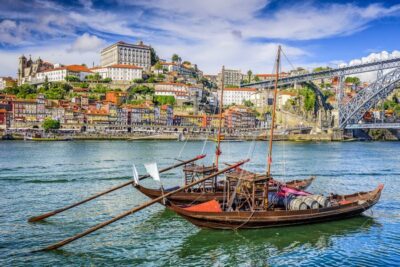
You start in Vila Nova de Gaia at the Water Line Douro meeting spot, then head out onto the Douro. The river name itself, tied to the idea of being made of gold in Latin, is a fun way to set the mood. Even if you do not think about etymology while you are on the water, it matches the vibe you see from the boat: sunlight on the river, layered buildings, and that classic Porto coastline look.
The rhythm matters. You are not stuck waiting in one place for ages. You pass major points of interest, then you get the chance to slow down at selected stops for photos and tasting. For many people, that is the sweet spot for a first visit: enough context to orient you, without draining your energy.
The bridges again, other departures:
- Porto: 6 Bridges Douro River Cruise★ 4.3 · 6,472 reviews
- Porto: Bridges Cruise & Sunset & Port Wine Cellar Option★ 4.2 · 4,180 reviews
- Porto: River Douro 6 Bridges Cruise★ 4.3 · 4,168 reviews
- Porto: Douro River Party Boat with Sunset Option & 6 Bridges★ 4.7 · 2,040 reviews
The 2-hour itinerary: what you’ll see and what it’s good for
This experience runs about 2 hours, and it is paced for sightseeing. Here is how each part fits, plus what to watch for.
Start on the Douro River and get your bearings fast
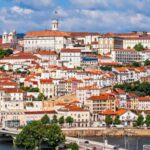
The opening stretch is all about perspective. From the water, Porto and Gaia look arranged on purpose. You can spot how the city climbs from the waterfront, where the bridges connect, and which neighborhoods are really close to the river.
Why it matters for you: if you only see Porto from streets, you miss the geometry. A river cruise helps you understand why the bridges are where they are and how the waterfront shaped the city.
The oldest bridge pass: the details you can actually notice
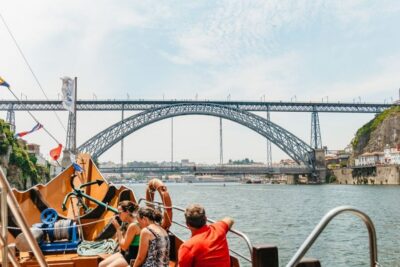
Early on, you pass beneath Porto’s oldest bridge. You will see architectural details as the boat slips under it. This is one of those moments where being on the water helps, because you get a view that you cannot recreate from a sidewalk.
A practical tip: when the guide calls out something, look up. Bridge architecture is mostly vertical and horizontal at once, and your best angle is usually right as you go under.
Possible drawback: if you get motion sick easily, the time right by bridge structures can feel like quick turns. Holding steady and focusing on the horizon can help.
The 1881 engineering icon: when history looks practical
Next, the tour spotlights a Porto icon built in 1881, still in use today. This matters because it reframes what you think “historic” means. This is not just old stone. It is 19th-century engineering that still works as part of modern Porto life.
What to do in this moment: take a couple photos that include both the bridge and the river banks. In your camera roll, you will thank yourself later when you try to remember where everything sits.
More quintas pouring further up the valley:
- From Porto: Douro Valley w/ Boat Tour, Wine Tasting & Lunch
★ 4.7 · 19,061 reviews - Complete Douro Valley Wine Tour with Lunch, Wine Tastings and River Cruise
★ 5.0 · 12,920 reviews - Porto: Douro Valley with Winery Lunch, Tastings & Cruise
★ 4.7 · 7,002 reviews - Porto: Live Fado Show with Glass of Port Wine
★ 4.8 · 6,498 reviews
Historic district segment: São Francisco and Dom Luís I
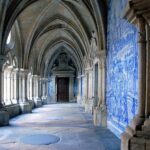
The route then transitions into Porto’s historic district, the part known for medieval architecture and narrow streets. Highlights include the Church of São Francisco and the iconic Dom Luís I Bridge, plus that maritime heritage feeling along the waterfront.
Why this stop is valuable: churches and bridges look different up close. From the boat you get scale. On land, you get texture, shapes, and the human scale of the streets.
What you might want to watch for: the Dom Luís I Bridge area is a magnet. If you take photos, be ready for crowds near major viewpoints and plan a few shots from slightly to the side rather than only from the main walkway.
Vila Nova de Gaia riverside: the Port wine world, plus views
Then you roll into Gaia’s riverside zone, famous for Port wine cellars. This is a natural match for the tasting part of the trip, because the whole area is built around wine storage and trade.
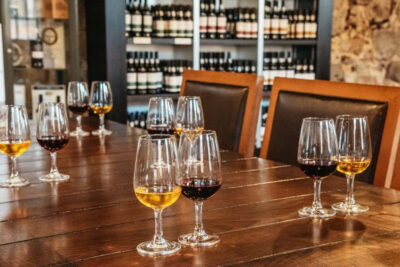
Expect a quick stop that gives you panoramic views and a chance to capture memorable photos. This is not just sightseeing. It helps you connect the glass bottle on your table to the landscape where the wine is aged and stored.
Practical note: wear layers. Riverfront weather can shift, and tasting is easiest when you are comfortable.
Historic customs building: neoclassical, cultural, and story-driven
Another highlight is a historic riverside building once used for customs, now a cultural venue with neoclassical architecture and exhibitions or events that celebrate Porto’s heritage.
This is one of those stops that I think works best if you like context. Even if you do not plan to enter any museum spaces, seeing how old trade infrastructure got repurposed can change how you read the waterfront.
Glass palace and gardens: a calm break from the city rush
You also pass a beautiful 19th-century glass palace surrounded by gardens. It is designed for panoramic views of the Douro River and Porto, plus a peaceful stroll feeling.
This is a great contrast stop. After bridges and tight streets, the gardens give you space for a breather. If you need a moment to reset your legs, this is the kind of stop that helps.
The arch bridge completed in 1963
Back to water views with an impressive arch bridge connecting Porto and Vila Nova de Gaia, completed in 1963. This is a reminder that the river crossing story did not end in the 1800s. Modern engineering still shapes the city’s daily flow.
Sunset note: this part is especially beautiful at sunset, when the river surface turns reflective and the buildings take on warmer tones.
Where the Douro meets the Atlantic at Foz do Douro
The experience ends with the poetic finale, where the Douro River meets the Atlantic Ocean, plus views of the seaside neighborhood of Foz do Douro.
Why it sticks with you: meeting water systems always feels dramatic, even from a boat deck. If you love coastlines, you will probably want to linger a bit after the tour ends, just to keep looking.
What you should really love here: views, pacing, and Port wine context
If I had to summarize why this tour is a smart choice, it comes down to three things.
First, the bridge focus is concrete. You are not doing a generic “boat ride around the city.” You are actively seeing bridges at different ages and styles, and that gives the trip a clear theme. Even if you are not a construction nerd, you will start recognizing shapes fast.
Second, the pacing keeps you from feeling stuck. A 2-hour window is short enough for most schedules, yet long enough to hit Porto, bridges, historic stops, and the tasting zone without feeling rushed the whole time.
Third, the Port tasting lands in the right context. You are not just drinking and moving on. You are seeing the cellar culture area in Gaia right where the wine story lives.
And yes, the guide matters. Afonso is named as impeccable in the experience feedback, and that is exactly what you want from a guide on a multi-stop route. It is the difference between a tour that feels smooth and one that feels chaotic.
Logistics that affect your day: meeting point, group size, and tickets
This tour starts at Water Line Douro, on the Water Line Douro at da Praia, 4400-554 Vila Nova de Gaia. It ends back at the same meeting point, so you do not need to solve where to go next.
A few details help you plan:
- You’ll have a mobile ticket.
- It is offered in English.
- It runs with a maximum of 14 travelers, so you are unlikely to feel swallowed by a massive crowd.
- It is near public transportation, which is useful if you are moving around Porto and Gaia by tram or metro.
- Most travelers can participate, but keep in mind it is a river experience, so you may be standing and moving with the flow of the boat and stops.
Weather and timing: when this tour works best
Because it is a cruise, good weather matters. The experience requires good weather, and if it is canceled due to poor weather, you are offered a different date or a full refund.
How to use that info: if you are in Porto for only a short time, schedule this tour early in the trip. That way you have backup days if the forecast forces changes.
For the best photos, think late-day light. The arch bridge area and the river-to-ocean finale are described as especially beautiful at sunset. Even if you are not a strict sunset person, aiming for golden hour can make the whole route feel more cinematic.
Also, consider clothing. Riverfront air can be cool even when the sun is out. Bring a light jacket and something comfortable for standing.
Who should book this Porto Douro bridge and wine tour
This is a strong fit if you want:
- A first-time Porto highlight that still feels grounded in real local culture.
- A break from nonstop walking, while still seeing major landmarks.
- A clear theme, bridges and river architecture, plus a practical Port tasting payoff.
It is also a good choice for couples and small groups because the limit of 14 keeps it easy to ask questions and follow along.
If you are the type who wants hours of museums, this is not that. This experience is made for seeing, tasting, and moving. If that sounds like your style, you will probably love it.
Is it worth $42.06 for a 2-hour boat, bridges, and wine?
At $42.06 per person for about 2 hours, the value depends on what you compare it to.
You are paying for:
- A guided Douro River cruise experience.
- Stops that include major bridge viewpoints and historic landmarks.
- A Port wine tasting component.
- English narration.
- A small group of up to 14.
If your alternative is piecing together a similar mix of waterfront sightseeing plus Port tastings on your own, the math usually favors the tour. Transport and time add up fast, and getting the right viewpoints in one outing is hard without coordination.
In short, this price makes sense if you want convenience, context, and a local taste in a single block of time.
Should you book Porto 6 Bridge Boat Tour and Wine Tasting?
Yes, you should book it if you want a focused Porto and Gaia intro with a real drink payoff. The combination of bridges, historic districts, and the Port wine cellar area stop is exactly the kind of itinerary that helps you understand where everything sits and why it matters.
I would skip or reschedule if:
- You know you will struggle with outdoor time and possible wind on the river.
- Your schedule is too tight to handle weather changes, since this experience depends on good weather.
If you can travel flexibly and you like seeing Porto from the water, this one is a smart use of your time.
FAQ
How long is the Porto 6 Bridge Boat Tour & Wine Tasting Experience?
The experience is approximately 2 hours.
What is the price per person?
The price is $42.06 per person.
Is the tour offered in English?
Yes, it is offered in English.
How big is the group?
The tour has a maximum of 14 travelers.
Where do you meet for the tour?
The meeting point is Water Line Douro, da Praia, 4400-554 Vila Nova de Gaia, Portugal.
Does the tour end at the same place it starts?
Yes, the activity ends back at the meeting point.
What happens if the weather is poor?
This experience requires good weather. If it is canceled due to poor weather, you will be offered a different date or a full refund.
Is free cancellation available?
Free cancellation is available. You can cancel up to 24 hours in advance for a full refund.
Porto Counters, Cellars and Grills
- Douro Valley Small-Group Tour with Wine Tasting, Lunch and Boat
★ 5.0 · 3,642 reviews - Porto: Cálem Cellar Tour, Fado Show & Wine Tasting
★ 4.4 · 3,530 reviews - Porto: Cockburn’s Port Lodge Tour and Tasting
★ 4.8 · 3,360 reviews - Porto: Douro Valley Tour with Wine Tasting, Cruise and Lunch
★ 4.7 · 2,714 reviews
Rabelo Boats Off the Quay
- Porto: Guided Tour by Tuk-Tuk & Optional Douro River Cruise
★ 4.5 · 5,980 reviews - From Porto: 2 Wine Regions, Farm-to-Table Lunch & Boat
★ 4.9 · 5,724 reviews - Douro Valley: Historical Sites, Wine Experience, Lunch & Cruise
★ 5.0 · 5,133 reviews - Authentic Small Group Douro Wine Tour with Lunch & River Cruise
★ 5.0 · 4,775 reviews
Fresh off the Porto quays

Six Bridges Cruises, compared.
Bridges Cruise & Sunset & Port Wine Cellar Option
Read our review →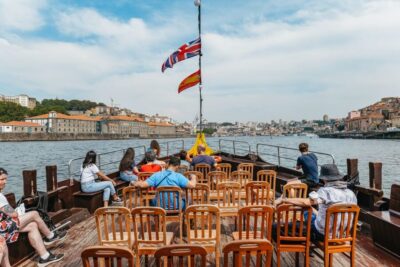
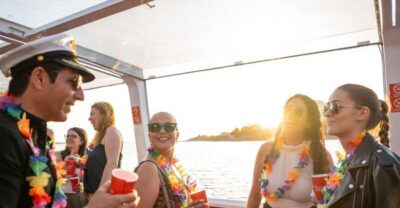
Douro River Party Boat with Sunset Option & 6 Bridges
Read our review →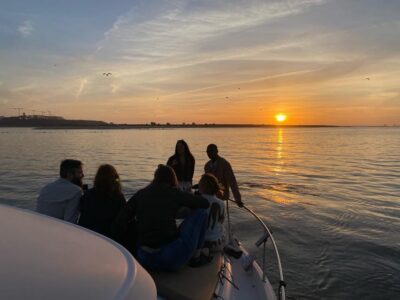
6 Bridges Cruise & Port Wine with Sunset Option
Read our review →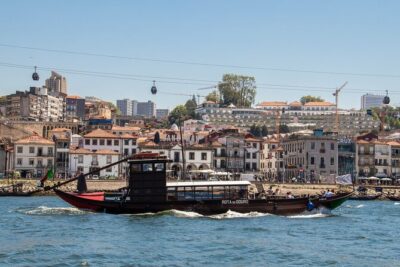
Porto Six Bridges Panoramic Cruise on the Douro River
Read our review →
Luxury 6 Bridges Yacht Cruise with Wine & Snacks
Read our review →Browse the lists this tour appears in