Reviewed · PORTO
Modern Art Oporto
Modern Porto does not make sense until you walk through the stuff that came before it. This private walking tour in Porto traces the city’s biggest urban and industrial leap, from the 1800s through the 1920s, using architecture and street-level landmarks as your timeline. I love how the focus stays practical, you learn what you are looking at while you walk. I also like that it is led by an art-historian guide, so the stops are more than photo ops.
You’ll start at Estação de São Bento and then connect dots between early rail growth, major buildings, and the cultural hubs that helped scholars and artists feel at home in the city. The potential drawback is simple: it is a walking tour, so plan for cobblestones and a moderate pace over about 2 to 4 hours.
In This Review
- Key reasons this tour works so well
- Why Porto’s 1800s to 1920s timeline is a smart way to see the city
- Starting at Estação de São Bento, where the story kicks off
- Early rail growth in real streets, not just museum talk
- Pérola do Bolhão, a market-area stop that helps you feel everyday Porto
- Café Majestic and Lello, where culture and design collide
- Café Majestic: Art Nouveau with Paris influence
- Livraria Lello & Irmão: neogothic drama and scholarly gravity
- Town Hall and Mercado Ferreira Borges, the city as an engine
- Palácio da Bolsa and Ponte D. Luís I, commerce meets the iconic view
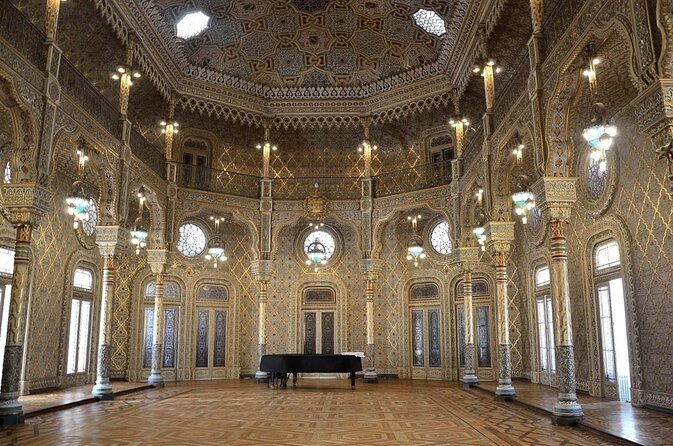
- Palácio da Bolsa: where wealth had a home
- Ponte D. Luís I: closing the loop with the Douro crossing
- Private guide value, and what André’s service style means for you
- Price, timing, and logistics that actually matter
- Who should book Modern Art Oporto
- Should you book this tour?
- FAQ
- Where is the tour meeting point?
- How long is the tour?
- Is this a private tour?
- Who leads the tour?
- Is hotel pickup included?
- Is food and drink included?
- Do I need moderate physical fitness?
- Are children allowed?
- How does cancellation work?
Key reasons this tour works so well
- Art-historian guide: you get context, not just facts.
- Focused time period: Porto’s 1800s to 1920s growth explained as you walk.
- Private pace: your group goes through with just the guide.
- Great anchor start: São Bento sets the tone with mid-1800s architecture.
- Classic Porto skyline moments: you’ll reach major landmarks tied to commerce and crossing the Douro.
Why Porto’s 1800s to 1920s timeline is a smart way to see the city
Porto grew fast when rail, industry, and trade started reshaping everyday life. On this tour, you get the story in the order that makes sense on foot: where people arrived, what they built, and how culture found a place inside the changes. That matters because Porto can feel like a pile of gorgeous buildings unless you understand what pushed them into existence.
A key idea your guide highlights is how Porto’s expansion in the 1800s let the city move beyond older fortifications, including what remained of the Fernandine Wall. When you connect that to what you see in the streets, you start noticing the “why” behind the design choices, whether it’s grand façades, modern-feeling commercial spaces, or architecture influenced by larger European trends.
You also get a clean “through line” that reaches the Roaring 20s. Even if you are not an architecture nerd, you’ll feel the shift between earlier styles and later influence as the walk progresses.
Still deciding? A few more Porto outings to weigh against this one:
- The Unvanquished Tour in Porto City Center★ 5.0 · 26,497 reviews
- From Porto: Douro Valley w/ Boat Tour, Wine Tasting & Lunch★ 4.7 · 19,061 reviews
- Complete Douro Valley Wine Tour with Lunch, Wine Tastings and River Cruise★ 5.0 · 12,920 reviews
- Porto: Douro Valley with Winery Lunch, Tastings & Cruise★ 4.7 · 7,002 reviews
Starting at Estação de São Bento, where the story kicks off
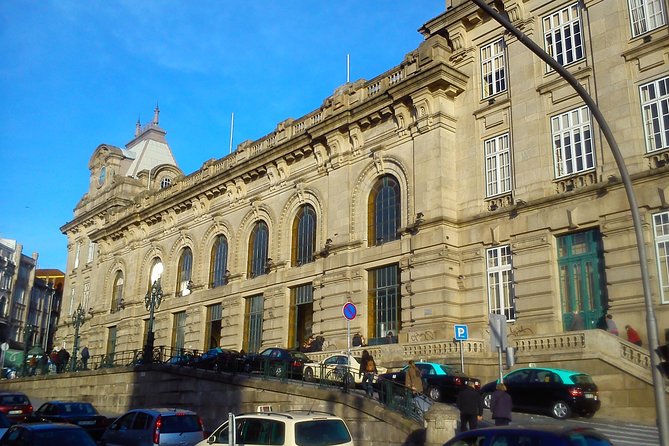
Your meeting point is the Railway Station of São Bento, and that is a strong choice. The station is right in the center of Porto’s identity, and it gives you a credible starting line for the rail era your guide will discuss. If you are arriving by train, this also makes your day easier because you already have a geographic anchor.
From here, the tour naturally moves into the city center’s built environment, including the kind of architecture that shows up when a city has money, momentum, and ambition. Your guide frames what you see as part of Porto’s transformation, from the mid-1800s through later stylistic waves in the early 1900s.
What I like about this start is that it is not random. You are starting where the city’s modern movement becomes visible, then you walk toward the landmarks that grew with industry and commerce. If you’ve ever done a walking tour where the first stop feels like a warm-up, this one feels like the real beginning.
Early rail growth in real streets, not just museum talk
This tour is built around the idea that Porto’s industrial growth changed the layout and priorities of the city. As you walk, your guide points out how the rail era shaped connections, and how that pressure to move goods and people helped the city expand outward and rebuild what it could.
That sounds abstract until you are standing on the streets and seeing the results. Even without going inside every place, you can read the city’s “upgrade path” by noticing façade styles, street orientation, and the way prominent buildings cluster around key areas.
You’ll also hear about early railroad stations as part of the city’s leap forward. It is the kind of context that helps when you later look at photos of Porto and wonder why certain neighborhoods look the way they do.
If you prefer tours that stay grounded in what you can see in front of you, this approach fits.
Pérola do Bolhão, a market-area stop that helps you feel everyday Porto
One of the tour highlights includes Pérola do Bolhão. This is a name you’ll want to remember because it anchors you in the real rhythm of Porto, not just the postcard monuments. Market-area landmarks matter on history walks because they explain how the city functioned day to day, especially when industry was expanding and trade was moving.
Your guide uses stops like this to connect the cultural life of the city with the economic forces behind it. So instead of treating food and shopping spots as side notes, you learn why they are part of the same story as formal civic and commercial buildings.
The practical upside is that it breaks up the walk. You get a moment where the tour energy shifts from grand façades to street-level life, which makes the time period feel more complete.
Café Majestic and Lello, where culture and design collide
Two of the biggest “wow” moments on the walk are Café Majestic and Livraria Lello & Irmão. These are not just famous addresses. They are cultural signals. They tell you where Porto attracted writers, artists, academics, and students when the city was reshaping itself.
Elsewhere in Porto, worth a look before you book:
- Porto: Live Fado Show with Glass of Port Wine
★ 4.8 · 6,498 reviews - Porto: 6 Bridges Douro River Cruise
★ 4.3 · 6,472 reviews - Porto: Spiritus Multimedia Show Entry Ticket
★ 4.5 · 6,403 reviews - Porto: Torre dos Clerigos Entrance Ticket
★ 4.6 · 6,395 reviews
Café Majestic: Art Nouveau with Paris influence
Café Majestic is described as a bohemian beacon for poets, writers, and architects, and the façade is Art Nouveau, with heavy influence from Paris. Standing near it, you get a sense of how Porto absorbed international style trends while still keeping its own identity.
Even if you do not plan to stop for a drink, the architectural framing is worth it. It helps you see the city’s cultural life as something designed and intentional, not accidental.
Livraria Lello & Irmão: neogothic drama and scholarly gravity
The bookstore Lello & Irmão is known for its outstanding neogothic façade, and this tour connects it to Porto’s role as a cultural beacon for scholars and academics. It’s also tied to J. K. Rowling’s Harry Potter in the tour narrative, since the shop inspired her work.
Whether you are into that pop-culture link or just want the architectural story, you’ll benefit. Neogothic isn’t a random style choice, it communicates aspiration, learning, and prestige. When your guide puts that into context, the façade becomes a message, not just an impressive exterior.
My advice: take a minute to look up and around. These places reward a slow gaze, not a quick selfie sprint.
Town Hall and Mercado Ferreira Borges, the city as an engine
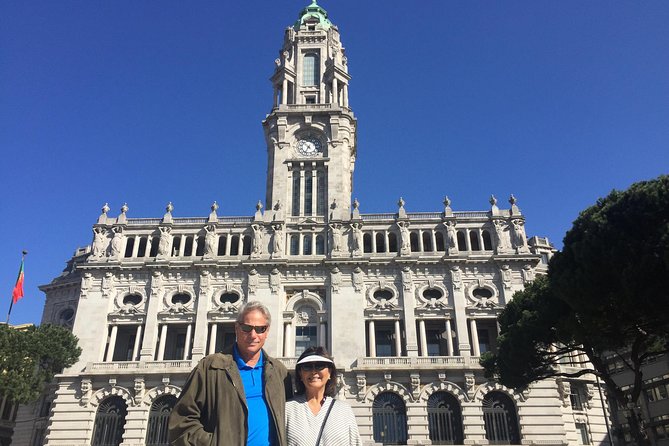
After the “cultural beacon” stops, the route shifts toward civic and commercial Porto. The highlights include the Town Hall and Mercado Ferreira Borges, which is the market of Ferreira Borges.
This is where the story turns practical again. Porto’s 1800s to 1920s growth is not only about art and cafés. It is also about how a city organizes power and trade. Civic buildings show who was shaping policy and public life. Markets show how goods moved and how the city fed itself and sold what it produced.
If your travel style is equal parts history and people-watching, market and civic stops help you understand who the architecture was built for. You start to notice how “important” buildings tend to cluster where movement and business were already happening.
Also, markets and civic spaces often give you the best lighting for photos during a walking tour, because you’re often near open areas and grand façades.
Palácio da Bolsa and Ponte D. Luís I, commerce meets the iconic view
The tour includes Palácio da Bolsa, the Stock Exchange Palace, and then the walk ends at Ponte D. Luís I, the Luís I Bridge.
Palácio da Bolsa: where wealth had a home
A stock exchange palace tells you everything about a city that was riding a wave of trade. On this tour, Palácio da Bolsa is framed as a major stop within Porto’s growth and influence. It is the kind of place where business culture becomes architecture.
Even if you only see it from the outside, it helps you connect the dots from the earlier rail and market themes. You see that Porto’s industrial and commercial engine needed visible, permanent spaces. That is what this kind of landmark represents.
Ponte D. Luís I: closing the loop with the Douro crossing
Then you reach the bridge, one of Porto’s defining views. Ponte D. Luís I is included because it ties into how Porto connected across the Douro and how the city’s expansion needed physical links, not just money and plans.
Walking to the bridge also gives your brain a payoff moment. You started at São Bento, moved through culture and commerce, and then you land at a crossing that shows how the city works in three dimensions.
If you’re only in Porto for a short time, finishing around one of the most famous bridge viewpoints is a smart way to leave with a visual memory that sticks.
Private guide value, and what André’s service style means for you
This is a private tour. That matters because it changes how the walk feels. You can ask questions without worrying about holding up a big group, and your guide can pace the day around what you care about most.
The tour description says it is led by a professional art historian guide, so you’re getting interpretation of the architecture and what it signals, not just a route list. And the feedback highlights André as a standout guide. In the notes from past guests, André is praised for a lot of knowledge, being happy to answer questions, and even helping with scheduling when someone could not attend at the booked time by offering a different tour time.
That kind of flexible service is not guaranteed in every city. It’s a real value add, especially if your Porto schedule is tight.
So if you want a guide who can talk about architecture with clarity, answer follow-ups, and adapt when plans shift, this tour aligns well.
Price, timing, and logistics that actually matter
The price is $25.13 per person, and for a 2 to 4 hour private walking tour, that’s often reasonable if you care about a guided explanation instead of just self-guided wandering. Since the tour is private, the “value” comes from avoiding the generic version of history you get from audio guides.
Timing is another practical factor. The tour runs for about 3 hours around the historic city center, and you should assume you’ll be walking most of that time. If you are sensitive to cobblestones or you know you tire quickly, consider whether you want a slower version of Porto, or bring water and plan comfortable shoes.
The included items focus on the guide experience. You get a local guide and a professional art historian guide, plus the private tour setup. Hotel pickup and drop-off are available only if you choose that option, and transportation to and from attractions is not included. So if you do not have hotel pickup, you’ll want to get yourself to São Bento.
You also get a mobile ticket, which is convenient. Less time hunting for printed passes.
Who should book Modern Art Oporto
This tour is a good fit if you want:
- A guide to explain Porto’s architecture from the 1800s through the 1920s
- A private format where questions are welcome
- A walking route that hits major landmarks without turning into a long day of transit
It is less ideal if:
- You want a relaxed, slow sightseeing stroll with lots of long breaks
- You’re hoping for a full food or drink experience, since food and drinks are not included
- You want to avoid walking entirely, since the tour has a moderate physical fitness requirement
It also helps if you like connecting culture to the built environment. This tour does that. You see cafés, bookstores, markets, civic buildings, and commerce architecture as parts of one changing city.
Should you book this tour?
I’d book it if you like Porto for its details and you want a guide to help you read those details. The combination of São Bento as a strong start, the cultural stops like Café Majestic and Livraria Lello & Irmão, and the commerce and view-makers like Palácio da Bolsa and Ponte D. Luís I creates a satisfying arc.
If you’re the type who enjoys learning while walking, this is one of the best ways to make the city feel less like a collage and more like a story.
If you’re unsure, think about one thing: do you want to spend your time chasing explanations, or do you want someone to hand you context as you move? This tour leans firmly toward the second option.
FAQ
Where is the tour meeting point?
The meeting point is Porto’s Railway Station of São Bento (São Bento Railway Station).
How long is the tour?
It lasts about 2 to 4 hours, with the walk described as around 3 hours through the historic city center.
Is this a private tour?
Yes. It is a private tour, with only your group participating.
Who leads the tour?
You’ll have a local guide and a professional art historian guide.
Is hotel pickup included?
Hotel pickup and drop-off are included only if you select the option. Transportation to and from attractions is not included otherwise.
Is food and drink included?
No. Food and drinks are not included.
Do I need moderate physical fitness?
Yes, the tour asks for a moderate physical fitness level.
Are children allowed?
Children must be accompanied by an adult.
How does cancellation work?
Free cancellation is available up to 24 hours in advance for a full refund. If canceled less than 24 hours before the start time, the amount paid is not refunded. If the experience is canceled due to minimum traveler requirements, you’ll be offered another date or a full refund.