
Reviewed · WALKING TOURS
LGBTour Porto: Walk through Porto, discover the LGBTQIA+ History
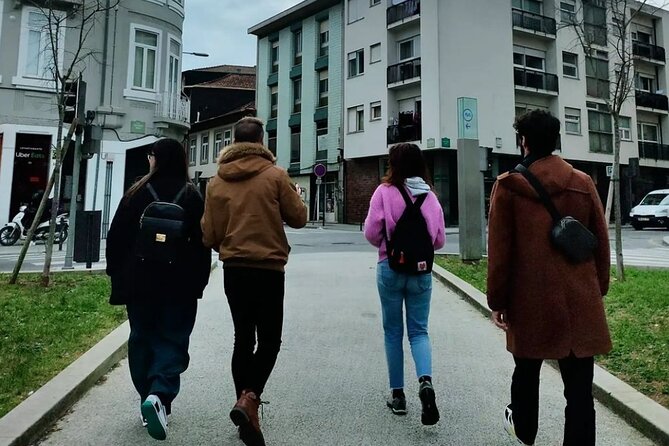
Porto changes when you walk with queer memory. This 3-hour LGBTQIA+ walking tour gives you a different way to read the city, from pride-march locations to places that shaped queer culture and visibility.
I really like how Ricardo (Ricardo Barros) turns ordinary streets into a story you can feel, with personal context that keeps the tour moving. I also love that the pacing is relaxed and human, with time to ask questions and connect, not just hear facts.
One thing to consider: it’s still a walking tour. If you prefer minimal walking, plan for comfort and take the slower moments when the group stops to breathe.
In This Review
- Key takeaways before you go
- A walk that reads Porto like a map of queer memory
- Meeting at Av. de Fernão de Magalhães and walking into the city’s quieter threads
- Stop 1: Campo 24 de Agosto Garden, where pride history starts
- Stop 2: Rua de Santa Catarina, tourism’s power to change the meaning of places
- Stop 3: Praca da Republica and Teófilo Braga Garden, pride today meets queer books
- Stop 4: Livraria aberta, why queer business matters more than you think
- The busy streets interlude: students, teaching, and social change
- Stop 5: Tribunal da Relação do Porto, dates, justice, and the cost of rights
- Stop 6: Miradouro das Virtudes, Douro views and a personal ending
- Price and value: what $38.45 buys you in real terms
- How to plan your day around this tour
- Who this LGBTQIA+ Porto walking tour suits best
- Should you book this tour?
- FAQ
- How long is the LGBTQIA+ walking tour in Porto?
- What is the price per person?
- Is the tour offered in English?
- Where do I meet the guide and where does it end?
- How big is the group?
- Is there a mobile ticket?
- Can I get a full refund if I cancel?
Key takeaways before you go
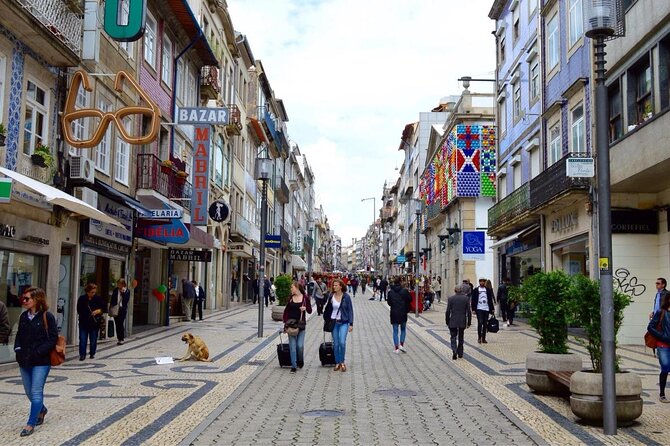
- See pride history in real places where marches and community life shaped Porto
- Queer bookstores stop the tour from feeling like a lecture and turn it into living culture
- A small group max of 15 keeps the vibe conversational, especially for solo visitors
- Morning or afternoon start times help you match your energy and Porto sightseeing plans
- End at Miradouro das Virtudes for a Douro view plus a thoughtful closing chat
A walk that reads Porto like a map of queer memory
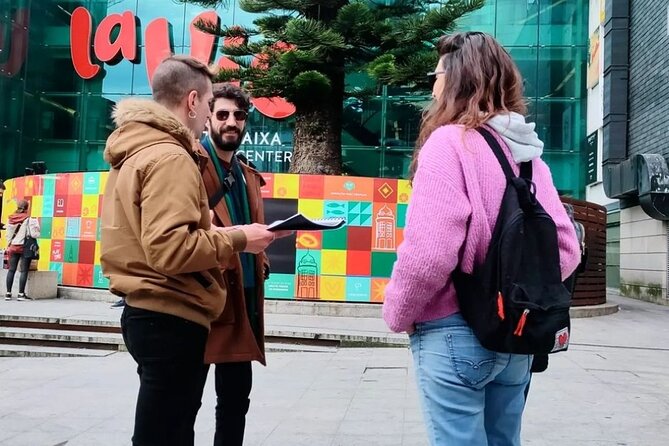
If you only see Porto from the main viewpoints, you miss layers. This tour is built to help you notice what tourism tends to cover up. You’ll look at familiar areas and then reset your eyes, asking what changed, who benefited, and who had to fight just to exist openly.
What makes this one different is the tone. It is not a checklist of landmarks. It is a conversation-led walk, with pauses that let the story land. Ricardo brings lived-in perspective, and you can feel the care behind it, especially when the route connects past struggle to today’s queer community presence.
Also, the logistics are simple. You get a mobile ticket, it runs in English, and the stops you’ll visit are free to enter. Even better, the group stays small, so you are not swallowed by a crowd.
More Porto on foot:
- Porto Walking Tour, Lello Bookshop, River Cruise and Cable Car★ 5.0 · 3,354 reviews
- Experience Porto’s Charm: 3-Hour Guided Walking Tour★ 5.0 · 2,432 reviews
- Porto: 3-Hour Guided City Highlights Walking Tour★ 4.8 · 2,050 reviews
- Porto: Wine Tasting with Tapas Walking Tour★ 4.4 · 1,541 reviews
Meeting at Av. de Fernão de Magalhães and walking into the city’s quieter threads
You meet at Av. de Fernão de Magalhães 43 in Porto. From there, the tour builds momentum step by step, starting close to the beginning of the story and ending with a view that feels like a mental exhale. The tour ends at Calçada das Virtudes 5, at the Miradouro das Virtudes area.
Two practical tips help you enjoy this more:
- Wear shoes you trust. Porto streets can be slick or steep depending on the day.
- Bring a curious attitude. The best moments come from the back-and-forth, not just listening.
Ricardo keeps the pace comfortable. The tour is designed to cover a lot in about 3 hours, but it does not feel rushed.
Stop 1: Campo 24 de Agosto Garden, where pride history starts
The tour kicks off at Campo 24 de Agosto Garden. Here you pass the first location linked to the first LGBTQIA+ pride march. It’s the kind of start that matters. Instead of starting with generic “gay Porto” vibes, you start with the origin point, the real place tied to collective action.
What I like about this opening stop is how it frames the whole route. You quickly learn that visibility was not handed over like a brochure. It was built through community organizing, risk, and persistence. Even if you have never studied Portuguese queer history before, this gives you a clear foundation.
This stop is short, about 20 minutes, and admission is free. You’re not trapped in a lecture either. You’re just handed a lens.
Stop 2: Rua de Santa Catarina, tourism’s power to change the meaning of places
Next up is Rua de Santa Catarina, where you analyze how time and tourism have shifted an area tied to the LGBTQIA+ community. The key idea here is not nostalgia. It is observation. How does a street function now, and how did it function when queer people needed spaces to be safer, more private, or more visible?
You’ll look at what people notice today versus what the community once needed to navigate. That contrast makes Porto feel more honest. Tourist energy is great, but it can also blur context. This stop teaches you to look past the present-day storefront rhythm.
Expect about 10 minutes here, free entry, and a chance to ask what changed and why.
Stop 3: Praca da Republica and Teófilo Braga Garden, pride today meets queer books
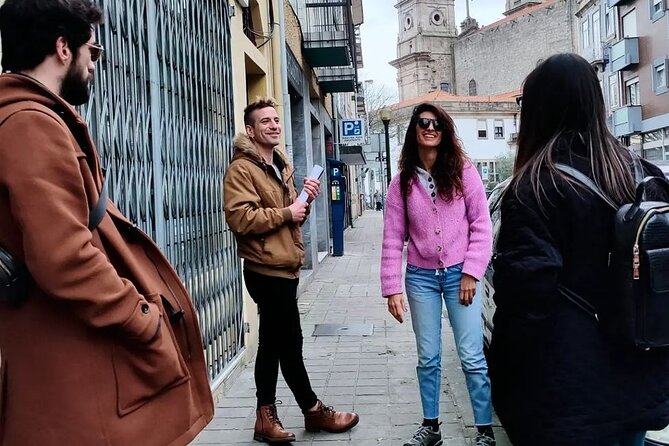
Then the tour flows into Praca da Republica, one of the busiest nodes in Porto. Ricardo helps you reflect in a square where the Pride march is currently starting, so the place connects modern celebration to older struggles. It is a clever way to make history feel current instead of stuck in the past.
You’ll also encounter Teófilo Braga Garden and stop for time at an LGBTQIA+ themed bookshop. This part of the tour is valuable for a simple reason: books carry community memory. They preserve names, arguments, styles of activism, and the stories that keep identities from being erased.
The Praca da Republica segment runs about 40 minutes. If you love people-watching, this is also where you’ll see how the city moves around the queer story instead of outside it.
More of the old city, layer by layer:
- Douro Valley: Historical Sites, Wine Experience, Lunch & Cruise
★ 5.0 · 5,133 reviews - Porto: An Intimate Fado Show in a Historical Tavern
★ 4.8 · 2,055 reviews - Porto: Historic City Center Walking Tour
★ 4.7 · 1,172 reviews - Porto: Private Tour of the Historic City in a Ford T Car
★ 4.8 · 932 reviews
Stop 4: Livraria aberta, why queer business matters more than you think
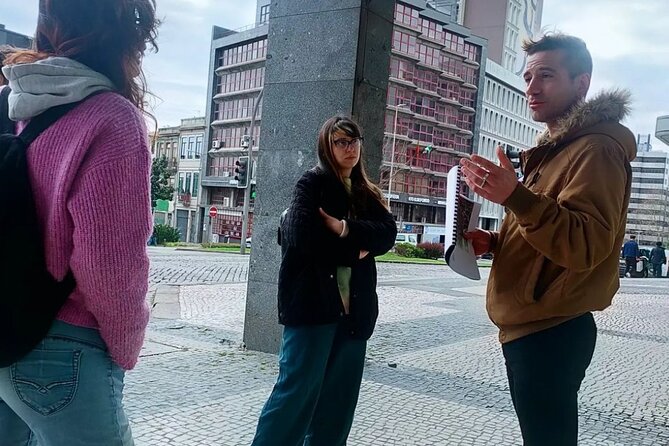
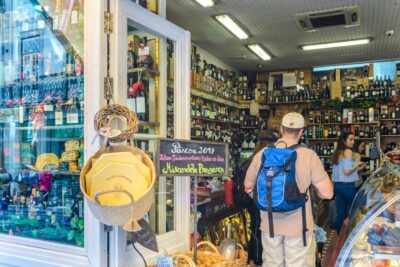
The book stops continue at Livraria aberta. This is where the tour shifts from “history locations” into “living queer culture.” You’ll learn about its link to Diversity and Inclusion Books, and the wider idea of the importance of queer business.
This matters because queer culture does not survive on marches alone. It needs spaces that welcome, employ, publish, and share. In this shop, Ricardo connects you with LGBT+ writers and discusses how representation changes society, not just entertainment.
The time here is around 30 minutes, and it stays practical. You’ll leave with authors and themes you can look up later, which makes the tour keep working long after the walk ends.
The busy streets interlude: students, teaching, and social change
There’s a mid-tour stretch where you pass through a very busy part of Porto, full of tourist references and a strong student presence. This is not random routing. The point is to connect the city’s day-to-day momentum to ideas about teaching and social change tied to diversity and inclusion.
I like this segment because it pulls the tour out of “marker tourism,” where you only collect photos at famous spots. Instead, you connect queer history to education, attitudes, and the way communities grow over time. It also makes Porto feel like a living place, not a museum.
Time here can vary depending on the pace of the group, but you get enough of a break from the heavy-history moments to reset.
Stop 5: Tribunal da Relação do Porto, dates, justice, and the cost of rights
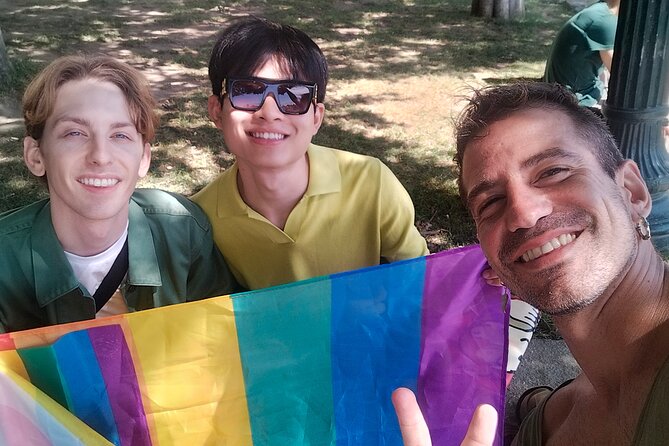
Near the end, you pass in front of Tribunal da Relação do Porto. Ricardo explains key dates in the city and Portugal’s queer history, with the statue of justice acting like a visual anchor.
This stop hits differently than the pride-march sites because it brings the legal and social weight of history into view. You are not just learning what happened. You are seeing how power and institutions shaped who could be safe, who could be visible, and who faced consequences.
Expect about 25 minutes here. It stays focused, and it’s a strong moment if you care about how activism intersects with law, culture, and public life.
Stop 6: Miradouro das Virtudes, Douro views and a personal ending
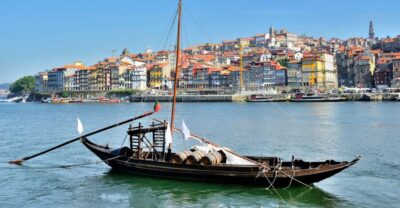
The tour finishes at the Miradouro das Virtudes, near Chafariz das Virtudes. This viewpoint is known for its diversity, its beauty, and the sweeping view over the Douro. It’s a fitting ending. After history and meaning, you get calm and sky.
The closing time, about 30 minutes, is more reflective. Ricardo shares how he experienced the queer movement growing through his youth in Porto, then summarizes the tour’s key themes and what they can mean for your understanding of the city today.
If you like tours that end with a human moment rather than a hard stop, you’ll appreciate this. It feels like you’re leaving the city with a new sense of sight.
Price and value: what $38.45 buys you in real terms
At $38.45 per person, this tour is priced like a mid-range walking experience, but the value comes from three places.
First, the route is not built around monuments that anyone can read from a distance. You go to queer-relevant locations and queer-centered cultural stops like Livraria aberta, which adds something you cannot easily reproduce on your own in a short time.
Second, the group size is capped at 15 travelers, which makes Q&A and connection realistic. That matters when the topic is personal and socially complex.
Third, the duration is about 3 hours, and the stops stay free to enter. So you are paying mainly for the storytelling, the pacing, and the local perspective.
One more value note: the tour is offered in English and you receive confirmation at booking time, which keeps things smooth if you are planning around flights and other activities.
How to plan your day around this tour
This walk can fit nicely at the start or middle of your Porto schedule. If you have never visited, the route helps you orient yourself through the city’s social geography. You learn what’s nearby and what has meaning, so later visits feel sharper.
If you are already sightseeing, choose morning or afternoon based on your energy. Morning tends to be great for fresh focus. Afternoon can work if you want this tour as a thoughtful reset before dinner.
Practical packing ideas:
- Bring water. Porto walks add up.
- Bring a small notebook or notes app. Ricardo’s storytelling can give you names and themes to look up later.
- Have a light plan afterward. The viewpoint ending is scenic, so you might want an easy meal nearby rather than a long sprint to another attraction.
Who this LGBTQIA+ Porto walking tour suits best
This tour is especially good if you want your Porto visit to feel human. If you care about LGBTQIA+ history, queer culture beyond nightlife, and how social change shows up in real spaces, you will likely enjoy it a lot.
It is also a strong option for solo travelers. The small group and conversational tone make it easier to ask questions and feel included without forcing awkward small talk.
Finally, it suits people who like a guided route that stays away from pure checklist sightseeing. If you want fewer generic postcards and more context, this is your kind of walk.
Should you book this tour?
I’d book it if you want Porto through a queer lens and you value lived-in context, not just facts. The combination of pride-linked sites, queer bookstore culture, and the viewpoint ending makes it both educational and emotionally satisfying.
If you hate walking, or you want a tour that never gets introspective, you might find it heavier than expected. But for most people, the relaxed pacing and human storytelling keep it balanced and worth your time.
If you want one activity that will change how you see the city for the rest of the trip, this is a strong choice.
FAQ
How long is the LGBTQIA+ walking tour in Porto?
It lasts about 3 hours.
What is the price per person?
The price is $38.45 per person.
Is the tour offered in English?
Yes, the tour is offered in English.
Where do I meet the guide and where does it end?
You meet at Av. de Fernão de Magalhães 43, 4300-169 Porto, Portugal. The tour ends at Calçada das Virtudes 5, 4050-629 Porto, Portugal, at the Miradouro das Virtudes viewpoint.
How big is the group?
The tour has a maximum group size of 15 travelers.
Is there a mobile ticket?
Yes. The tour includes a mobile ticket.
Can I get a full refund if I cancel?
Yes. You can cancel up to 24 hours in advance for a full refund. If you cancel less than 24 hours before the start time, the amount paid is not refunded.
Fresh off the Porto quays






Walking Tours, compared.
Porto Walking Tour, Lello Bookshop, River Cruise and Cable Car
Read our review →
Experience Porto’s Charm: 3-Hour Guided Walking Tour
Read our review →

Walking Tour, Lello Bookshop, Boat and Cable Car
Read our review →Browse the lists this tour appears in