
Reviewed · WALKING TOURS
Discover Porto A Private Walking Tour with Authentic Tasting
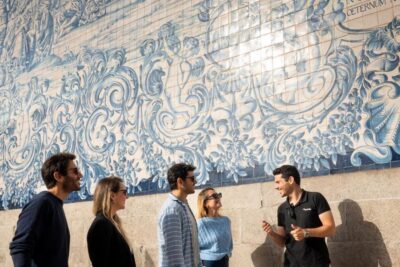
Porto teaches history through tile and street life. This private 3-hour walk connects you to the city’s big-name sights and quieter corners, with an end stop built around an authentic tasting. I especially love the azulejo panels at São Bento, and I love how the experience stays personal thanks to the private format with guide Thiago Costa.
One thing to plan for: Porto is hilly. You’ll be walking up and down, so wear supportive shoes and keep your pace steady, especially if you’re not used to city hills.
In This Review
- Key highlights you will actually feel
- Starting at the Welcome Center, then straight into Porto’s landmarks
- São Bento Train Station and its azulejo history panels
- Avenida dos Aliados, Porto’s grand boulevard moment
- Mercado do Bolhão for Porto’s everyday food culture
- The Belle Époque café interior stop, where the city slows down
- An 18th-century theater stop, architecture plus performing arts
- Ponte Luís I over the Douro, the bridge that ties viewpoints together
- Sé Cathedral, Porto’s Romanesque-to-Baroque story at the city’s core
- Clérigos Church complex and its tower, Porto’s skyline signal
- The authentic tasting finish, wine and Port that matches the walk
- Why the private format with Thiago Costa feels different
- Price and value for a $72.09, 3-hour private Porto walk
- Practical tips so you enjoy the full 3 hours
- Should you book this private Porto walking tour with authentic tasting?
- FAQ
- How long is the Porto private walking tour?
- Where does the tour start and end?
- Is this tour private?
- What language is the tour offered in?
- Does the tour include tastings?
- What is the cancellation policy?
Key highlights you will actually feel
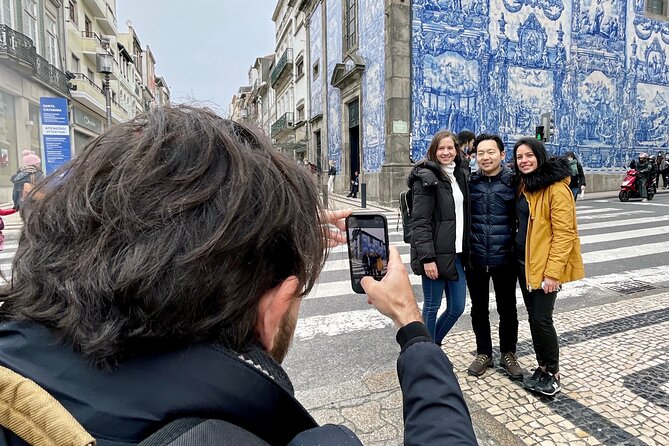
- São Bento’s azulejo storytelling: iconic, free to enter, and easy to appreciate even if you rush
- Avenida dos Aliados as Porto’s centerline: big architecture and city energy in a short stretch
- Mercado do Bolhão for real daily food culture: a quick, sensory market stop that adds texture
- Belle Époque café and an 18th-century theater: classic interiors and performance history in one walk
- Ponte Luís I, a UNESCO bridge: double-deck views over the Douro that make photos and orientation easier
- Sé Cathedral and Clérigos complex stops: Romanesque-to-Baroque clues plus Porto’s skyline symbol
Starting at the Welcome Center, then straight into Porto’s landmarks
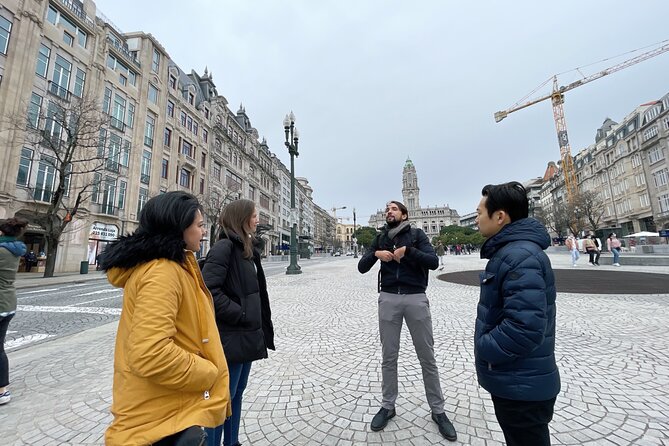
You meet at the Loja Interativa Porto Welcome Center on Praça de Almeida Garrett, at the city’s administrative and visitor crossroads. It’s a smart start because you’re already in the middle of Porto’s action, and it makes the rest of the route easier to follow on your own later.
From the first stretch, you get a clear sense of how Porto “works”: stations, boulevards, markets, places of worship, and viewpoints all connected by walking. This is not a long bus tour where you watch from a window. It’s a city-on-foot tour, which means you pick up the feeling of how locals move and where they gather.
More eating and drinking in Porto:
- From Porto: Douro Valley w/ Boat Tour, Wine Tasting & Lunch★ 4.7 · 19,061 reviews
- Douro Valley Small-Group Tour with Wine Tasting, Lunch and Boat★ 5.0 · 3,642 reviews
- Porto: Cálem Cellar Tour, Fado Show & Wine Tasting★ 4.4 · 3,530 reviews
- Porto: Cockburn’s Port Lodge Tour and Tasting★ 4.8 · 3,360 reviews
São Bento Train Station and its azulejo history panels
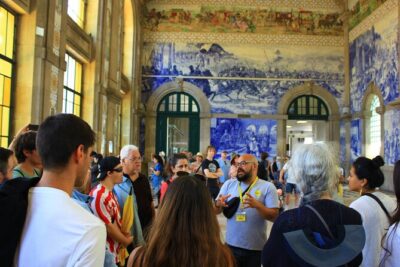
São Bento is the kind of place you could pass by fast and miss. Instead, you pause at Porto’s main train hub and focus on what makes it special: the famous azulejo tile panels that depict scenes from Portuguese history.
This is one of those stops that feels instantly readable. Even if you do not know every figure, you can still appreciate the storytelling style and the craft of the tiles. It’s also practical because the station is free to enter, so you can enjoy it without budgeting time for tickets.
Tip for your visit: stand back enough to take in the full panel effect, then step closer to notice how the scenes are organized. Your photos will look better when you capture both the tiles and the station setting.
Avenida dos Aliados, Porto’s grand boulevard moment
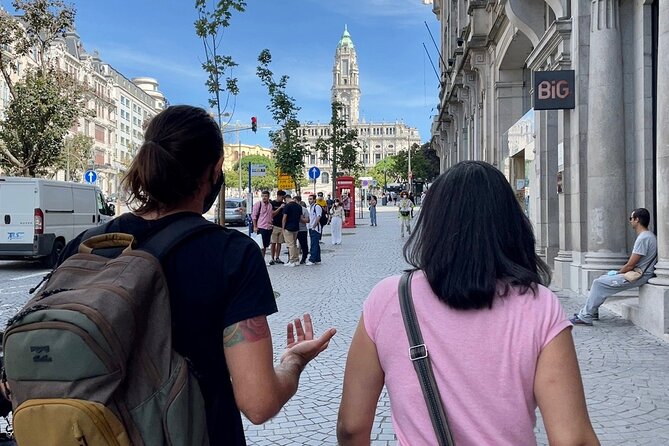
Next, you head to Avenida dos Aliados, Porto’s main boulevard. This is where the city shows its big, formal side, with handsome buildings and the City Hall area anchoring the street.
This stop works because it’s short but memorable. You get architecture, movement, and a sense of where public life centers. If you want a quick way to understand the city’s layout, this is one of the easiest clues on the route.
Avenida dos Aliados is also a good reset point if you need a bathroom break or a quick look at your surroundings before continuing uphill.
Mercado do Bolhão for Porto’s everyday food culture
Mercado do Bolhão is a compact detour into local daily life. You’re there for a short stop, but it’s enough to shift your brain from monuments to people.
Think: stalls, smells, and the constant motion of a working market. It sells things like fresh produce, meats, fish, and regional delicacies. Even when you are not shopping, you learn how Porto eats and how market conversations shape the vibe.
One nice part of this stop is that it adds sensory context. Later, when you do your Port and wine tasting, you’ll have a better sense of what “regional” means here.
The Belle Époque café interior stop, where the city slows down
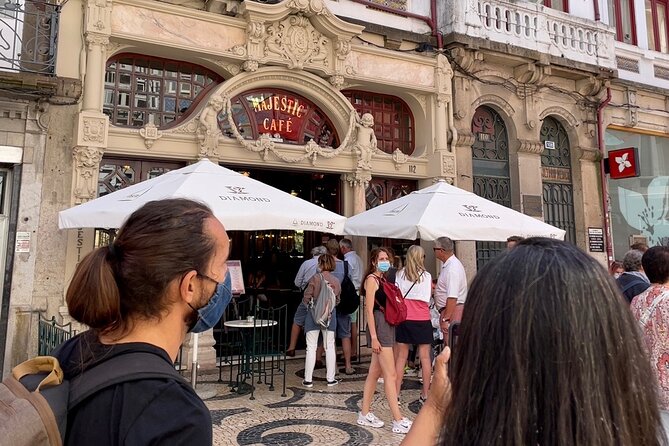
At some point on the walk, you make time for a historic café with an ornate Belle Époque interior. It opened in the 1920s and has been a meeting place for intellectuals, artists, and locals.
Even if you do not sit down for a long coffee, you get something valuable: a break from the street rush and a look at Porto’s softer, creative side. The décor is described as opulent, with intricate woodwork, gilded mirrors, and sparkling chandeliers.
This stop is not just pretty. It’s useful. It shows you another layer of Porto beyond bridges and churches, the layer tied to conversation and culture.
What to do in the moment: take 2 minutes to scan the room before you ask questions. The guide can point out design details, and you’ll understand what you’re looking at.
More Porto on foot:
- Porto Walking Tour, Lello Bookshop, River Cruise and Cable Car
★ 5.0 · 3,354 reviews - Experience Porto’s Charm: 3-Hour Guided Walking Tour
★ 5.0 · 2,432 reviews - Porto: 3-Hour Guided City Highlights Walking Tour
★ 4.8 · 2,050 reviews - Porto: Wine Tasting with Tapas Walking Tour
★ 4.4 · 1,541 reviews
An 18th-century theater stop, architecture plus performing arts
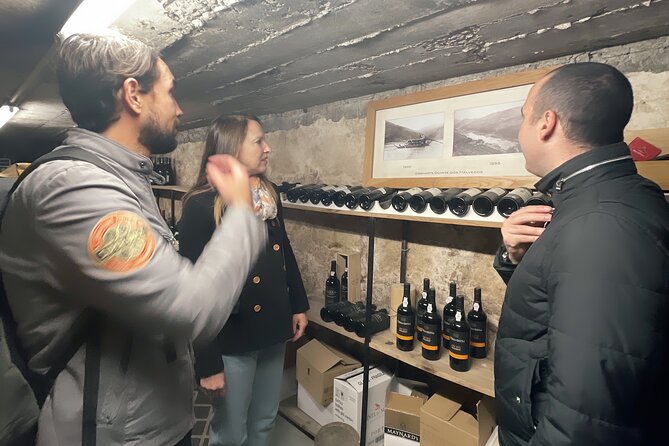
You also visit a historic theater dating to the 18th century. It’s known for its exquisite architecture and its long artistic role in the city.
This is a good stop if you like the idea that buildings have careers. The theater has hosted everything from classical plays to more modern work, which gives you a time-bridge from older Porto to present-day creativity.
Like the café, this stop helps balance the route. After markets and major landmarks, the theater brings texture and culture. It makes the tour feel like a guided walk through different eras, not just a checklist of famous sights.
Ponte Luís I over the Douro, the bridge that ties viewpoints together
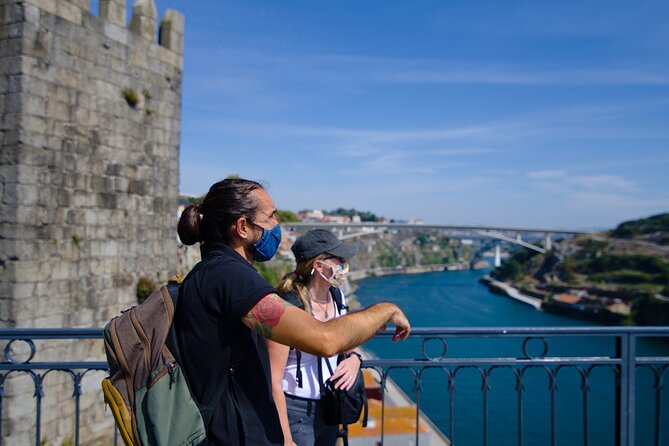
Ponte Luís I is Porto’s emblematic double-deck iron bridge over the Douro River. The lower level is for vehicles, and the upper level is for pedestrians. It’s also recognized as a UNESCO World Heritage Site.
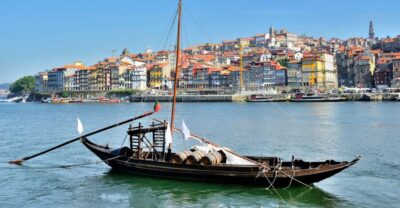
This is one of the best “orientation” stops you can take on a walking tour, because it gives you a big-picture moment. You connect Ribeira on one side with Vila Nova de Gaia on the other, and you get the river and city layout in a single glance.
Why this matters for you: when you later walk the Ribeira area on your own, you’ll already understand how the river bends, where the neighborhoods connect, and why this bridge is so central to the city’s feel.
Sé Cathedral, Porto’s Romanesque-to-Baroque story at the city’s core
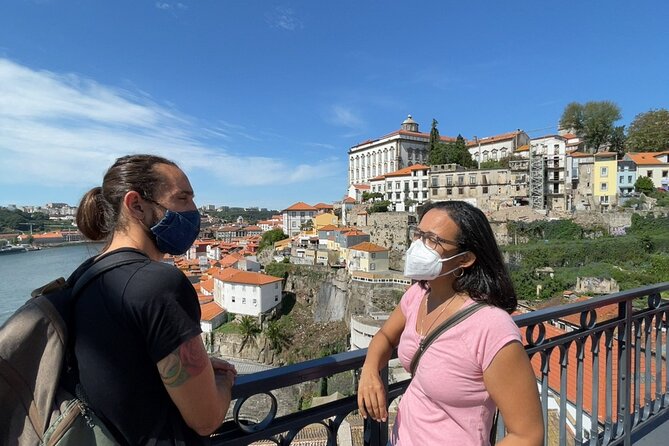
Next comes the Catedral da Sé do Porto. The cathedral dates back to the 12th century and blends Romanesque, Gothic, and Baroque styles. It’s the seat of the Bishop of Porto, which adds weight beyond architecture.
This stop is about seeing layers. You can look at the façade and notice how different styles overlap through time, like the building is a timeline in stone.
Practical note: even if you only admire the exterior, this is still a high-value stop because the façade details are the point. It’s also a central anchor in Porto’s older city area, so you’re learning the city’s “spine,” not just passing through it.
Clérigos Church complex and its tower, Porto’s skyline signal
Then you focus on the Clérigos tower, the skyline symbol tied to the Clérigos Church complex. The idea is simple but powerful: it represents Porto’s architectural legacy and the influence of the clergy in the city’s past.
This is a “look up” kind of stop. Instead of being only about façade details at street level, you get that skyline connection. It helps you understand why Porto photos so often include tall silhouettes and church towers.
If you’re short on time later: this stop makes your self-guided exploring easier, because you’ll start noticing tower lines and sight angles when you move around.
The authentic tasting finish, wine and Port that matches the walk
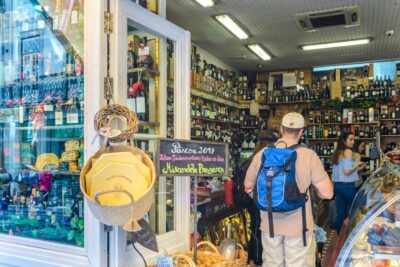
The tour’s ending includes a wine and Port tasting. In at least one described tasting setup, it happens at a tasting room affiliated with a small wine shop that sells local wine and Port.
This is exactly what makes the tasting feel earned. You have already seen the city’s older structures, walked through the areas tied to daily life, and looked at the river connection that made Port shipping possible. The last part of the tour is not random. It fits the geography and the story you just walked through.
How to make the most of it: ask your guide what you should try based on what you’ve liked so far. If you prefer something lighter, say so. If you want a sweeter Port style, ask directly. With a private guide, you get real back-and-forth.
Also, your guide may send follow-up recommendations afterward. In one experience, Thiago promised an email list of places to go and see, and the recommendations were described as spot-on. If you do not see the email, check your spam folder or request a resend.
Why the private format with Thiago Costa feels different
What really elevates this tour is the way it moves with you. Thiago Costa brings a friendly, fun energy, and he answers questions with patience and detail. People also describe him as flexible, adjusting when schedules run late, including starting 15 minutes later due to a delay.
Another strong point: he tailors the walk to your interests and keeps you engaged. If you ask a lot of questions, you get a lot of answers. If you want more story and less lecture, you get that too.
You’ll also get more than the obvious photo stops. A common theme is getting shown quieter corners and lesser-known spots, which helps the tour feel like learning Porto, not just ticking off landmarks.
Price and value for a $72.09, 3-hour private Porto walk
At $72.09 per person for about 3 hours, this is not a budget group tour price. You are paying for private time, a guided route through major highlights, and a tasting added at the end.
For me, that price makes sense if you fit one of these situations:
- It’s your first day in Porto and you want to orient fast.
- You like asking questions and getting specific answers.
- You want a structured route that still leaves room for real conversation.
- You care about the food and wine angle, not just monuments.
If you only want a casual stroll and you are comfortable reading maps on your own, you might spend less elsewhere. But if you want your time to feel guided, with a tasting finish, this is a solid value for what you get.
Practical tips so you enjoy the full 3 hours
Porto hills are real. Plan for walking up and down, bring supportive shoes, and take your time at corners. This matters most if you’re traveling with kids, older family members, or anyone who tires quickly on inclines.
Also, go in with a question list. The tour format works best when you treat it like a conversation. Ask about architecture, religion, city layout, or food and wine styles. That is how you turn landmarks into stories you remember.
One more small strategy: at each big landmark, pause first, then ask. Your guide can point out details faster when you are already looking closely.
Should you book this private Porto walking tour with authentic tasting?
Yes, I’d book it if you want a smart first look at Porto that mixes the iconic with the local, and ends with wine and Port instead of stopping at another viewpoint and calling it done.
Skip it if you dislike walking hills or if you only want broad, self-paced sightseeing without a guide shaping the route. For everyone else, the combination of landmark stops, market culture, and the tasting finish makes it a strong, no-drama way to understand Porto in a few hours.
FAQ
How long is the Porto private walking tour?
It is approximately 3 hours.
Where does the tour start and end?
It starts at Loja Interativa Porto Welcome Center, Praça de Almeida Garrett 27, 4000-069 Porto, Portugal. It ends at Pátio d’as Marias, Rua de Cedofeita 269, 4050-180 Porto, Portugal.
Is this tour private?
Yes, it is a private tour or activity, so only your group participates.
What language is the tour offered in?
The tour is offered in English.
Does the tour include tastings?
Yes. The experience includes a wine and Port tasting at the end.
What is the cancellation policy?
Free cancellation is available up to 24 hours in advance of the experience’s start time for a full refund. If you cancel less than 24 hours before, the amount paid is not refunded.
Fresh off the Porto quays






Walking Tours, compared.
Porto Walking Tour, Lello Bookshop, River Cruise and Cable Car
Read our review →
Experience Porto’s Charm: 3-Hour Guided Walking Tour
Read our review →

Walking Tour, Lello Bookshop, Boat and Cable Car
Read our review →Browse the lists this tour appears in