
Reviewed · BRAGA & GUIMARãES DAY TRIPS
Authentic Braga & Guimarães: Small Historical Group Tour
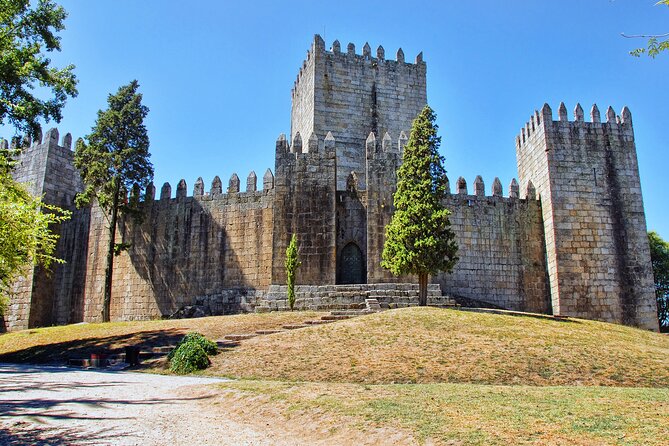
A morning ride to Portugal’s oldest legends feels quietly magical. This small-group day trip brings you from Guimarães Castle down into medieval streets, then on to Braga for two standout sanctuaries and the cathedral. It is a compact day that still feels full, because the guide ties the sights together instead of treating them like checkboxes.
I especially loved the small-group pace (max 8 people) and the way the day stays comfortable, not rushed. My other big favorite was the history thread, from the legend of Afonso Henriques at Igreja de São Miguel do Castelo to the dramatic victory story marked at Largo da Oliveira.
One thing to consider: the schedule is packed, and you will do moderate walking on hilly, old-town streets. Also, if your group includes multiple languages, the guide may repeat explanations, which can stretch the timing a bit.
In This Review
- Key highlights you will feel
- Getting from Porto without turning the day into a commute
- Guimarães Castle hilltop start, then a walk that teaches the city
- Igreja de São Miguel do Castelo: a Romanesque church with a royal legend
- The 15th-century palace museum: power, wear and tear, and careful restoration
- Rua de Santa Maria: one of Guimarães’ early connectors
- Praca de S. Tiago: where the town breathes
- Largo da Oliveira and the olive tree symbolism
- Padrão do Salado: turning a battle into a monument
- Igreja de Nossa Senhora da Oliveira: monastery origins to Gothic rebuild
- Braga Cathedral, then two different styles of Christian spectacle
- Se de Braga: the cathedral that predates nationhood by decades
- Bom Jesus do Monte: Via Crucis up the hill, then the Five Senses staircase
- Sanctuary of Our Lady of Sameiro: a quieter finish with mountain views
- Price and logistics: what makes this $70.60 feel fair
- The walking pace and how guides shape your experience
- Who this tour suits best
- Should you book this Braga and Guimarães day trip?
- FAQ
- What is the tour duration?
- When does the tour start?
- Is hotel pickup included?
- How large is the group?
- What languages are offered?
- Are monument entrances included in the price?
- Is lunch included?
- Is transportation provided?
- Do I need a ticket on my phone?
- What is the cancellation policy?
Key highlights you will feel
- Max 8 people: less crowd pressure, more real conversation, and easier photo pauses.
- Guimarães Castle descent: a fast “top to town” overview that makes the city instantly easier to understand.
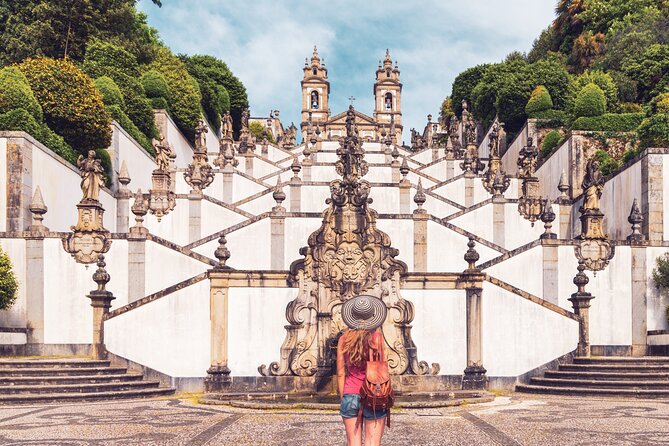
- Bom Jesus do Monte UNESCO steps: Via Crucis chapels, the Five Senses staircase, and huge panoramic payoff.
- Practical guide styles: guides like Cheila, Nuno, Francisco, and Brahim are repeatedly praised for clear English and smooth, safe pacing.
- Entrance access built in: monument entries are included for the key stops, plus bottled water and hotel pickup.
Getting from Porto without turning the day into a commute
This is the kind of day trip that works best when you are not trying to master train schedules or parking lots. You start at 8:30 am, and your pickup time gets emailed to you so you can plan breakfast and coffee without stress. From there, you ride in a premium air-conditioned vehicle, and you get bottled water for the road.
Why this matters: Braga and Guimarães are not next door. You want the time you pay for to be spent walking streets, looking at churches, and staring at views, not sitting around in transit. The small-group format (up to 8) also helps you feel like you have a plan, not a forced march.
North to Braga and Guimaraes, other trips:
- From Porto: Braga and Guimarães Full-Day Trip★ 4.6 · 3,951 reviews
- Best of Braga and Guimaraes Day Trip from Porto★ 4.5 · 2,552 reviews
- Porto: Guimarães & Braga Tour with Entry Tickets and Lunch★ 4.8 · 602 reviews
- From Porto: Braga & Guimarães with Lunch Small Group Tour★ 4.8 · 545 reviews
Guimarães Castle hilltop start, then a walk that teaches the city
You begin Guimarães from the upper part of town, near Guimarães Castle. The guide sets the scene with early Portugal, then you start descending into the city center. It is a smart order, because you get the big picture first, and then the streets and monuments start making sense as you move.
The walking here is not described as strenuous, but it is real terrain. If your legs are sensitive, wear shoes you trust, and take your time in the older stone lanes. The payoff is that Guimarães feels like a story you can follow, not a list.
Igreja de São Miguel do Castelo: a Romanesque church with a royal legend
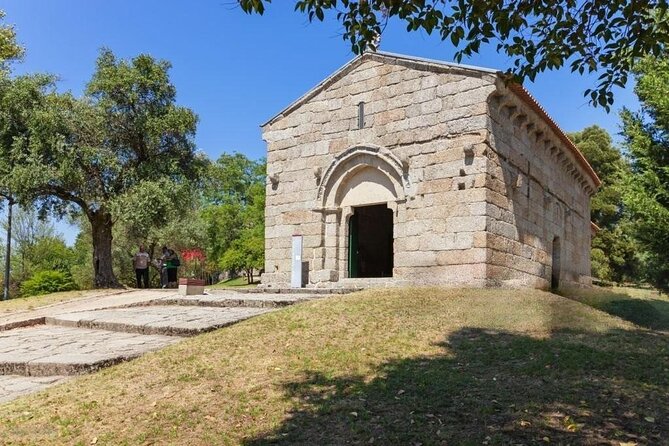
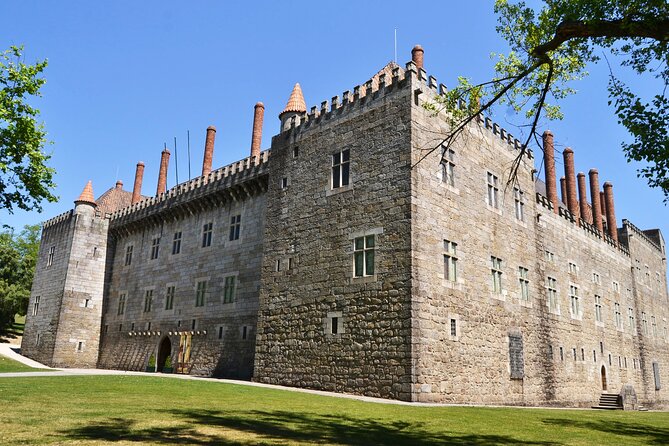
Next comes Igreja de São Miguel do Castelo, a church with roots in the 13th century and classified as a national monument. It is Romanesque in feel, and it was rebuilt in the early 20th century to match its original appearance.
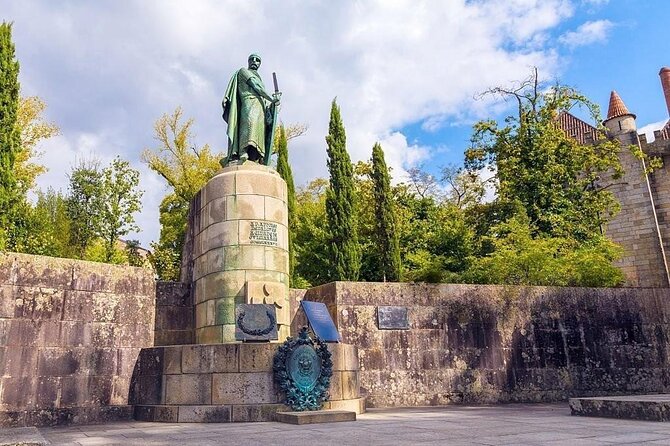
What makes this stop fun is the legend tied to the first king of Portugal, D. Afonso Henriques, who is said to have been baptized here. Even if you treat legends as lore rather than footnotes, it adds texture to the architecture. You are not only looking at stone, you are hearing how people attached meaning to place.
The 15th-century palace museum: power, wear and tear, and careful restoration
From the castle area you move toward a 15th-century palace linked to D. Afonso and his marriage to D. Constança de Noronha. Over the years, the building served multiple purposes, which led to wear and tear. Then, in the early 20th century, restoration began, and the palace now functions as a museum.
The museum focus is the kind of mix that often surprises people: tapestries, furniture, Chinese porcelain, and paintings. That combo matters because it shows Portugal was never isolated. This is local power, but it also reflects wider connections through art and objects.
Rua de Santa Maria: one of Guimarães’ early connectors
You then pass along Rua de Santa Maria, described as one of the first streets in Guimarães. The street’s role was practical, too, linking the convent of D. Mumadona Dias with the residential area and the castle.
This is the kind of stop I like for orientation. You get to see how the city was planned, where people likely moved, and why the medieval layout still shapes today’s atmosphere.
Other days out with Porto as the base:
- Aveiro and Costa Nova Half Day Tour from Porto with Boat Ride
★ 4.5 · 1,522 reviews - Porto: Douro Valley & Amarante Wine, Food & River Tour
★ 4.7 · 1,411 reviews - From Porto: Aveiro, Paiva Walkways, & Suspension Bridge Tour
★ 4.9 · 1,357 reviews - Aveiro: Half-Day Tour from Porto with Optional Cruise
★ 4.4 · 1,266 reviews
Praca de S. Tiago: where the town breathes
At Praca de S. Tiago, you land in a social square surrounded by typical Guimarães architecture, with restaurants, bars, and terraces. The legend here centers on the apostle James leaving an image of the Virgin Mary during pilgrimage.
There was a church built in the 12th century, but it was demolished in the 19th century. That detail helps you read the square more thoughtfully. It is not just a backdrop for lunch, it is a historical layer cake.
Largo da Oliveira and the olive tree symbolism
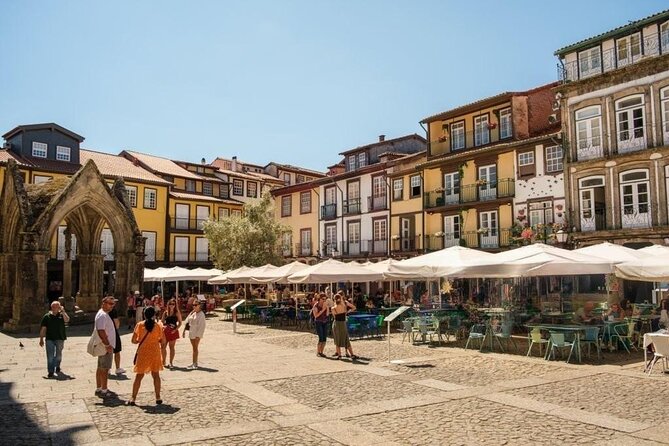
One of the most emblematic stops is Largo da Oliveira, where the name comes from an ancient olive tree tied to peace and tradition. The guide also connects the square to major medieval moments, including medieval courts and pivotal events in the formation of Portugal as a nation.
This stop is also where you can pause and take photos. The square’s vibe is part of why the guided format works here: you have enough context to see meaning, but still enough freedom to look around.
Padrão do Salado: turning a battle into a monument
Near Largo da Oliveira you will see the Padrão do Salado, a monument honoring D. Afonso IV’s victory over the Moors in the Battle of Salado (1340).
If you only remember battles from textbooks, this kind of on-street marker makes it real. You are standing in the physical place where a national narrative was given stone form.
Igreja de Nossa Senhora da Oliveira: monastery origins to Gothic rebuild
You close the Guimarães chapter at Igreja de Nossa Senhora da Oliveira (Colegiada de Guimarães). Origins trace back to a monastery founded in the first half of the 10th century by Countess Mumadona Dias. The current church was built in 1387 by order of King D. João I, following Gothic models.
This is one of those stops where the guide’s storytelling adds value. You start noticing how early Portugal grew from religious power and local governance. And you also see why Guimarães is treated as a cradle city, even centuries later.
Braga Cathedral, then two different styles of Christian spectacle
After Guimarães, you head to Braga. The day shifts from medieval “birthplace” energy to religious architecture that feels grand and organized, like it was designed to be seen from every angle.
Se de Braga: the cathedral that predates nationhood by decades
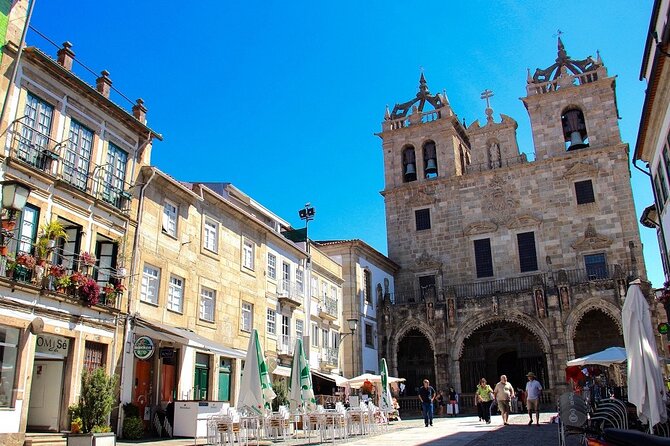
Braga Cathedral (Se de Braga) is the one you should not rush. Construction dates to the end of the 11th century, and it was dedicated to the Virgin Mary by Bishop D. Pedro. The guide frames it as the first Portuguese cathedral, built decades before the founding of the nation itself.
This timing matters. When you stand inside or outside a cathedral with that chronology, you understand why people built religious sites as anchors of identity. It is not only about worship. It is about continuity.
Your entrance here is included, so you can spend energy paying attention rather than figuring out tickets.
Bom Jesus do Monte: Via Crucis up the hill, then the Five Senses staircase
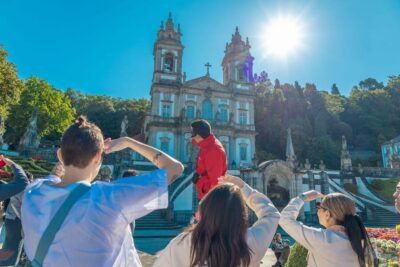
Next is Bom Jesus do Monte, a sanctuary with over 600 years of history and UNESCO recognition in 2019. It is described as part of the European Sacri Monti, created after the Council of Trent in the 16th century.
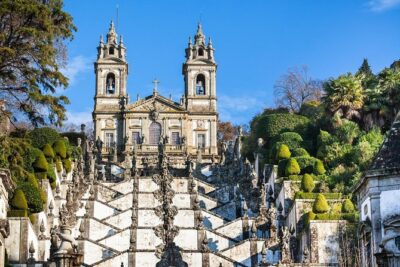
You will get the heart of it through the Via Crucis, with chapels, fountains, and sculptures representing the Passion of Christ. The route climbs the hillside and ends at a neoclassical church built between 1784 and 1811.
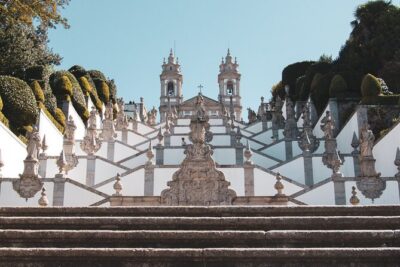
Then comes one of the most memorable visuals: the Staircase of the Five Senses. It is a baroque work where fountains and statues symbolize the human senses.
Here is my practical takeaway: if you want the best photos, slow down and look for sightlines between terraces. Many people walk straight upward without watching the geometry. A good guide helps you notice how the whole set is staged for visitors.
Sanctuary of Our Lady of Sameiro: a quieter finish with mountain views
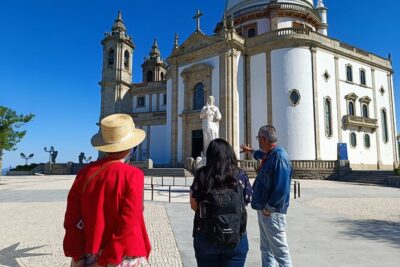
To wrap up, you visit the Sanctuary of Our Lady of Sameiro (Santuário do Sameiro). It was founded on June 14, 1863 by Father Martinho António Pereira da Silva. Braga gets two Marian anchors on this tour, and Sameiro is the calmer one.
Sameiro is described as the second largest Marian pilgrimage center in Portugal, after Fátima. It also has a location advantage, sitting at about 566 meters altitude, which means you get a big view over Braga and the surrounding area.
In terms of pacing, this stop works well as a gentle landing after Bom Jesus. You get context, beauty, and a breath of air without needing to sprint back through the day.
Price and logistics: what makes this $70.60 feel fair
At $70.60 per person for about 8 hours, the price looks low once you add up what is included. You get:
- Hotel pickup and drop-off
- A premium air-conditioned vehicle
- Small group up to 8
- An expert guide in English
- Bottled water
- Monument access included for key stops
Most stops are free entry in the schedule details, with cathedral and a couple of major attractions also covered through the tour.
What is not included is lunch. That can be a downside if you hate making decisions mid-day. But it can also be a benefit because you can eat where you want, not where someone else chooses.
My advice: plan a simple lunch strategy before you go. If you are vegetarian, ask your guide for restaurant ideas during the morning, because at least one guide experience on this route included accommodating vegetarian needs at a lunch spot. If you have allergies, treat lunch as your responsibility and ask questions at the restaurant.
Also remember: this is a day with hills. Bring a light layer, some sunscreen, and keep some cash or a card for snacks. Even with water included, you might want coffee or a pastry during a break.
The walking pace and how guides shape your experience
The tour is built around guided interpretation, and reviews strongly suggest the guides are a big reason people love it. Guides like Cheila and Nuno are praised for being fluent in English and for bringing a sense of safety and comfort during transit and stops. Francisco gets high marks for handling the day with precision and giving enough time without feeling rushed. Brahim is also singled out for knowledge and for making the day easy going.
There is one practical consideration you should keep in mind. One review notes that when Spanish-speaking and English-speaking passengers were in the group, the guide repeated dialogue in both languages, which added time. That does not make the tour bad, but it can affect how much freedom you feel at each stop. If you want the most time for photos and unstructured wandering, ask about the group language mix when you book.
Who this tour suits best
This is ideal if you want:
- A guided day that connects monuments to Portugal’s early story
- Comfort and low stress, since pickup and drop-off are included
- Enough structure to avoid getting lost, but not so much that you cannot look at details
It may be less ideal if you dislike walking hills, or if you want a totally free-flow day with long museum time on your own. The schedule is designed to show a lot, not to linger for hours at one site.
If you are a first-timer in northern Portugal, this tour also gives you a strong sense of contrast: Guimarães feels foundational and medieval, while Braga feels ceremonial and intentionally monumental.
Should you book this Braga and Guimarães day trip?
Yes, I think you should book it if your goal is a high-value, small-group day that teaches you what you are looking at. For the price, you are getting comfortable transport, expert interpretation, and multiple major stops without having to manage tickets all day.
Skip it or choose another option if you want a more relaxed pace with minimal walking, or if you prefer a day where you control every detail from start to finish. The tour is thoughtfully paced for most people, but the terrain and the number of stops mean it is not a sit-down-only outing.
If you book, do one simple thing: ask your guide early for a couple of practical food recommendations in Guimarães or Braga. Then you can make lunch part of the experience, not a boring pause.
FAQ
What is the tour duration?
The tour lasts about 8 hours.
When does the tour start?
The start time is 8:30 am.
Is hotel pickup included?
Yes. The tour includes hotel pickup and drop-off, and pickup time is sent by email before the day of the tour.
How large is the group?
This is a small-group tour with a maximum of 8 travelers.
What languages are offered?
The tour is offered in English.
Are monument entrances included in the price?
Yes. Entrances to monuments are included, and many stops are listed as free admission.
Is lunch included?
No. Lunch is not included.
Is transportation provided?
Yes. You travel in a premium air-conditioned vehicle.
Do I need a ticket on my phone?
Yes, the tour uses a mobile ticket.
What is the cancellation policy?
Free cancellation is available up to 24 hours in advance of the experience’s start time for a full refund.
The Old City, Layer by Layer
- Douro Valley: Historical Sites, Wine Experience, Lunch & Cruise
★ 5.0 · 5,133 reviews - Porto: An Intimate Fado Show in a Historical Tavern
★ 4.8 · 2,055 reviews - Porto: Historic City Center Walking Tour
★ 4.7 · 1,172 reviews - Porto: Private Tour of the Historic City in a Ford T Car
★ 4.8 · 932 reviews
Fresh off the Porto quays


Braga & Guimarães Day Trips, compared.
Best of Braga and Guimaraes Day Trip from Porto
Read our review →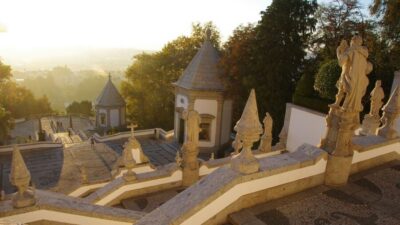
Guimarães & Braga Tour with Entry Tickets and Lunch
Read our review →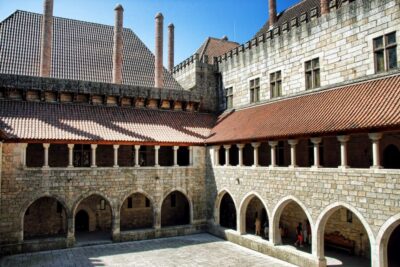
Braga & Guimarães Small Group Tour: Lunch & All Tickets Included
Read our review →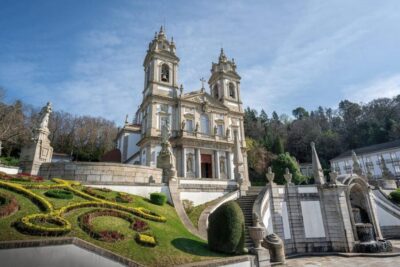
Guimaraes & Braga Small Group Tour with Lunch and Tickets
Read our review →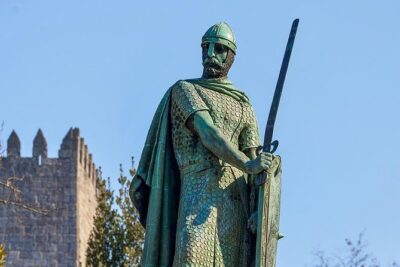
Browse the lists this tour appears in